Understanding office chair cushion thickness starts with a number most buyers never check: the height of your seat surface with you actually sitting on it. A spec sheet lists seat height measured at the seat plate or on a thinly padded seat. Add foam and that number moves. Add six inches of memory foam and you have changed where your hips, knees, and elbows land relative to the desk, the backrest, and the floor.
I spent nine years as a facilities manager buying chairs for 400 person floors, then six years building out home offices with a tape measure in hand. The same mistake shows up in both jobs. People shop brand and price, then find out the seat sits two inches too low or three inches too deep. Cushion thickness is the one part of that equation you can still change after the box is open, so treat this as office chair cushion thickness explained from the seat up: what foam changes, what it cannot fix, and how to check your own numbers before you spend anything.
Related: How to Measure Desk Height for Your Chair and Body →
Quick answer
Cushion thickness is a fit variable, not a comfort upgrade. Foam raises your seated height, shifts your hips forward relative to the backrest, and changes the angle between your thighs and your torso. A thin pad is a small correction for a seat that sits slightly low. A six inch booster is a large correction, and it belongs on seats that are far too low rather than on a chair that already fits. If your seat height is already correct, extra thickness usually makes the setup worse, not better.
Four useful options
| Model | Best fit | What stands out |
|---|---|---|
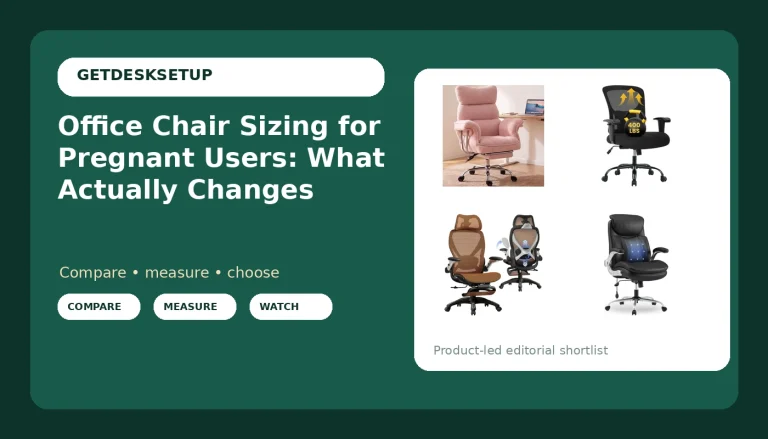
| MABOZOO Extra Thick Chair Cushions,Office Chair Booster Seat Cushion to Raise Seat Height for Pain Relief,18 x 16 x 6 inch Non Slip Memory Foam Thick Cushion with Carry Handle(Black) | Seats that sit far too low | Listing states 18 x 16 x 6 inches, memory foam build, non slip base, carry handle |
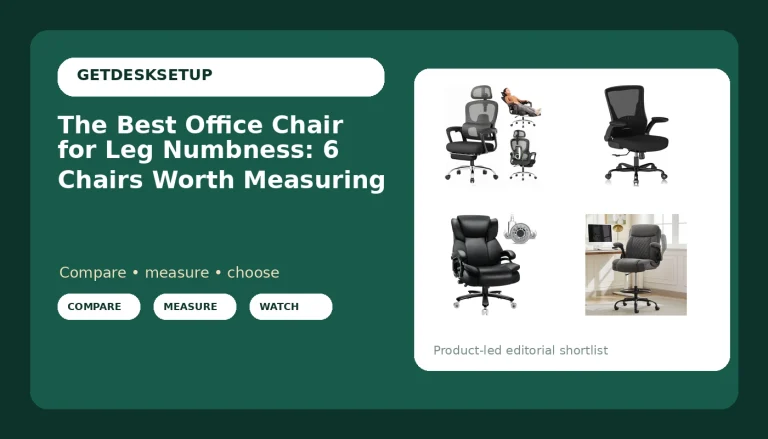
| Marsail Ergonomic Office Chair with 6D Armrests, Ergonomic Chair with 3D Adjustable Headrest, Slide Seat, Lumbar Support, and 4-Position Tilt Lock – Big and Tall Office Chair with 330 lbs Capacity | Buyers who want adjustment in every direction | 6D armrests, 3D adjustable headrest, slide seat, 4 position tilt lock, stated 330 lbs capacity |
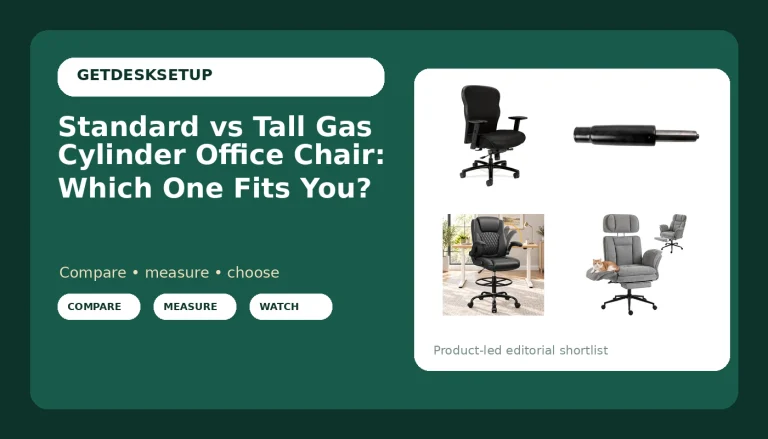
| Cross Legged Office Chair with Arms, Wide Criss Cross Chair with Wheels, 360° Rotating Footrest, Height Adjustable Swivel Chair for ADHD, Heavy Duty Ergonomic Office Chair for Home Office Relaxing | Sitting cross legged at a desk | Wide criss cross seat, 360 degree rotating footrest, height adjustable swivel, wheels |
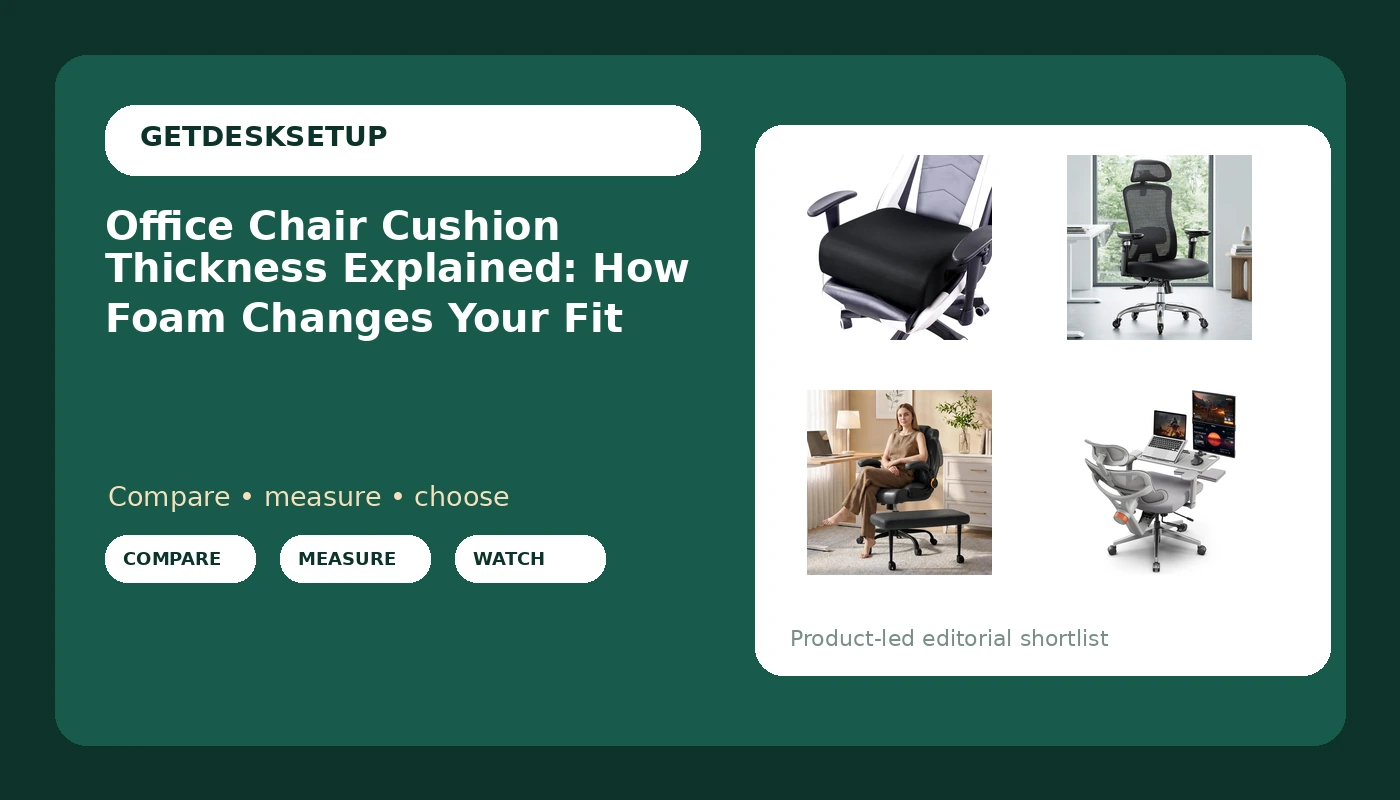
| Newtral Office Chair Ergonomic – Home Office Desk Chair, Big and Tall Office Chair, Auto-Following Lumbar Support for Back Pain, Adjustable Seat Depth and Height (with Footrest + Laptop Tray, Gray) | Adjusting seat depth and height together | Auto following lumbar support, adjustable seat depth and height, footrest and laptop tray included |
Seat height booster: MABOZOO Extra Thick Chair Cushions,Office Chair Booster Seat Cushion to Raise Seat Height for Pain Relief,18 x 16 x 6 inch Non Slip Memory Foam Thick Cushion with Carry Handle(Black)
Six inches of foam is a large change, and the size of the change is the whole point. If your chair already puts your feet flat and your thighs roughly parallel to the floor, a booster this thick pushes your knees above your hips and leaves your feet searching for the ground, which is the opposite of what you want. This is a tool for a seat that is far too low: a fixed height chair, a low stool, a seat sitting at the bottom of its gas lift range, or a shorter person at an adult sized desk. Anyone whose seat height is already right should skip it. Anyone who buys it should plan to raise the desk or add a footrest at the same time, because seat height and work surface height are one decision, not two.
Adjustment density: Marsail Ergonomic Office Chair with 6D Armrests, Ergonomic Chair with 3D Adjustable Headrest, Slide Seat, Lumbar Support, and 4-Position Tilt Lock – Big and Tall Office Chair with 330 lbs Capacity
This is the opposite approach to a booster cushion. Instead of stacking foam on a fixed seat, you move the seat itself: slide it forward or back for depth, lock the tilt in one of four positions, drop the armrests to the height your shoulders want, and set the headrest where your neck actually lands. Big and tall is a label, not a measurement, so check the seat depth range against your own hip to knee length before you commit. If the seat runs deep for you, foam at the back makes the problem worse, not better. Skip this one if you want a lounge chair rather than a task chair, or if you already know your seat depth and it matches what you own.
Cross legged position: Cross Legged Office Chair with Arms, Wide Criss Cross Chair with Wheels, 360° Rotating Footrest, Height Adjustable Swivel Chair for ADHD, Heavy Duty Ergonomic Office Chair for Home Office Relaxing
Cross legged sitting changes the geometry in a way cushion thickness cannot fix. You need width, a flat surface, and enough room under the desk to fold a leg without hitting a drawer. A thick, soft booster under a crossed leg rolls your hips and pushes the whole stack sideways, which is why the wide flat seat here makes more sense than foam on a narrow one. The trade off is the one that comes with any wide seat: you sit further from the backrest when your legs are down, so lumbar contact is a choice you make rather than something the chair does for you. Skip it if you need square, supported sitting for eight hour stretches and your back depends on continuous lumbar pressure.
Depth and height together: Newtral Office Chair Ergonomic – Home Office Desk Chair, Big and Tall Office Chair, Auto-Following Lumbar Support for Back Pain, Adjustable Seat Depth and Height (with Footrest + Laptop Tray, Gray)
Depth adjustment is the feature worth paying for, because depth is the one number foam cannot add back. If your seat runs long, you can slide this one forward until the front edge clears the crease behind your knee and your back still reaches the lumbar support. The auto following backrest is designed to stay in contact as you move, which is the part a fixed backrest cannot do. The footrest and laptop tray matter if you work in more than one posture through the day, and matter not at all if you do not. Skip this one if your current seat depth already matches your body, or if you would never use the tray, because you would be paying for range you will not use.
Prices and availability may change. Product images, names, and retailer links are matched to verified listings. No current price, rating, stock status, or measured result is stated here without current evidence.
How office chair cushion thickness changes seat height and seat depth
Seat height is measured from the floor to the top of the seat surface while someone is sitting on it. Every listing you read quotes the other number: the height of the seat with nothing on it. Foam compresses, so a cushion adds less height than its label promises, and the gap between the two numbers grows with body weight and with the density of the foam. That is the first reason two people can buy the same six inch cushion and end up with different setups.
Seat depth is the second number, and it is the one people forget. Usable depth runs from the front of the backrest to the front edge of the seat. A cushion that stops short of the backrest pushes your hips forward, which breaks contact with the lumbar support and leaves your lower back unsupported no matter how carefully the chair is adjusted. A cushion that reaches all the way back takes depth away from your thighs, so the front edge presses behind your knee. Neither outcome shows up in a product photo.
The third effect is angle. Extra thickness raises your hips relative to your knees, which rolls the pelvis back and flattens the natural curve of the lower spine. Some people feel that as relief and others feel it as new pressure. It depends on which direction your original misfit went.
The fourth effect is the desk. Raise the seat and the desk stays where it is, so your elbows drop below the work surface and your wrists bend up to type. Seat height and desk height are one decision, not two. If you add foam, plan to raise the desk, add a keyboard tray, or accept a different working posture.
Reading a chair spec when foam thickness is not listed
Almost no chair listing states foam thickness or foam density, and the ones that do rarely state both. That is fine, because thickness is not the spec you need. What you need is the range of positions the chair can reach.
Look for these instead: the seat height range in inches, the seat depth, whether the seat slides forward and back, whether the lumbar support moves up and down or in and out, how the armrest adjusts, how many recline positions there are and whether tilt tension is adjustable, whether the headrest moves, and what kind of caster the base uses.
Thick and soft is not the same as supportive. A cushion that measures four inches on a table can compress to almost nothing under a heavier sitter, and memory foam softens as the room warms up. This is why ergonomic chair cushion thickness is a weaker buying signal than the numbers around it: the foam is a variable, and the frame is the part you cannot change.
Desk chair cushion thickness and task chair cushion thickness are the same question asked with different words: how much foam sits between you and the seat plate, and how much of that foam stays there once you are on it. Before you buy anything, run these five steps.
- Sit in your current chair and measure from the floor to the top of the compressed seat, not the empty seat.
- Measure from the floor to the underside of your desk, then subtract the thigh clearance you actually want.
- Measure from the back of your hip to the back of your knee and compare it with the seat depth range on the listing.
- Write down which number is wrong: height, depth, or both. Foam can fix height and can only make depth worse.
- Change the cheapest thing first. A caster swap is a small reversible height change, foam is the next step up, and a new chair is the last resort.
Practical guidance before you add foam
- Add thickness only when the seat is too low. If your feet are already flat and your thighs are level, thicker foam moves you out of position.
- Keep the front edge of the cushion behind the crease at the back of your knee. If it presses there, the cushion is too deep for you.
- Raise the desk or add a keyboard tray at the same time. A taller seat under an unchanged desk pushes your elbows below the work surface.
- Check your back contact after the change. If the foam pushes you away from the lumbar support, you have traded one problem for another.
- Give new foam a week before you judge it, and keep the return window open. Memory foam softens with body heat and takes a set where you sit.
Which option should you choose?
Choose the MABOZOO Extra Thick Chair Cushions when the seat under you is far too low and you want to keep the chair you already own. Choose the Marsail Ergonomic Office Chair with 6D Armrests when you want adjustment in every direction, including armrests, headrest, seat slide, and a four position tilt lock, and you need the stated 330 lb capacity. Choose the Cross Legged Office Chair with Arms when the way you actually sit is cross legged and a standard square seat fights you. Choose the Newtral Office Chair Ergonomic when seat depth is the number that is wrong, because depth is the one thing foam cannot add back.
The caveat is the same for all four. A chair or cushion is only correct against your own measurements, and nothing here replaces the tape measure. No listing photo shows how a seat will sit under your specific body, and no thickness number tells you where your knees will end up.
The bottom line
Cushion thickness is a geometry adjustment. It raises your seat, moves your hips relative to the backrest, and changes the angle of your pelvis. Used on a seat that is too low, it is the cheapest correct fix in a home office. Used on a seat that already fits, it creates problems you did not have. Measure your seated height and your hip to knee length first, decide whether height or depth is the number that is wrong, then buy the smallest change that corrects it. If depth is the problem, no cushion solves it and the chair has to change.