Air in a home office is a rate, not a smell. It is how much fresh air moves through the room per hour, how many particles are being shed inside it, and whether any of that moving air reaches the zone where you actually breathe. Most people answer the wrong question first. They buy a filter for a room that has no path for air to leave, or they crack a window for ten minutes and call it ventilation. This piece covers home office air quality in the order that changes it: exchange first, sources second, your breathing zone third, and gear last. If you sit eight hours a day in a sealed ten by ten room, most of what you inhale has already been through your lungs once.
Related: How to Set a Standing Desk to Your Measured Height →
Quick answer
The largest lever on home office air quality is air exchange, not filtration. Get outside air moving through the room on a schedule, then cut the particle sources inside it (floor dust, cable piles, printer output, kitchen smells from an open plan), then lift your breathing zone out of the still layer that sits against the desktop. Filtration is the third step, not the first, and it only earns its place in a room you have to keep closed for weather or noise.
Four useful options
| Model | Best fit | What stands out |
|---|---|---|
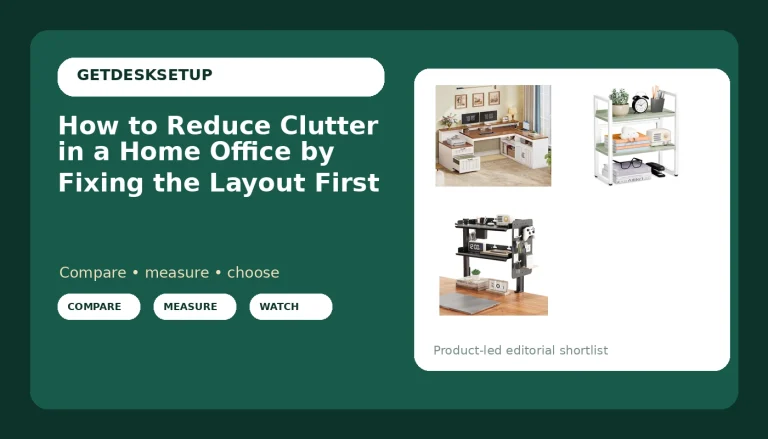
| Synorla Ergonomic Tall Drafting Chair-Mesh Desk Chair with Flip-Up Arms | Tall desks and standing-desk pairing, where a standard chair sits too low | Tall drafting frame, mesh back, flip-up arms |
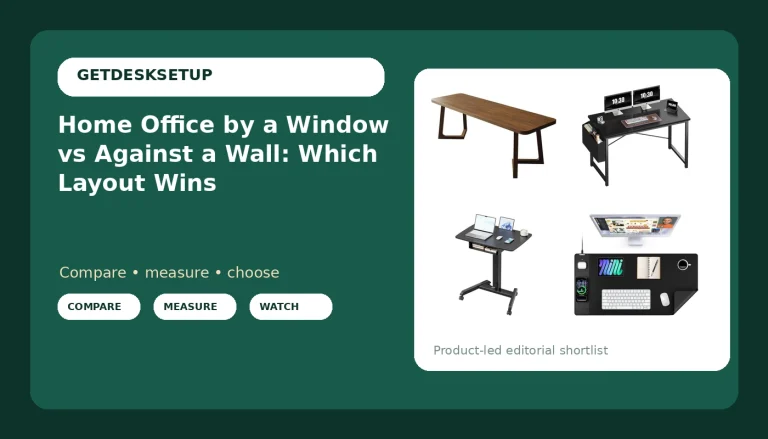
| Acer A640 4K Webcam with AI Noise Canceling Mic for Streaming Meetings | Calls you want to take with the window or a fan running | 4K capture plus an AI noise canceling mic |
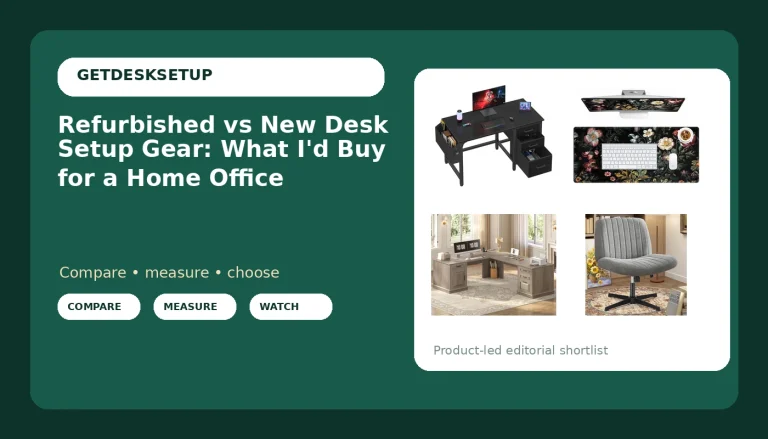
| AOC Wireless Headset with Mic for Work, AI Noise Cancelling, Bluetooth | All-day calling with the door open or the room unsealed | Bluetooth wireless, AI noise cancelling, work headset design |
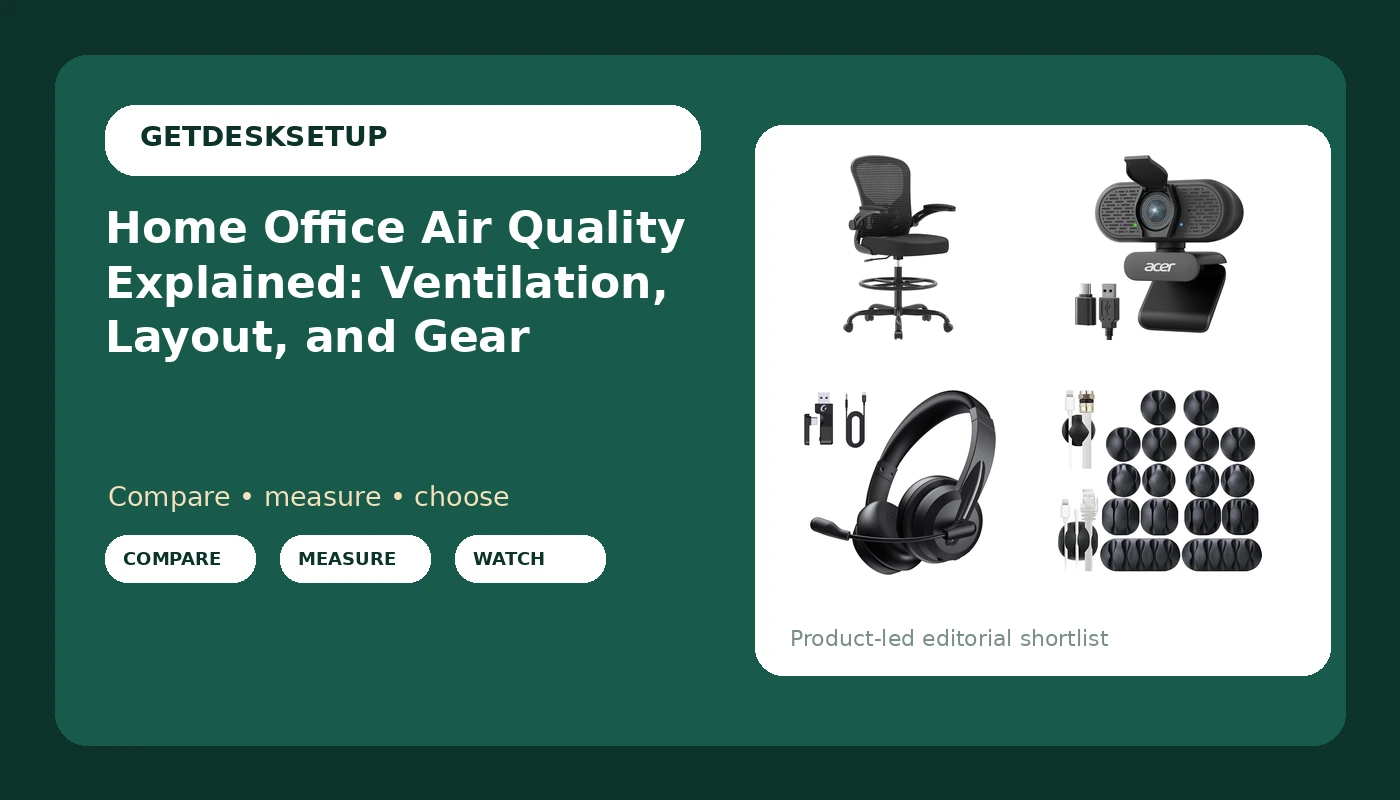
| OHill 16PCS Black Cable Clips, Self Adhesive Cord Holder Cord Organizer | Any desk with a cable pile living on the floor | 16 self-adhesive clips for routing cords off the floor |
Tall seating: Synorla Ergonomic Tall Drafting Chair-Mesh Desk Chair with Flip-Up Arms
Here is who should skip it. A drafting chair is a pairing decision, not an upgrade. If your desk sits at a standard fixed height and you are on the shorter side, a tall seat leaves your feet dangling and your wrists above the keyboard plane, which trades one problem for two. Measure your seated elbow height with a tape before you buy, and check the listing's stated seat height range against that number. Also check the seat depth against your own thigh length; a tall chair that is too deep pushes you forward off the backrest, and you will end up leaning into the desk all day. Get the numbers right and this is the seat that keeps your head out of the stagnant air.
Capture gear: Acer A640 4K Webcam with AI Noise Canceling Mic for Streaming Meetings
Be clear about what this does and does not do. A noise canceling microphone reduces what the person on the other end hears. It does not clean your air, and it does not remove anything from the room. What it changes is your behavior: with a mic that rejects steady room noise, you can keep a window cracked or a fan running through a call instead of sealing the room for an hour at a time. Mount the camera at the top of the monitor, keep your monitor distance where you can read without leaning in, and let the window light fall on your face rather than behind you. That is a lighting layers decision as much as a video one.
Headset: AOC Wireless Headset with Mic for Work, AI Noise Cancelling, Bluetooth
The honest trade-off: a wireless headset needs charging, and Bluetooth audio quality depends on your machine's adapter, not the headset alone. If you take six hours of calls a day, plan the charging rotation. If your calls are short and occasional, a wired option may be simpler. But if your room gets stuffy by early afternoon and you cannot stand up to fix it because you are tethered, this is the accessory that removes the excuse. It also cuts one cable from your desk, which matters more than it sounds.
Cable control: OHill 16PCS Black Cable Clips, Self Adhesive Cord Holder Cord Organizer
Adhesive clips fail for one reason: dust. Wipe the surface with alcohol, let it dry, press the clip for a full count, and wait before loading it. Do not run a cord under tension through a clip, and do not use a clip as a strain relief for a heavy power brick. If you are routing a thick power cable, put it on a clip near the power outlet and let the slack hang free. This is cable planning, not decoration. A cord that pulls on a monitor arm changes your monitor angle within a week, and a cord that crosses the walking path is a trip hazard you will trip over at 7 am with coffee in hand.
Prices and availability may change. Product images, names, and retailer links are matched to verified listings. No current price, rating, stock status, or measured result is stated here without current evidence.
What actually drives home office air quality
Three variables do almost all the work. The first is exchange rate: how quickly the air in the room is replaced with air from somewhere else. The second is source strength: how much dust, moisture, volatile organic compound, and carbon dioxide is being added inside the room. The third is position: where your nose sits relative to the air that is actually moving.
Most houses have no mechanical fresh air supply for a spare bedroom. The exchange mechanisms available to you are a window, an open door that creates cross flow with another opening, a bathroom or kitchen exhaust fan, and whatever the central system pulls in when it runs. If the office door is shut and the window is shut, you have no exchange mechanism at all, and the room only gets worse as the day goes on. Carbon dioxide is the easiest thing to watch: outdoor air sits near 420 parts per million these days, and a sealed room with one person in it climbs steadily above that. You do not need a sensor to feel the direction of travel, but a cheap CO2 monitor turns a feeling into a number.
This is why most home workspace air quality complaints land in the same window, mid afternoon, in a closed room, in a house where nobody has opened anything since morning. It is also why work from home air quality problems so often get misdiagnosed as allergies. Dust is real, but a sealed room concentrates everything you and your furniture shed, and it does it slowly enough that you blame the pollen count.
Home office air quality explained in one measured routine
Work the variables in order and the room changes within a day. If you only do one thing, do step three.
- Measure the room. Length times width times ceiling height in feet gives you cubic feet of air. Write it in a notebook. A ten by ten room with an eight foot ceiling holds 800 cubic feet, which is a small volume to share with a running computer and a human for eight hours.
- Count your air paths. Window, door, exhaust fan, HVAC vent. Write down which ones are actually openable from your chair. If the answer is one, that is your project.
- Create exchange. Crack the window and open the door, or put a small fan in the window frame blowing outward so it pulls air out of the room. A fan in the middle of the room only stirs the air you already breathed.
- Cut the sources. Vacuum the floor under the desk, clear the cable pile, move the printer out of the sleeping and working space, and stop storing cardboard in the corner.
- Raise your breathing zone. Desk height, chair pairing, and monitor distance together decide where your head sits. A taller seat puts your face into the moving air instead of the still layer just above the desktop.
Practical habits that hold up after a month
- Keep the floor under the desk clear. Air moves along the floor before it moves anywhere else, and a storage box under there blocks the only current you have.
- Tape a one inch strip of tissue to the window frame and watch it. If it never moves, you have no exchange, no matter how the room feels.
- Clean the surface before any adhesive clip goes on, and press for a full ten count. Dust is what kills self-adhesive hardware.
- If you cannot open a window, run the bathroom or kitchen exhaust with the office door open. That pulls air through the room rather than recycling it.
- Rotate the charging cable for a wireless headset into your desk routine, or you will be on a call with a dead battery and a closed window.
Which option should you choose?
Choose the Synorla Ergonomic Tall Drafting Chair-Mesh Desk Chair with Flip-Up Arms when your desk sits high enough that a standard chair leaves your head in the stagnant layer, and you have measured your seated elbow height against the listing's stated seat range. Choose the Acer A640 4K Webcam with AI Noise Canceling Mic for Streaming Meetings when video quality matters and you want the far end to hear you clearly with a window open. Choose the AOC Wireless Headset with Mic for Work, AI Noise Cancelling, Bluetooth when you take enough calls that walking to the window mid-meeting needs to be possible. Choose the OHill 16PCS Black Cable Clips, Self Adhesive Cord Holder Cord Organizer when the floor under your desk is a cable pile and you want the cheapest change on this list.
None of these four products cleans air. A chair, a webcam, a headset, and a pack of clips do not remove particles or carbon dioxide. What they do is remove the reasons you keep the room sealed, and sealing the room is the actual mechanism behind most stale home office air. If your room has a moisture problem, a persistent smell, or a known mold issue, that is a building problem and no accessory on this page touches it.
The bottom line
Ventilation first, sources second, breathing zone third, filtration last. Measure the room, count the openings, create flow, clear the dust and the cable pile, then adjust desk height and chair pairing so your head sits in the air that is moving. If you have been asking about work from home office air quality and buying filters for a sealed room, you have been working the list backwards. Fix the exchange, and the rest of the setup gets easier to live with.