Tall vs short footrest is a geometry question, not a style question, and you can settle it with a tape measure before you spend anything. The short version: a floor footrest and a chair-mounted footrest fail in different ways. A floor footrest fixes dangling feet. It cannot fix a seat pan that sits too high for your legs, because the problem is the seat, not the floor. This comparison covers four products that put a surface under your feet at four different heights: one floor footrest with three adjustable heights, one drafting chair with a footrest ring, and two gaming chairs with pull-out footrests. Each one has a person it fits, and each one has a person who should walk away.
Related: Ergonomic chair seat depth and height guide
The short answer: sit in your chair and measure the floor to the crease behind your knee, then measure the floor to the top of your seat cushion at the front edge. If the seat sits within about an inch of that knee number, buy the floor footrest. If the seat sits higher than that and will not come down, no floor footrest will save you, and you need a surface attached to the chair: a drafting chair with a footrest ring or a recliner with a pull-out footrest.
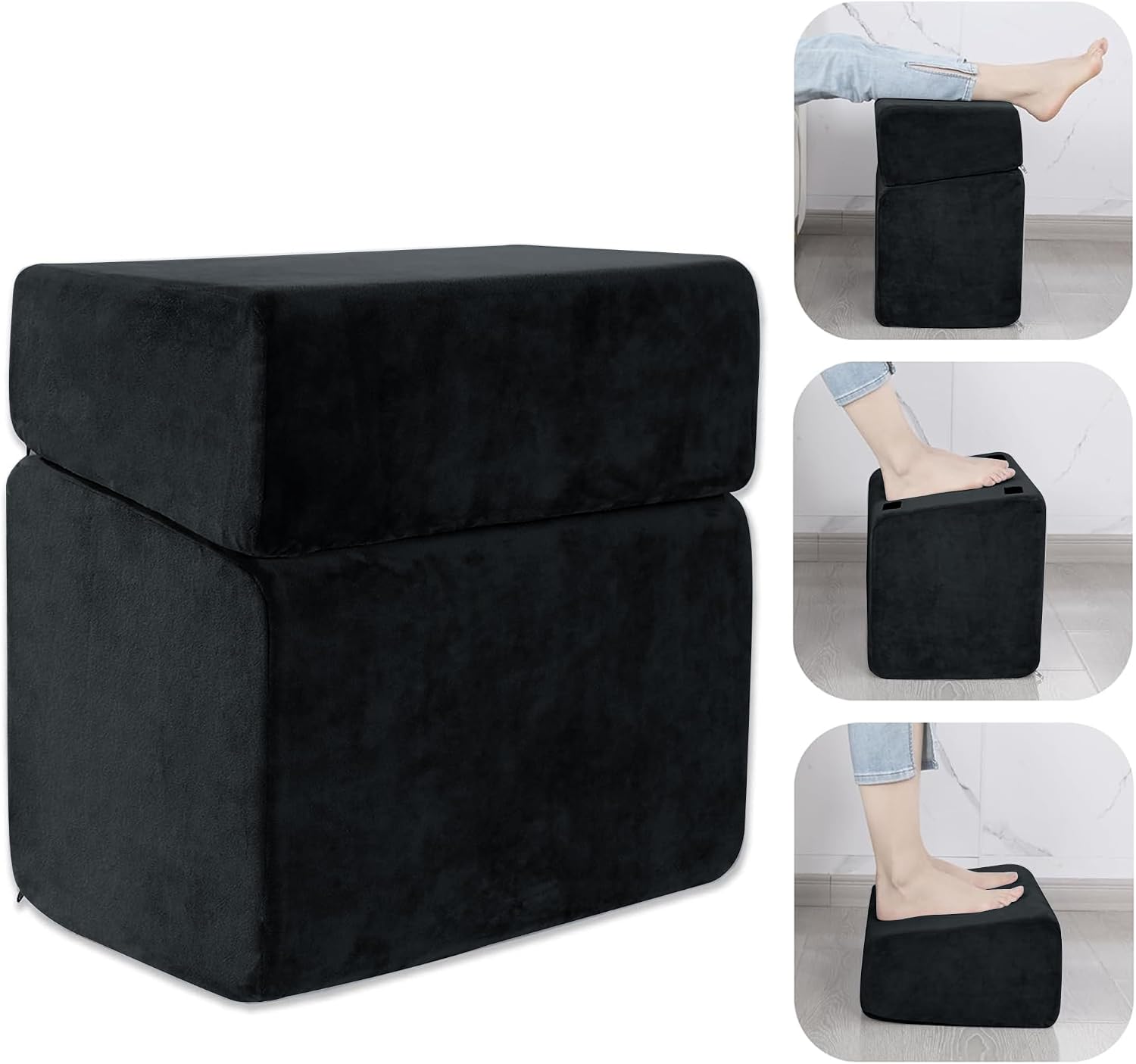
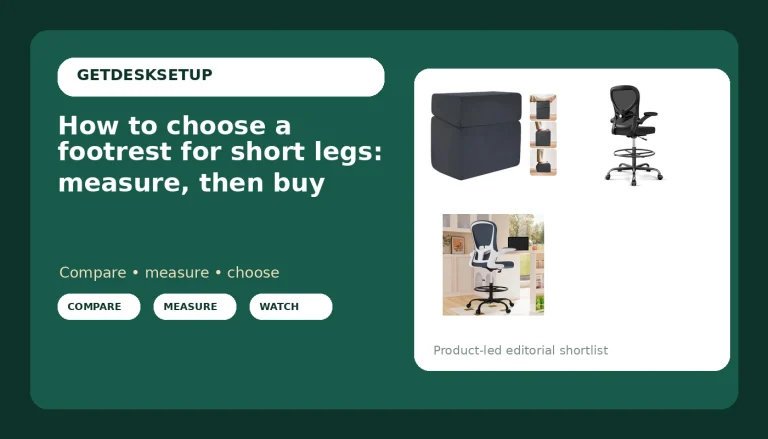
ROYALAY Under Desk Foot Rest
The only product here that is purely a footrest. Three adjustable heights, high-density memory foam, and a washable cover, so you can change your knee angle and keep the thing clean.
It cannot rescue a seat that is too high. If your thighs are unsupported, a floor footrest lifts your feet and leaves the real problem exactly where it was.
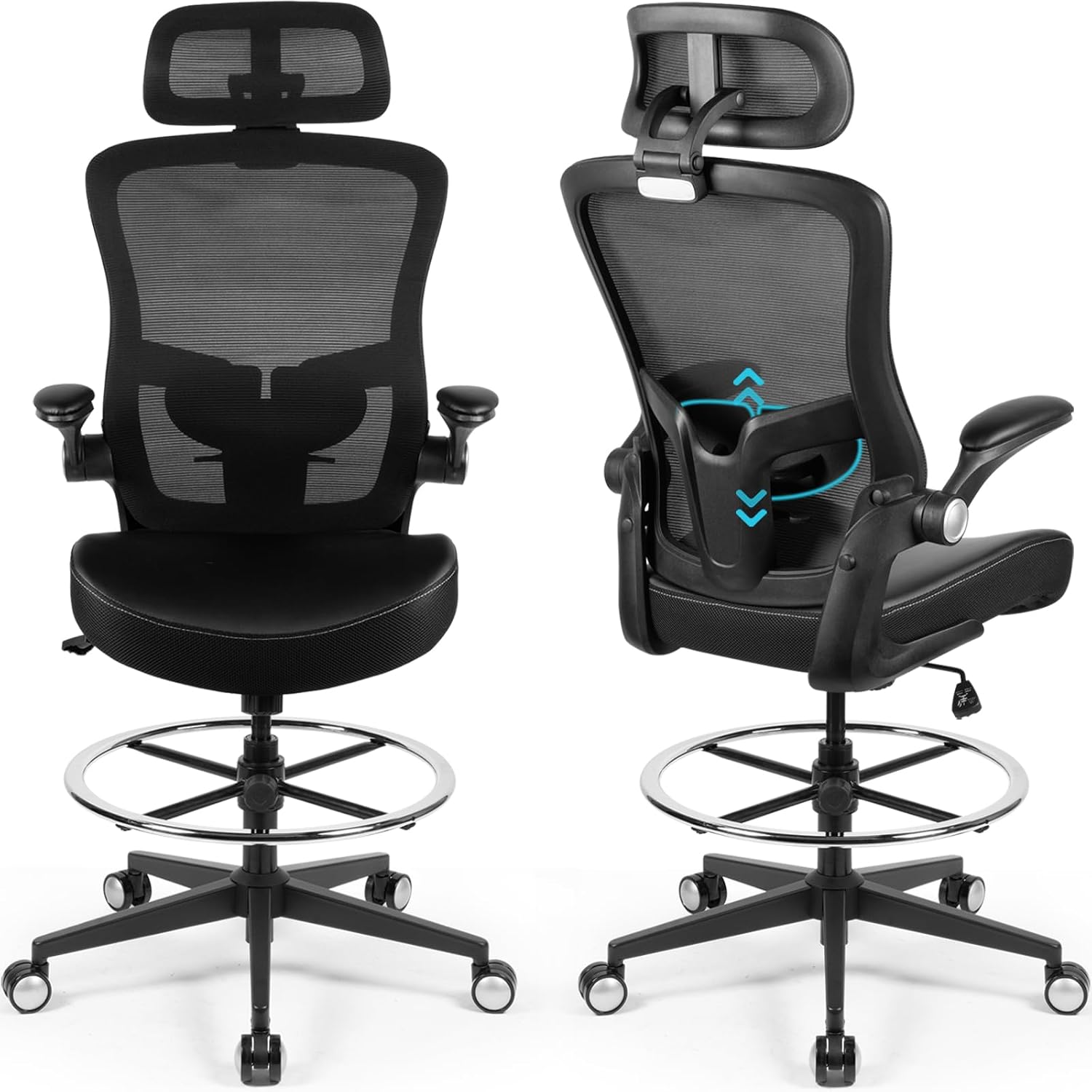
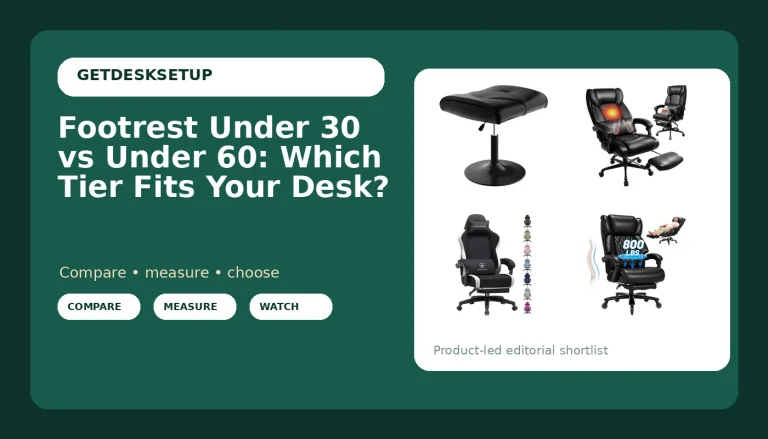
Drafting Chair 400 lbs with Footrest Ring
The footrest ring is mounted to the chair, so it rises with the seat at any height. Published 400 lb capacity, adjustable lumbar support, flip-up armrests, and a headrest.
It is a whole chair, not an accessory. The ring only exists for this chair, so you cannot keep the chair you already own.
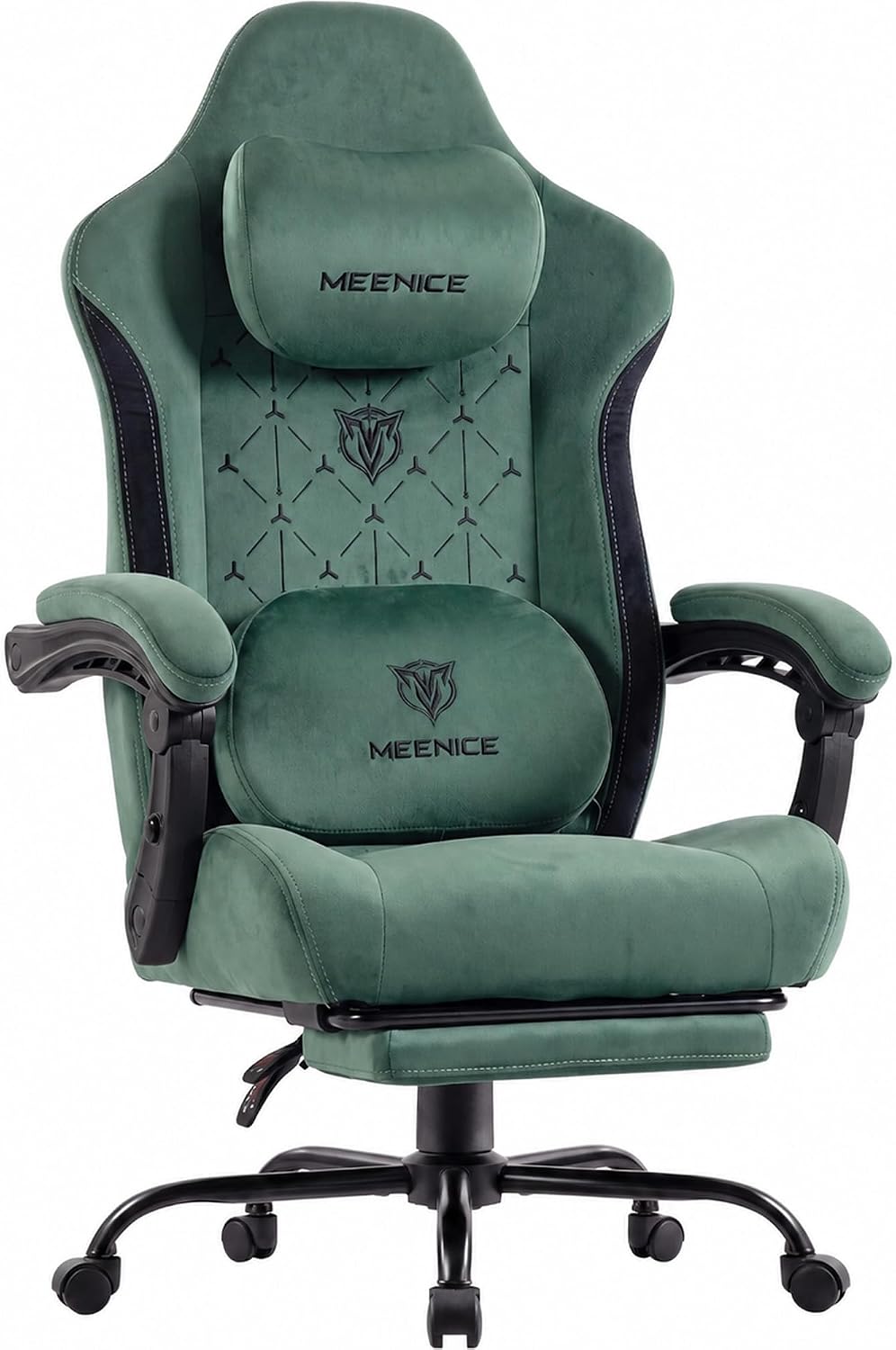
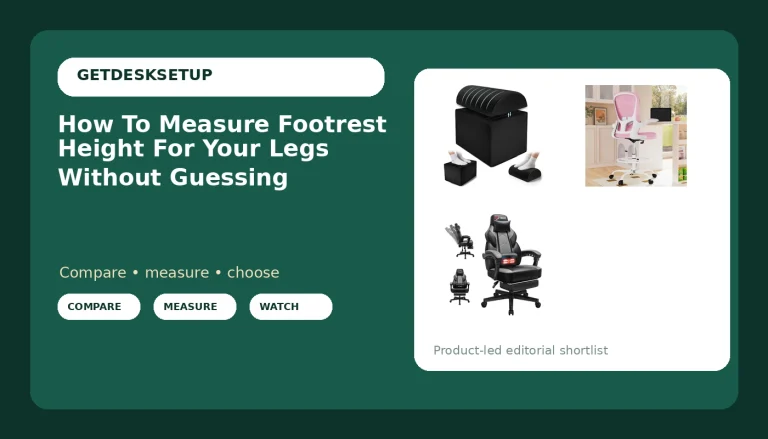
Fabric Gaming Chair with Heated Massage and Footrest
A recliner first: heated massage lumbar support, a pocket spring seat, and a pull-out footrest for the reclined position. Published 350 lb capacity.
The pull-out footrest only makes sense with the back reclined. It is a break-and-nap feature, not a typing-posture footrest.
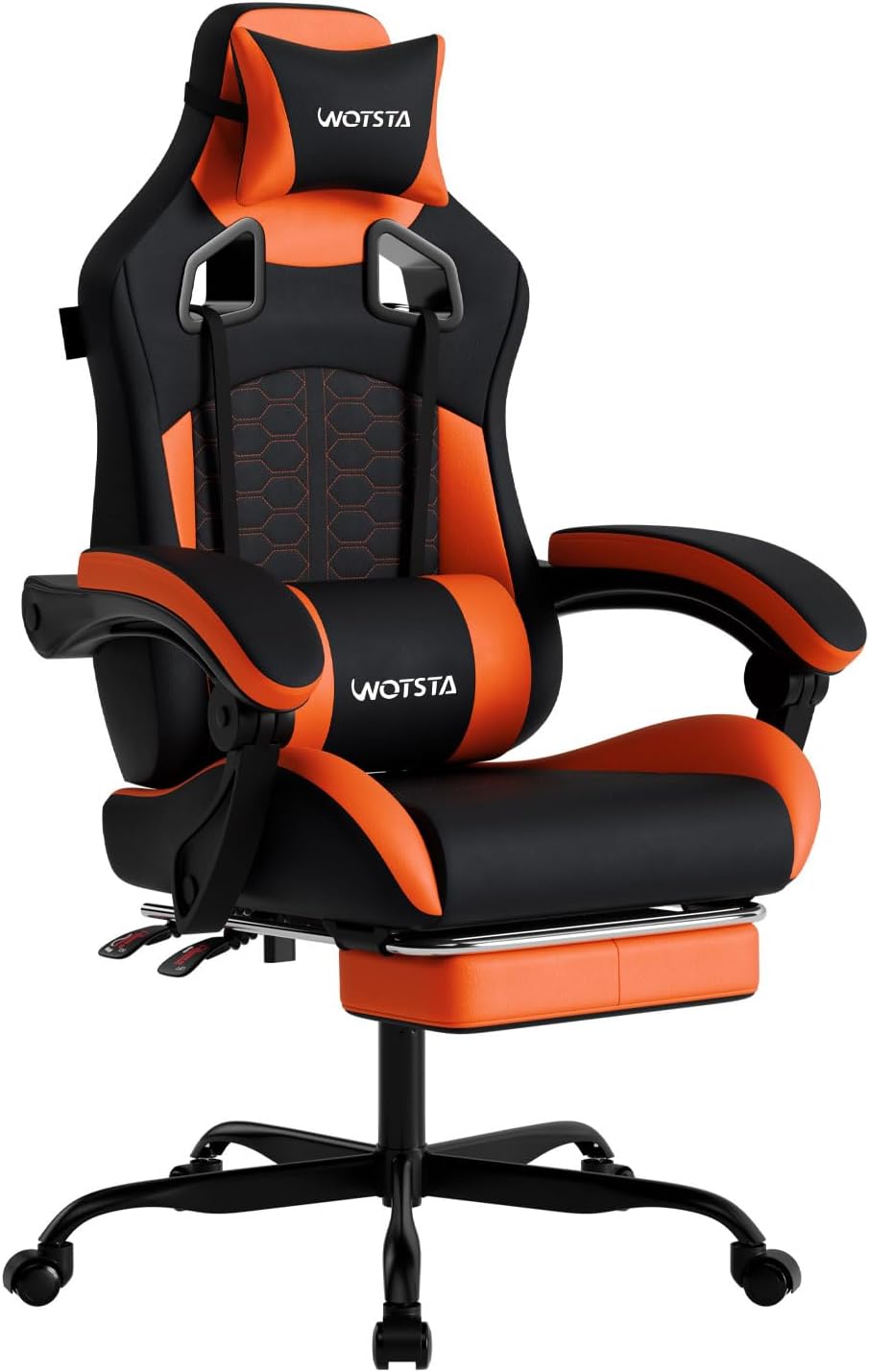
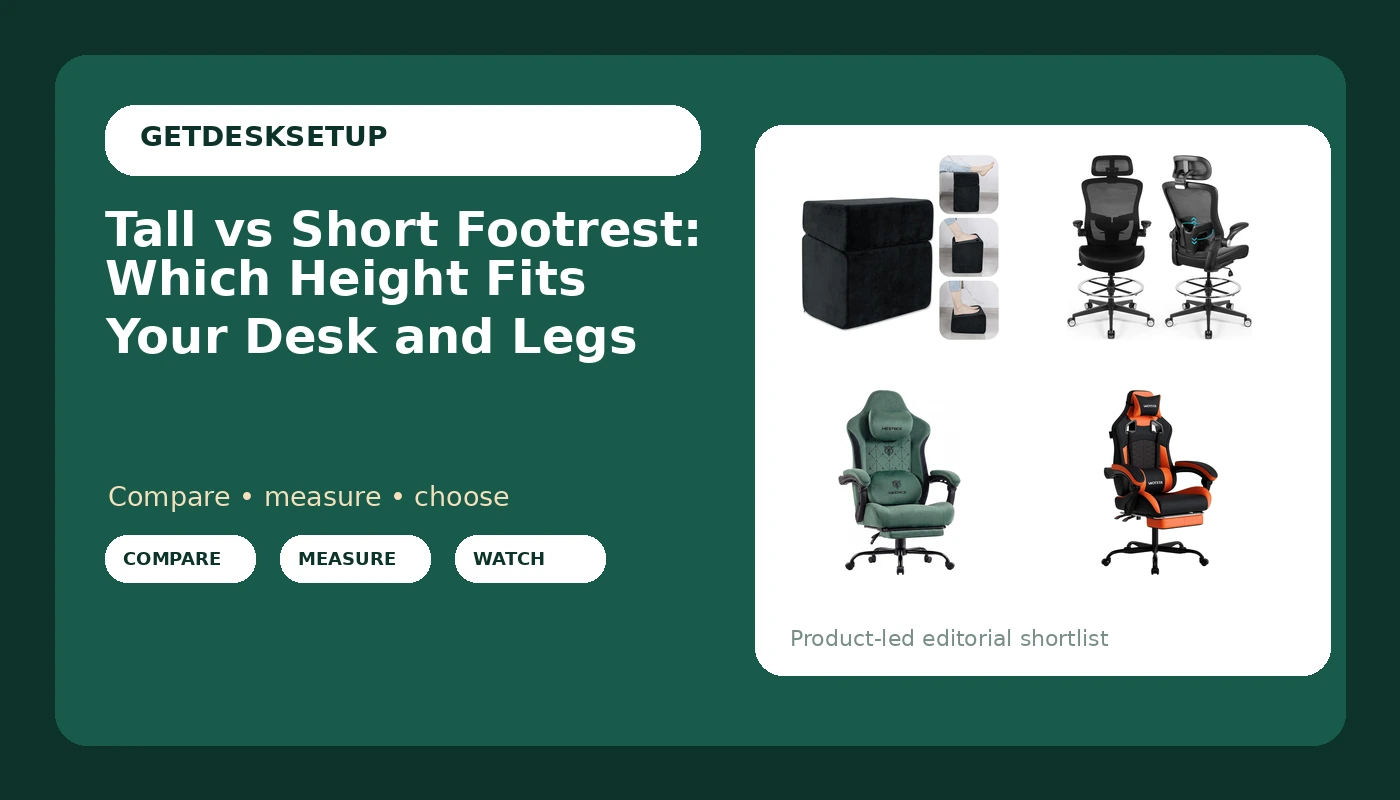
Gaming Chair with Massage, PVC Leather
The most stripped-down entry in the group: massage, headrest, lumbar support, and a pull-out footrest, in black and orange PVC leather.
Published 300 lb capacity is the lowest here, and the footrest has the same recliner-only limit as the fabric chair.
Prices and availability may change.
What tall vs short footrest means in practice
The difference between a tall and a short footrest is not a number. It is where the surface is anchored. A short footrest sits on the floor. You can nudge it with your toe, slide it under the desk when you stand up, and carry it onto a plane. A tall footrest is anchored above floor level, usually to the chair itself. The drafting chair's ring is fixed to the chair column. The two gaming chairs' footrests slide out of the seat base. Both of those rise and fall with the seat, which is the entire point: they hold the same angle relative to your hips no matter how high the chair goes.
That anchor difference decides the purchase. A floor footrest is an accessory you buy once and move between desks. A tall footrest is a property of the chair, so buying one means buying a chair.
This is also where the short footrest vs tall argument gets run backwards all the time. People buy the floor footrest first because it is cheap and easy, then discover their real problem is a seat pan that is too high and too deep for their legs, which no floor accessory can reach. The measurement further down tells you which case you are in before you spend anything.
The short option: a floor footrest with three height settings
The ROYALAY Under Desk Foot Rest is the only product in this comparison that is a footrest and nothing else. It sits on the floor, it has three adjustable heights, and the top surface is high-density memory foam under a washable cover. That combination matters more than the listing makes it sound. A foam footrest that cannot change height locks your knees into one angle all day, and a cover you cannot wash turns an accessory into something you stop touching.
The three settings are the reason this is the right first buy for most desks. Start at the lowest position, sit with your feet flat, and work upward until your thighs feel supported at the front edge of the seat and your ankles are not pointing your toes at the floor. If you want a slight tilt rather than a flat surface, you slide the unit forward or back under the desk rather than adjusting the unit itself. That is the honest way to tune it, and it costs you nothing.
Memory foam density is the spec that decides whether this survives. Low-density foam collapses under heel pressure within a month and you end up with a flat slab that does nothing. High-density memory foam is the stated spec here, which is what you want under a heel that presses all day.
Who should skip it: anyone on a drafting stool or a tall chair whose seat pan cannot come down to knee height, because a floor footrest cannot reach that high. Anyone who wants their feet up while reclined. And anyone who works on a hard floor and hates a footrest that slides, since a floor unit will travel unless something stops it.
The tall option: a drafting chair with a footrest ring
The Drafting Chair 400 lbs with Footrest Ring is the honest answer to a seat that sits high. The ring is bolted to the chair's column, so when you raise the seat to work at a tall desk, the ring comes up with it. Your feet land on the ring at the same relative height no matter where you set the seat. That is a geometry fix, not a comfort feature, and it is the only thing in this comparison that solves a genuinely tall seat.
The rest of the chair is built for standing-desk work: adjustable lumbar support you can move to your back rather than the average back, flip-up armrests so you can push the chair fully under a desk, and a headrest. Published capacity is 400 lb, which is the highest in this group.
I am not going to hand you a height range for this chair, because the listing does not publish one and I do not guess. What I will tell you is what to measure instead. Take your knee number, add the amount of support you want under your feet, and compare that against the chair's published seat height range. If the range does not reach your number, skip the chair. If it does, the ring will meet you there.
Who should skip it: anyone who wants to keep the chair they already own, because the ring cannot be moved to another chair. Anyone who wants a footrest while reclining, since a ring is an upright-sitting tool. And anyone who wants to adjust footrest position forward or back, because a ring is fixed to the column.
The pull-out footrests on the two gaming chairs
The Fabric Gaming Chair with Heated Massage Lumbar Support and the PVC leather gaming chair both solve the foot problem the same way: a panel that slides out from under the seat when you recline. In an upright typing posture, that panel is stowed or in the way. Reclined, it gives you a place to put your heels while the back takes your weight off your lower spine. If you are comparing a tall or short footrest for actual desk work, understand that these are tall footrests with a condition attached.
The two chairs differ in ways worth knowing. The fabric model uses a pocket spring seat, which is closer to a mattress construction than a foam slab, and it adds heated massage lumbar support. Published capacity is 350 lb. The PVC leather model is the stripped-down version: massage, headrest, lumbar support, a pull-out footrest, black and orange upholstery, and a published 300 lb capacity, the lowest in this group.
The difference between tall and short footrest use cases shows up here more than anywhere else. These are recliner footrests. They are for the twenty minutes after lunch when you lean back, not for the six hours of upright work that decide whether your back hurts on Friday.
Who should skip both: anyone buying a chair primarily for eight hours of upright typing, because a pull-out panel does not help that posture. Anyone above the published capacity of the specific chair. And anyone who already owns a chair they like, since neither of these is an add-on.
How to measure the number that decides it
Six steps, five minutes, one tape measure. Do this before you open a single product page.
- Sit in your chair at your desk, feet flat on the floor, knees at roughly 90 degrees, back against the backrest.
- Measure the floor to the crease behind your knee. That is your knee number.
- Measure the floor to the top of the seat cushion at the front edge. That is your seat number.
- Subtract. Zero to about an inch means your chair fits and a footrest is optional comfort. One to three inches means a floor footrest with adjustable height will close most of the gap. More than that means you need a surface attached to the chair, or a different chair.
- Repeat the measurement barefoot and in the shoes you actually wear at the desk. Soles change the number.
- Write both numbers in your phone. When a listing does not publish a seat height range, you now know to skip it rather than guess.
That subtraction is the whole tall vs short footrest decision. Everything else is upholstery.
Footrest angle, mat thickness, and mat density
Footrest angle is the thing people forget to check after they buy. A surface that is too low makes you point your toes and load your calves. Too high and your knees come up above your hips, which is worse for your back than dangling feet. With the ROYALAY unit, the three height settings cover the range and you fine-tune with position. With a chair-mounted ring or a pull-out panel, the angle is set by the chair, so the chair has to be right.
Mat thickness and mat density work on the same principle if you stand part of the day. A thick, soft mat bottoms out under a heel and stops doing anything; density is what keeps it working. The same logic applies to the memory foam on a footrest, which is why the density spec is worth more attention than the height of the foam stack.
The other mistake is using a footrest to compensate for a seat that is too high. If you raise your feet enough to reach a seat that never should have been that high, your knees end up above your hips and you have traded one problem for a worse one. Fix the seat first. Then use the footrest for the last inch.
Who should skip each one
The fastest way to waste money here is to buy the product that matches your budget instead of the one that matches your measurement. So, plainly:
- Skip the ROYALAY floor footrest if your seat pan sits more than about three inches above your knee number, if you want your feet up while reclined, or if you need the surface to stay in one place on a hard floor.
- Skip the drafting chair if you are keeping your current chair, if you want a reclined footrest, or if the published seat height range does not reach your knee number.
- Skip the fabric gaming chair if you are buying for upright desk work, if you are above its published 350 lb capacity, or if you want an add-on rather than a new chair.
- Skip the PVC leather gaming chair for the same reasons, plus the fact that its published 300 lb capacity is the lowest in this comparison and its upholstery is the least breathable of the four.
Setup order, because it matters
Assemble and adjust the chair before you touch the footrest. For the drafting chair, that means base and cylinder first, then the seat, then set the height with a tape in hand rather than by feel, then move the lumbar support to your back. Tighten everything only after the height is right. Reversing that order means you are adjusting a loaded chair, which is how people strip hardware.
For the floor footrest, set the chair height first, sit down, then place the footrest where your heel naturally lands. Start on the lowest of the three settings and work up. If you set it high first, you will spend a week sitting with your knees above your hips and blame the footrest.
For either gaming chair, unpack and recline it fully before you judge the pull-out footrest. The panel only makes sense at the end of its travel, and a chair that feels wrong upright may be exactly right in the reclined position you actually use for breaks.
The rest of the desk: cable management and lighting
Once your feet are sorted, two other things break a setup quietly. The first is cable management, and it is not aesthetics. A cable that pulls on a monitor arm changes the monitor angle within a week, and you will not notice until your neck does. Run power and display cables along a raceway under the back edge of the desk, gather the slack in a cable sleeve, and hold the run in place with an adhesive clip every foot or so. A run that moves when you move is a run that will drag your monitor out of alignment.
The second is light. Desk lamp lumens matter more than the lamp's shape or finish, because a dim desk makes you lean in toward the work, which undoes the posture you just paid to fix with a footrest. Get the light on the work surface, not in your eyes, and the footrest gets to do its job.
The tall vs short footrest verdict
If your seat number is within about an inch of your knee number, buy the ROYALAY floor footrest, set it low, and stop thinking about it. You have a chair that fits and you are buying comfort, which is a fine thing to buy.
If your seat cannot come down to your knee number, the floor footrest is the wrong purchase. The Drafting Chair 400 lbs with Footrest Ring is the only product in this comparison that solves a genuinely tall seat, because the ring travels with the seat.
If what you actually want is a chair to lean back in with your feet up, the two gaming chairs are the answer, and the choice between them comes down to upholstery and published capacity: 350 lb and a pocket spring seat on the fabric model, 300 lb and PVC leather on the black and orange one.
Measure your knee number first. Every wrong footrest purchase I have seen started with someone skipping that step and buying the cheapest thing on the page.