I have measured the seat depth of more than 300 office chairs with a tape measure, and the number that decides whether a chair works for you has nothing to do with the logo on the backrest. It is the distance from the front edge of the seat to the point where your back meets the backrest. Miss that by two inches and you will either perch on the front edge all day or feel the seat lip pressing into the back of your knees by mid-afternoon. That is why the short seat vs deep seat office chair question comes up in almost every home office I build.
Here is the blunt version. If your knee crease measures on the short side, buy the short seat chair. If you are big or tall enough that most office chairs feel like a school desk, buy the deep seat chair. If you are in the middle and two people share the desk, buy the one with adjustable lumbar support and stop overthinking it.
Related: How to Set Up a Standing Desk at the Right Height
The short answer: seat depth is a fit measurement, not a comfort setting. Match it to your body once and you stop thinking about the chair.
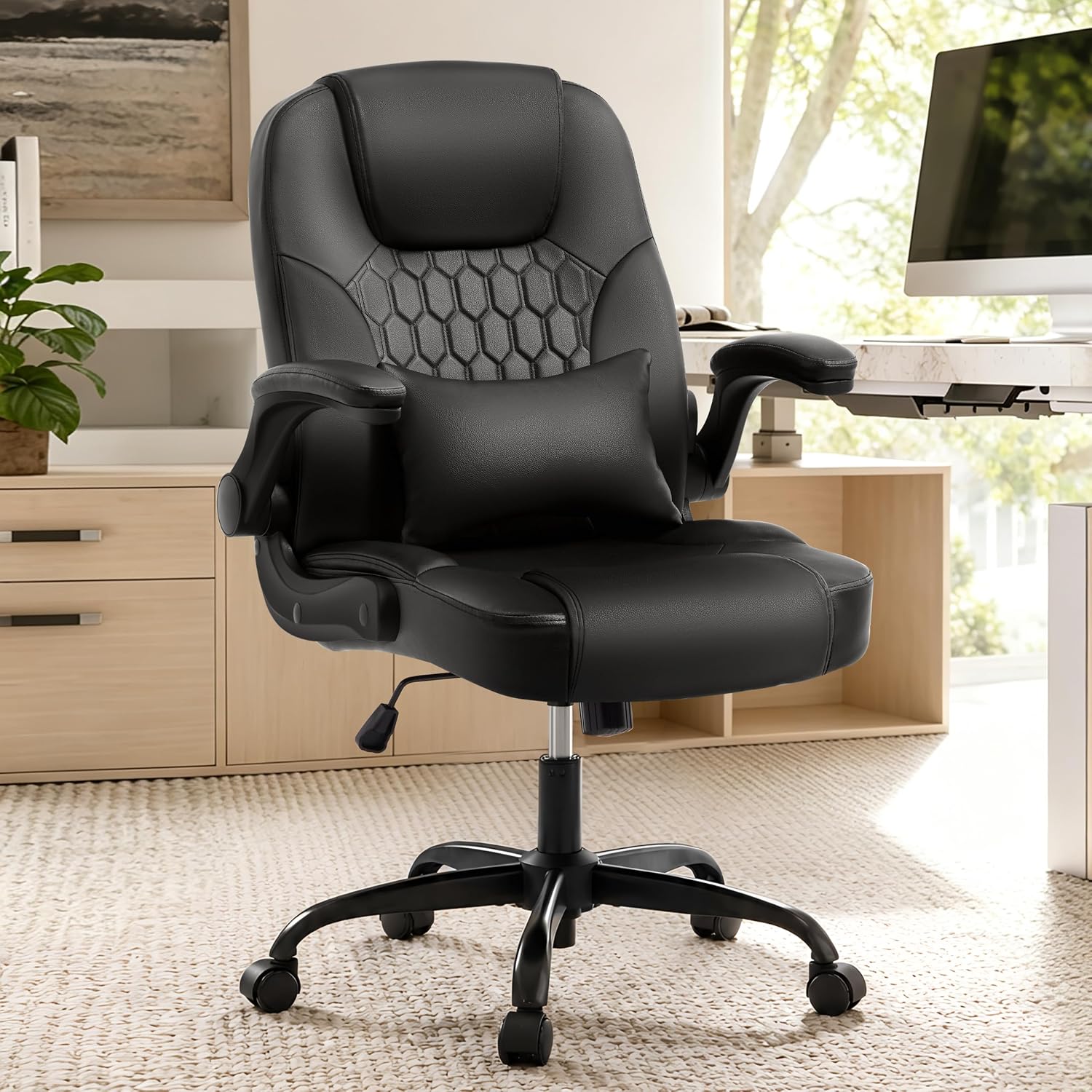
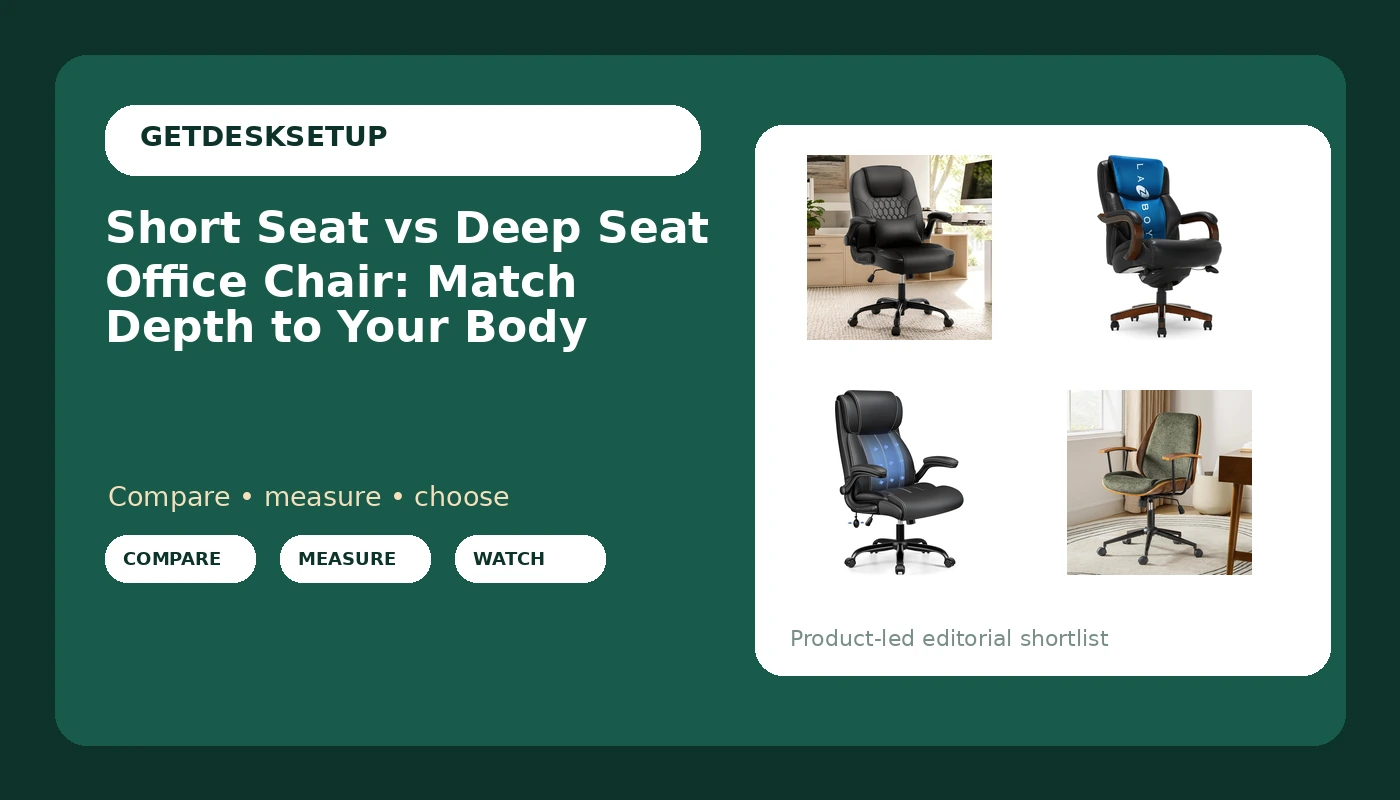
Fizzin PU Leather Office Chair Ergonomic Lumbar Support Short People,Black
The only chair in this set positioned for shorter frames, with lumbar support named in the listing
Nothing here for a 6-foot buyer, and the short seat leaves long thighs without support
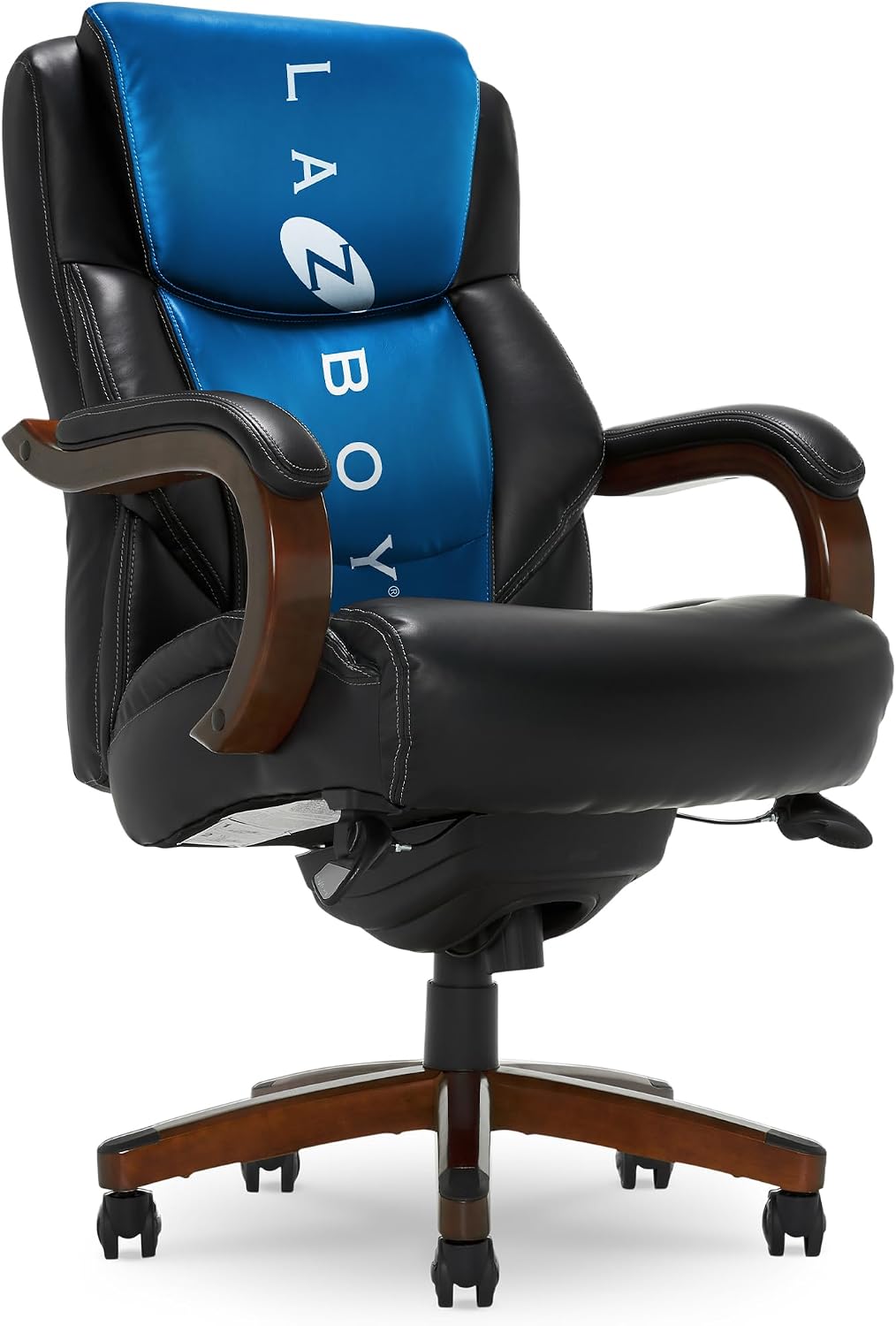
La-Z-Boy Big and Tall Executive Office Chair Lumbar Support, Leather Chair
The deep end of the range, built for the body types most office chairs ignore, with leather and lumbar support
Too much chair for anyone under about 5'8", and the depth pushes short users forward
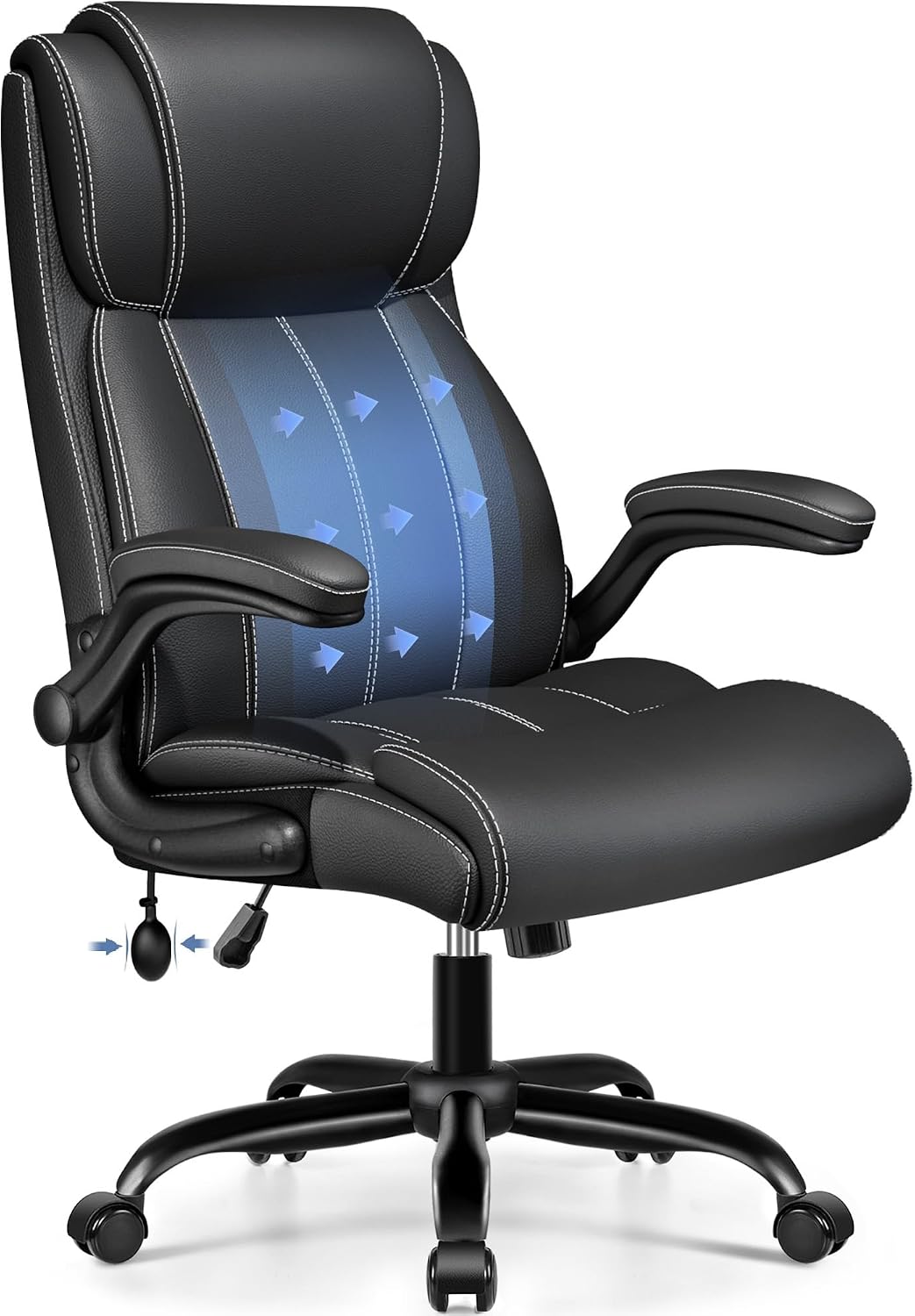
BESTFAIR Ergonomic Office Chair, Desk Chair with Adjustable Lumbar Support
Adjustable lumbar support makes it the one chair here that can be re-tuned when a second person sits down
Not a short seat chair and not a big and tall chair, so the middle of the range is the whole story
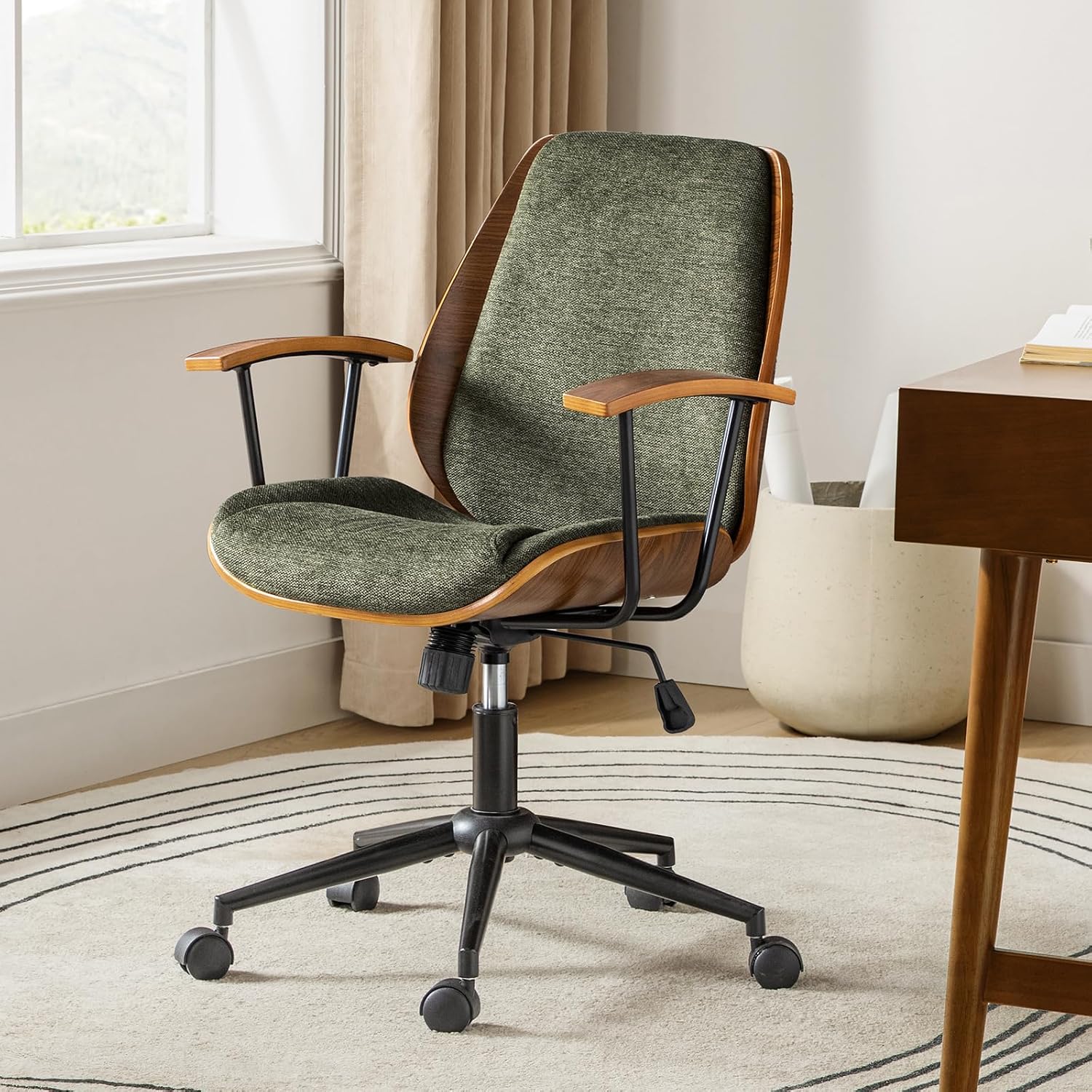
HULALA HOME Solid Wood Office Chair with Tilt Function & Metal Base, Green
Tilt function and a metal base under a solid wood frame, the best looking chair here on a video call
Sizing is not its pitch, so it will not solve a seat depth problem for you
Prices and availability may change.
How to measure your own seat depth before you buy
Sit on a hard kitchen chair, feet flat on the floor, back against the backrest. Run a tape from the point where your buttock meets the backrest to the back of your knee crease. Write that number down. Now subtract two to three inches, which is the two-finger gap you want between the front edge of any chair and the back of your knee. The result is your target seat depth.
Rules of thumb I use, and they are rules of thumb, not gospel: most people under about 5'4" land in the 16 to 17 inch range, most people between 5'4" and 5'10" land around 17 to 19 inches, and most people over 6 feet want 19 inches or more. If you are tall but short legged, trust the tape over your height. Leg length, not height, is what a seat has to fit.
The second number is seat height. Sit with your feet flat and your thighs roughly parallel to the floor. Your seat height should put your knees level with your hips, maybe a hair lower. If a chair's seat height range starts above that number, the chair is wrong for you no matter how good the lumbar support is, because you will spend the day with your feet dangling or your knees above your hips.
I am not going to quote a spec sheet seat depth for any of these four chairs. Spec sheets round, they measure at the widest point, and they rarely say whether the number includes the backrest cushion. Measure your own body, read the listing for the chair you are considering, and if the listing never states a seat depth range, treat that silence as information.
The short seat vs deep seat office chair difference, in one page
The difference between short seat and deep seat office chair geometry is not comfort. It is where your weight lands. A deep seat spreads load across the full length of your thigh, which is why tall users call it supportive and short users call it a chair that shoves them forward. A short seat puts your weight on your sit bones and lets your back actually reach the backrest, which is why short users call it comfortable and tall users call it a bench.
This is the deep seat office chair vs short seat argument in one sentence: a deep seat holds you up, a short seat lets you sit back.
The consequences show up in places people do not expect. A deep seat chair has a bigger footprint and often will not tuck far enough under a shallow desk, which changes your monitor distance whether you meant it to or not. A short seat chair gives you less thigh support, so on a ten hour day you may want a footrest to keep pressure off the sit bones. Neither is better in the abstract. One of them is better for your leg length.
If you have ever asked whether you need a short seat or deep seat office chair, the answer is already in the knee crease measurement you took two minutes ago. Under 17 inches, shop the short end. Over 19 inches, shop the deep end. In between, you have room to choose on other features.
The short seat pick: Fizzin PU Leather Office Chair
The Fizzin PU Leather Office Chair is the only chair in this comparison whose listing says out loud who it is for: shorter users. It pairs that positioning with ergonomic lumbar support and a PU leather cover, which is the practical choice if you want a chair you can wipe down instead of vacuum.
Who it fits: if you are under about 5'4", or you are taller with a short thigh measurement, this is the chair that lets your back touch the backrest without leaving a gap behind your knees. If you have spent years sitting in a deep executive chair with a rolled towel behind your lower back to fake the fit, this chair removes the need for the towel.
Who should skip it: if you are over about 5'10", the seat will be too short for your thighs and you will feel the front edge well before the end of the workday. If you are over roughly 250 pounds, look at the big and tall end of this list instead, because a short seat concentrates load on a smaller area.
Check current Amazon price on the listing, and confirm the seat height range clears your own lower leg measurement before you commit.
The deep seat pick: La-Z-Boy Big and Tall Executive Office Chair
La-Z-Boy names this one Big and Tall, and it is the deep end of this comparison. Leather, lumbar support, and the executive chair shape that this brand has been building recliner style hardware into for decades. If you are 6 feet or taller, or you carry most of your weight in your torso, this is the chair in this set that will not feel like furniture built for somebody else.
Who it fits: roughly 6 feet and up, or 250 pounds and up. The deep seat spreads your weight across the thigh, which matters on a long day. If your current chair leaves red marks across the top of your thighs from the seat edges, that is a depth problem, and this is the fix for it.
Who should skip it: if you are under about 5'8", the depth will push you forward until you are sitting on the front third of the seat with your back off the backrest. That is worse than a chair that is slightly too shallow. Also measure your desk before you buy, because a deep seat needs more floor space to slide in and out, and a keyboard tray makes that harder.
Check current Amazon price, and check the weight rating on the listing against your own weight with some headroom.
The adjustable middle: BESTFAIR Ergonomic Office Chair
The BESTFAIR Ergonomic Office Chair is the shared desk answer. Its listing names adjustable lumbar support, and that is the feature that lets a chair be re-tuned when a second person sits down. Be honest about what it does and does not do: adjustable lumbar support moves where the support lands on your back, it does not change seat depth. If your problem is depth, no amount of lumbar adjustment will save you.
What it does well is cover the middle of the range without asking you to guess. For a household where one person is 5'6" and another is 5'9", that adjustability is worth more than any single fixed feature, because both users can get the lumbar support in the right spot instead of one person living with it in the wrong one.
Who it fits: medium frames, roughly 5'4" to 5'10", and anyone who shares a desk.
Who should skip it: if you are at either extreme of the height range, or if you already know your knee crease measurement is under 17 inches or over 19 inches. In that case the adjustability is solving a problem you do not have.
The style pick with tilt: HULALA HOME Solid Wood Office Chair
Green, solid wood, metal base, tilt function. This is the chair you buy when the chair is on camera, and that is a legitimate reason in a room where clients see your background twice a week. The tilt function matters more than people expect: a chair that lets the seat and back move together keeps your hip angle open through the afternoon, which is the difference between sitting up at 4 p.m. and sliding down.
Solid wood and a metal base also solve a durability question that mesh and plastic frames sometimes do not, at least in appearance. This is a chair that looks like furniture rather than equipment, and in a small apartment that counts.
Who it fits: medium frames, video call rooms, and anyone who wants a chair that does not look like a call center.
Who should skip it: anyone buying a chair specifically to solve a seat depth problem. This one is not positioned as a sizing solution, and no tilt function fixes a seat that is two inches too deep for your legs.
Trade-offs: what you give up at each end
Deep seat chairs gain weight distribution, recline comfort, and support for long torsos. They lose knee clearance, floor space, and any chance of fitting a short user well. The deeper the seat, the more you need to check that the chair still slides under your desk with the armrest clearing the drawer front.
Short seat chairs gain back contact, knee clearance, and a smaller footprint. They lose thigh support, which shows up as sit bone pressure on very long days, and they can feel cramped to a tall user within an hour.
The middle of the range gains flexibility and loses certainty. A chair designed around one body type does that one job better than a chair designed to cover everyone.
Three features are worth checking on any of these four before you buy. Armrest height should put your elbows at desk height with your shoulders relaxed, not shrugged. A headrest only earns its space if you recline past about 110 degrees, otherwise it is decoration behind your neck. And the caster type matters: hard casters for carpet, soft casters for hardwood, or you will be replacing a floor finish instead of a chair.
Setup notes: the order that keeps a chair tight
Cast the wheels into the base first and press until each one clicks. Seat plate onto the gas lift, lift into the base, then the seat, then the armrest, then the backrest last. Tighten everything at the end rather than as you go, because a chair assembled in the wrong order develops a wobble you cannot find later.
Then set the tilt tension. The knob under the seat controls how hard the chair pushes back when you lean. Set it so the chair holds your weight without fighting you, and re-set it any time a different person uses the desk. That one knob is the difference between a chair that supports you and a chair you are actively pushing against all day.
Who should skip each chair
- Fizzin PU Leather Office Chair: skip it if you are over about 5'10" or over roughly 250 pounds.
- La-Z-Boy Big and Tall Executive Office Chair: skip it if you are under about 5'8", or if your desk is shallow enough that the chair cannot slide in with you in it.
- BESTFAIR Ergonomic Office Chair: skip it if you are at either extreme of the height range, or if your real problem is seat depth rather than where the lumbar support lands.
- HULALA HOME Solid Wood Office Chair: skip it if you need the chair to solve a sizing problem, because that is not what it is for.
FAQ
Is a deep seat always better for tall people?
No. A deep seat is better for long thighs. If you are 6'2" with short legs, a deep seat will still push you forward, and the tape measurement beats your height every time.
Can a cushion fix a seat that is too deep?
A lumbar cushion changes your back angle, not the distance from your hips to the front edge of the seat. It can help you tolerate a deep chair for an hour. It will not fix the fit. A footrest is usually the better accessory, because it lifts your knees and reduces the pull on your lower back.
Does seat depth change what seat height I need?
No, they are separate measurements, but they interact. A deep seat with a low front edge can cut into your calves, and a short seat with a high front edge can leave your feet unsupported. Measure both, then set the chair so your feet are flat.
How do I know my current chair is too deep?
Sit all the way back with your feet flat. Slide your hand behind your knee. If more than three fingers fit between the seat edge and the back of your knee, the chair is too deep. If your knee is pressed against the seat edge, it is too short.
The bottom line
The short seat vs deep seat office chair decision is a measurement, not a preference, and it takes about four minutes with a tape. Under 17 inches of knee crease, buy the Fizzin and stop fighting chairs built for longer legs. Over 19 inches, buy the La-Z-Boy Big and Tall and stop pretending a cushion fixes a seat that is too small for you. In the middle, buy the BESTFAIR and set the lumbar support once for each person who uses the desk. And if the chair is going to be on camera more than it is going to be measured, the HULALA HOME wood chair is the one people will ask about.
None of those four is the best chair. One of them is the right chair for your leg length, and that is the only ranking that survives a full workday.