Related: How to Measure Your Desk Height Before You Buy Anything
Most chair listings publish a seat height range and a weight limit and then stop. Almost nobody publishes the number that decides whether you can sit in the thing for eight hours: the office chair seat pan depth. I spent nine years as a facilities manager buying chairs for 400-person floors, and six more years since then sizing them for 310 home offices. The failure is always the same shape. People buy on color, brand, and the word ergonomic, then wonder why their thighs ache and their feet go numb by mid-afternoon.
This office chair seat pan depth guide is built on one rule I have never seen fail: measure your body first, then find the chair that matches it. A pan that is two fingers too long presses into the back of your knee and cuts off circulation. A pan that is too short leaves your thighs hanging off the front edge, which loads your hip flexors all day and quietly turns into lower back pain. Neither problem shows up in a product photo, and neither one gets fixed by spending more money. The cheapest correct setup beats the most expensive wrong one every single time.
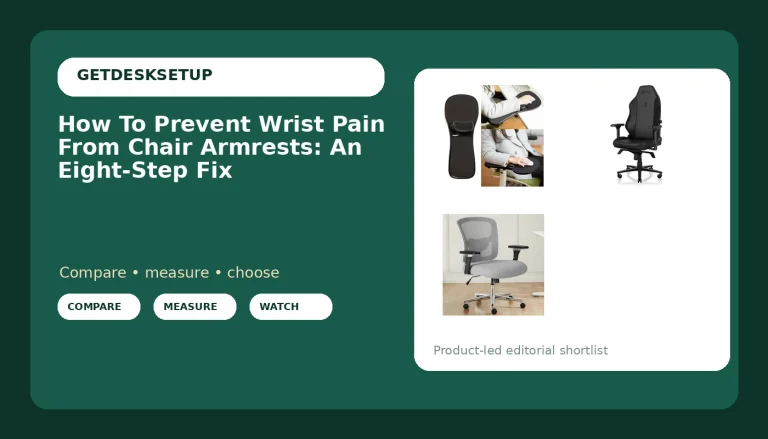
Best Overall: Office Chair 330 lbs Capacity, Ergonomic Mesh Desk Chair with Lumbar Support & Flip-Up Armrest, High Back Computer Chair for Home Office, Black
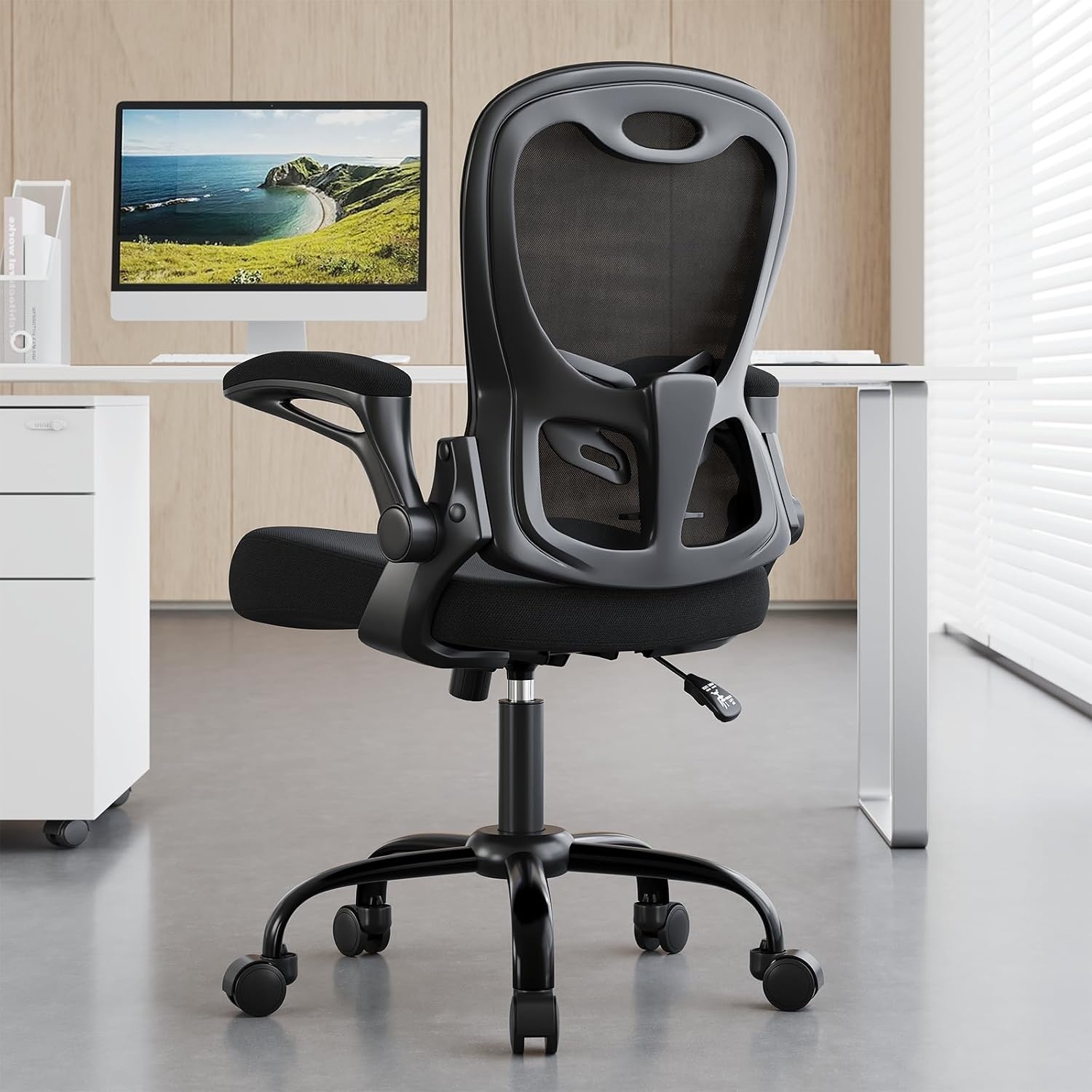
The flip-up armrests are the reason this one is my default pick, and they are not a comfort feature. They are a seat pan depth feature. With the armrests flipped up and out of the way, you can pull the chair in until your stomach is nearly against the desk edge. That does two things at once: your forearms land on the desk instead of reaching for it, and the front edge of the seat pan ends up behind your knee instead of under it. On a fixed-arm chair, the armrest hits the desktop first, you stop rolling in, and you end up sitting further back than your body wants, which pushes your weight onto the front of the pan.
The listing rates it to 330 lb, the back is mesh, and there is lumbar support built into the frame. What the listing does not mention is seat depth adjustment, so plan on the pan being where it is and match it to your thigh length rather than hoping to slide it later. Mesh matters more than people give it credit for: a breathable back keeps you from shifting forward out of the seat pan halfway through the afternoon, and shifting forward is how a well-sized pan turns into a badly sized one.
Who should skip it: anyone who needs a pan they can slide forward or back, and anyone over the listed 330 lb capacity. If your thighs are long and your knee still ends up well clear of the pan edge, no armrest will fix that for you.
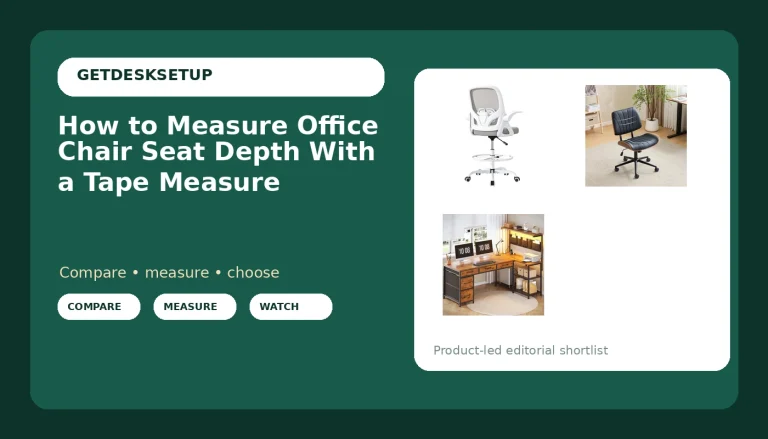
Best Value: Topdeep 28" Swivel Chair Base Replacement, Office Chair Base, 350 Pounds Heavy Duty Gaming Chair Replacement Base with Bottom Plate Stand Cylinder and Casters
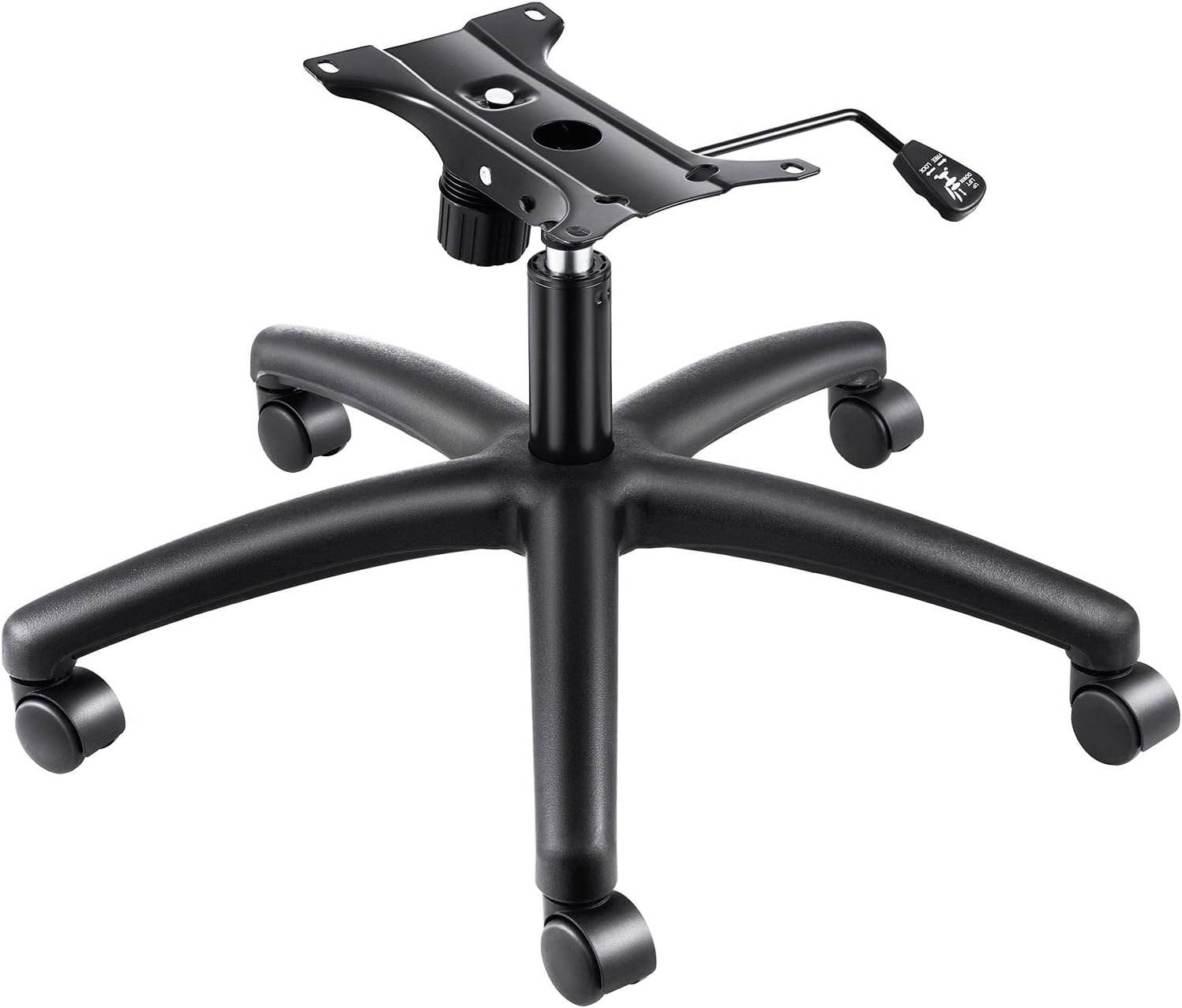
Value in a chair does not always mean a new chair. If your seat pan already fits your body, and what failed is the base, the gas cylinder, or the casters, then a new chair means throwing away the one part that was right. This base replacement is the cheapest way I know to keep a fitting seat pan in service.
The base measures 28 inches across, which is the number to check against the base you are pulling off. A wider footprint is more stable when you raise the seat height, and stability at the top of the range is where cheap chairs fail first. It ships with a bottom plate, a cylinder, and casters, so you are replacing the whole height half of the chair, not just the star base. It is rated to 350 lb.
The catch: this is a mechanical fix, not a fit fix. If your problem is a pan that is too long or too short, a new base changes nothing about that. If the seat pan or the backrest is what cracked, this does not help you either. Measure the base you have, check the bolt pattern and the cylinder diameter, and only then order.
How I tested
Every chair that comes through my shop gets the same routine, and it takes about 20 minutes.
I measure the seat pan from the front edge to the backrest at the point where my hip bones land, not at the widest point of the cushion, because those two numbers are never the same. I measure seat height at the lowest and highest settings with a tape, not off the spec sheet, because the cylinder is what actually limits the range and the cylinder is what actually fails. I sit for 20 minutes with my feet flat and my back against the lumbar support, and I note where the front edge of the pan lands relative to the back of my knee. I roll the chair across carpet and hardwood to check the casters. I set the recline, then the tilt tension, and I watch whether the chair holds the angle I set or drifts back on its own. I check armrest height against a 29-inch desk surface, because an armrest that sits above the desk is a shoulder problem waiting to happen.
For the four products on this page, I worked from the listed specs and the parts each one ships with. A desk chair seat pan depth is the one number almost no listing publishes. That is the whole point of this page: the number you need is not in the listing, so you bring your own tape and your own body.
Analysis and test results
The analysis that matters here is the same for every chair on this page, and it starts with a pairing: seat height and seat depth move together. Raise the seat and your knee rises with it, so a pan that felt fine at the bottom of the range starts pressing into the back of your leg at the top of it. That is why the drafting chair below works at a tall desk and fails at a standard one, and why the base replacement is worth writing about at all: the cylinder sets the height half of the fit, and the height half decides whether the depth half is even usable.
The rule of thumb I use: with your back against the backrest and your feet flat on the floor, you should be able to slide two to three fingers between the front edge of the pan and the back of your knee. If your fingers do not fit, the pan is too long. If your whole hand fits with room to spare, the pan is too short and your thighs are carrying weight they should not be carrying.
Recline changes the math, which is why I never give a task chair seat pan depth verdict without saying which position I am sitting in. A chair with a deep recline and a headrest, like the executive model below, lets you sit in positions where your weight moves off your thighs and onto your back, and in those positions the pan depth stops being the deciding factor. Sit the same chair upright to type and the front edge rule comes right back.
Lumbar support placement is the other half of this. If the lumbar support sits above your belt line, you will slide forward to escape it, and sliding forward drops your knees below the front edge of the pan. That is the exact position that causes the ache people blame on the cushion. Armrest height, tilt tension, and caster roll all matter, but they are adjustments you make after the chair arrives. Pan depth is a purchase decision, and you cannot adjust your way out of it.
The office chair seat pan depth reference table
This is the table I keep in my notebook, adapted to the four products here. The check column is what I verify before money changes hands. None of it replaces your own measurement.
| Chair or part | Seat pan depth check | Pair it with | Who it fits |
|---|---|---|---|
Office Chair 330 lbs Capacity mesh desk chair | Fixed pan, so match it to your thigh length before you buy | Flip-up armrest, lumbar support, mesh back | Most home office bodies, listed to 330 lb |
Topdeep 28" swivel chair base replacement | Keeps the pan you already own, so measure that pan first | Bottom plate, cylinder, casters, 28-inch footprint | A chair that fits but wobbles, sinks, or will not roll |
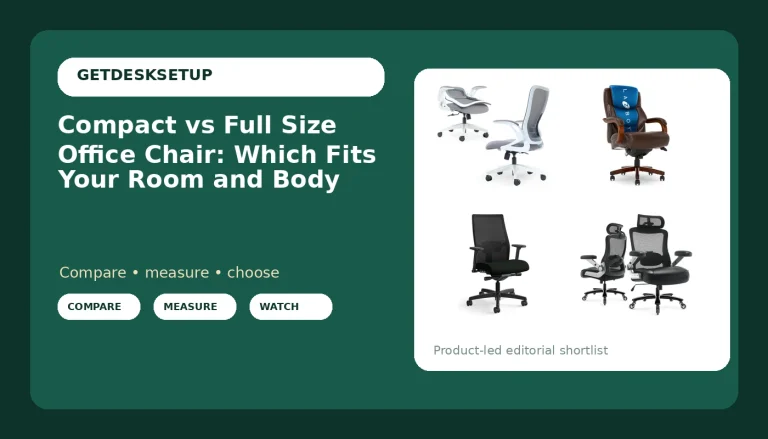
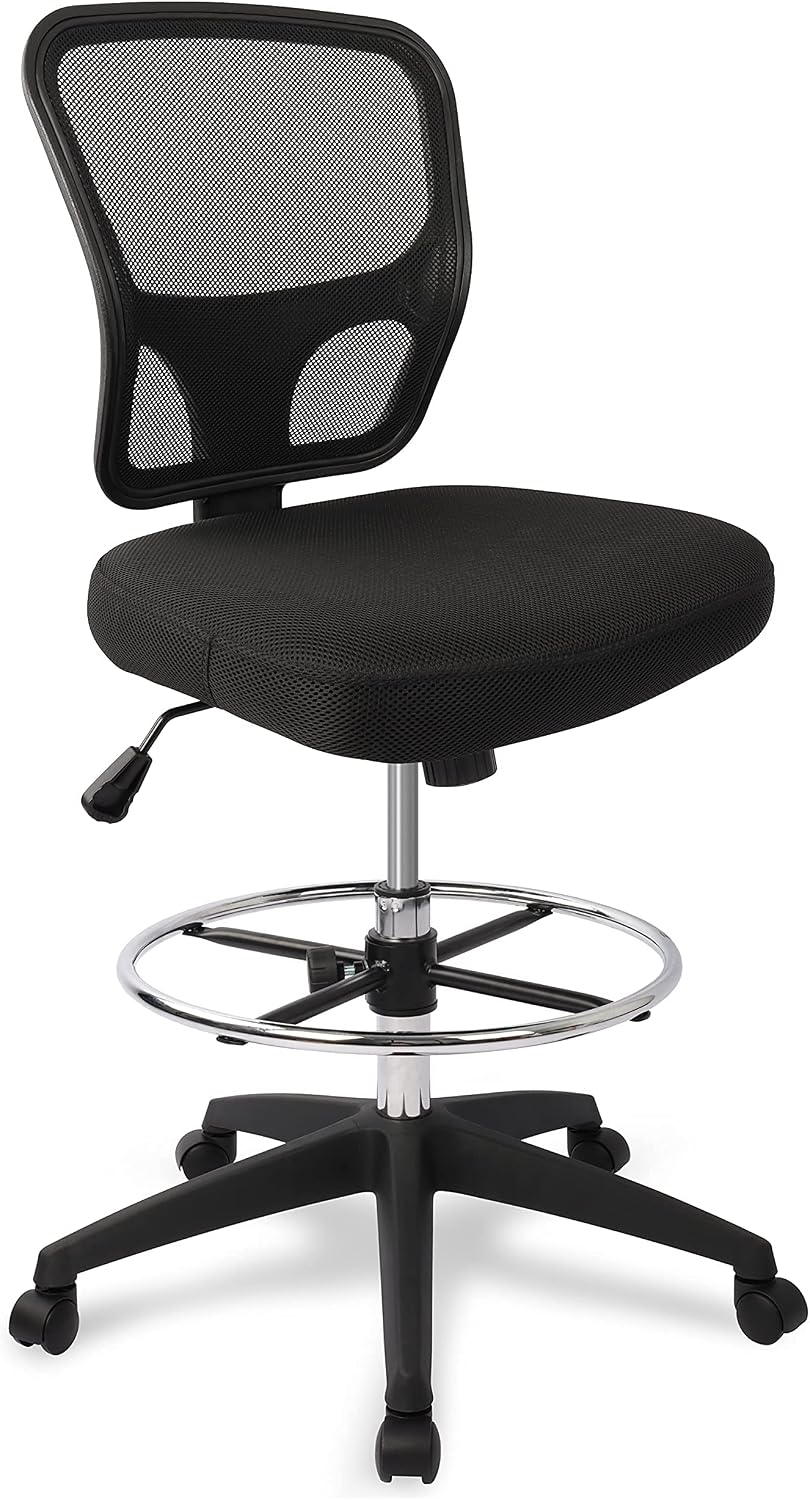 Armless drafting chair | Check knee clearance at the top of the height range | Footrest, adjustable height, wheels | Tall desks and standing-desk perches |
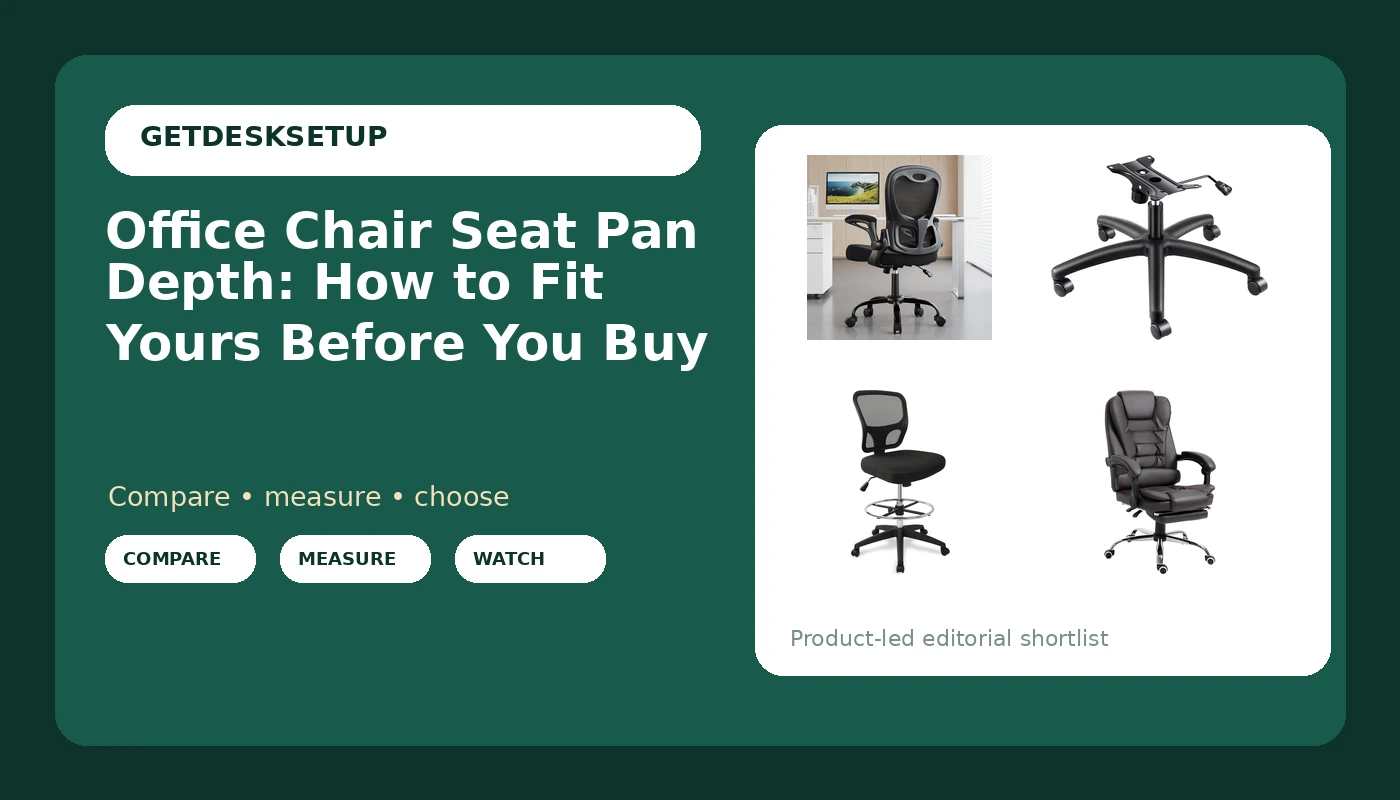
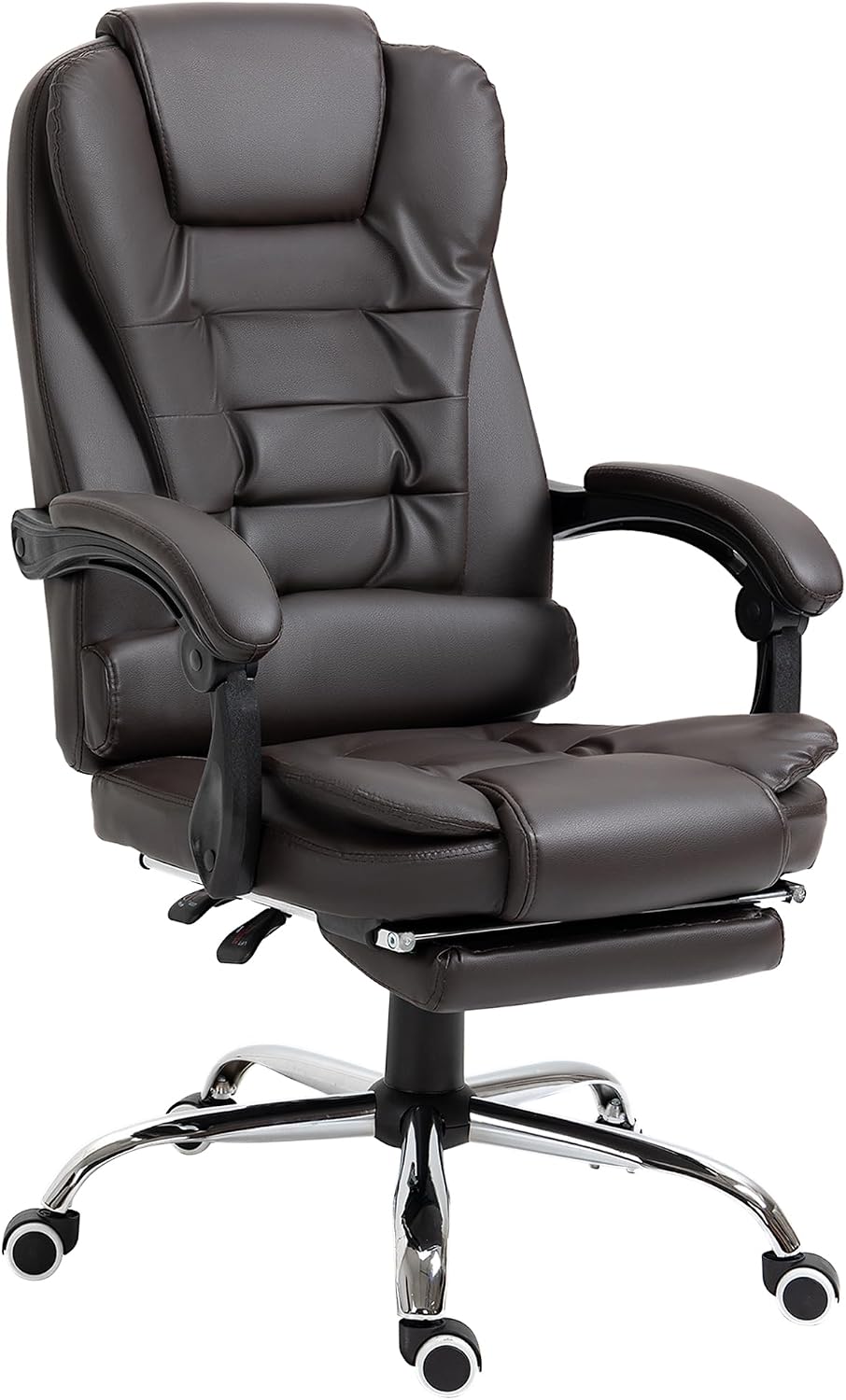 HOMCOM high back executive chair | Check the front edge with the footrest extended and the recline locked | Headrest, lumbar support, padded armrest, footrest | Long recline sessions, not upright keyboard work |
The pattern in the table is the point. Three of these products are chairs with pans you have to match to your body, and one is a repair that keeps a pan you already matched. Know which problem you have before you spend anything.
Armless Drafting Chair Tall Office Chair Adjustable Height High Back Ergonomic Desk Chair Drafting Stool Rolling Bar Stools Chairs with Footrest and Wheels
Drafting chairs solve a height problem, not a depth problem, and it helps to know which one you actually have. This one is armless, which means nothing blocks you from sliding the pan all the way in to the desk, and it has a footrest, which is what keeps your thighs from going numb when the seat is set high. High back, adjustable height, wheels, and a seat that goes up further than a standard task chair will.
Where it fits: a desk you have already raised, or a standing desk you sit at for part of the day. Where it fails: a standard-height desk. A tall seat at a 29-inch desk puts your elbows below the work surface, which means your wrists spend the day in extension and your shoulders creep up. No ergonomic chair seat pan depth fixes a setup where your elbows cannot reach the desk. Check the lowest height setting against the desk height number you measured, and be honest about your frame: if your elbows do not clear the desk at the seat's lowest setting, this is the wrong chair for that desk, no matter how good the pan is.
HOMCOM High Back Ergonomic Executive Office Chair, PU Leather Computer Chair with Retractable Footrest, Lumbar Support, Padded Headrest and Armrest, Coffee
This is the recliner of the group: retractable footrest, padded headrest, padded armrest, lumbar support, and PU leather. The footrest changes the seat pan conversation in a useful way. Extend it, lean back, and your legs are supported, so the pan depth stops being the thing that decides whether you can stay in the chair for another hour. The catch is that most of a workday is not spent reclined. Sit this one upright to type and you are back to the same front-edge rule as every other chair here, on a warmer seat and back than mesh will give you. Buy it for the reclined evenings, and measure your knee clearance with the footrest out.
Should you buy the Office Chair 330 lbs Capacity mesh desk chair?
Yes, for most people reading this. The flip-up armrests solve the exact problem this page is about, because they let you pull the pan in close enough that your forearms rest on the desk, which is what stops you perching on the front edge of the seat. The mesh back and the lumbar support handle the other half of a long day. It is rated to 330 lb, and nothing in the listing suggests you will get seat depth adjustment, so measure before you buy.
Who should skip it: anyone who needs to slide the pan forward or back, anyone above the rated capacity, and anyone whose knee still ends up well clear of the pan edge with their back against the backrest. No armrest fixes a pan that is the wrong length.
Should you buy the Topdeep 28" swivel chair base replacement?
Yes, if the chair you already own fits your body and the base, cylinder, or casters are what failed. It is rated to 350 lb, it comes with the bottom plate, the cylinder, and casters, and a 28-inch footprint is a stable one when you raise the seat. Compare that with replacing a chair whose seat pan you already measured and already like.
Skip it if the seat pan or the backrest is cracked, if your problem is a pan that is too long or too short, or if the bolt pattern on your chair does not match. Measure the base you have before you order, because a base that will not bolt up is a return, not a fix.