Related: Desk Height and Chair Height: Setting Both From Your Own Measurements
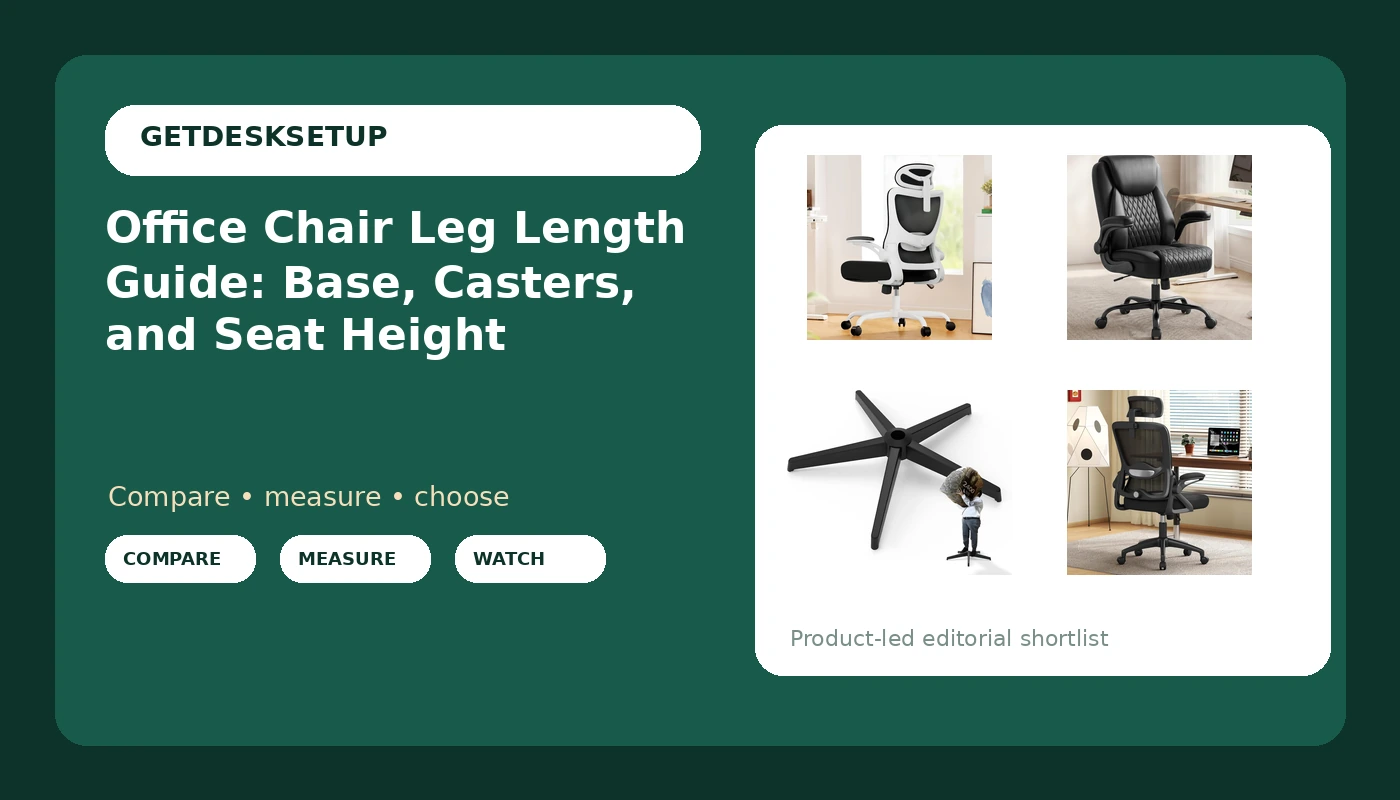
The office chair leg length is the number almost nobody writes down, and it is the number that decides whether your feet reach the floor. I have measured seat heights in 310 home offices, and when someone tells me their chair feels wrong, the legs are usually the reason: a base that sits too tall, a caster that adds height nobody counted, or a gas cylinder that never drops far enough for a shorter frame. This office chair leg length guide is the tape-measure version. No brand worship, no guessing from a spec sheet. What the legs control, how to measure yours, and which of the four chairs and bases I would hand a client.
Here is the part most buyers miss. The legs on a task chair are three parts stacked: the five-star base, the gas cylinder, and the casters. Change one and the seat height changes with it. That is why two chairs with identical backrests can fit two very different people. Get the legs right and the rest of the chair starts to work: seat depth, lumbar support, armrest height, all of it. Get them wrong and you spend the year with your feet on a box and your wrists angled up at the keyboard.
Best Overall: Marsail Ergonomic Office Chair
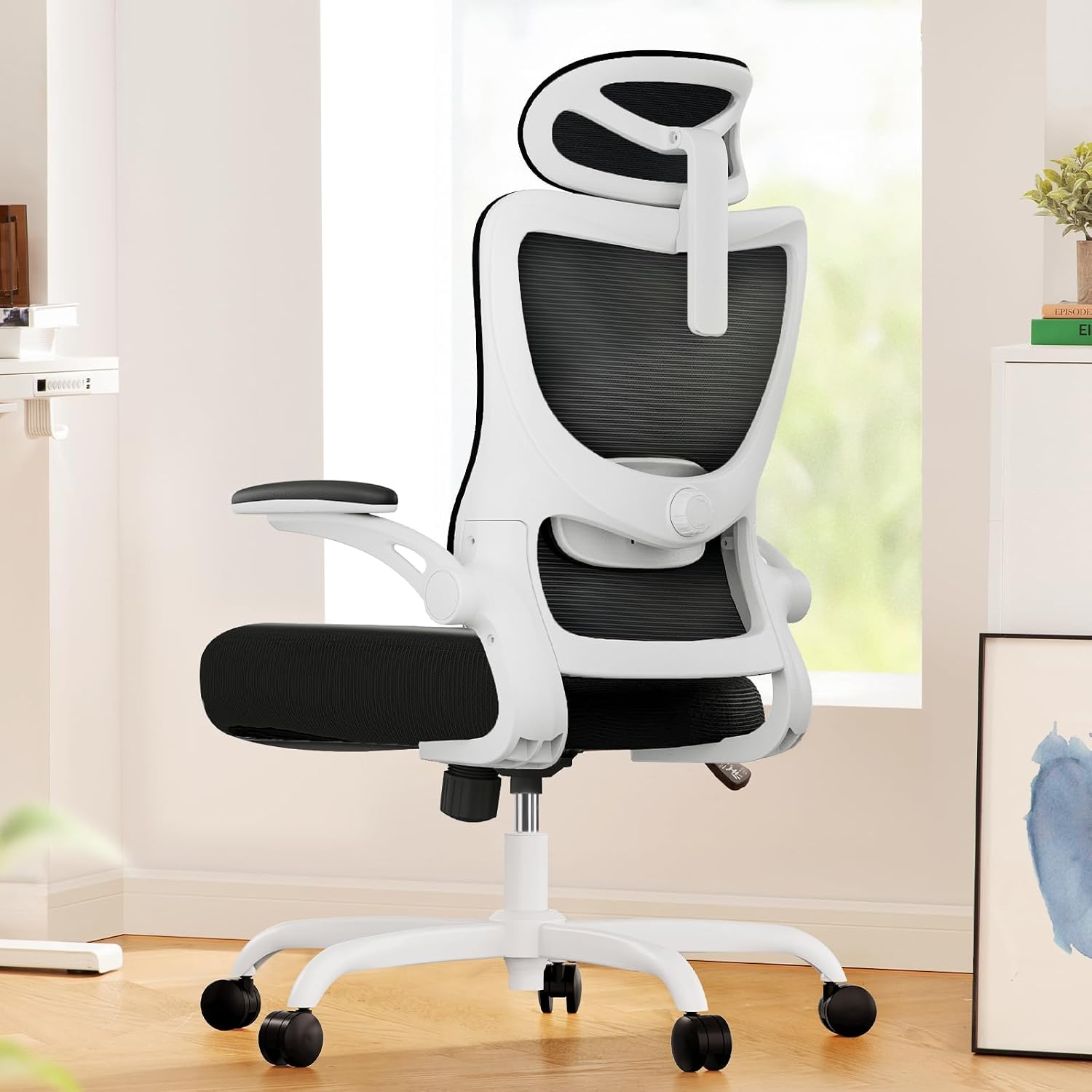
If I only get one thing across in this office chair leg length guide, it is that the legs and the backrest have to adjust to the person, not the other way around. The Marsail Ergonomic Office Chair is the chair I put in front of most clients. The high back mesh keeps air moving across your back, which matters in a small room with the door closed and a monitor running warm. The lumbar support adjusts up and down instead of being a molded bump you either match or do not, and that single detail is the difference between a chair that is called ergonomic and a chair that behaves like it. The 3D armrests move enough directions that you can get your elbows under your shoulders instead of out in front of them.
The legs are the standard stack: a five-star base, a gas cylinder, and casters on a swivel. That matters more than it sounds. Casters and cylinders are the parts that wear first, and the chair that survives a decade is the one whose legs you can service instead of the one with the prettiest shell.
The headrest is the part to check in person if you can. It helps when it lands at the base of your skull. If it hits your shoulders instead, it pushes your chin forward and you will hate it within a week. That is a body-fit question, not a quality question, and it is the same reason I tell people to measure before they buy any chair with a fixed back. If you plan to lean back, check whether the tilt tension is adjustable, because a recline that drops you backward with no resistance is worse than a locked back.
Best Value: COMHOMA Mid-Back Office Chair
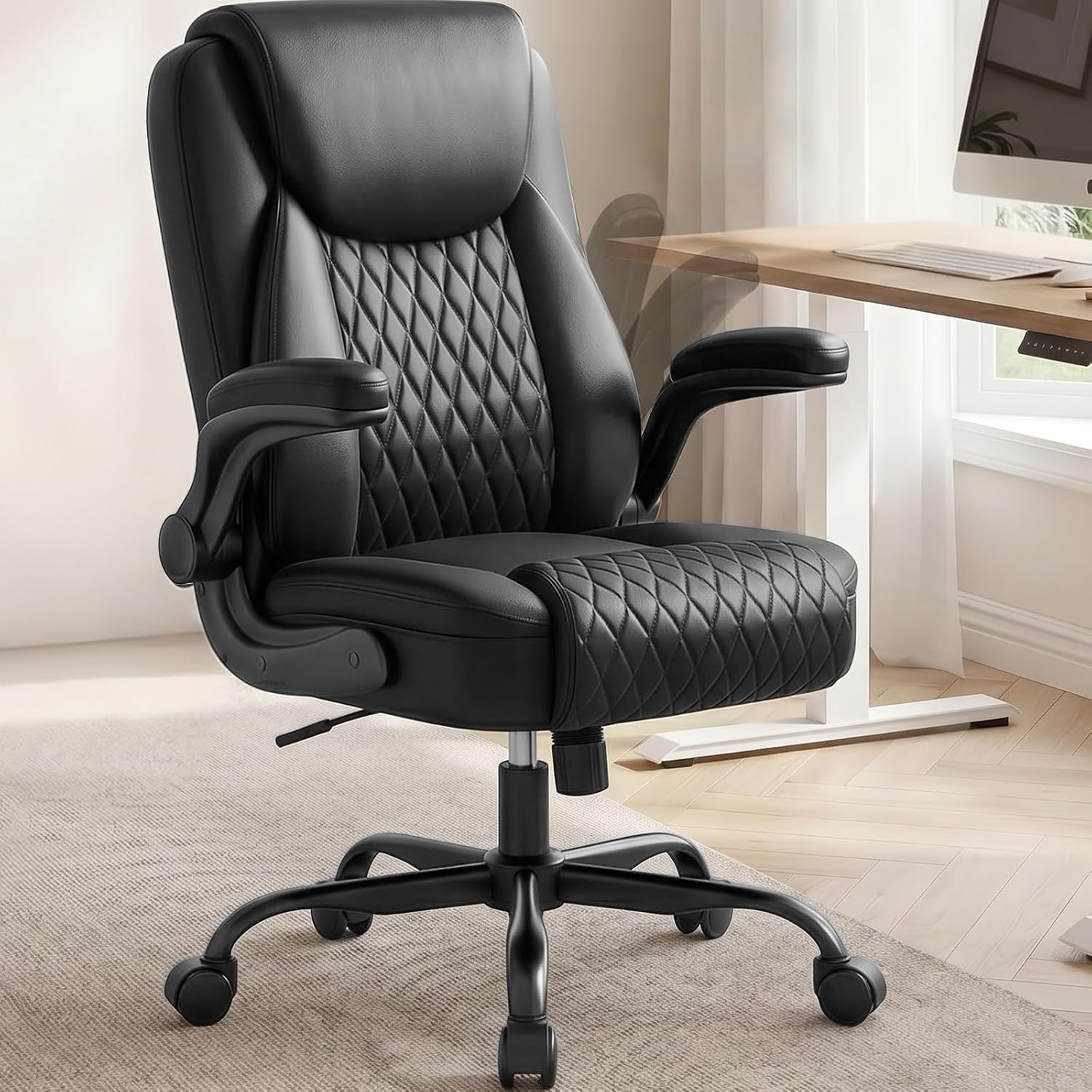
The COMHOMA Mid-Back is the chair I hand people who work at a desk too small for a full-size task chair. The flip up arms are the reason. Fold them down and the chair slides under a desk with a shallow apron, which is how you keep a small room usable. Fold them up and you have somewhere to put your elbows through a long afternoon. The rocking function gives you movement without a full recline, and movement is what keeps your hips from locking into one position.
The sturdy metal base is the part that matters for leg length. A metal base holds its shape under load. The plastic bases are the ones that flex and eventually crack at the leg, usually right where the cylinder socket meets the star. If you are heavier than average, check the base material before you check the mesh or the color.
Mid-back means no headrest. If you recline hard and want your neck supported, this is the chair to skip, and the high back option above is the one to look at instead. The lumbar support here is a fixed curve rather than an adjustable pad, so it either lands in the right spot on your back or it does not. Sit in it if you can, or compare that curve against your own lower back before you order.
Two practical notes. The PU cover wipes down easily, which matters if you eat at the desk, and it runs warmer against your back in July than mesh does. The casters are standard, so if you change floors later you swap casters rather than the whole chair.
How I tested
I measure desk chair leg length the same way every time, because a number taken wrong is worse than no number at all. Barefoot, then in shoes. Tape hooked on the floor, seat dropped to the lowest setting the cylinder will give me, then raised again to the top of the range. Base diameter across the widest pair of legs. Caster wheel diameter, because that is height you cannot see in a product photo. Then the chair goes on a hard floor and on carpet, and I sit and lean to one side to see whether the base lifts or the chair tips.
The top of the range is the test that matters most. A chair can feel fine in the middle of its height range and turn into a wobble at the setting a tall user actually needs. So every chair goes to its highest usable seat height, and I push back from there. That is where the leg stack either holds or gives.
After the tape, I check the parts that fail first: the casters, the cylinder, and the base. Does the cylinder hold height under load, or does it sink over an afternoon? Do the casters roll on carpet, or do they just sink into it? Does the base flex when you lean? A chair that fails any of those fails regardless of how good the lumbar support is. Those notes go in the notebook, and they are the notes I hand a client before anything gets ordered.
Analysis and test results
Three measurements decide whether a chair fits you, and only one of them is on the chair's spec sheet in a form you can trust. The first is your own popliteal height: sit down, put your shoes on, and measure from the floor to the crease behind your knee. That is the seat height you need. If a chair's lowest setting sits above that number, your feet dangle and your thighs take the pressure. If its highest setting sits below it, you are climbing out of a bucket all day.
The cylinder sets the range. The casters are the fine adjustment, and they are the part people forget. A bigger caster wheel raises the seat, and the difference is small but real: it is the difference between your feet flat and your toes down. If you are comparing task chair leg length across two models, compare base diameter and caster size before you compare backrest height, because the backrest is the part you can live with.
Base diameter is stability. A wider base is harder to tip when you lean or swing sideways, which is why heavy duty bases run wide. The tradeoff is floor footprint: a wide base catches the edge of a chair mat and takes more room under a corner desk. If you use a mat, measure the mat before you buy a wide base. And if you roll between hard floor and carpet, remember that hard casters sink in carpet while soft casters drag on hardwood, so pick for the floor you actually have.
Recline and tilt tension come after all of that. A chair that fits your legs but has no resistance in the back is still a chair you will fight. If you lean back for reading or calls, test the recline at the tension you would use, not the tension it shipped with.
Here is who should skip what. If your feet dangle at the chair's lowest setting, skip it, no matter how good the lumbar support is. If you want neck support and the chair has no headrest, skip it. If you are heavier than average and the base is plastic, skip it. And if the seat depth is too long for your legs, skip it, because no amount of adjusting the armrest or the headrest will pull your knees back to where they belong. If you want the tape-measure method for that, I keep it in my seat depth notes.
The office chair leg length reference table
This is the table from the notebook, minus the columns that only matter to me. Every row is something I would put in a home office, and the last column is the leg question to ask before you order.
| Product | Leg stack | Best for | Leg-length note |
|---|---|---|---|
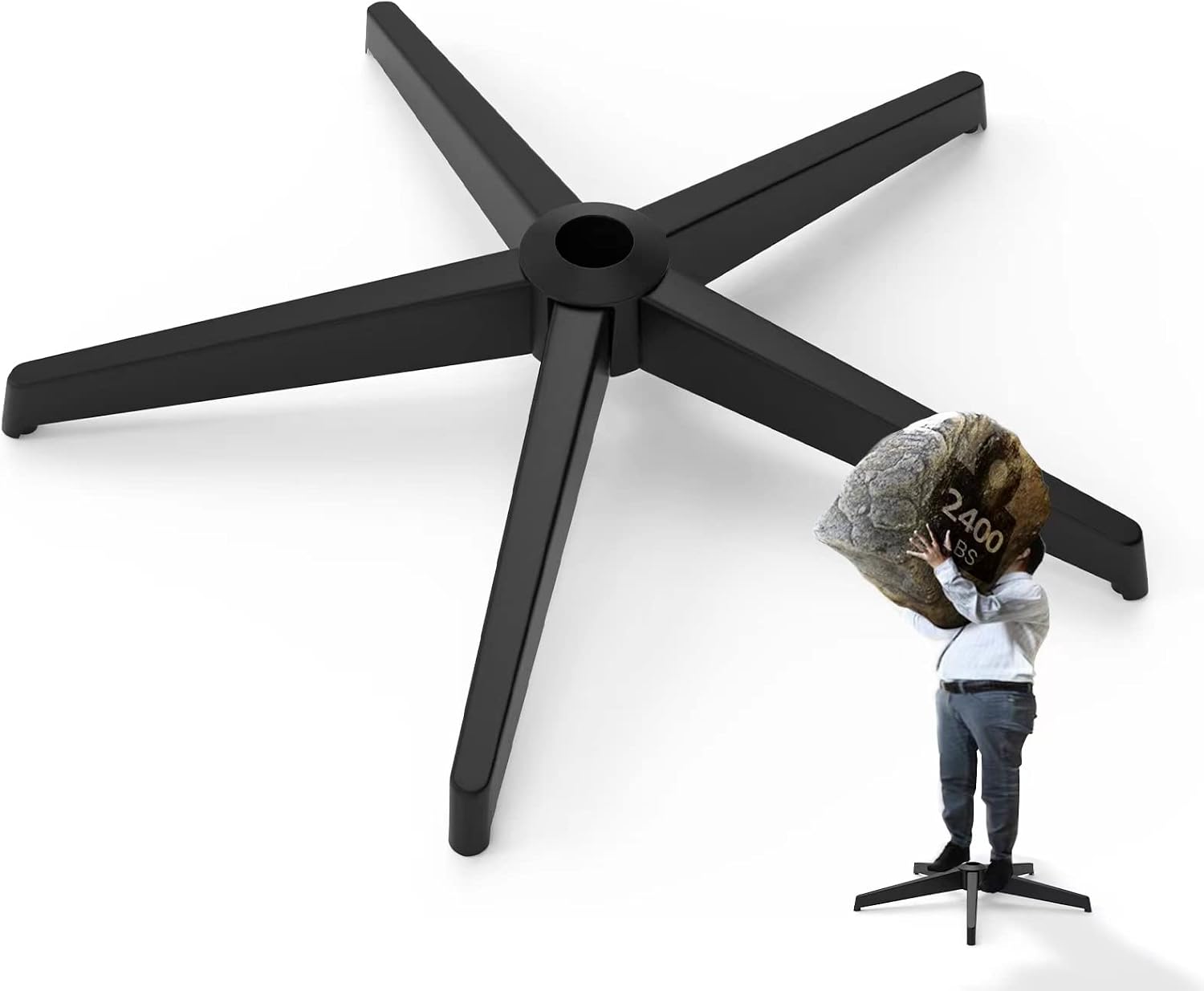 View on Amazon → Sytopia 28'' Heavy Duty Office Chair Base Replacement | 28 inch cross metal legs, 2400 lb rating, universal gas cylinder and caster sockets | Reviving a chair with a cracked or flexing base | Reuses your existing cylinder and casters, so your seat height stays where it was |
Marsail Ergonomic Office Chair | Five-star base, gas cylinder, casters, swivel | Most home offices, one chair for one person | The cylinder sets the range, so check the top of it, because that is where wobble shows up |
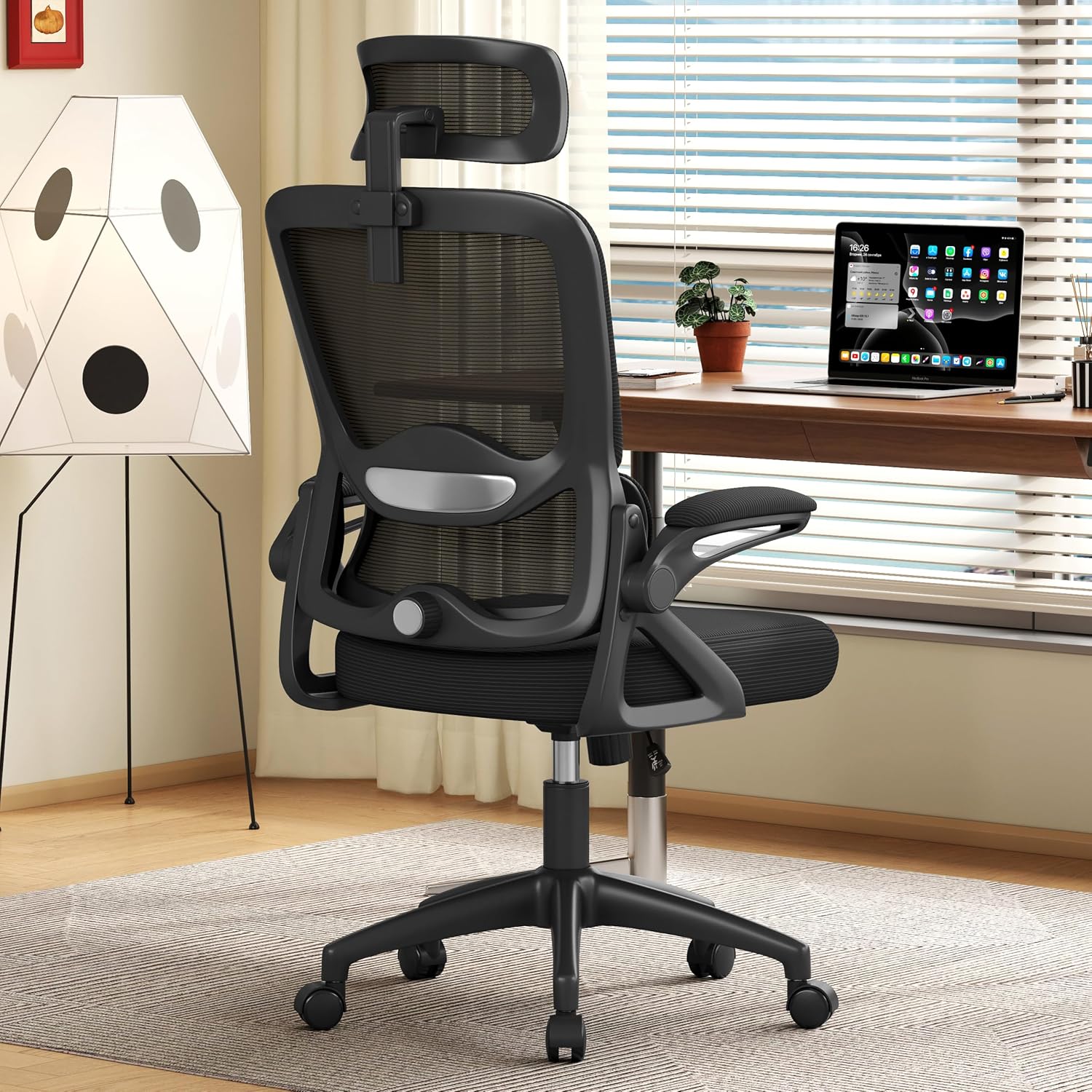 View on Amazon → 400 lbs Big and Tall Mesh Office Chair | High back frame rated to 400 lb, headrest, flip-up arms | Larger users who need more seat and a steadier base | Ask for the base diameter before you buy, because a wider base is what keeps a heavier user from tipping |
COMHOMA Mid-Back Office Chair | Metal base, rocking function, flip-up arms | Small desks and shared rooms | Flip-up arms let the chair tuck under, and the metal base is the part to check for flex |
The one thing the table cannot tell you is your own number. Take the popliteal measurement first, then read the rows.
When a base swap is the right fix
A base swap is for a chair whose seat and back are still good and whose legs are not. You know the symptoms: the chair tips when you stand up, the base flexes when you lean, or one leg has a hairline crack near the caster socket. The Sytopia base replacement is built for exactly that repair, with 28 inch cross metal legs, a 2400 lb rating, and universal gas cylinder and caster sockets in matte black.
The installer order matters. Flip the chair over, work the old base off the cylinder, seat the new base on the cylinder, then push the casters back into the sockets. Keep your original cylinder and casters and your seat height does not change at all, which is the whole point of swapping the base instead of the chair. Change the caster size in the same session and your seat height does change, so decide which one you are doing before you start.
If the cylinder is the part that is failing, a new base will not save you. And if the seat depth or the back is the problem, no base on the market fixes that.
Big and tall chairs and the leg stack
When the body gets bigger, the legs carry more, and that is where cheap chairs give up first. The 400 lb Big and Tall mesh chair in the table pairs a high back and a headrest with flip-up arms, and the parts to verify before you order are the ones you cannot see in a photo: the base material, the base diameter, and the caster size.
Ergonomic chair leg length is not a number you will find on the box, so ask for the base diameter and the seat height range in writing before you buy anything in this class. A plastic base on a heavy user is the first failure point, and it usually fails at the leg, not at the seat. And if the headrest lands on your shoulders instead of the base of your skull, skip this class of chair entirely and buy a high back without one.
Should you buy the Marsail Ergonomic Office Chair?
Yes, for most home offices. The adjustable lumbar support is the feature that earns it, because a pad you can move up and down fits more bodies than a molded curve ever will. The 3D armrests, the mesh back, and the headrest all do their jobs, and the leg stack is standard enough that the wear parts are the parts you can replace.
Skip it if you never recline, because you are paying for a headrest you will not use. Skip it if the headrest hits your shoulders rather than your neck. For everyone else, this is the chair I would order first and measure second, because the adjustments are wide enough to cover the small differences a tape measure turns up.
Should you buy the COMHOMA Mid-Back Office Chair?
Yes, if your desk is small and you want the chair to disappear when you are done. The flip up arms and the rocking function are the two reasons to buy it, and the metal base is the reason it holds up. It is the chair for a shared room, a rented apartment, or a desk tucked into a corner where a full-size task chair would fight the wall.
Skip it if you want neck support, because a mid-back has no headrest and no amount of adjusting changes that. Skip it if you need a lumbar pad you can move, since the curve here is fixed. If those two things do not matter to you, this is the cheapest correct setup in the group, and the cheapest correct setup beats the most expensive wrong one every time.