Related: The Desk Setup Checklist for a Home Office That Survives a Pregnancy
I have built out 310 home offices, and the calls that get urgent fastest come from clients who are pregnant. The chair that worked at eight weeks is not the chair that works at 32. Your center of gravity moves forward, the seat you used to sink into starts pushing your hips out of line, and the lumbar curve you ignored for a decade starts talking to you by mid-afternoon. This office chair guide for pregnant women is the phone version of that call: what to measure, what to adjust, and which of the four products on this page is worth your money.
I do not do "comfortable." Comfort is not a specification, and it is not something I can check for you. A chair either matches your seat height and seat depth or it does not, and pregnancy changes both numbers inside a few months. So I work from ranges instead. Your popliteal height is the floor-to-crease-behind-the-knee number that sets your seat height. Your femur length is the number that sets your seat depth, the distance from the front edge of the seat to the backrest. Add lumbar support you can adjust without tools and armrest that clear your desk apron, and you have a chair that still works in the third trimester. Where a listing will not publish those numbers, that is an answer too. I do not print prices here, because they move; every link goes to the live listing so you can check the current figure yourself.
Best Overall: Big and Tall Ergonomic Office Chair, Criss Cross Desk Chair with Pivot Arms
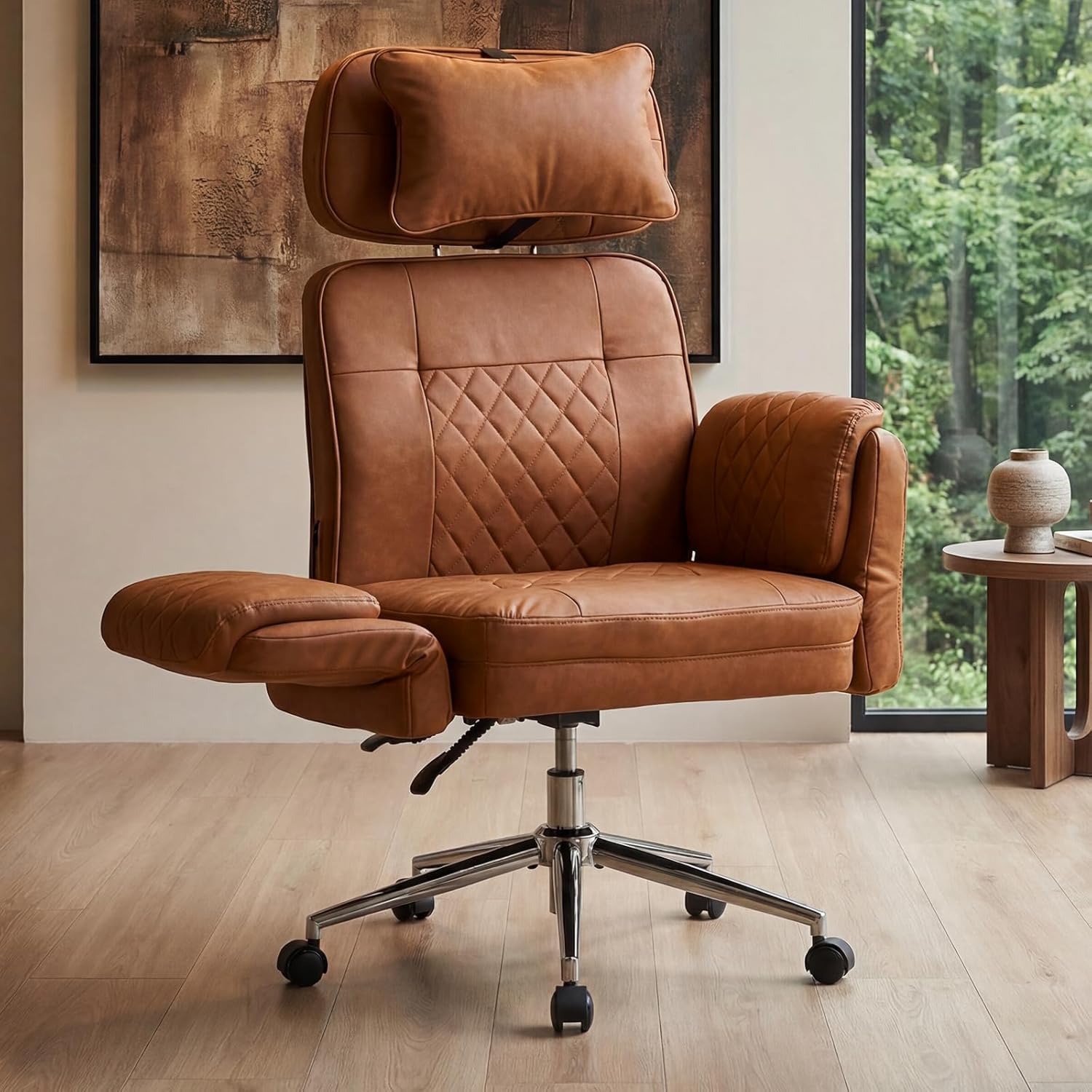
Big and tall is the sizing category that does the most work for a pregnant body, because it is built around a wider seat pan and a heavier frame rating rather than around a slim profile. That is the version of a chair you want when your hips need room and the last thing you can tolerate is a seat that pinches at the sides.
The pivot arms are the feature I care about most here. Armrest that swing out of the way mean you can pull the chair close to the desk for typing, then swing them aside when you stand up. In the third trimester, standing up is the whole game. A chair that forces you to twist or scoot forward to clear a fixed armrest is a chair you will start avoiding, and avoiding your chair means working from the couch, which means your lumbar support disappears for four hours.
The criss cross back design gives you a backrest that flexes with your spine instead of holding one fixed angle, and the frame is rated for a big and tall user, so there is headroom on weight capacity rather than a number you are creeping toward.
Two things to verify before you buy. First, the seat depth. Big and tall chairs sometimes run deep, and a seat that presses behind your knee for an hour cuts circulation and makes you shift constantly. Second, the seat height range. If the lowest setting is still above your popliteal height, your feet will dangle and you will need a footrest, which is a real cost and a real trip hazard in a small office. Both numbers are on the listing. Read them against your own measurements before you click. Visit on Amazon
Best Value: Seat Cushion for Office Chair, Ergonomic Cushion with Lumbar Support Pillow
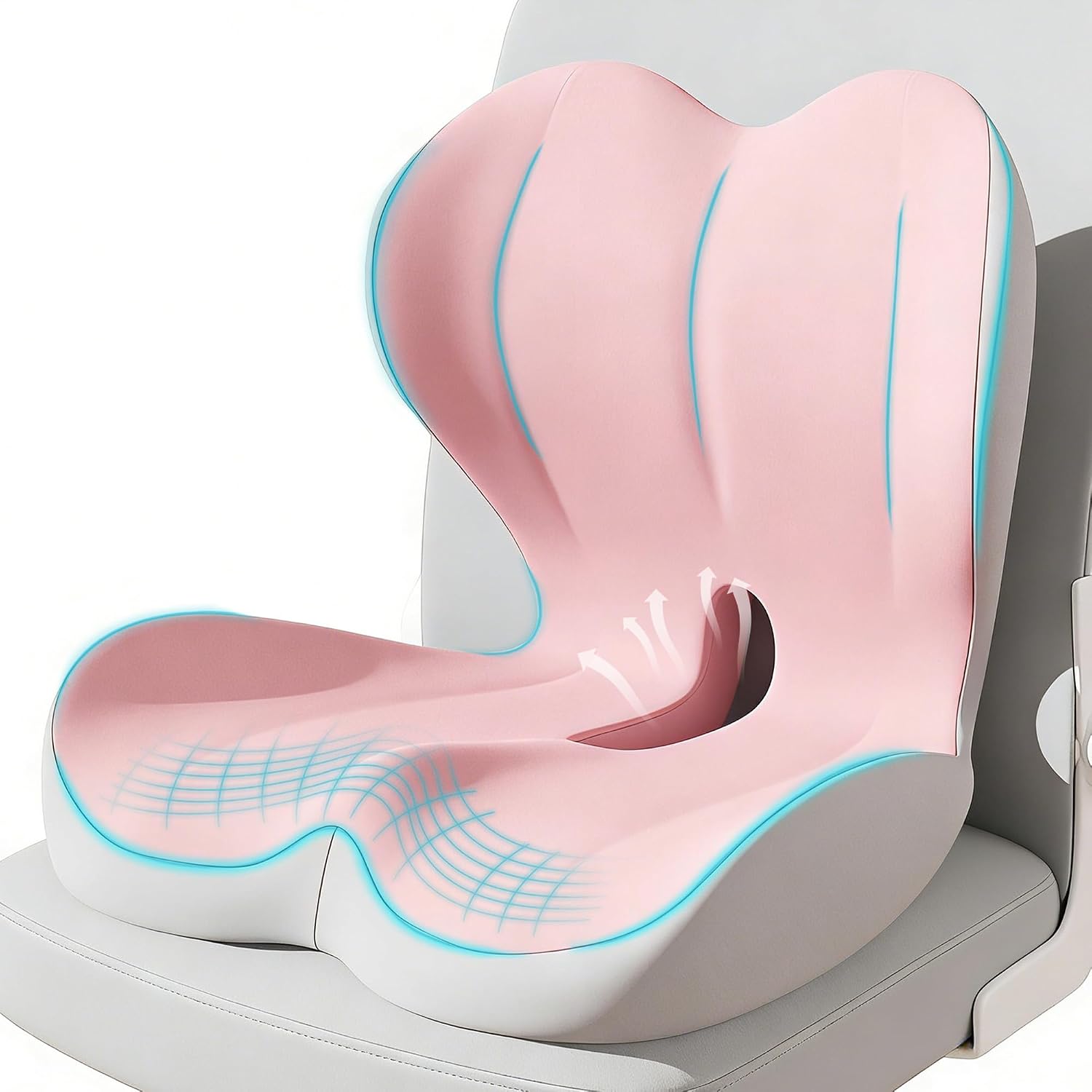
Not everyone needs a new chair. Plenty of the pregnant clients I work with already own a decent chair with a bad seat, and the fix costs a fraction of a new frame. This cushion and lumbar pillow set is the cheapest correct answer on this page.
The cushion does two jobs. It adds a little height, which helps if your chair's lowest setting now sits too low for your changed posture, and it softens a seat pan that has gone flat. The lumbar pillow handles the other half of the problem, because a chair with no adjustable lumbar support stops fitting you the moment your lower back starts to arch. That combination is why this beats spending the same money on a chair-shaped object from a big box store.
Two warnings. A thick cushion changes your seat depth, because it pushes you forward on the pan, so check that the front edge is not now digging in behind your knee. And if the cushion raises your seat height past your popliteal measurement, your feet will not reach the floor properly. A footrest or a stack of books under the desk is the honest fix, and it is not optional, because a dangling foot tilts your pelvis and undoes the lumbar support you just paid for. Check current Amazon price
How I tested
Most task chair guide for pregnant women posts list features. I list measurements, because features do not tell you whether a chair fits. Every chair that goes into a client's office passes the same checks.
Seat height range: the lowest and highest setting, checked against the user's popliteal height. The chair has to reach the low number, not just claim a range on the box.
Seat depth: front edge to backrest, checked against femur length. Too shallow and you get no thigh support. Too deep and the edge presses behind the knee.
Lumbar support: can the height be changed without tools, and does it land in the small of the back rather than the mid-back. A fixed lumbar pad is a decoration.
Armrest: do they clear the desk apron at your working height, and can you get out of the chair without twisting. This is also where I check how to set desk height against your chair, because the two numbers are a pair.
Recline and tilt tension: does the backrest lock, and can you tighten the tension enough that leaning back does not turn into a slow fall. Recline takes load off the lower back. A loose tilt makes standing up harder, which is the opposite of what you want.
Caster and base: does it roll on your actual floor, hardwood or carpet, and does it stay put when you push down to stand.
I have not put a tape measure on every chair on this page. Where a manufacturer does not publish a number, I say so, and you confirm it on the listing before you buy. That is the honest version of a test, and it is more useful than a reviewer telling you a chair felt nice for a week.
Analysis and test results
Think of this as a desk chair guide for pregnant women that leads with numbers rather than adjectives, because the numbers are the part that changes. Three things shift over nine months, and each one moves a different part of the chair.
Center of gravity moves forward. That loads the front of the seat and makes a seat that is even slightly too deep feel worse. This is the main argument for a chair you can adjust rather than a chair that happened to fit you last year.
The lumbar curve increases. A pregnant spine arches more, which means the lumbar support needs to sit lower and be adjustable. An ergonomic chair guide for pregnant women has to answer that question first. If you take one thing from this page: a chair marketed as ergonomic with no lumbar adjustment is a chair with a cushion sewn into the back, and it will not follow you through the third trimester.
Getting up gets harder. This is where the armrest and the caster matter more than the backrest. Pivot arms let you swing out of the way. A caster that locks stops the chair rolling away from you mid-stand. A tilt tension you can tighten means the backrest supports you on the way up instead of dumping you backward.
For the rest of this office chair guide for pregnant women, the expensive question is whether to buy a chair at all. The honest answer: if your current chair has an adjustable lumbar support and a seat height that reaches your popliteal number, spend the money on the cushion and the lumbar roll and keep the chair. If it has neither, no cushion will fix it, because a cushion cannot lower a seat or add an adjustment that is not there.
Weight capacity is worth one line. The heavy-duty chair in the table is rated well past what most people need, and that headroom is not a gimmick if you are carrying extra weight, or if you want a chair that will still be solid after the baby arrives and you are holding one.
The office chair guide for pregnant women reference table
Four products, four different jobs. Read the column that applies to your situation and skip the rest.
| Product | Role | The number to check | Skip it if | Price |
|---|---|---|---|---|
Big and Tall Ergonomic Office Chair, Criss Cross Desk Chair with Pivot Arms | Primary chair with swing-away armrest | Seat depth and seat height range | The armrest will not clear your desk apron | Check current Amazon price |
Seat Cushion for Office Chair, Ergonomic Cushion with Lumbar Support Pillow | Cheap fix for a chair you already own | Added seat height | Your seat height is already at or above your popliteal number | Check current Amazon price |
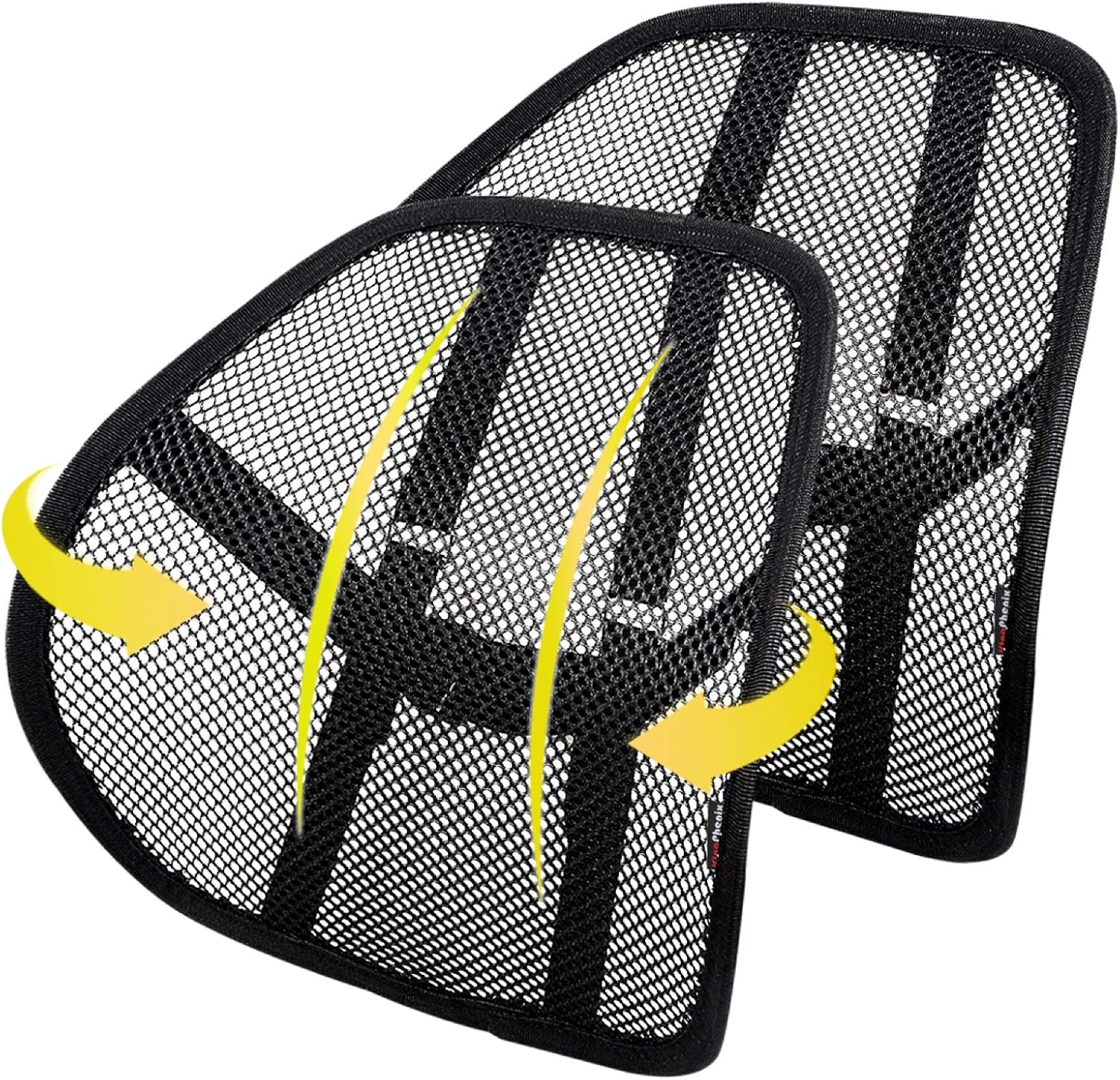 kingphenix Lumbar Support (2 Pack) with Mesh, Suit for Car, Office Chair | Add-on lumbar support, one for the office and one for the car | Where the pad lands on your back | Your chair already has an adjustable lumbar support | Check current Amazon price |
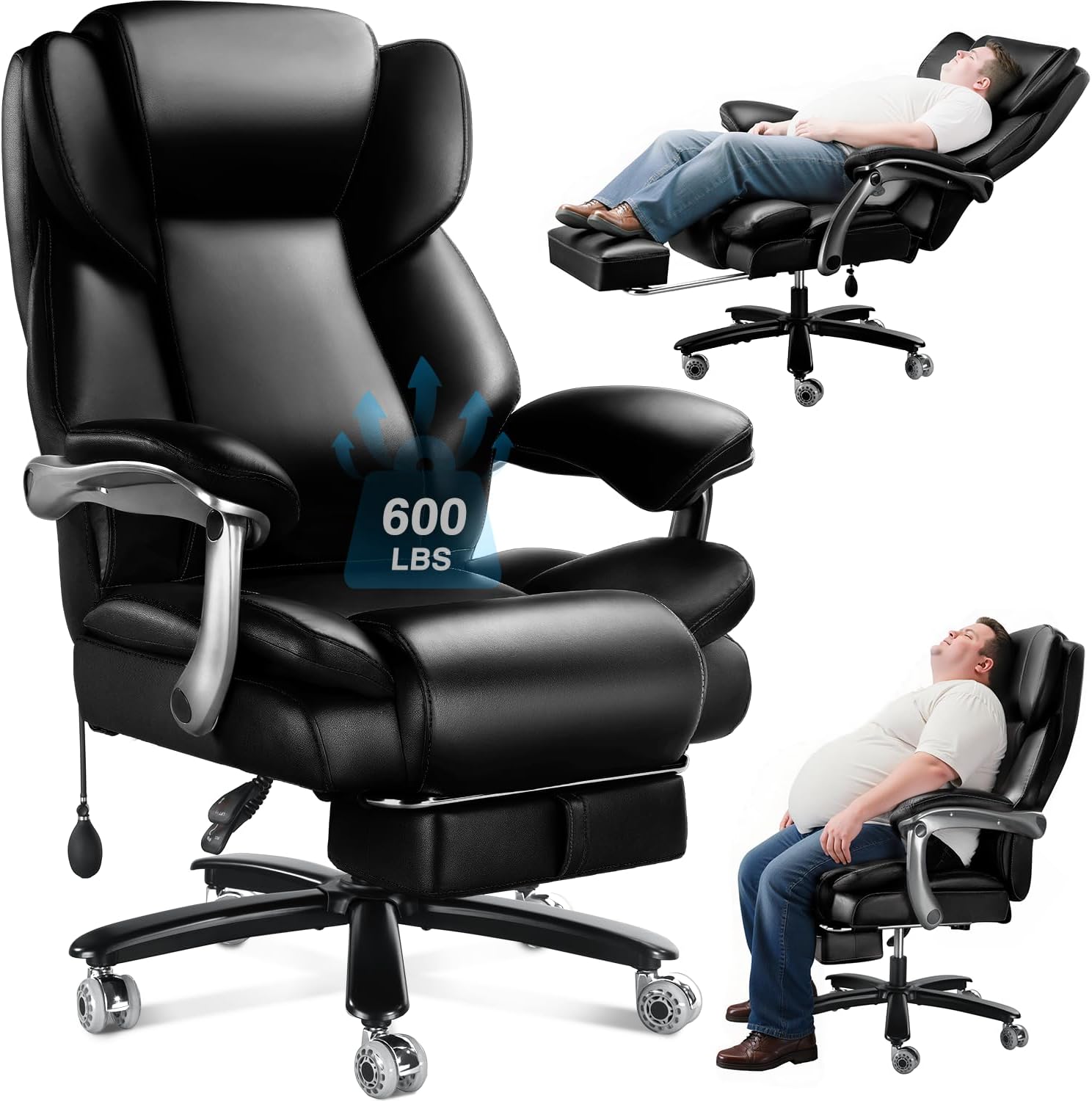 600lbs Big and Tall Reclinging Office Chair ,Heavy Duty Computer Desk Chair | Recline-heavy chair with a high weight rating | Weight rating and recline lock | You work in short bursts and stand up often | View on Amazon → |
kingphenix Lumbar Support (2 Pack) with Mesh, Suit for Car, Office Chair
The two-pack is the point. One goes on your office chair, one goes in the car, because a commute is forty minutes of the same bad posture you just spent money to fix at your desk. The mesh keeps it from turning into a sweaty pad against your back, which matters more than it sounds when you are already running warm.
Placement is everything. It goes in the small of your back, at or slightly below the belt line, not across the shoulder blades where most people first strap it. If it feels like it is pushing you forward, it is too high. If your chair has a lumbar pad you cannot move, this product does not help you, and you should put the money toward the seat cushion instead. A pad you can position beats a pad that came welded into the backrest at the factory.
600lbs Big and Tall Reclinging Office Chair ,Heavy Duty Computer Desk Chair
Recline is the underrated feature for the second and third trimester, because leaning back takes load off the lower back. The catch is tilt tension. A chair that reclines with a loose tension turns every lean into a slow slide backward, and then standing up requires a rock forward first, which is exactly the movement that hurts.
This is the chair on the page built around a high weight rating, and it reclines. That combination is why it earns a sub-section rather than a table row and a shrug. If you want to work leaned back for part of the day, check two things on the listing: that the recline locks at more than one angle, and that the tension adjusts. A headrest is a bonus, not a requirement, though it stops you craning your neck when you do lean back.
What it is not is a small-room chair. A heavy-duty frame and a wide seat take up floor space, so measure the footprint against your desk before you order, the same way you would measure a desk against a wall.
Should you buy the Big and Tall Ergonomic Office Chair, Criss Cross Desk Chair with Pivot Arms?
Yes, if your current chair has no adjustable lumbar support and no armrest that move, and you plan to keep working at a desk after the baby arrives. The pivot arms and the big and tall sizing are the two features that keep working while your body changes, and this is the expensive half of the decision, so you only want to make it once.
Skip it if your desk sits low and the armrest will not slide under the apron, or if the published seat depth is longer than your femur measurement. In that case, buy the cushion, keep the chair you have, and put the difference toward a footrest.
Should you buy the Seat Cushion for Office Chair, Ergonomic Cushion with Lumbar Support Pillow?
Yes, if your chair already has an adjustable lumbar support and a seat height that reaches your popliteal number, because then the only things wrong with your setup are a flat seat and a tired lower back. It is the cheapest correct fix on this page, and it is also the easiest one to undo if it does not work out.
Skip it if the cushion pushes your seat height past your measurement and you are not willing to add a footrest, or if your chair has no lumbar adjustment at all. A cushion cannot add an adjustment that is not there, and no amount of padding fixes a seat depth that is wrong for your body. That is the short version of this office chair guide for pregnant women: measure, then spend.