Related: Best Ergonomic Office Chair for a Small Home Office
I have measured 310 home offices with a tape, not a spec sheet, and teachers are the hardest fit I run into. That is why this office chair guide for teachers starts with a number instead of a brand: your seat depth, measured from the crease behind your knee to the back of your hips while you sit. Get that wrong and no amount of mesh, foam, or marketing copy will save the chair.
A teaching day is not an office day. You sit to grade, stand to write on a board, twist toward a document camera or a second screen, and perch on the front edge of the seat while a student stands at your desk. A chair that only works in one of those postures is a chair you will resent by November. And most of the listings I see call a chair ergonomic with no lumbar adjustment at all. If the lumbar pad does not move up and down, it is a shape, not a support. That is the first thing I check, and the first thing this guide filters for.
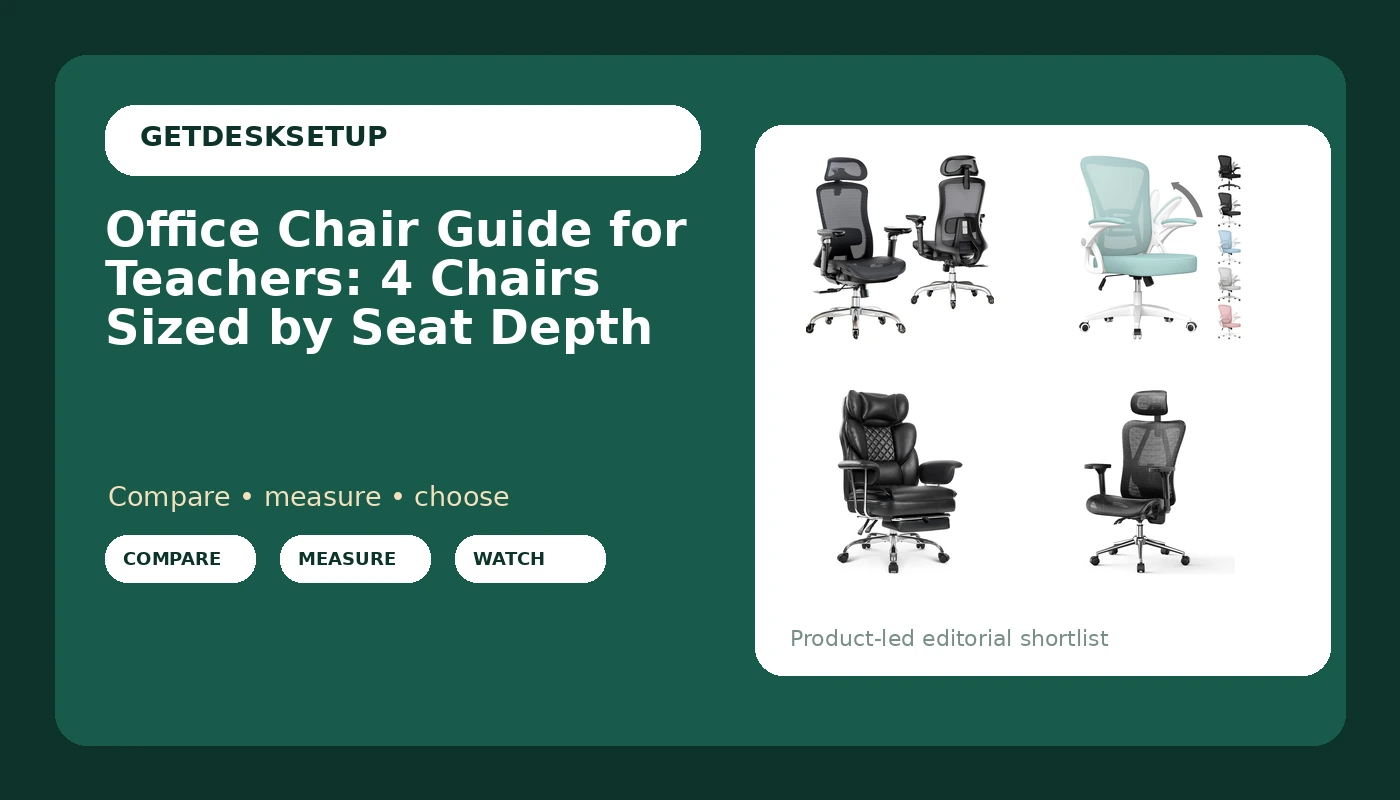
Best Overall: Marsail Mesh Ergonomic Office Chair with Sliding seat Depth Mesh Desk Chair
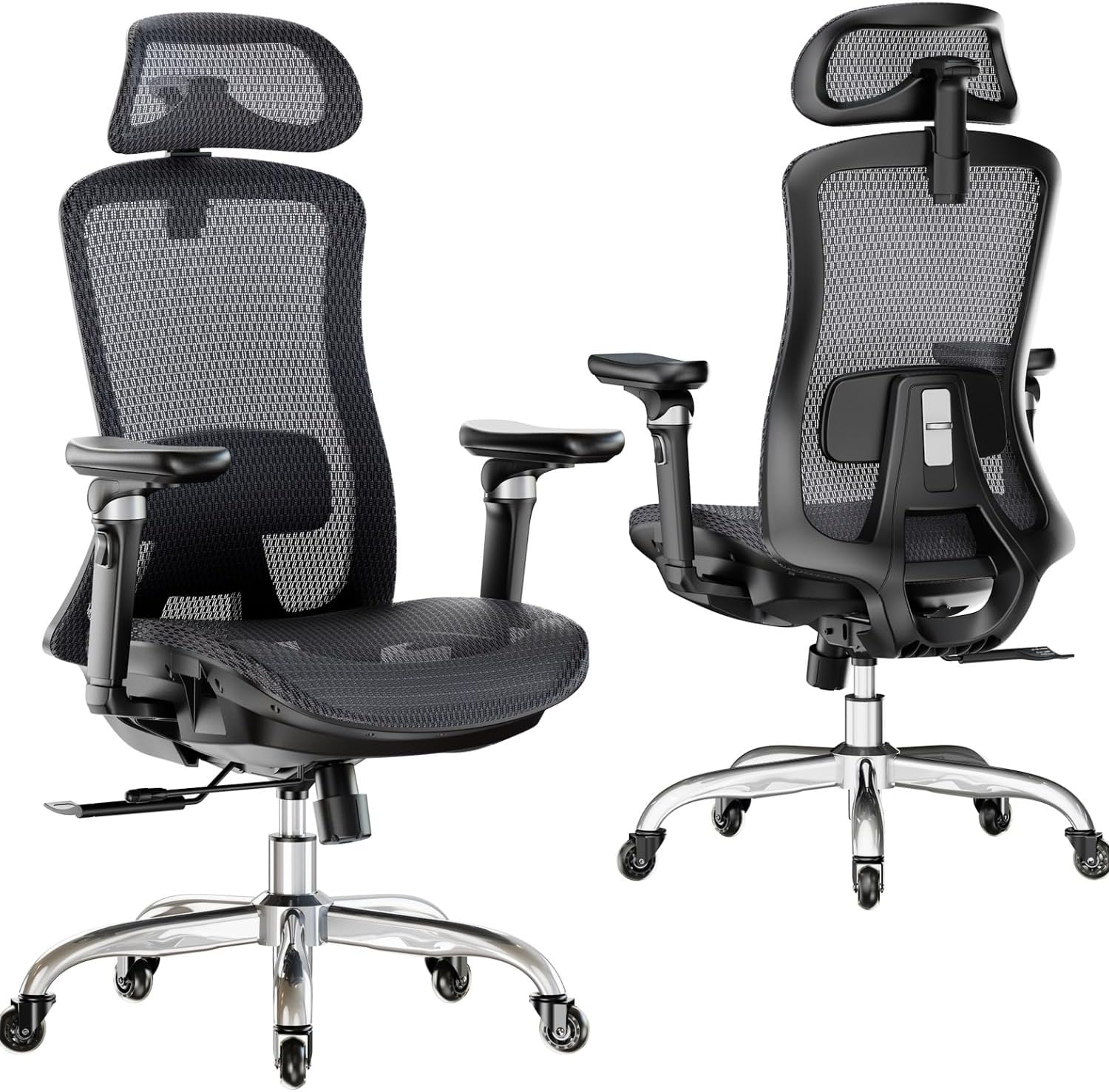
The feature in this chair's name is the one I would pay for on any chair: a sliding seat. Seat depth is the adjustment most budget chairs leave out, and it is the one that decides whether a chair fits you or just tolerates you. Long in the leg and a fixed seat digs into the back of your knee. Short in the leg and a fixed seat leaves you perched forward with nothing behind your hips. A sliding seat lets you set depth once for your own body and stop thinking about it.
For a teacher that matters more than usual, because you change posture constantly. Grading at the desk wants a deeper seat. Turning to the board wants a shallower one so your back stays against the backrest. Mesh is the right call for a room that runs warm, which most classrooms and closed-door home offices do.
The honest limits. Mesh is a working surface, not a couch. If you want a chair you can sink into and recline in for an hour, this is not it, and the big and tall option below is a better match. If your main posture is leaning back with a book, skip this one too. For everyone who sits forward and works, this is the chair I would put in a client's office for a year.
Best Value: naspaluro Home Office Desk Chair Mid Back with Adjustable Height Green
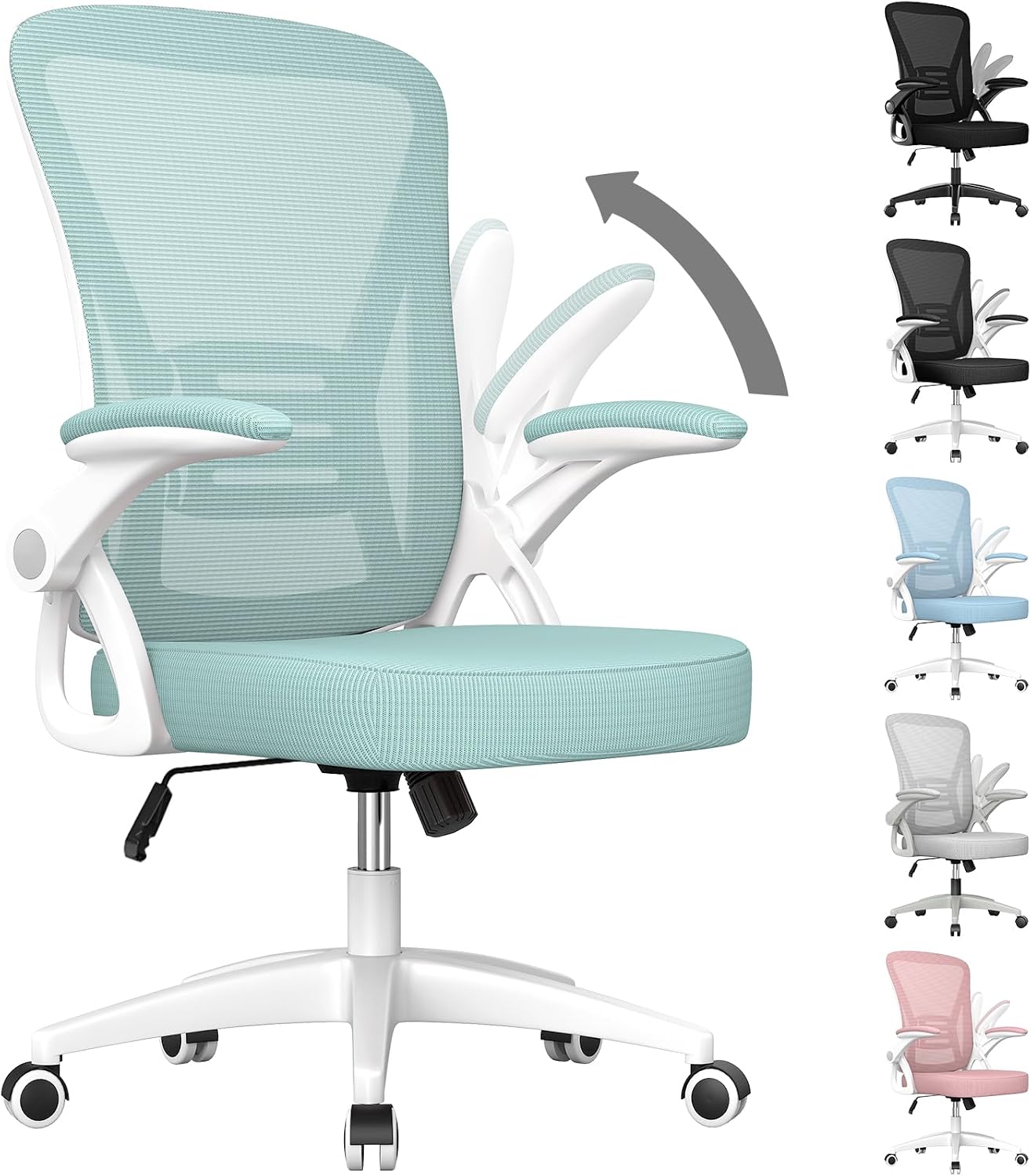
This is the chair I hand to someone setting up a first classroom desk or a corner of a spare bedroom who does not want to spend much. Adjustable height is the adjustment that matters most for a teacher, because your desk height is fixed and your body is not. Raising or lowering the seat is how you get your forearms level with the desk and your feet flat on the floor. A mid back keeps the chair visually small, which matters in a room that also holds a desk, a filing cabinet, and a stack of papers waiting to be graded.
The honest limits. A mid back stops below your shoulder blades, so if you slouch into the upper back, there is nothing there to catch you. And a mid-back chair is built around an average frame, not a tall one. If you are tall, the top of the backrest lands in the middle of your spine and you feel it by the end of a long day.
Who should skip it: tall users, and anyone who wants upper-back support while reclining. Everyone else on a tight budget gets a chair that does the basic job correctly, and I would rather see a correct cheap setup than an expensive wrong one.
How I tested
Same four checks, same order, every chair in this guide.
Seat height: I sit, plant both feet flat, and check whether the seat can go low enough or high enough that my forearms land level with the desk in front of me. A chair that cannot reach that height is out, no matter how good it looks in a photo.
Seat depth: I set the seat so the front edge sits just behind the crease of my knee, then check whether I can hold that position without sliding forward. If the depth is fixed and it does not land right, I note who it will not fit rather than calling it comfortable.
Lumbar support: does the pad move up and down, and does it stay where I put it after a week of sitting? A fixed lumbar bump is the most common failure in this category, and it is the reason so many chairs get called ergonomic when they are just curved.
The moving parts: casters on carpet and on a hard floor, plus tilt tension, because a chair whose recline is too loose for your weight is a chair you fight all day. I also sit through a full grading session in each one, standing up and sitting back down the way a teacher actually does, then assemble each chair the way a teacher would: alone, on a Sunday, following the sheet in order.
Then I hand the verdict to the person, not the chair. Every recommendation here names who should skip it.
Analysis and test results
Start with the two extremes. The NEO CHAIR Big & Tall PU Leather Office Chair is the one to look at if a standard mid back feels narrow or stops too low on your spine. High back, lumbar support, and a wider build: it is the chair for a long grading session where you lean back between papers. Skip it if you run warm, because PU leather does not breathe the way mesh does, and skip it if you need the smallest possible footprint under a tight desk.
The naspaluro Ergonomic Mesh Office Chair with 3D Armrest is the desk-work chair. Three-dimensional armrests matter because you can move them in and out as well as up and down, which is what lets you get your elbows under your shoulders while typing and then push the arms aside when you turn to the board. Mesh keeps air moving. Skip it if you never use armrests, since you are then paying for a feature you will not touch.
The Marsail wins overall on the sliding seat depth, which is the only adjustment in this group that fixes depth rather than working around it. The naspaluro mid back wins value because adjustable height and a small footprint are the two things a first setup actually needs.
On headrests: a headrest is a reclining feature, not a working one. If you never recline past a few degrees, it is something that catches your hair and adds bulk. Buy it because you lean back, not because the listing photo looked premium.
The pattern across all four is the same. Seat depth and lumbar adjustment decide fit. Everything else is preference. That is the whole point of an ergonomic chair guide for teachers: ergonomics is a measurement, not a feeling. If you cannot say your seat depth in inches, you are guessing, and the chair will tell you so by March.
Office chair guide for teachers: seat and desk sizing table
This is the table I keep in my notebook when I size a chair for a client. Read across your row and stop at the first chair whose skip column does not describe you.
| Chair | Back and material | Adjustment that matters | Best for | Skip it if |
|---|---|---|---|---|
Marsail Mesh Ergonomic Office Chair with Sliding seat Depth | Mesh | Sliding seat depth | Long legs, short legs, anyone between sizes | You want a padded lounge chair |
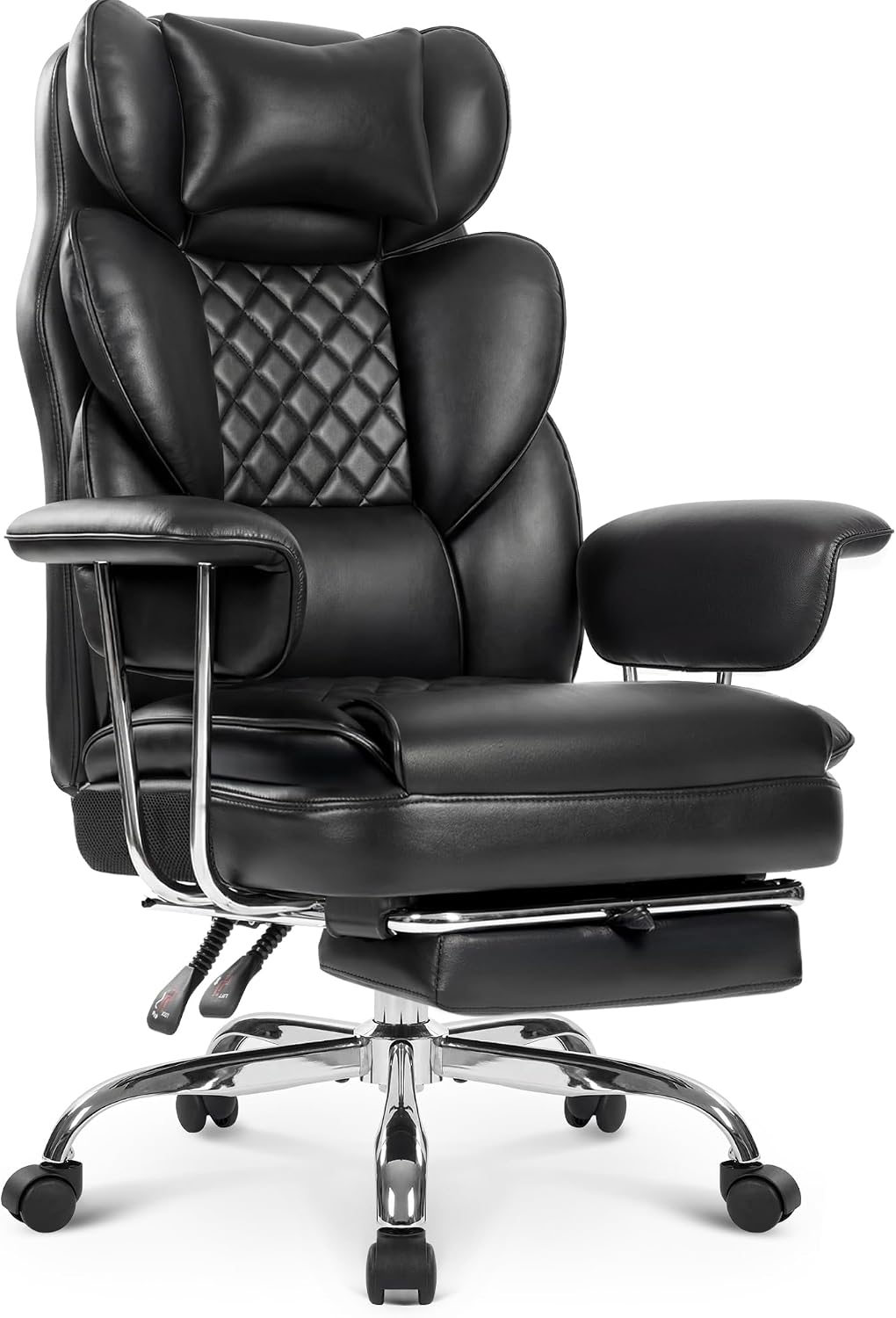 View on Amazon → NEO CHAIR Big & Tall PU Leather Office Chair | High back, PU leather | Lumbar support | Bigger frames, long leaning-back sessions | You run warm or need a small footprint |
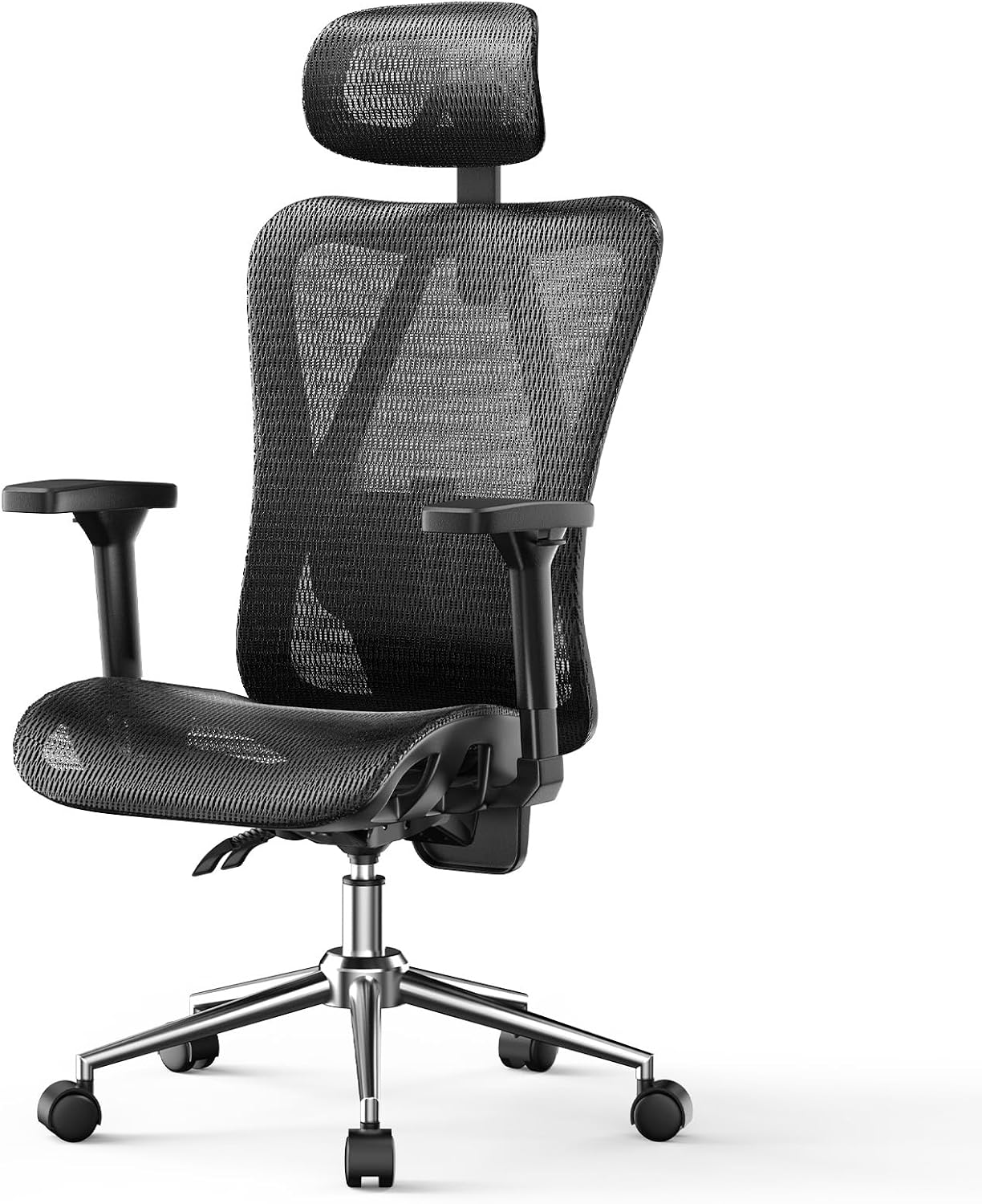 View on Amazon → naspaluro Ergonomic Mesh Office Chair with 3D Armrest | Mesh | 3D armrest | Typing and mouse work at desk height | You never use armrests |
naspaluro Home Office Desk Chair Mid Back with Adjustable Height Green | Mid back | Adjustable height | First setups, tight budgets, small rooms | You are tall or want upper-back support |
Note what is not in this table: prices, because they move, and comfort ratings, because they are useless without a body attached to them. Check the current price on the listing and check the return window before you commit.
Task chair or big and tall: which frame fits a teacher
A task chair is built for a working posture: feet flat, elbows at desk height, back against the backrest, moving between the desk and the board. That is why the two mesh chairs here are the ones I would put in a classroom, and why the 3D armrest model is the one for a teacher who types while students work.
A big and tall chair is built for a larger frame and for leaning back between tasks. If your spine is wider than the average chair allows for, the extra width is not a luxury, it is the difference between sitting against the backrest and sitting in front of it. Think of this section as a task chair guide for teachers: match the frame to the posture you actually hold most, not the one you wish you held.
What to measure before you order
Treat this as a desk chair guide for teachers rather than a shopping list: three numbers, one tape measure, five minutes.
Seat depth. Sit on a hard chair, slide back until your hips touch the backrest, and measure from the crease behind your knee to the back of your hips. That is the depth you want, and it is the number a sliding seat lets you hit.
Seat height. With your feet flat on the floor, measure from the floor to the crease behind your knee. That is roughly the seat height you want at your desk, and it is why the height range matters more than the top number in the listing.
Desk clearance. Measure from the floor to the underside of the desk, then check that the armrests fit under it at your seat height. If the arms hit the drawer, you end up sitting further back than you should, and your seat depth setting stops mattering. Casters on a rug will not roll the way they do on a hard floor, so test on the surface you actually have.
Should you buy the Marsail Mesh Ergonomic Office Chair with Sliding seat Depth?
Yes, if your legs are shorter or longer than the chair industry's idea of average. The sliding seat is the reason. It fixes depth instead of papering over it, and it is why this is my overall pick in this office chair guide for teachers.
What it is not: a lounge chair. If your ideal evening is reclined with a book, the mesh back will not do what you want. But if you sit forward, grade, and turn to a board all day, the depth adjustment is worth more than any amount of padding.
Should you buy the naspaluro Home Office Desk Chair Mid Back with Adjustable Height Green?
Yes, if you are setting up a first desk and want to spend as little as possible without buying something you will replace next year. Adjustable height and a small footprint cover the two things a new setup needs, and a green mid back does not fight a small room for space.
Skip it if you are tall, or if you slouch into the upper back. A mid back leaves the top of your spine unsupported and no adjustment fixes that. If either of those describes you, go up to the big and tall chair or the Marsail instead.