I spent nine years as an office facilities manager buying chairs for 400-person floors, then six more running a two-person desk setup service that has built out 310 home offices, and the question that lands in my inbox most often is still this one: 250 lb vs 400 lb capacity office chair, which rating does your body actually need? The short version is that the rating is a structural number, not a comfort number. Paying for 400 lb capacity when you weigh 175 lb buys you a wider frame, a heavier base, and denser foam, and none of those are automatically better for an eight-hour day.
Related: Office Chair Seat Depth: How To Measure Yours Before You Buy
For most people under about 220 lb, a well-built mid-range chair is the smarter buy. If you are over 250 lb, or two people share one chair and one of them is, the heavy-duty 400 lb frame is the one that will still be square after two years.
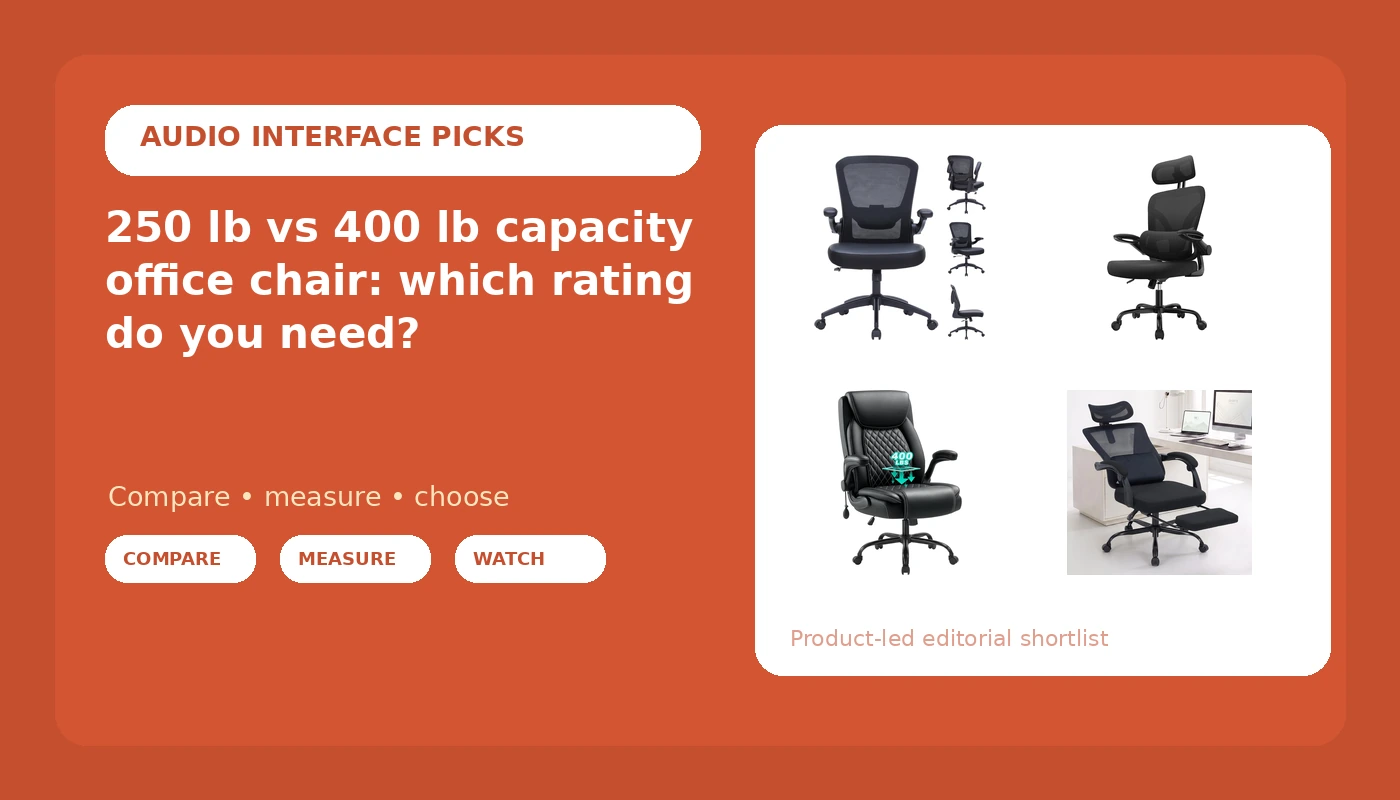
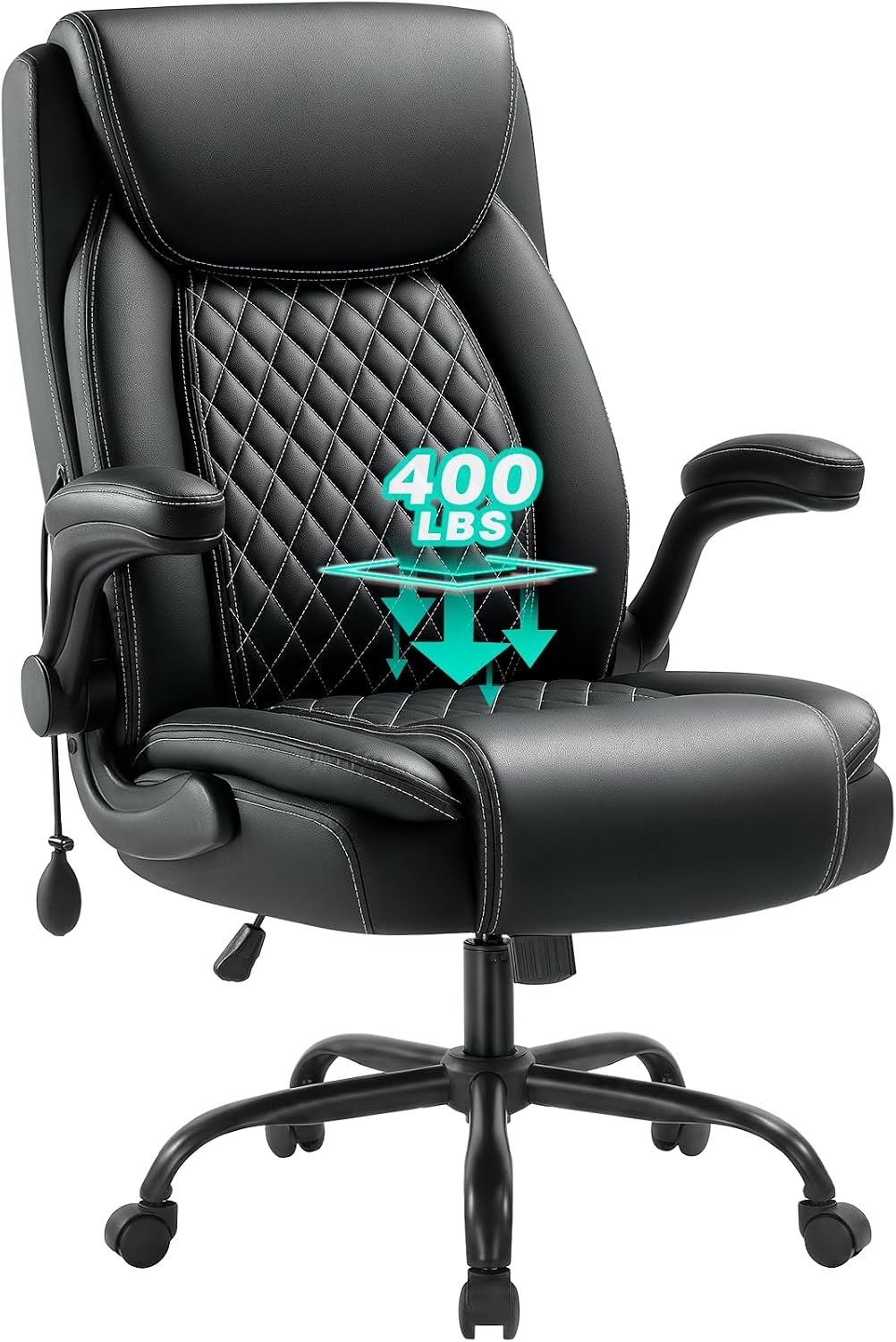
Heavy Duty Office Chair, 400 lb, with flip-up arms
The only chair here with a stated 400 lb rating, plus flip-up arms and adjustable lumbar support
PU leather does not breathe like mesh, and it is the heaviest chair of the four to move
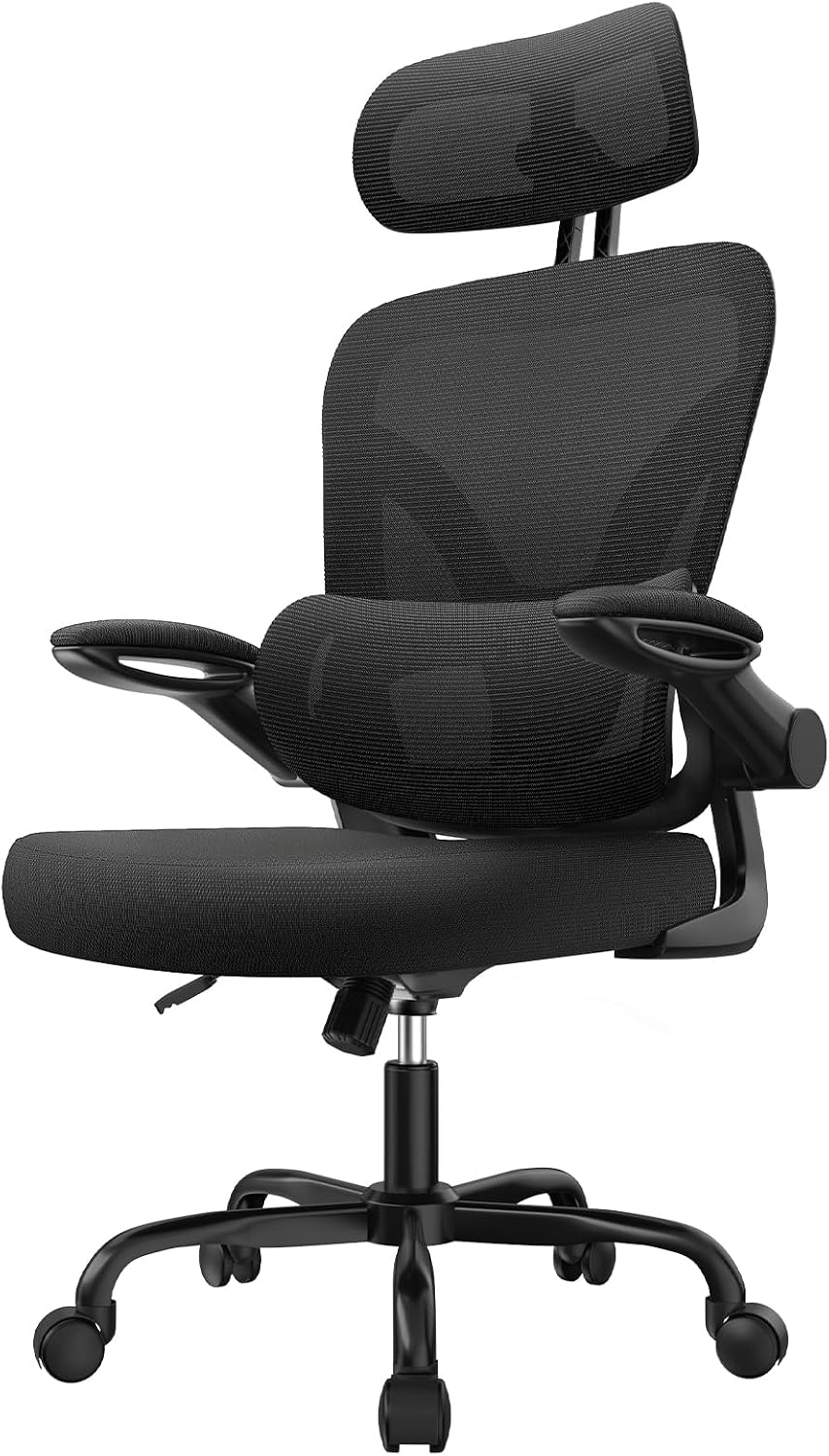
Bigzzia Ergonomic Office Chair with Lumbar Support, high back
High back gives mid-back and shoulder-blade contact, not just a lumbar pad
No published weight rating and no flip-up arms
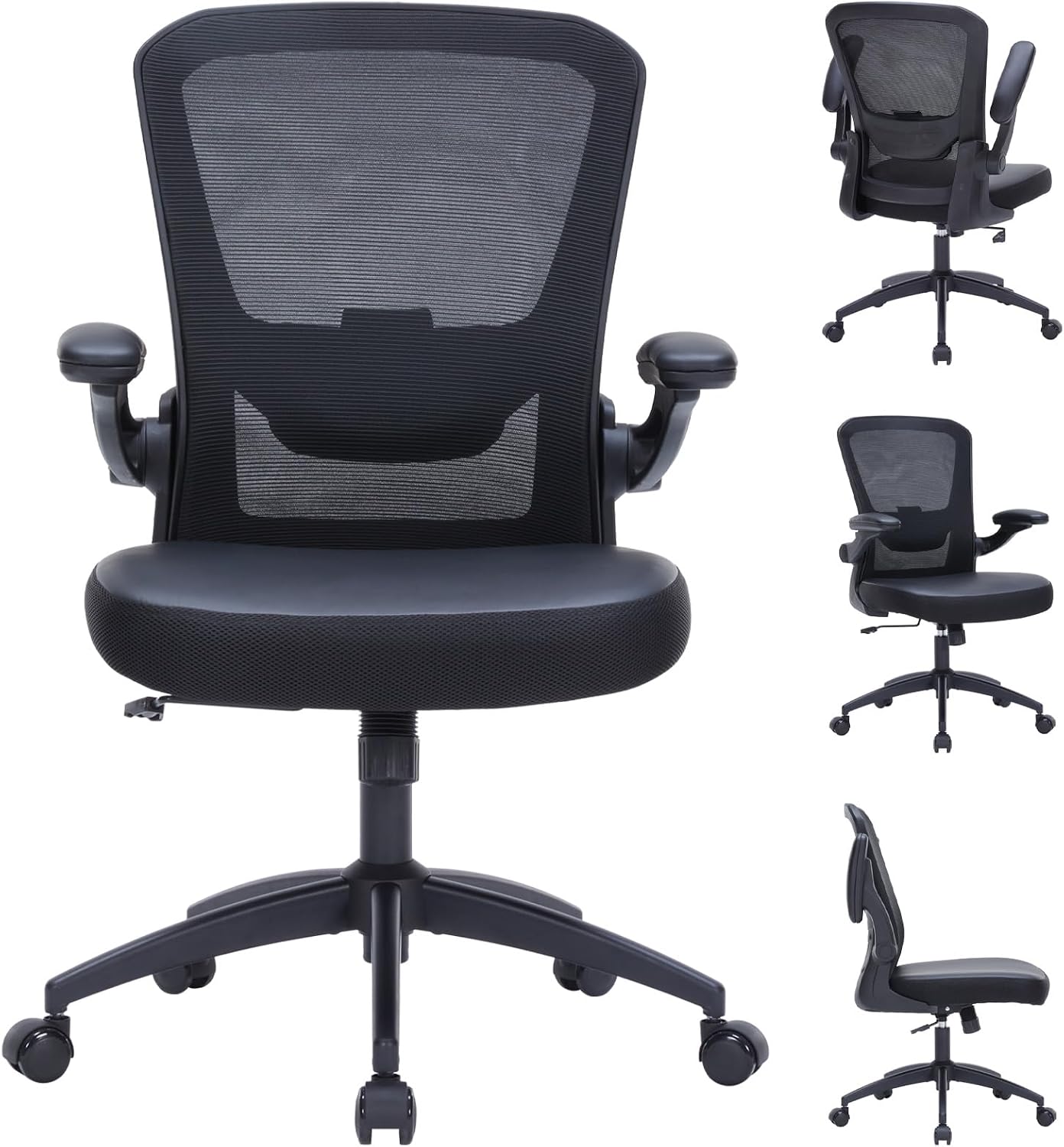
Indulgear Office Chair with Lumbar Support, flip arm
Flip arm clears a keyboard tray, and the lumbar support is the point of the build
Listing leads with comfort language instead of a capacity number
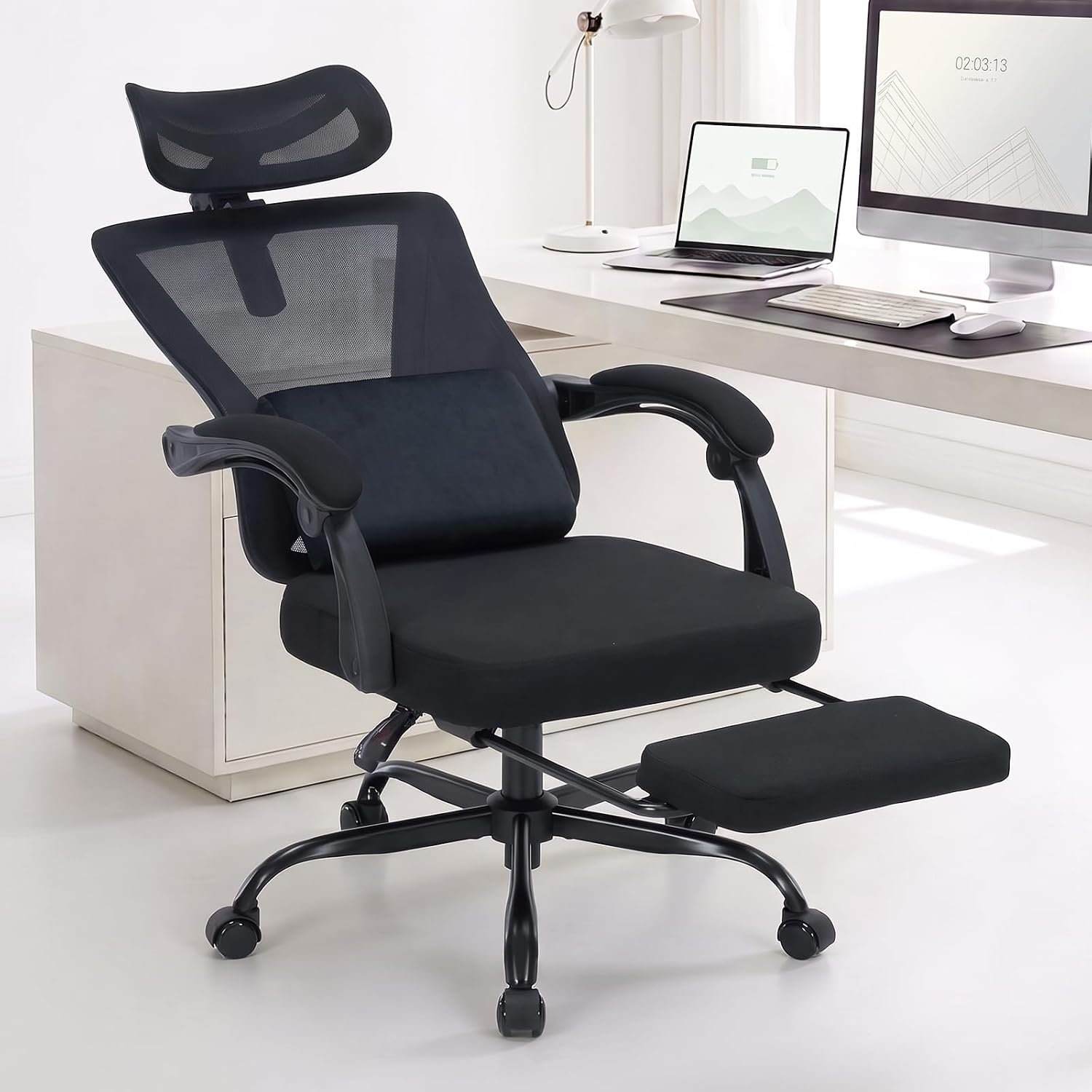
Ergonomic Office Chair with footrest, 90 to 160 degree recline
The only chair here with a footrest and a published recline range
A 160 degree recline needs clearance behind the chair that a small office may not have
Prices and availability may change.
What a weight rating actually measures
A chair's weight rating is a load number for four parts, and the seat cushion is not one of them. The gas lift cylinder carries the vertical load. The five-star base spreads it across the floor. The seat plate and mechanism take the torque every time you lean back. The back frame takes the pull of the recline spring.
When a chair fails, it is almost always one of those four, and it fails in a predictable order: the cylinder starts sinking an inch overnight, the base splays until one caster drags, the mechanism develops a creak at the third tilt, and the back frame flexes a little further every month. That is why the rating matters more than the foam. Foam gets softer with use. Steel and nylon get weaker.
A 250 lb chair is not a bad chair for a 200 lb person, but it is a chair whose cylinder, base, and mechanism were sized for a load that a 200 lb person, a leaning-back habit, and a 40 lb dog on the lap can exceed on a Tuesday afternoon.
Two things to check in any listing before you trust a number. First, is a rating stated at all? If a listing does not state one, treat the chair as 250 lb class until you find the number in the product questions or the manual. Second, what are the base and the cylinder made of? A nylon base and a standard cylinder are the first two parts to give up, and they are the two parts nobody photographs. Heavy-duty chairs are also heavier to drag across a room, and that is the trade, not a defect.
250 lb vs 400 lb capacity office chair: where the extra money goes
When a maker builds a 400 lb chair, four things change. The seat pan gets wider and usually deeper, so the load is not concentrated on two sit bones. The foam gets denser and thicker, which is why heavy-duty chairs hold their shape longer. The cylinder and base get beefier. The back frame and mechanism get reinforced, which is what stops the flex you feel at the top of a recline.
The trade is real, and it is the part nobody mentions. A 400 lb chair under a 130 lb person is a chair whose armrests their elbows never reach and whose seat pan presses the back of their knees. If you are small, the heavier chair is not an upgrade. It is a chair you will fight for a year.
So the 250 lb vs 400 lb capacity office chair decision is not a quality ranking. It is a load question with a fit question stacked on top. Get the load right, then check seat depth, or you will own a strong chair that hurts.
The four chairs, one at a time
All four of these land in a similar price band, so nobody wins on budget alone. What separates them is what each one spends its money on, and only one of them is built around a published capacity number.
Heavy Duty Office Chair, 400 lb, with flip-up arms and adjustable lumbar support
This is the only chair in the group that puts its rating in the product name, and the name does you a favor: 400 lb capacity, flip-up arms, adjustable lumbar support, PU leather cushion, executive styling for a home office.
The rating is the headline. The flip-up arms are the second most useful feature, because they let the chair slide under a desk that has a keyboard tray or a shallow apron. Adjustable lumbar support means you can move the pad up or down the back frame to land at your actual lower back instead of the average one. PU leather is the surface to think about hardest: it wipes clean, and it does not breathe like mesh, so if your office runs warm in July, plan for that before you order.
Who should skip it: anyone under about 200 lb who wants a light chair to shove around, and anyone who has already decided they need a mesh back for airflow.
Bigzzia Ergonomic Office Chair with Lumbar Support, high back
The differentiator is the high back, and that matters more than the lumbar pad for anyone who slouches at the shoulder blades rather than the lower back. A high back runs the frame higher up your spine, so you get contact across the mid back as well as the lower back. That is the difference between a chair you can sit in for a long spreadsheet session and one that leaves your shoulders rounded forward by 3 p.m.
What the listing gives you is lumbar support and a high back. What it does not advertise is a weight rating or a recline range, so ask the seller before you assume either. If you are over 250 lb, get the capacity in writing, because this one does not publish it.
Who should skip it: anyone who wants flip-up arms for a keyboard tray, and anyone who needs a deep recline or a footrest for afternoon breaks. This is a work chair, not a nap chair.
Indulgear Office Chair with Lumbar Support, flip arm
Two features define this one: lumbar support and a flip arm. The flip arm is the practical feature of the pair. Folding the arms up gives you the width of both armrests back in clearance, which is often the difference between a chair that tucks under a 24 inch deep desk and one that sits proud of it.
The lumbar support is the other half, and it is worth checking whether the pad adjusts or is fixed to the frame. Fixed support lands wherever the factory put it, which works for an average spine and misses for everyone else. The listing calls the chair comfy, and comfy is not a measurement, so treat that word as decoration.
If you weigh more than 250 lb, ask for the rating before you order, because this listing leads with comfort language rather than a capacity number. Who should skip it: heavy users who need a published rating, and anyone who wants a headrest or a footrest.
Ergonomic Office Chair with footrest and 90 to 160 degree recline
This is the only chair here with a footrest and a stated recline range of 90 to 160 degrees, and that combination changes what the chair is for. A 160 degree recline with a footrest is a chair you can lean back in far enough to take pressure off your lower back between tasks, and the footrest is what keeps your legs from dangling when you do.
Plan for the space behind you, because a chair that lies back that far needs clearance, and a small home office does not always have it. The footrest is also a moving part, so check how it stows before you commit.
Who should skip it: anyone whose desk has a drawer or a crossbar close to the floor, and anyone who wants a single-purpose upright work chair. This one is the most versatile of the four and the fussiest to live with.
Seat height and seat depth: measure before you compare ratings
Seat height and seat depth decide whether a chair fits. The weight rating decides whether it survives. Both matter, and they are separate checks, so do not let one answer for the other.
Measure two things at home with a tape. First, sit on a hard chair with your feet flat and measure from the floor to the crease behind your knee. That is your target seat height, and you want the chair's low end at or below it, never above it. Second, measure from the back of your butt to the back of your knee and subtract an inch or two. That is your target seat depth, and it decides whether the front edge of the seat digs into your calves.
Then compare those numbers against the seat height range and seat depth in the listing. If a listing does not publish a seat height range, do not buy blind, no matter how good the rating looks.
A 250 lb vs 400 lb capacity office chair comparison does not answer this question for you. Two chairs with the same rating can sit two inches apart in height, and the taller one can be wrong for a 5 foot 4 inch user even when it is built like a truck.
Lumbar support, armrest, and recline across the four
All four chairs mention lumbar support, so the phrase alone separates nothing. What separates them is whether the pad moves. The heavy-duty chair advertises adjustable lumbar support, which means you can place the curve where your lower back actually curves. Fixed pads put the support wherever the factory put it, which fits an average spine and misses everyone else.
The armrest is the second differentiator, and here the group splits cleanly. Two of the four have flip-up arms, the heavy-duty chair and the Indulgear. That matters if your desk has a keyboard tray or a shallow apron. Fixed arms are fine if your desk is open underneath.
Recline is the third. Only one chair here publishes a recline range, 90 to 160 degrees, and it is the one with the footrest. If you cannot find a recline range for a chair, assume a modest working recline and nothing more.
Tilt tension, headrest, and caster checks before you order
Three details decide whether a chair is pleasant in month six rather than week one.
Tilt tension controls how hard you have to push to lean back. Without it, a light user floats backward and a heavy user cannot move the back at all. If the listing does not mention tilt tension, assume it is fixed, and read the reviews for the phrase "too easy to lean back" or its opposite.
A headrest is not on any of these four by name. If neck support matters to you, that is a different shortlist, and you should not buy a chair hoping a headrest is hiding in the box.
Casters are the cheapest part to fix and the easiest to overlook. Hard casters on a wood floor will mark it. If your office is carpet, the stock casters are fine. If it is hardwood or tile, budget for a set of soft polyurethane casters, which is the least expensive upgrade in this entire comparison.
400 lb capacity office chair vs 250 lb: the two minute decision
Run this list in order.
- Weigh yourself and add 25 to 40 lb for the bag, the leaning, and anything on your lap. That is your working load, not your body weight.
- If the working load is under 220 lb, a mid-range chair is the better buy, and you should spend the difference on a footrest or a set of casters.
- If the working load is over 250 lb, buy the chair with the published 400 lb rating. The other three here do not advertise one, and that is the whole argument.
- If the working load lands between 220 and 250 lb, buy the heavy-duty chair if you lean back hard or share the chair, and buy mid-range if you sit upright and move the chair around.
- Then check seat height and seat depth against your own measurements. Only after that should you look at color.
That is the difference between 250 lb and 400 lb capacity office chair in practice: one number decides whether you replace the chair in two years or in eight.
250 lb or 400 lb capacity office chair: who should buy which
The heavy-duty 400 lb chair is for the user who needs the capacity in writing, who wants flip-up arms, and who does not mind PU leather. It is the safest pick in this group for a shared chair, because the frame has the most margin.
The Bigzzia high back is for the upright sitter with shoulder and mid-back complaints who does not need a published rating. The Indulgear is for the desk with a keyboard tray, where the flip arm is the difference between a chair that stows and a chair that blocks a walkway. The footrest chair is for the user who takes real breaks and has the floor space behind them to lean back to 160 degrees.
And who should buy none of them: anyone who needs a headrest, anyone who needs a mesh back for airflow in a warm room, and anyone who needs a capacity above 400 lb. Those are different shortlists, and no amount of re-reading this comparison will change that.
What I would put in a client's office
If a client tells me they weigh 260 lb and sit eight hours a day, I order the heavy-duty 400 lb chair and I stop looking. The rating is published, the lumbar support adjusts, and the flip-up arms mean it fits almost any desk I have measured. That is a chair I would leave in a client's office for a year without a second visit.
If a client weighs 165 lb and wants a chair that tucks under a tray, I order the Indulgear and put the savings toward casters and a footrest. If they take long afternoon breaks and have the floor space, the footrest chair with the 90 to 160 degree recline is the one they will actually use.
Check the seat height range, check the seat depth, confirm the capacity in the listing, and read the desk height side of the setup before you buy. Check current Amazon price on the one that matches your numbers, and skip the rest. A chair either fits your body or it does not, and the weight rating is only the first of the two questions.