Related: How to Measure Seat Depth Before You Buy a Chair
Hip pain at a desk has a timing, and the timing tells you which number is wrong. If the ache shows up in the first hour, look at seat height. If it shows up after two or three hours, look at seat depth and lumbar support. This office chair guide for hip pain is built on those numbers rather than brand names, because I have never fixed a client's hip by selling them a more expensive chair with the same seat pan.
I have fitted chairs for 310 home offices, first as a facilities manager buying for 400-person floors and now as one half of a two-person desk setup service, and I keep a notebook of seat depth and seat height ranges measured with a tape instead of read off a listing. Four products did most of the work in those rooms: two mesh chairs with headrests, flip-up armrests and lumbar support, one universal headrest attachment, and one seat cushion. If the ache is on one side only, start with armrest height. If it is in both hips, start with seat depth.
Best Overall: DEVAISE Office Chair High Back Mesh Ergonomic Desk Chair with Flip-up Armrests, Adjustable Headrest and Lumbar Support, Black
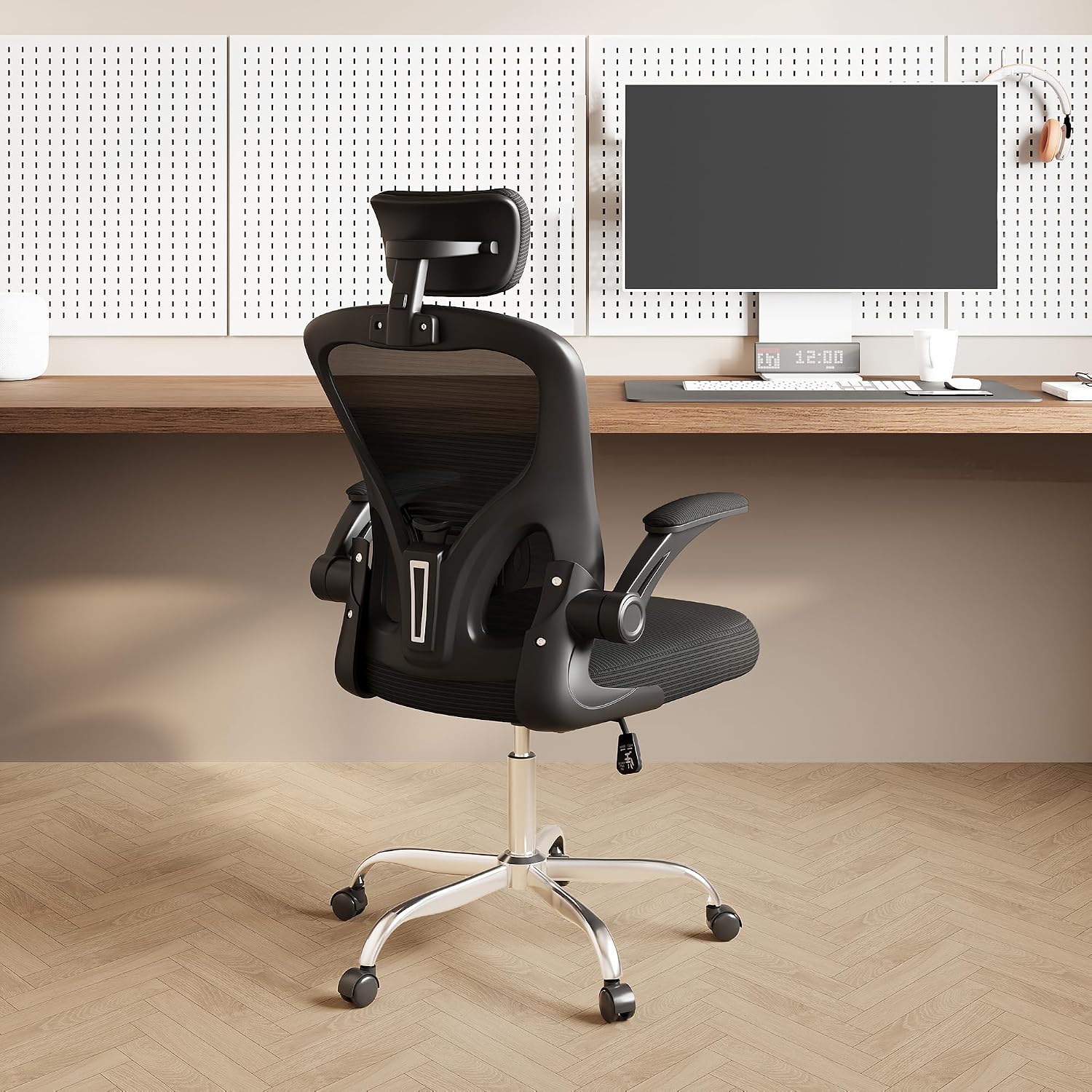
This is the chair I put in most client offices when the complaint is hip pain, because the two adjustments that matter most for hips are both here and both actually move. Flip-up armrests are the underrated one. With the arms up, the chair rolls far enough under the desk that you can sit square to the keyboard. Most people with one sore hip are sitting at an angle, one hip rotated forward, because a fixed armrest hit the desk edge and stopped them two inches short.
The lumbar support adjusts, which matters more than the product copy suggests. A lumbar pad in the wrong spot tips your pelvis back and hands the load to your hip flexors. Set it so the pad fills the small of your back with your shoulders relaxed, then check it again after an hour, because you will have slid down the seat.
The headrest is adjustable too, and I use it as a recline checkpoint. Lean back with your head supported and your hip angle opens past 90 degrees, which takes the compression off the front of the hip joint. Loosen the tilt tension until the chair moves when you move. A chair that reclines only when you shove it is not really reclining.
Fit range: I have put this chair with clients from about 5'2" to 5'11" and up to roughly 220 lb. The mesh back breathes, the seat pan is not a bucket, and the casters roll on carpet and hard floor alike.
Who should skip it: anyone over 6 feet with a long torso. The headrest tops out below where your neck wants it, and you will slump to meet it. Skip it too if you need a seat pan shorter than about 17 inches, because the padding at the front edge will press behind your knee. Before you buy any chair, measure your seat depth with a tape, not with your hand.
Best Value: FORTEM Seat Cushion, Office Chair Cushion for Tailbone Sciatica Pain Relief
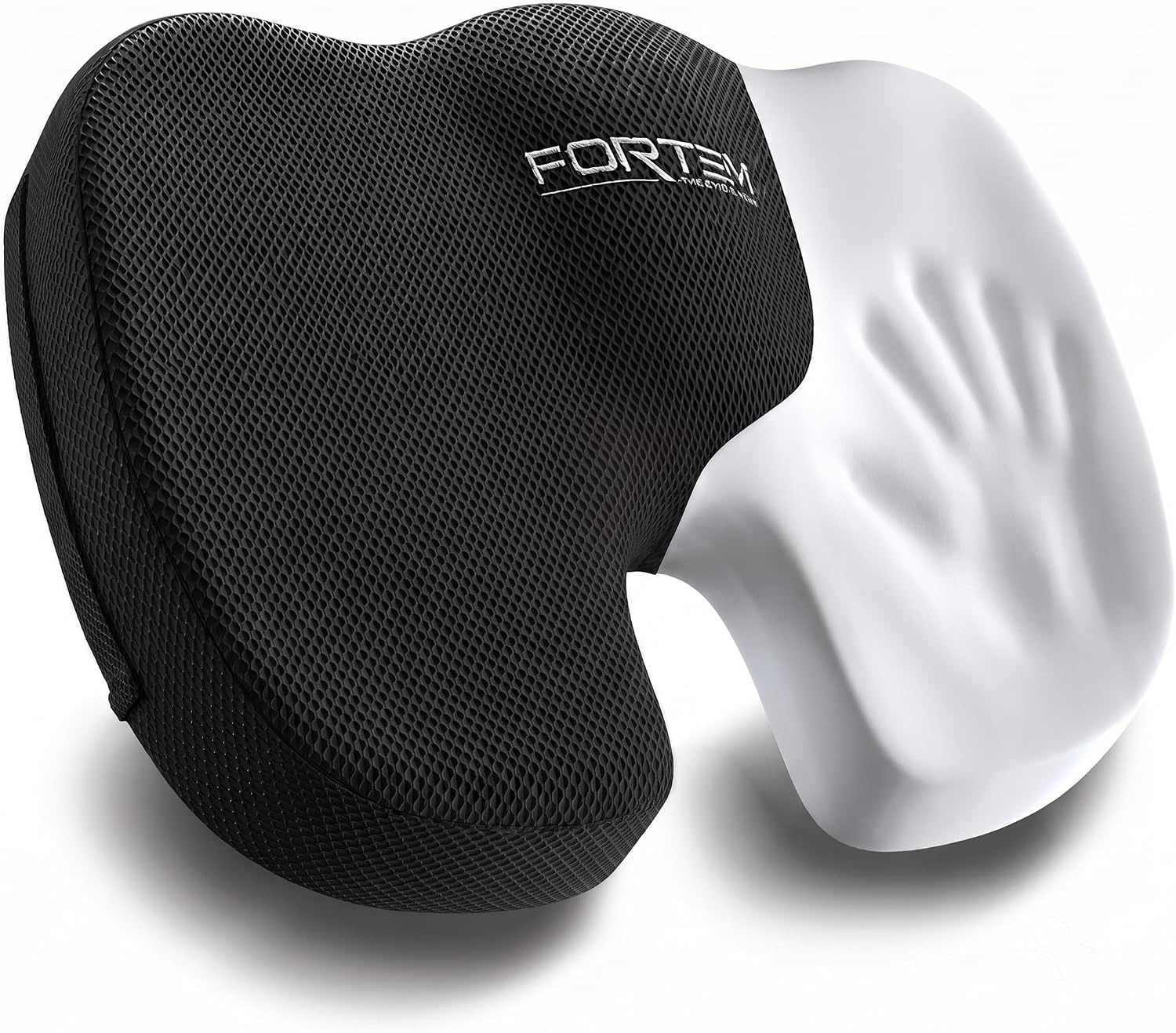
Most of the chairs I see in client homes are not broken. They are one number off. A seat pan that is 20 inches deep in a room where the person needs 17 pulls the pelvis forward, presses behind the knee, and leaves you sitting on the front edge with your hip flexors holding you up all afternoon. A cushion does not shorten a seat pan, but it changes the geometry that hurts: it fills a dish that has gone flat and takes the pressure off the sit bones and the tailbone.
That is why this cushion is the value pick in this office chair guide for hip pain. It is the cheapest correct fix for the most common cause I find, it moves between a task chair, a dining chair and a car seat, and it needs no tools.
What it does not fix: a seat that is too high, a lumbar pad in the wrong place, or armrests that stop you from getting under the desk. Those are chair problems, and a cushion on top of them just raises you further off the floor.
Who should skip it: short users whose seat is already too tall, and anyone whose chair has a deep dish and a cushion with life left in it. Adding height under you is the opposite of what a dangling-foot setup needs.
How I tested
I do not test chairs by sitting in one for an afternoon and writing down how it felt. Feelings change with the weather. Treat this as a task chair guide for hip pain and the order of checks is fixed: height, then depth, then lumbar, then armrests, then everything else.
Seat height first, with the tape. I set it so a user's feet sit flat on the floor with the thighs roughly level, then I check whether the lowest setting reaches that for someone 5'2" and whether the highest reaches it for someone 5'11". A chair that cannot reach the right height for your legs cannot be rescued by a lumbar pad.
Seat depth second, measured from the front edge of the pan to the backrest along the line where you actually sit. If there is more than about three fingers of space behind your knee, the pan is too deep and you will slide forward into a slump.
Lumbar support third. Not whether it exists, but whether the pad lands in the small of your back and whether it moves. A fixed pad an inch too low is worse than no pad at all, because it pushes your pelvis the wrong way.
Then the armrests, because the question is not comfort, it is whether you can get the seat close enough to the desk to keep both hips square.
Then I lived with each product for a full work week: both chairs, the cushion in three different chairs, the headrest attachment on two chairs that never came with one. I logged the seat height and seat depth of every chair in the notebook, and I noted where it hurt, if it hurt.
Analysis and test results
Every ergonomic chair guide for hip pain I have read starts with lumbar support, and that is the wrong end of the list. Start with seat height. If your feet dangle, your hip flexors hold your legs up all day and no lumbar pad on earth fixes that. Feet flat, thighs roughly level, hips at or slightly above the knee. That is the first number, and it is free to change.
Seat depth is the second. Two to three fingers of clearance behind the knee, no more. Deeper than that and the pelvis rolls forward, which is the position that makes the front of the hip ache.
Then lumbar support, then armrests, then recline and tilt tension. A working recline is the most underrated hip fix there is, because it changes your hip angle through the day instead of locking it at 90 degrees. Back the tension off until the chair moves when you shift your weight. The headrest and the casters come last: the headrest because it makes the recline usable, the casters because hard floor and carpet want different wheels.
The DEVAISE chair is the one I would buy with my own money for a hip-pain setup, because the adjustable lumbar pad and the flip-up armrests solve the two things I cannot fix with a tool. The mesh back held its shape through a week of full workdays, and once the tilt tension was backed off, the recline was easy enough that I used it without thinking.
The FORTEM cushion fixed a flat seat pan in three different chairs, and it is the only product here that travels. On a chair with a pan that is already too deep it helps less than you would hope, because it fills the dish without shortening the pan.
If you came here looking for a desk chair guide for hip pain and expecting one perfect chair, the honest answer is that the chair matters less than the two numbers. Get seat height and seat depth right and a mid-priced mesh chair beats a flagship with the wrong pan. Get them wrong and no chair at any price will save you.
The office chair guide for hip pain measurement table
This is the table I keep in the notebook, in the order I check it. Depth and height are measured with a tape, never read off a listing. The fit notes are mine, and so are the skip notes.
| Product | What it adjusts | Hip fit note | Price |
|---|---|---|---|
DEVAISE high back mesh chair | Adjustable headrest, adjustable lumbar support, flip-up armrests, recline | Best all-rounder for hip pain: arms up gets you square to the desk | Check current Amazon price |
FORTEM seat cushion | Nothing. It changes the seat surface | Cheapest fix for a flat or too-deep seat pan | Check current Amazon price |
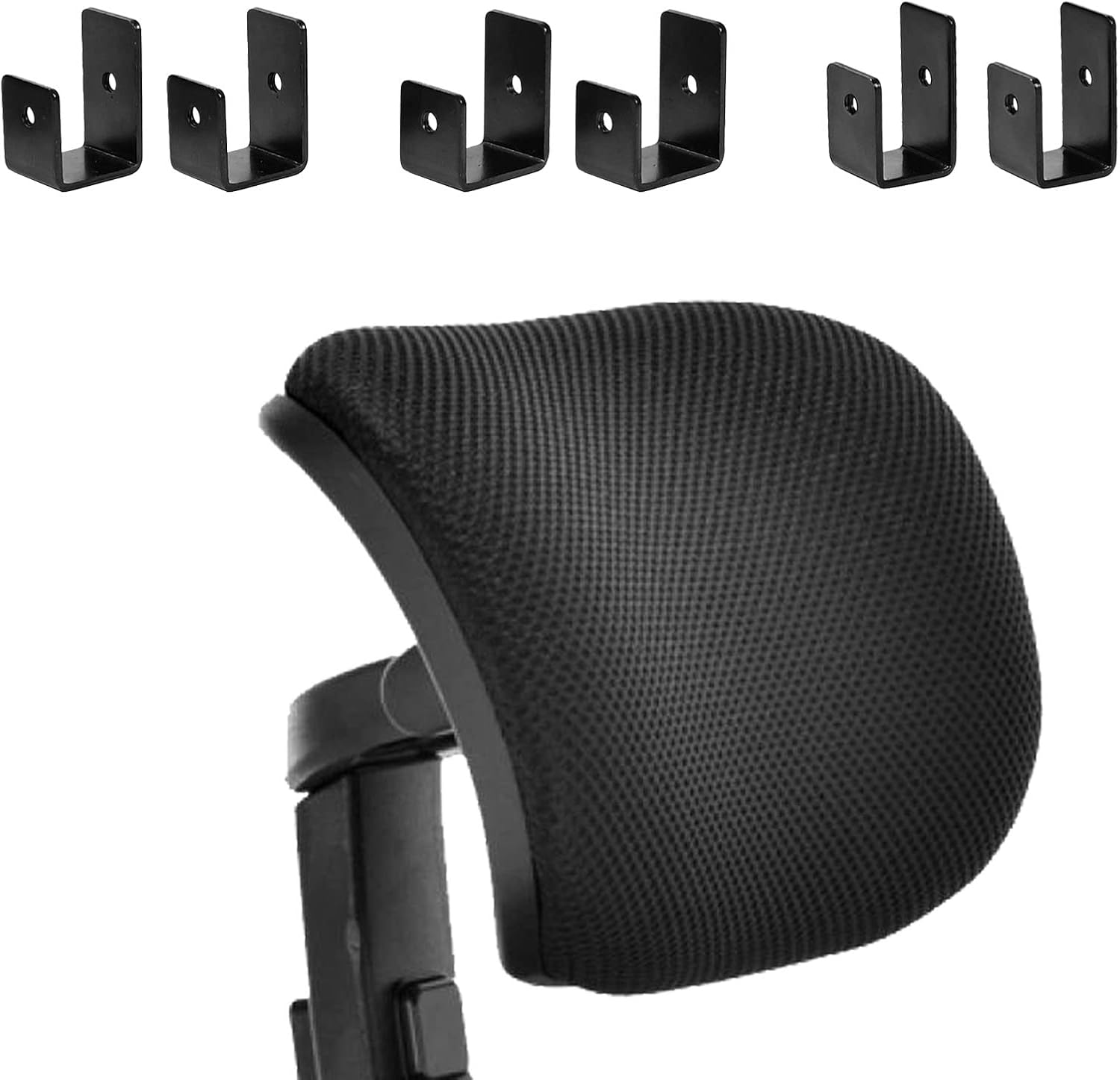 Universal mesh headrest attachment | Headrest height and angle | Keeps your neck neutral so you stop slumping onto one hip | View on Amazon → |
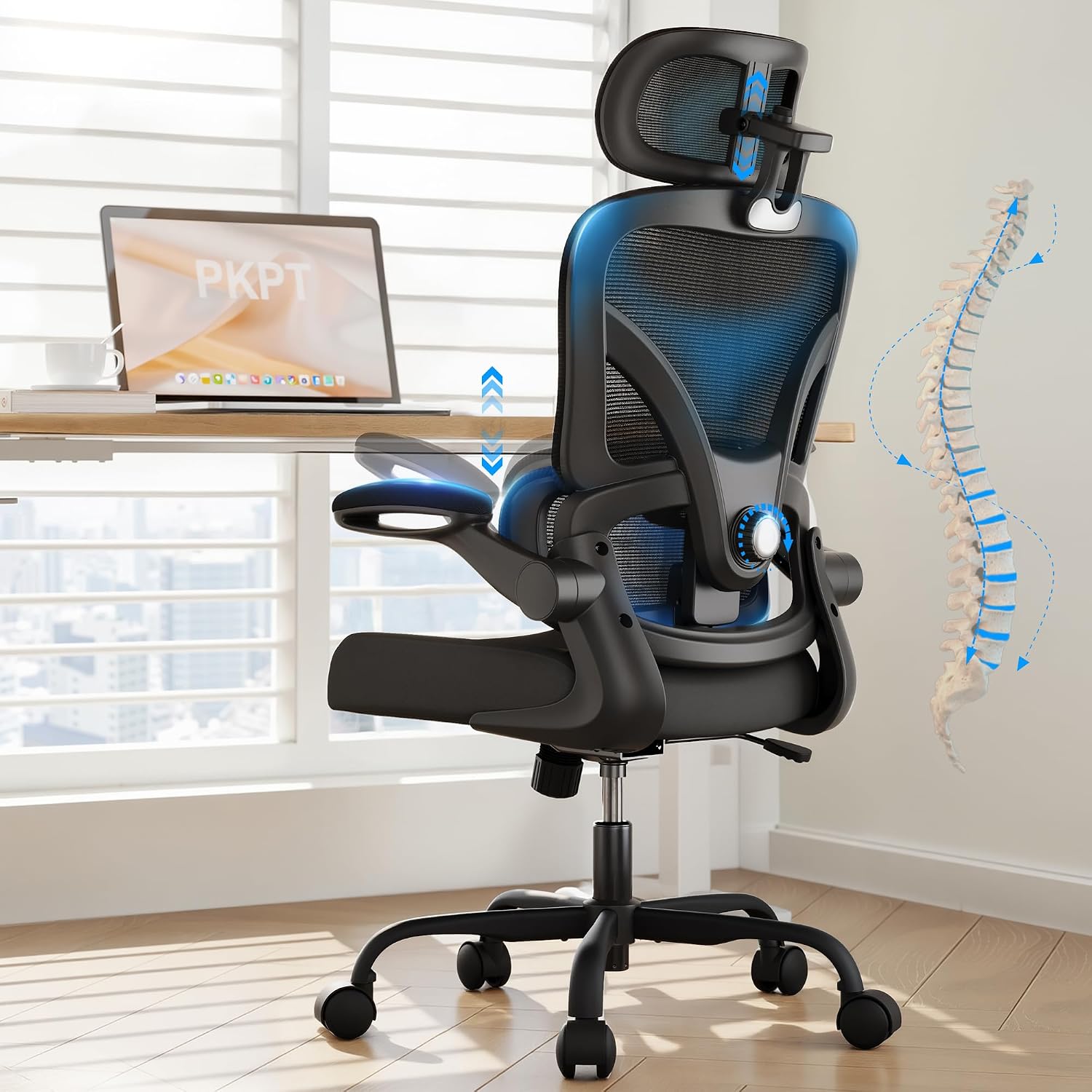 Mesh chair with headrest and lumbar support | Headrest, lumbar support, flip-up armrests | Second mesh chair, taller users, no seat depth adjustment | View on Amazon → |
If a row says nothing about seat depth, that is because the product does not change it. That is not a gap in the table. It is the point.
Adding a headrest to a chair you already own
Not every chair needs replacing. Plenty of task chairs are fine except for one thing: your head has nowhere to go when you lean back. Without a headrest, a recline turns into a neck strain, so people stop reclining, and the hip stays at 90 degrees all day. That is the whole argument for this headrest attachment. It clamps onto the back of a chair that never came with one, and it adjusts, so it can sit where your neck actually is rather than where the chair maker guessed.
It treats a symptom, not the cause. If your hip hurts because the seat pan is too deep, a headrest will not touch it. But if you avoid leaning back because your neck complains, this is the cheapest way to make the recline usable on a chair you already own. Check the back of your chair first: it needs a frame it can clamp to.
The mesh chair with a headrest and no seat depth adjustment
The second mesh chair in this guide has the same useful parts: a headrest, lumbar support, and armrests that flip up so you can get close to the desk. The armrests flipping up is the feature I would keep if I could keep only one, because it is the difference between sitting square and sitting twisted.
Where it differs is the seat pan. There is no depth adjustment, so it either fits your thigh length or it does not. Measure from the back of your knee to the back of your seat before you buy it. If you are at the short end of the range, the front edge can press behind the knee and push you back into a slump, and that is a chair to skip rather than fight. If you are taller and you want a mesh back with a headrest and flip-up arms without flagship money, this one earns its place.
Should you buy the DEVAISE high back mesh office chair?
Yes, if you are between about 5'2" and 5'11" and under roughly 220 lb. The two features that matter most for hip pain, an adjustable lumbar pad and flip-up armrests, are both here and both move, and the headrest makes the recline usable instead of decorative. It is the chair I would put in a client's office for a year and not think about again.
Skip it if you are over 6 feet with a long torso, or if you need a seat pan under 17 inches. And if your current chair is otherwise fine and only the cushion has gone flat, do not buy a chair at all. Buy the cushion.
One more thing: set the tilt tension before you judge the chair. Most people leave it cranked tight from the factory, sit rigid for a week, and decide the chair is stiff. Back it off until it moves when you shift your weight. That single adjustment is worth more than any lumbar pillow.
Should you buy the FORTEM seat cushion?
Yes, if the chair you own is the right height and the wrong seat. A flat seat pan or a pan that is too deep is the most common cause of hip pain I find in home offices, and this cushion is the cheapest correct fix for it. It moves between a task chair, a dining chair and a car seat, and it needs no tools.
Skip it if your seat is already too tall. Adding height under you pushes your feet off the floor, and dangling feet put the load straight into the hip flexors. Short users with a tall chair need a lower seat and a footrest, not a cushion. Skip it too if the chair has a deep dish and a seat with life left in it, because you are adding bulk rather than fixing geometry.
The honest order: fix seat height first, seat depth second, then lumbar support, then armrests. If you came looking for an office chair guide for hip pain and you take only one thing from it, take that order. It costs less than a new chair, and it works more often.