Tailbone pain that shows up after a long day at the desk is a pressure problem before it is a cushion problem. Your coccyx sits at the bottom of the spine, behind and below the sit bones, and it takes load from whatever surface is under you. An office chair and tailbone pain are linked by geometry rather than brand: a seat depth that pushes your pelvis forward, a seat height that leaves your feet dangling, a hard front edge, and a backrest angle that never changes all push weight onto the same small spot. I spent nine years buying and assembling chairs for 400-person floors and six more years building out home offices, and the pattern holds. The chair that hurts is rarely broken. It is usually the wrong size, set up wrong, or missing one adjustment that would have moved the load off your tailbone.
Related: How to Measure Seat Depth and Seat Height for Your Desk →
Quick answer
The office chair and tailbone pain explained version, in one paragraph: tailbone pressure comes from three things you can measure. A seat depth longer than your thigh leaves a gap behind the knee, so you perch forward on the front edge of the pan. A seat height that is too high or too low tilts the pelvis and changes where the sit bones land. A seat pan with no give under the coccyx concentrates load on one small area. Fix the measurements first, then add relief. A shaped cushion helps when the seat pan itself cannot be changed, and a chair with adjustable lumbar support, a working recline, and a seat you can actually sit back into removes the cause instead of the symptom. Nothing here is a medical claim. If pain persists, radiates down a leg, or follows a fall, that is a clinician's call, not a chair's.
Four useful options
| Model | Best fit | What stands out |
|---|---|---|
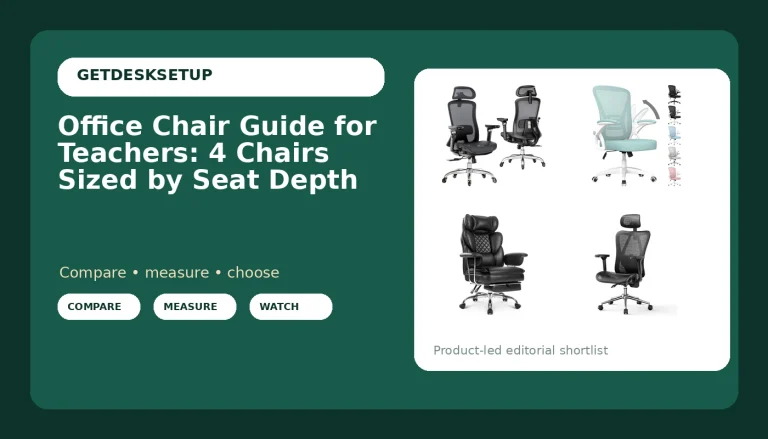
| ELABEST Mesh Office Chair | One desk, one person, full adjustability | Adjustable lumbar support and armrests, tilt function, wide seat |
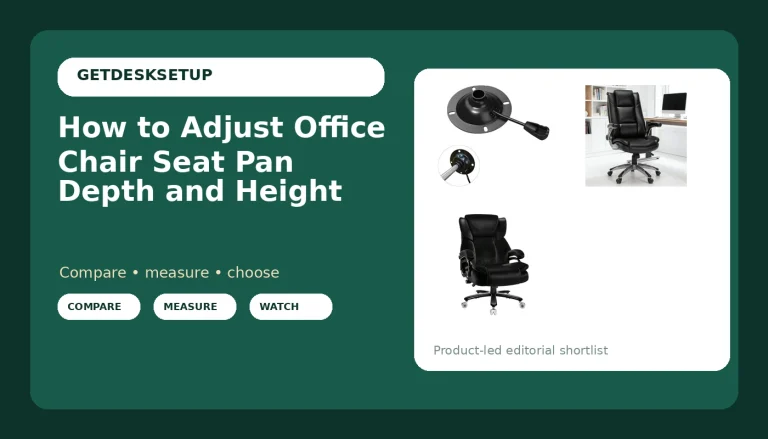
| Ergo Office Chair Cushion | A chair you are not replacing | Shaped for back, sciatica, and tailbone pain relief |
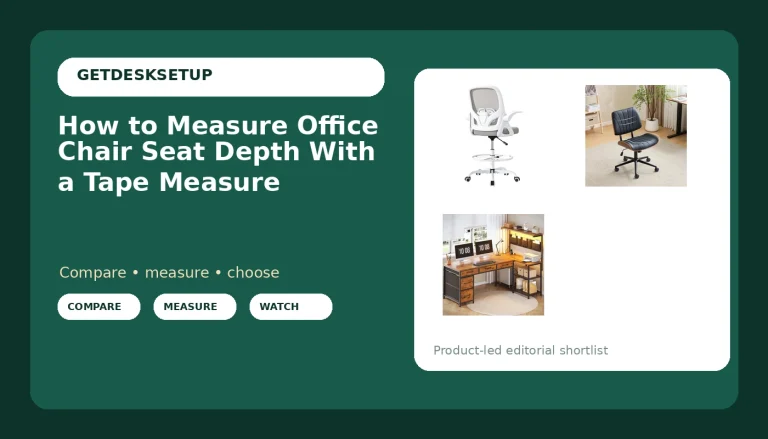
| FelixKing Office Chair (2-pack) | Two desks or a shared home office | Two mesh task chairs, lumbar support, flip up armrests |
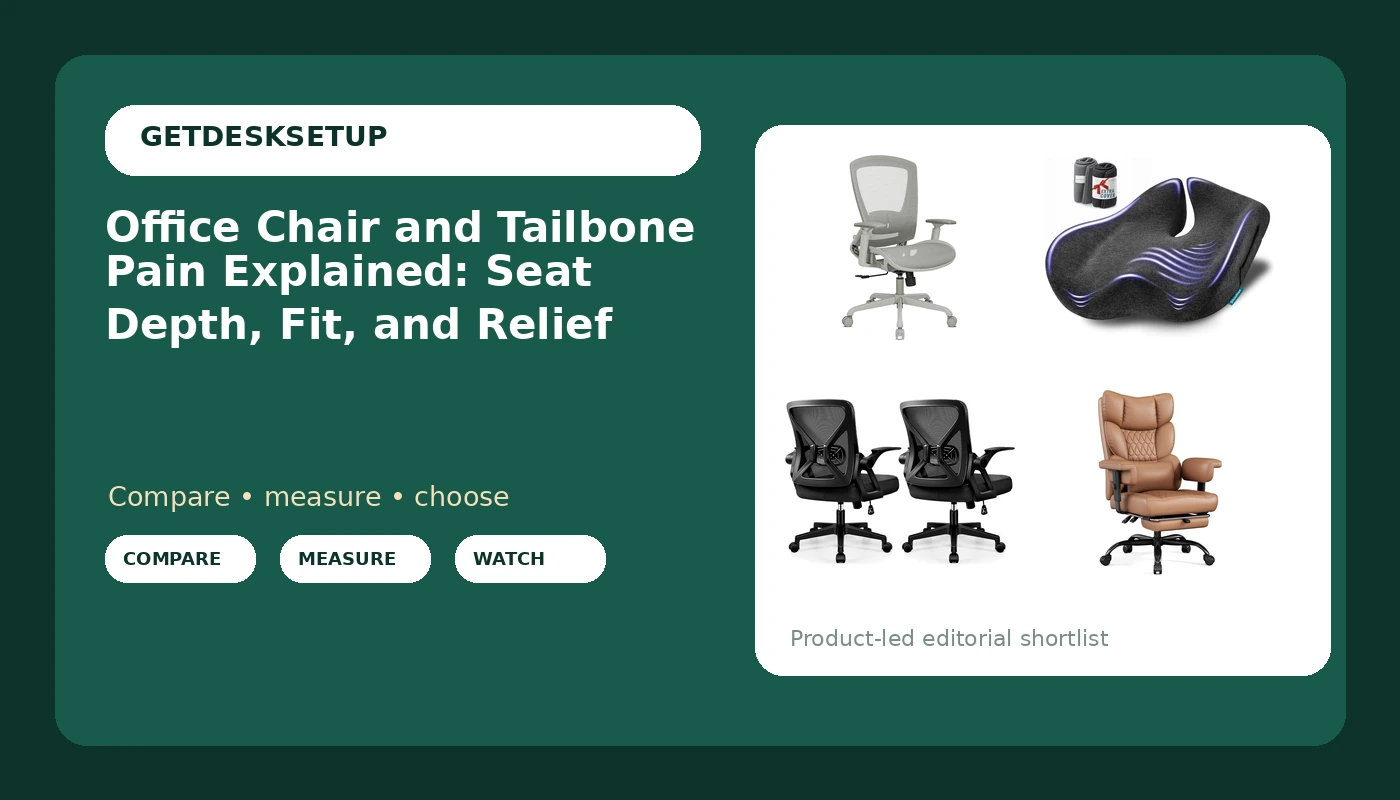
| Misolant Big and Tall Office Chair | Larger frames and long sessions | High back, footrest, 155 degree recline, lift armrests |
The adjustable mesh chair: ELABEST Mesh Office Chair
Tailbone load responds to change, and this chair gives you the three adjustments that change it. The lumbar support can be positioned rather than molded in place, which matters because the curve of your lower back is not where a fixed pad assumes it is. The tilt function lets the seat angle move through the day, so the contact patch under your pelvis is not identical at 9 a.m. and at 4 p.m. The armrests carry forearm weight so your shoulders can drop, which reduces the forward lean that pushes you onto the front edge of the seat. Who should skip it: anyone above the weight range the frame is rated for, anyone who wants a headrest for reclined work, and anyone who dislikes mesh at the front of the seat pan, since the edge of a mesh seat can dig in behind the thigh. If that last one is you, the cushion below is the cheaper test.
The targeted cushion: Ergo Office Chair Cushion for Back Pain, Sciatica, Tailbone Pain Relief
This is the fix for a chair you are not replacing. Buying a new chair because of one pressure point is a large answer to a small problem, and a cushion that removes material under the coccyx changes the contact area without changing the frame. Two things to check first. Thickness: any cushion raises your effective seat height, so if your feet already hover, adding foam makes the dangle worse and can push pressure forward rather than away. Seat depth: a cushion that sits proud of the seat pan shortens the usable depth, which is fine if you were perching and a problem if you were already at the limit. This is also the only option here that travels, so it works on an office chair, on the dining chair you use as a desk chair, and on the second desk in the spare room.
The two-desk pair: FelixKing Office Chair
Two chairs, one purchase, which is the whole reason this one is here. If you run desks for two people, or you keep one chair at a standing desk and another at a second workstation, buying singles doubles the cost for no benefit. The flip up armrests are the detail worth naming, because they let the chair slide fully under a desk when fixed armrests would hit a drawer or the desktop, and that is what makes a small room workable. A task chair and tailbone pain are often mismatched by seat depth alone, so measure before you commit: the mesh back and lumbar support cover airflow and lower back contact, and the swivel base with casters suits a hard floor or a low pile carpet. Who should skip it: anyone who needs a headrest, anyone above the weight range of a standard task chair frame, and anyone who wants a seat depth adjustment, which this chair does not offer.
The big and tall option: Misolant Big and Tall Office Chair
A recline of this size is not a comfort feature, it is a pressure tool. When the backrest opens past 120 degrees, the pelvis rotates back and load moves off the coccyx and the front of the seat onto the backrest, which is exactly what you want when sitting upright hurts. The footrest matters for a different reason: a reclined chair with feet on the floor pulls the thighs up and forward, and shorter legs end up with the seat edge pressing behind the knee. The adjustable lift armrests and the included lumbar support pillow let you tune the fit, and the big and tall build means a wider seat and a taller back than a standard task chair. Who should skip it: anyone in a small room, because a high back recliner needs clearance behind it, and anyone who runs warm, because faux leather holds heat.
Prices and availability may change. Product images, names, and retailer links are matched to verified listings. No current price, rating, stock status, or measured result is stated here without current evidence.
How an office chair and tailbone pain are connected
The coccyx is a small triangular bone at the base of the spine, and it is not designed to carry your full body weight for eight hours. When you sit, most of your weight should land on the two sit bones, the ischial tuberosities, which are broad and load-tolerant. The tailbone sits behind them, slightly higher, and it only takes real load when you slide forward, when the seat pan tilts you back into a slouch, or when a hard edge sits directly under it. That is why the pain often shows up late in the day rather than at the start. Pressure builds in the tissue over the bone, and the difference between a desk chair and tailbone pain that fades by lunch and pain that lasts into the evening is usually how long the same patch of tissue stays loaded without a change in position.
Three mechanics do most of the damage. Perching is the first: if the seat depth is longer than your thigh, you cannot use the backrest without your knees hitting the edge, so you slide forward, and now your tailbone is over the front lip of the pan. Slouching is the second: when the backrest angle and the lumbar support do not match your back, you slide down and the pelvis rotates back, which presses the coccyx into the seat. A hard or over-soft seat pan is the third: too firm and there is no give under the bone, too soft and the foam bottoms out and the pan underneath does the work. An ergonomic chair and tailbone pain are not opposites, by the way. A chair can be labeled ergonomic and still ship with a fixed lumbar pad, no tilt tension control, and a seat depth that is wrong for your height. The label is not a measurement.
Seat height and seat depth: the two numbers that decide it
Two measurements settle most of this, and you take both at home with a tape and a wall.
Seat height: sit on a hard chair with your feet flat and measure from the floor to the crease behind your knee, at the underside of the thigh. That is your popliteal height. Your office chair seat should sit within about an inch of that number, so your feet rest flat and your knees land roughly level with your hips. If the seat is higher than your popliteal height, your feet dangle, your thighs take the edge of the seat, and pressure moves forward onto the front of the pan. If it is lower, your knees rise above your hips and your pelvis rolls back onto the tailbone.
Seat depth: measure from the back of your buttock to the back of your knee, then subtract two to three inches. The result is the seat depth you want, because it leaves a gap behind the knee while still letting your back reach the backrest. Too deep and you perch. Too shallow and your thighs carry weight instead of your sit bones.
Then check the numbers in this order:
- Measure your popliteal height with the shoes you actually wear at the desk, and write it down.
- Measure the back of your buttock to the back of your knee, and subtract two to three inches for your target seat depth.
- Compare both against the chair's stated seat height range and seat depth before you buy anything.
- Set seat height first so your feet are flat, then set the armrest so your elbows rest near desk height with your shoulders down.
- Set tilt tension so the backrest follows your weight instead of fighting it, and recheck the setup after a week of real work.
How to sit so the pressure moves
- Sit back until your hips touch the backrest, then bring the lumbar support to the small of your back rather than the middle of your spine.
- Keep both feet flat. If the seat height cannot come down far enough for that, add a footrest instead of lowering the chair below a workable desk height.
- Change your recline angle two or three times a day. Small angle changes redistribute load off the coccyx without any new equipment.
- Use the armrest to take forearm weight when you are reading or thinking, not only when you are typing.
- Stand up every 30 to 45 minutes. The most effective pressure relief is a position change, and no cushion replaces it.
- If you add a headrest or a footrest, recheck the seat height afterward, because both change how your legs load the front edge of the seat.
Which option should you choose?
Choose the ELABEST Mesh Office Chair when you are replacing the seat and want the lumbar support, armrest, and tilt adjustments that let you change the load through the day. Choose the Ergo Office Chair Cushion for Back Pain, Sciatica, Tailbone Pain Relief when the chair is otherwise fine and the pressure is concentrated in one spot, or when you need relief that moves between two chairs. Choose the FelixKing Office Chair when two desks need chairs at once and the flip up armrests solve a tight room. Choose the Misolant Big and Tall Office Chair when you need a wider seat, a taller back, and a deep recline with a footrest for long sessions.
One caveat that applies to all four: none of them can be sized from a product page alone. Seat height and seat depth are the deciding numbers, and the only reliable source for them is a tape measure and your own body. If a listing does not state a seat height range, treat that as missing information rather than assume it fits.
The bottom line
An office chair and tailbone pain usually come down to fit, not to foam quality or price. Measure your popliteal height and your seat depth first, then match a chair to those numbers, then set the height, the armrest, and the tilt tension in that order. If the chair you own is right everywhere except under the coccyx, a shaped cushion is the cheapest test and the easiest to move between desks. If the seat pan itself is the problem, a mesh task chair with positionable lumbar support and a working recline removes the cause, and the two-pack covers a second desk without doubling the spend. And if you need a wider seat and a deeper recline, the big and tall option exists for exactly that. Fix the geometry, then let the chair do the rest.