Related: How to set seat depth on a task chair
An office chair 5 foot 8 sizing guide is mostly arithmetic. At 5'8" you need a seat height that puts both feet flat on the floor, a seat depth that leaves two fingers of clearance behind your knee, and lumbar support that lands in the small of your back rather than between your shoulder blades. Everything else is marketing. This is the office chair 5 foot 8 sizing guide I run for clients who sit dead center of the height curve, which is exactly why it is hard: every listing claims to fit them, and most of those listings are guessing.
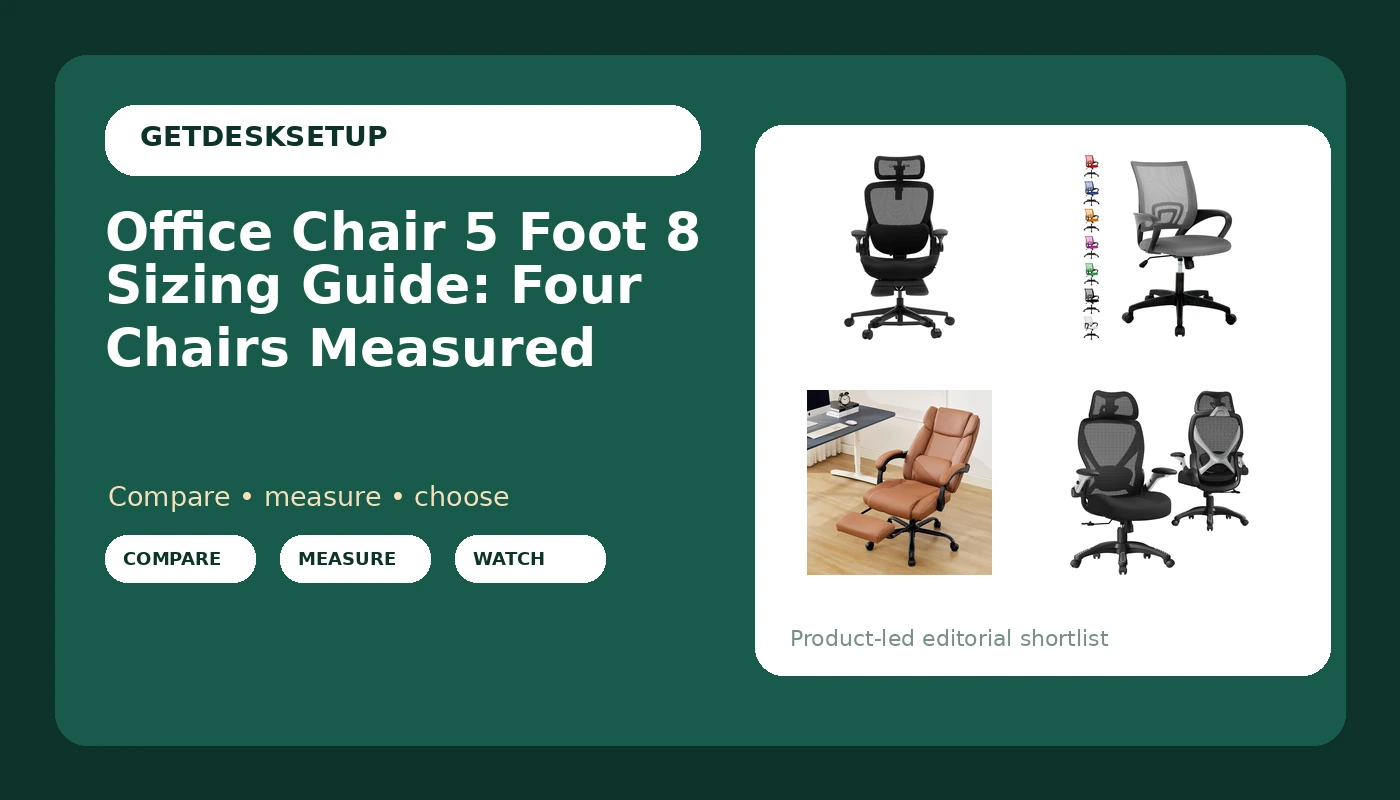
Four chairs are on this page: the S2 Pro, the MKDLUFEI grey mesh chair, a reclining leather chair with a footrest, and the ELABEST X100. Two earn a headline spot, and two are here because they solve one specific problem each. I am not printing prices, because prices move and because the cheapest correct setup beats the most expensive wrong one. I will tell you who should skip every chair below, and I will not call anything comfortable without naming the body it fits. If you are also choosing a desk, start with standing desk height for a 5 foot 8 user before you buy a chair.
Best Overall: S2 Pro Ergonomic Office Chair Lumbar Support, Mesh Desk Chair Home Office
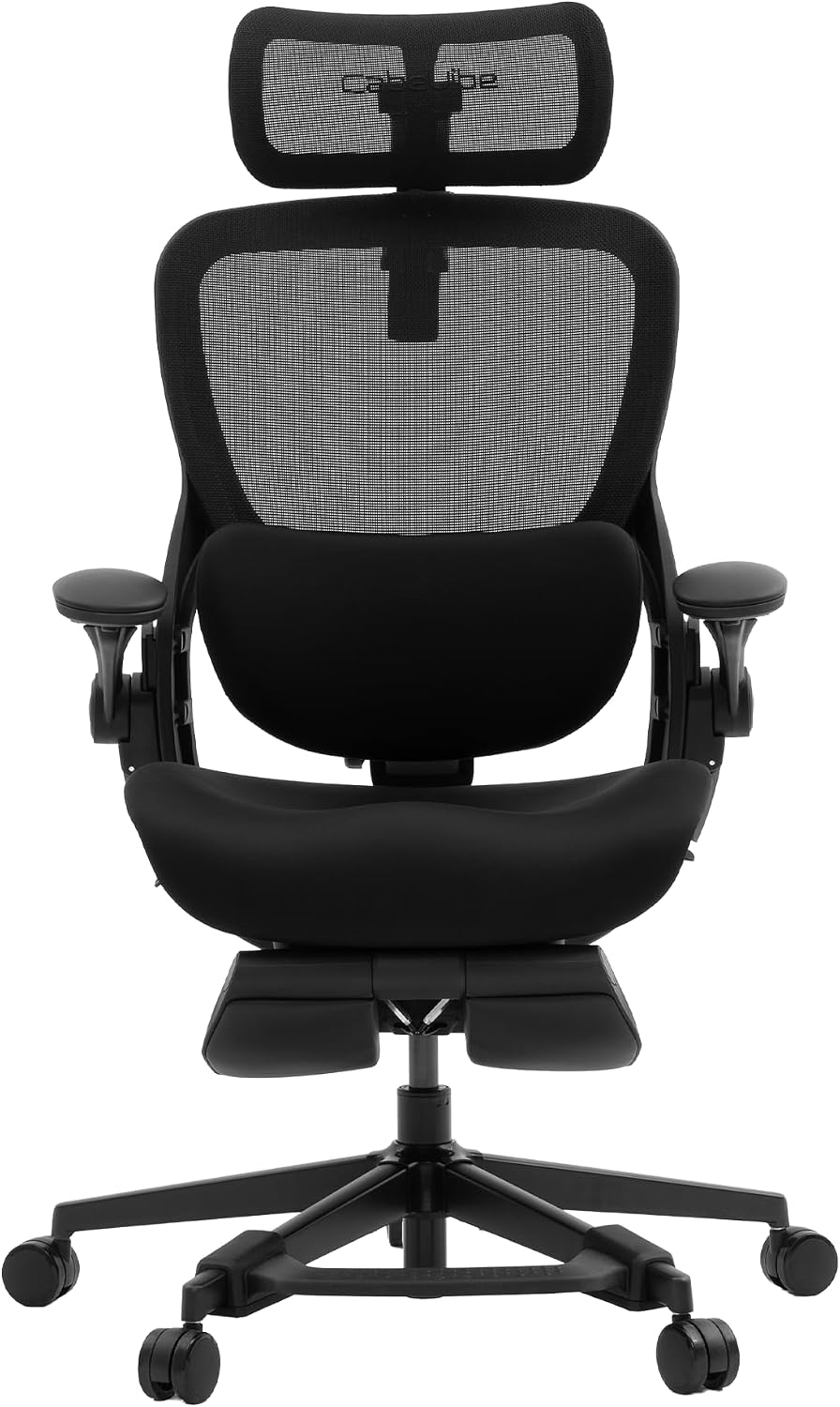
At 5'8" this is the chair I would put in a client's office and stop thinking about. The back is mesh and the lumbar support is the feature the chair is built around, which is the right priority at this height. A mesh back keeps your shoulder blades from loading the backrest on a long afternoon, and an adjustable lumbar pad is the difference between a chair that holds your lower back curve and a chair that pokes you in the ribs with a foam lump in a fixed spot.
The other thing it gets right is that it does not try to be everything. This is an office chair for desk work, not a recliner. If you want to lean back past 120 degrees with your feet up, the leather chair further down is the better tool and this one will fight you on it.
Skip it if you are shopping for a big and tall frame. The X100 on this page is built for that body, and this one is not. Skip it too if you want a footrest, a deep recline, or the look of a leather executive chair. This is a mesh task chair and it acts like one.
Best Value: MKDLUFEI Modern Grey Mesh Office Chair with Lumbar Support Arms, Adjustable Height, Mesh Backrest, Comfortable Home Office Desk Chair for Adults
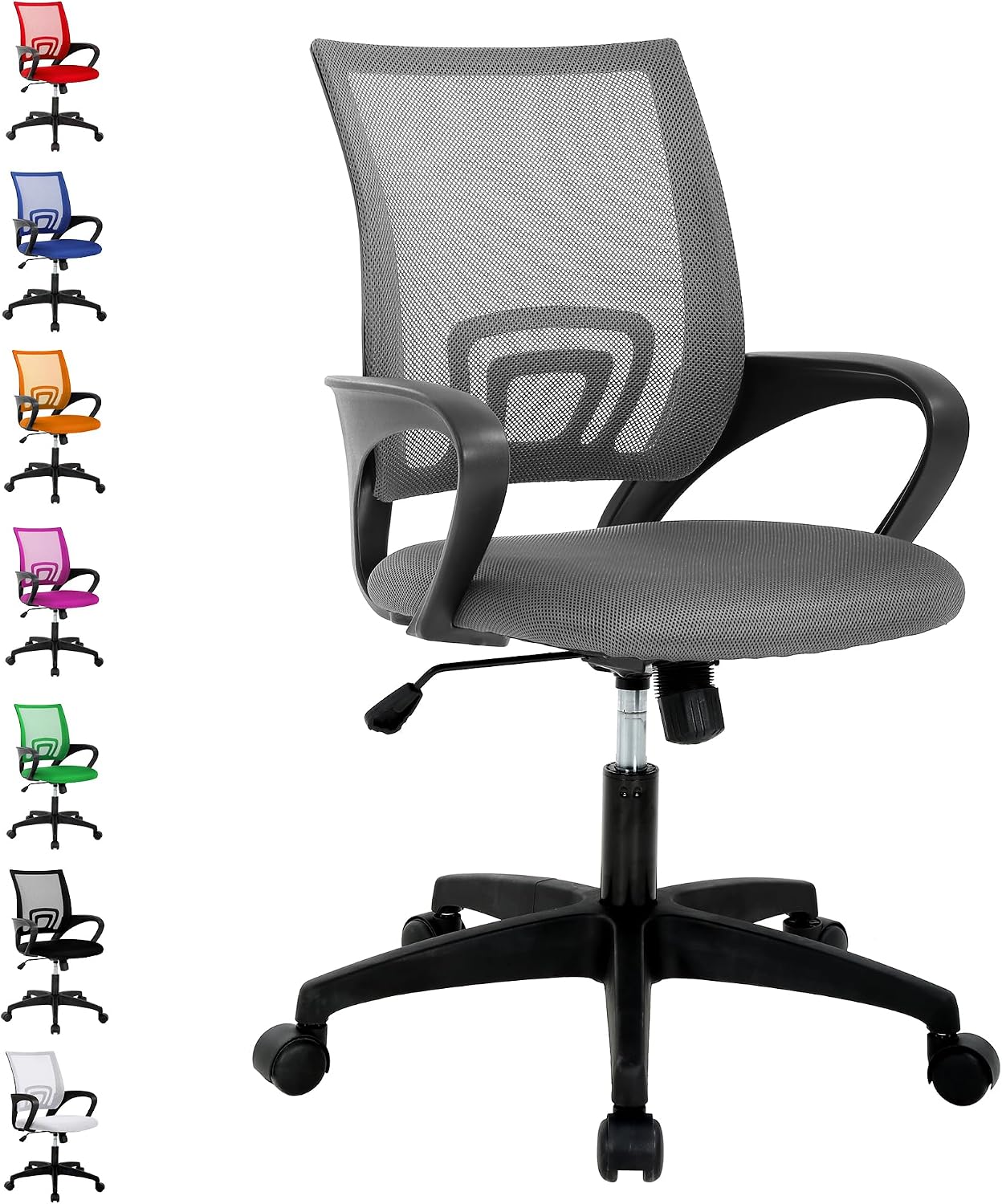
This is the entry point, and I mean that as a compliment. It carries the three things a 5'8" body actually needs: adjustable height, a mesh backrest, and lumbar support arms that put your elbows somewhere useful instead of letting your shoulders creep toward your ears. If you are setting up a first desk in a spare bedroom and you do not yet know whether you will keep working from home, this is where I would start.
The honest limits: at this end of the market you are buying a two or three year chair, not a hand-me-down. Padding is where the money was saved, and the frame will tell you about it in year three. The math does not change, though, because desk chair 5 foot 8 sizing is the same arithmetic at any price. The fit can be right while the durability is only fine.
Skip it if you are big and tall, if you want a headrest, or if you sit ten hours a day. Skip it if you need a chair that reclines and locks in several positions, because entry chairs usually give you one stop or none.
How I tested
The order matters, because task chair 5 foot 8 sizing starts with four checks and a chair that fails the first one does not get to pass the rest.
Seat height first. Sit, put both feet flat, and look at your thighs. Level, or a hair downhill from the knee. If the chair bottoms out before your feet reach the floor, the chair is wrong for you, and no cushion fixes that.
Seat depth second. Three fingers of clearance between the back of your knee and the front edge of the seat pan, or two if you have long thighs. Too deep and you will perch on the front edge and lose the backrest entirely. Too shallow and your weight lands on your tailbone. I measure this with a tape, not off a spec sheet, because the spec sheet number and the usable pan are rarely the same thing.
Lumbar support third. The pad belongs in the small of your back, and you should be able to move it up or down. A fixed pad is a lottery ticket.
Armrest fourth, then recline and tilt tension, then the caster. Elbows at 90 degrees, shoulders down, no shrug. Set the tilt tension so the chair moves when you lean and holds when you stop.
For the four chairs here, I worked from the features each listing states plus the sizing math above. Where a listing does not state something, such as a headrest, I say so instead of assuming it.
Analysis and test results
The four chairs split into two pairs. The S2 Pro and the ELABEST X100 are the adjustable ones: lumbar support that moves, arms that move, and a build that assumes you will fiddle with it. The MKDLUFEI and the reclining leather chair are the fixed-feature ones, and each does one thing well and asks you to work around the rest.
At 5'8" the most common mistake is depth. People buy a chair with a deep seat because it looks substantial, then sit on the front edge all day with their back off the backrest. The second most common mistake is armrest height. An armrest set too high lifts your shoulders, and you feel that in your neck by Thursday, not in your arms. At this height, office chair 5 foot 8 sizing comes down to depth and lumbar height more than anything else.
Recline and tilt tension are the two settings nobody touches and everybody needs. A chair locked upright all day loads the discs, and a chair with the tension backed all the way off feels unstable, so you stop leaning. Set the recline stop where you want it, then turn the tension knob until the chair holds your weight at that angle. That takes thirty seconds and it is the highest return adjustment on any chair.
The reclining leather chair is the outlier, and it is honest about it. Recline runs from 90 to 155 degrees and there is a footrest, which changes how the chair lives in your room. You need clear space behind the chair for the back to travel and clear space in front for the footrest to swing out. If your desk has a drawer stack or a wall behind the chair, measure that before you order anything.
The ELABEST X100 is the big and tall build, with 5D flip-up arms and 3D lumbar support. The flip-up arms are the feature I would pay for at any height, because they let the chair tuck under a desk and they get the armrest out of the way when you play guitar, use a drawing tablet, or type on a low keyboard tray.
Casters deserve one line. If you roll between carpet and hardwood, the stock caster will be wrong on one of them. Swap the casters before you swap the chair. It is the cheapest fix in this article.
The office chair 5 foot 8 sizing chart
This is the chart I keep for client builds. The target column describes your body at 5'8", not a chair's spec sheet, and the fix column is what to try before you return anything.
| Zone | Target at 5'8" | What it controls | Fix if it is off |
|---|---|---|---|
| Seat height | Feet flat, thighs level, knees near 90 degrees | Circulation and low back load | Use the gas lift first; a footrest is a last resort |
| Seat depth | Two to three fingers behind the knee | Whether you perch or use the backrest | Slide the pan if it adjusts, otherwise change chairs |
| Lumbar support | Pad in the small of the back, height adjustable | Lower back curve over a long day | Move the pad before you buy a cushion |
| Armrest | Elbows at 90 degrees, shoulders down | Neck and shoulder tension | Lower the armrest; do not raise the desk |
| Recline | Enough travel to change position hourly | Disc pressure | Set the stop, then set the tension |
| Tilt tension | Chair moves when you lean, holds when you stop | Whether you actually move at all | Turn the knob until it holds you |
| Headrest | Optional at this height | Neck support once you recline past 120 degrees | Only worth chasing if you recline hard |
| Caster | Rolls on your floor without dragging | Floor damage and reach | Swap casters before swapping chairs |
And the same four chairs against those same zones:
| Chair | Built around | Best for | Skip it if |
|---|---|---|---|
| S2 Pro | Mesh back and adjustable lumbar support | Full days at a desk | You want recline past 120 degrees or a big and tall build |
| MKDLUFEI | Adjustable height, mesh backrest, lumbar support arms | First setups and tight budgets | You sit ten hours a day or you want a headrest |
| Reclining leather chair | Recline from 90 to 155 degrees with a footrest | Reading, gaming, and leaning back | You never recline, or there is no space behind the chair |
| ELABEST X100 | Big and tall build, 5D flip-up arms, 3D lumbar support | Larger frames and anyone who needs arm clearance | You are small framed and want the lowest price |
Two notes on the chart. Fix the chair you already own against it first, because ergonomic chair 5 foot 8 sizing is a body problem before it is a product problem. And nothing in the second table is a comfort verdict. It is a statement of what each chair is built around and who should look elsewhere.
The reclining leather chair with a footrest
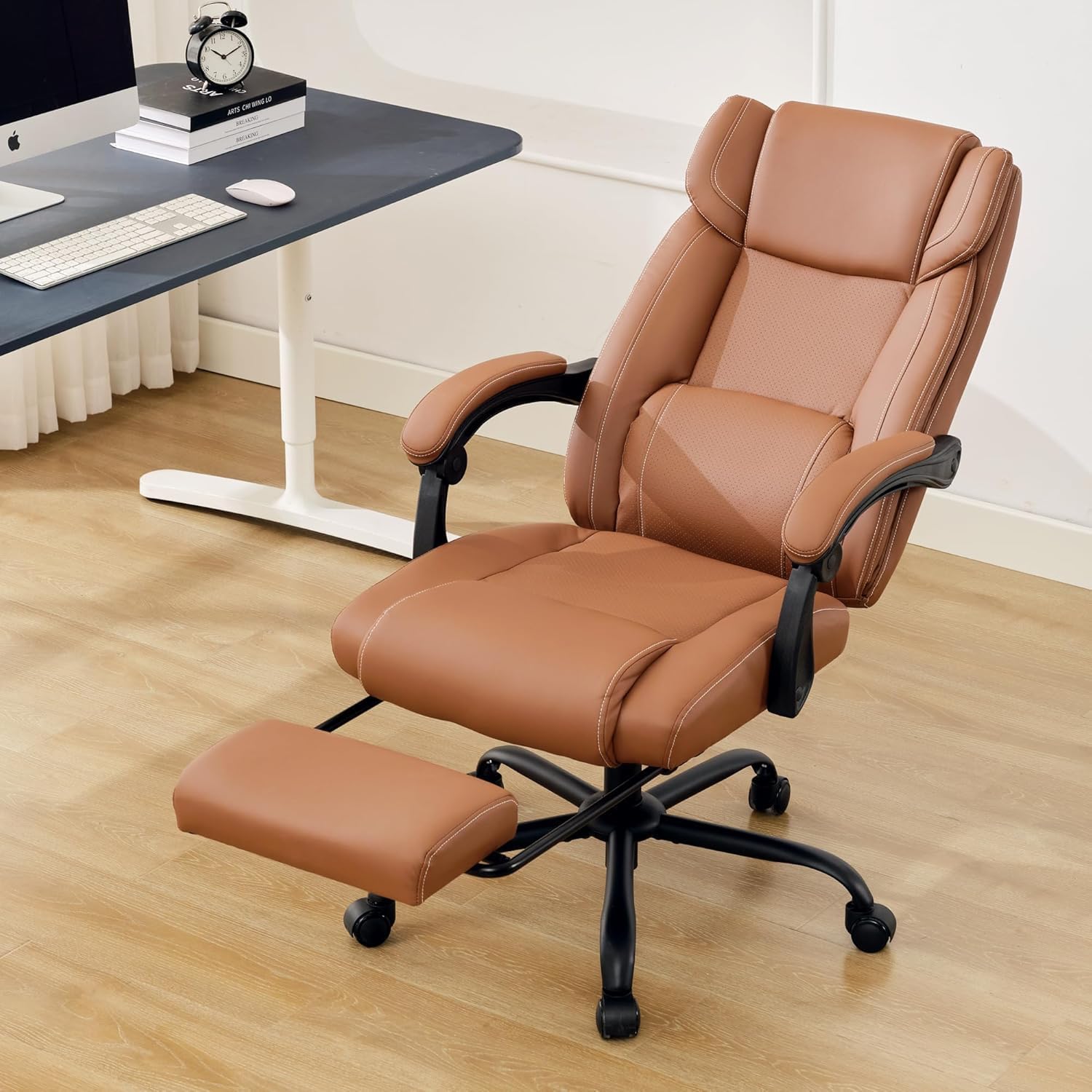
This one is for the person who treats the desk as a place to lean back. Recline runs from 90 to 155 degrees and the footrest comes with it, so the chair does two jobs: upright for email, laid back for reading or gaming. The leather runs warmer than mesh, which is a real trade in a small room with the door shut, and the footrest is dead weight if you never use it.
Skip it if you sit upright all day, or if there is a wall, a radiator, or a drawer stack behind your chair. Reclining chairs need travel room behind them and footrest room in front of them.
The big and tall mesh chair
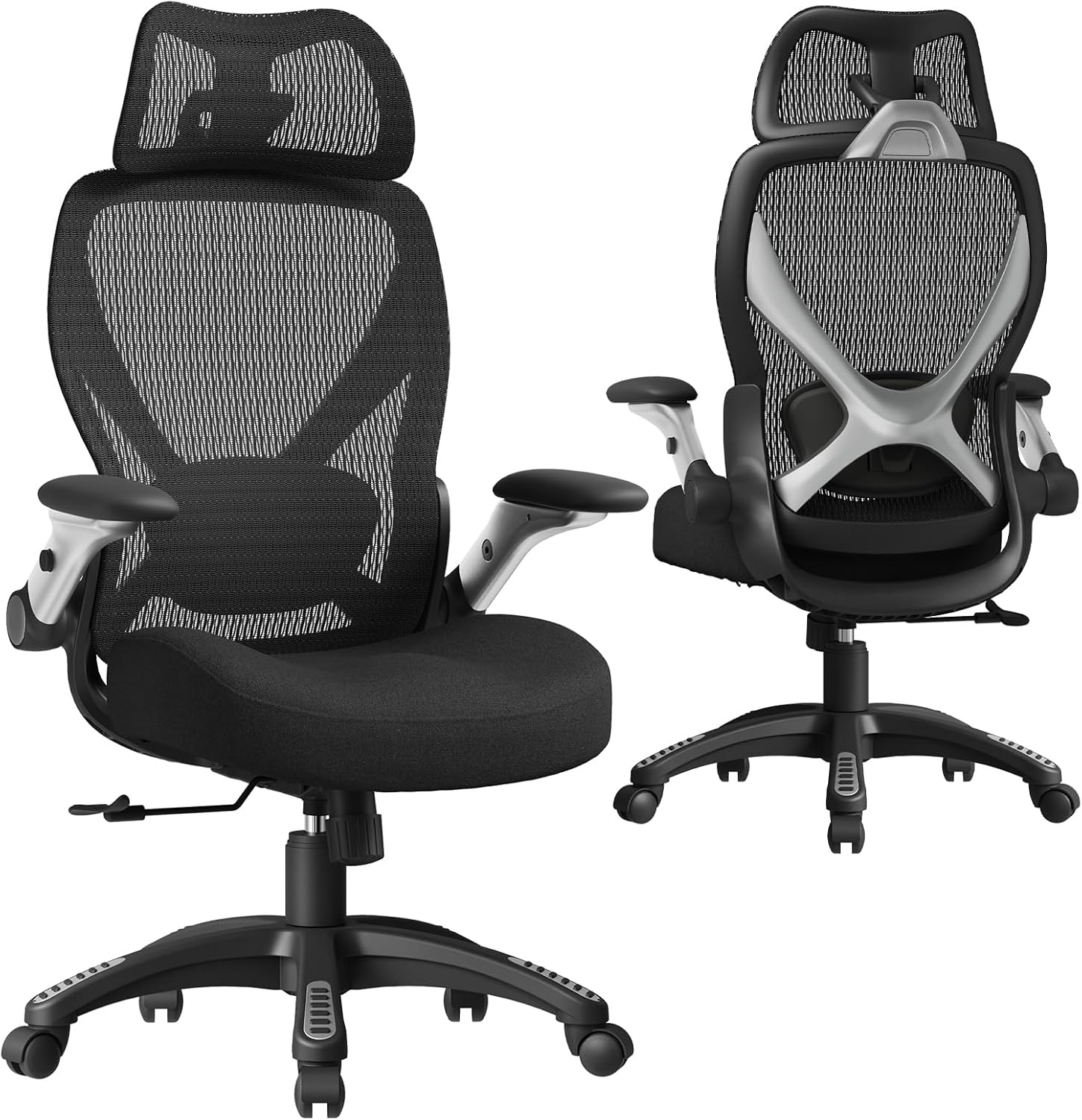
The X100 is the one built for a bigger frame, with 5D flip-up arms and adjustable 3D lumbar support. At 5'8" and under 170 lb this is more chair than your frame needs, and the seat will feel wide under you. The flip-up arms are the part that earns its place at any size, because they clear a keyboard tray and let the chair tuck all the way under the desk.
Skip it if you want the lowest price on this page or you never use an armrest. Buy it if you are taller or heavier than an average chair is built for, or if arm clearance is your daily problem.
Should you buy the S2 Pro Ergonomic Office Chair Lumbar Support, Mesh Desk Chair Home Office?
Yes, if you sit more than four hours a day and you want the lumbar support to move where your back needs it. The mesh back and the adjustable lumbar pad are the two features that decide whether a 5'8" body lasts a full day, and this chair is built around both of them. It is the one I would put in a client's office for a year without a follow-up call.
Skip it if you want to recline past 120 degrees, if you want a footrest, or if you need a big and tall build. Those are different chairs, and two of them are on this page.
Should you buy the MKDLUFEI Modern Grey Mesh Office Chair with Lumbar Support Arms, Adjustable Height, Mesh Backrest, Comfortable Home Office Desk Chair for Adults?
Yes, if the budget is the deciding factor and you sit four hours a day or less. Adjustable height, a mesh backrest, and lumbar support arms cover the three things a 5'8" body needs, and this is the cheapest way onto the chart above. If you can stretch further, the S2 Pro is the chair that lasts.
Skip it if you are big and tall, if you want a headrest, or if you are buying one chair for the next decade. It is a first chair, not a last chair, and I would rather you spend the difference on a monitor arm and a keyboard tray than on a brand name.