I have taped seat depth in 310 home offices, and the argument I have most often with a client is never about brands. It is about adjustable vs fixed lumbar support. A chair can have a steel frame, a long warranty, and a headrest that moves six ways, and still push a hard curve into a spot your spine does not want. Fixed lumbar support is a shape the factory picked. Adjustable lumbar support is a shape you pick. That one difference decides whether you are still fine in month eight, and it is the first thing I check before a chair goes into a client's office.
Related: How to Measure Seat Depth and Desk Height for Your Body
The short answer to adjustable vs fixed lumbar support is that adjustable wins for most desks, and the cheapest way to get it is not always a new chair. Sometimes it is a support belt you position yourself. The long answer is about torso length, seat depth, and the fact that you cannot measure a fixed curve from a product photo.
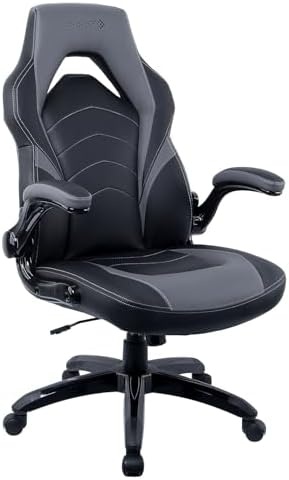
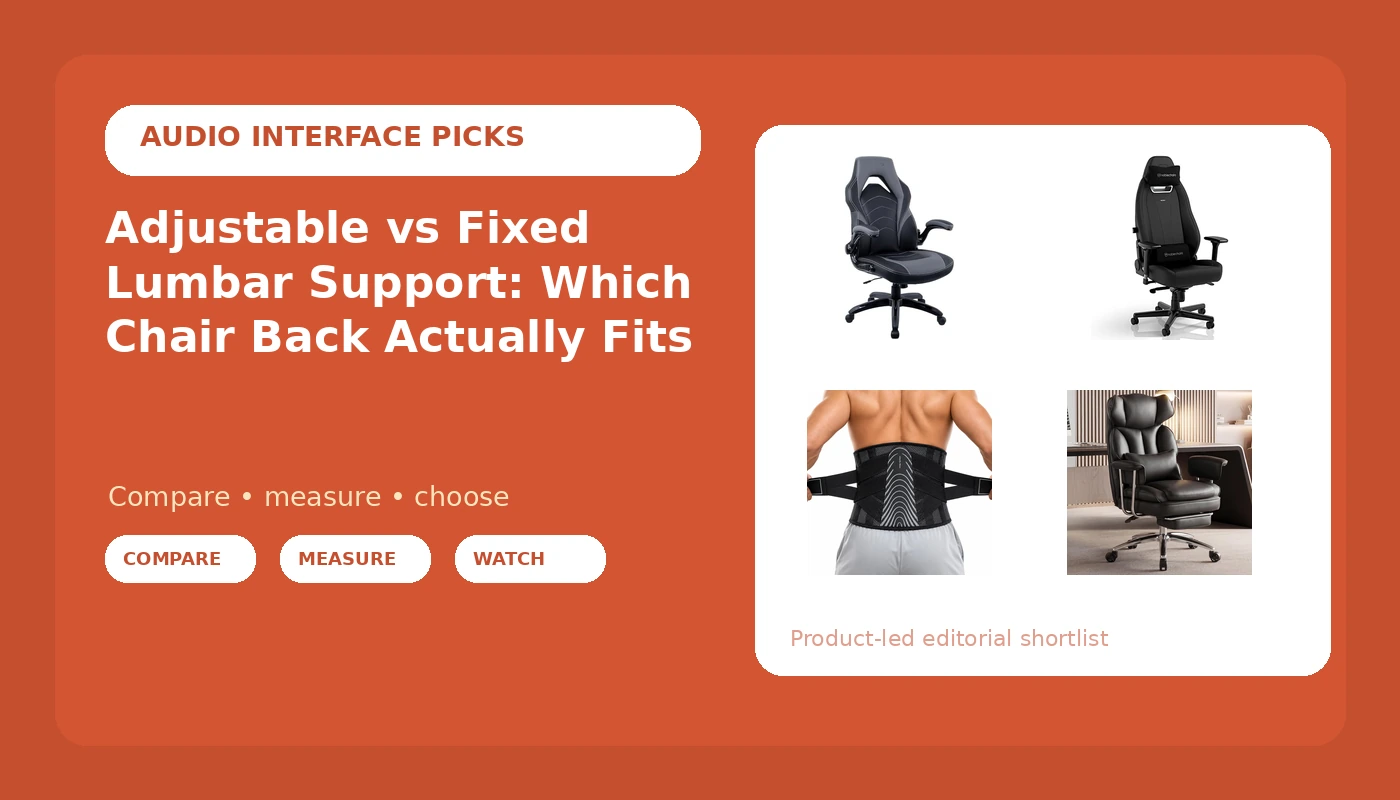
STAPLES Emerge Vortex Gaming Chair
Adjustable height and a swivel base, so you can set seat height first and worry about the backrest second
The lumbar piece in this class is often a strapped pillow, so confirm it can be repositioned before you buy
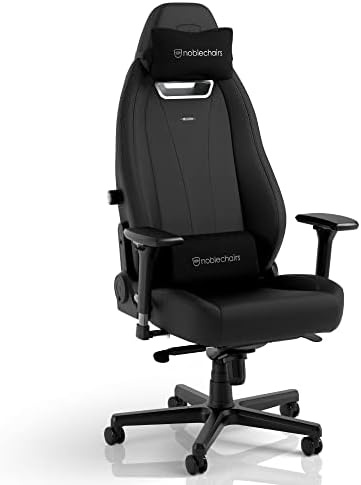
noblechairs Legend Ergonomic Gaming Chair
Built as an ergonomic seat first and a gaming chair second, with the backrest as the organizing feature
PU leather does not breathe, and a warm room with the door closed is where you notice it
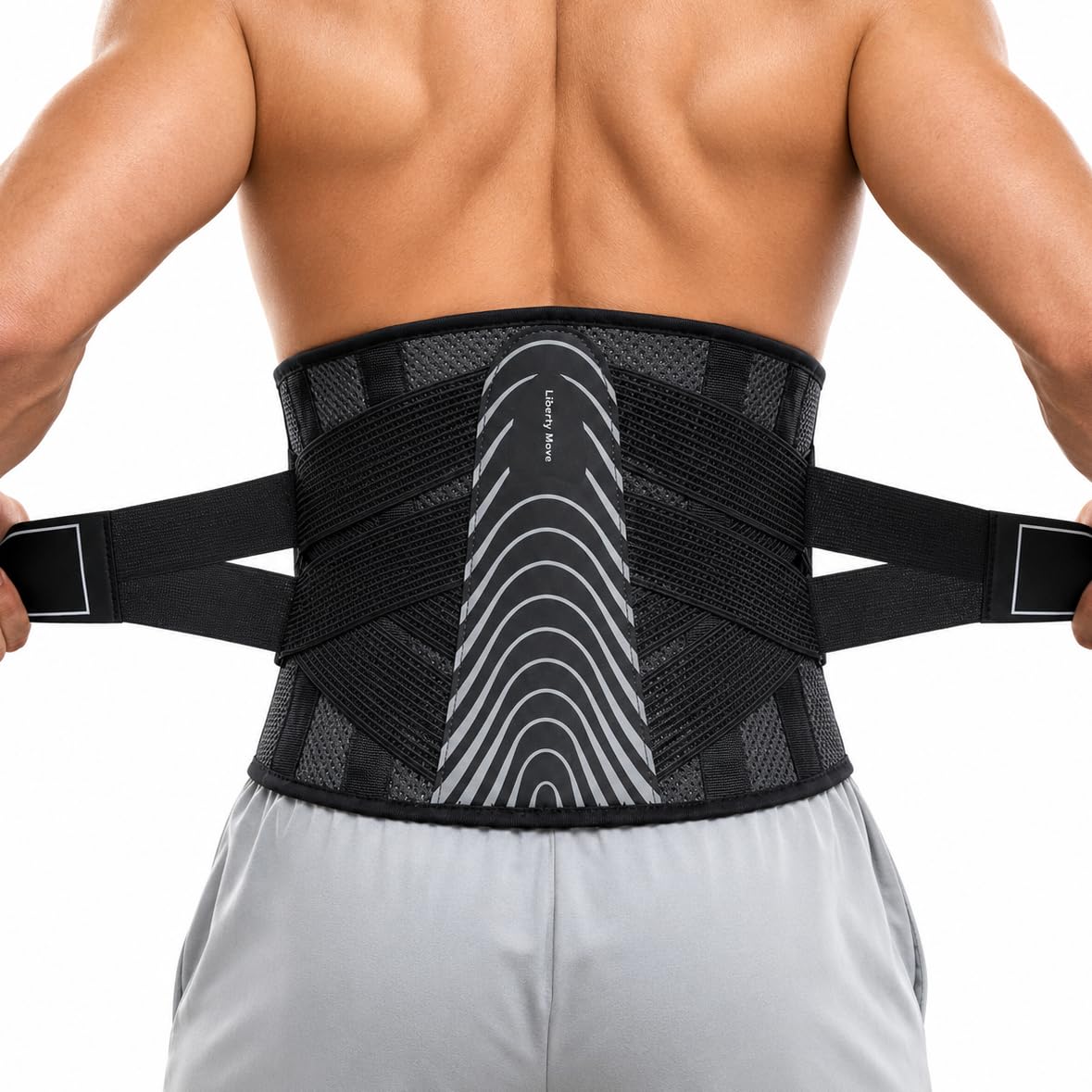
Adjustable Back Brace for Men Lower Back Pain
Lumbar support you position yourself, and it works with the chair you already own
It is a support, not a chair. It fixes nothing about seat depth or seat height
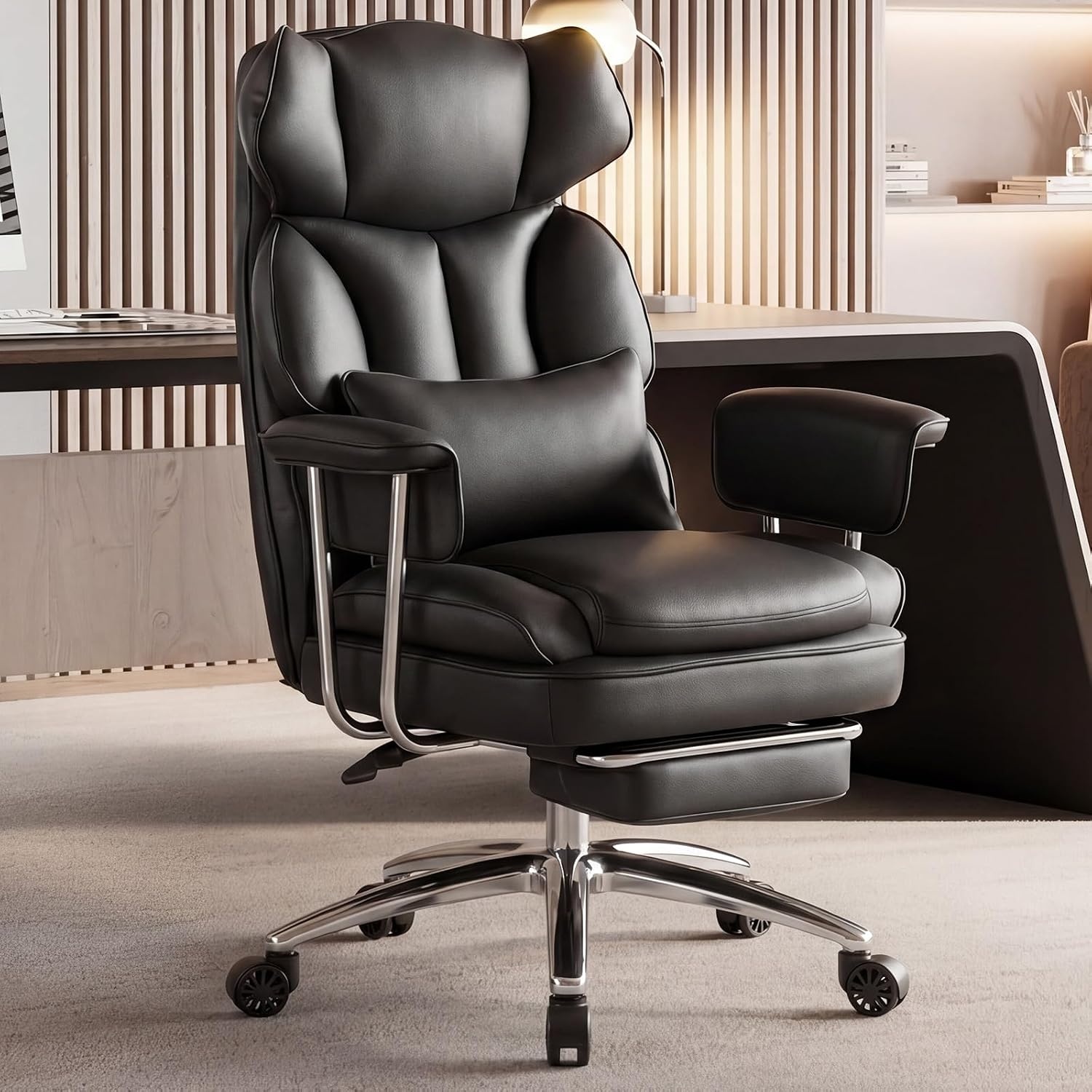
DUMOS Ergonomic Home Office Desk Chair
Executive styling that fits a living room office where a racing frame looks out of place
The padded back hides the curve, so you cannot see or move where the support sits
Prices and availability may change.
What adjustable vs fixed lumbar support actually changes
The difference between adjustable and fixed lumbar support is where the curve lands on your back, and whether you can move it. Your lumbar curve sits in the small of your back, roughly at belt height. A backrest that supports that spot lets your pelvis stay upright without you holding it there. A backrest that supports a few inches higher pushes your ribcage forward and your hips slide out, which is the slouch you feel at three in the afternoon.
Fixed lumbar support is molded into the backrest, or it is a pad stitched or strapped into one position. It is not automatically bad. If your torso length matches the shape the designer used, a fixed curve can beat a loose adjustable pad, because it cannot drift. The problem is that you cannot verify that match from a product photo. You find out on day one, sitting in it.
Adjustable lumbar support moves, usually up and down, sometimes in and out. Height adjustment matters more than depth for most people, because torso length varies more than back shape does. When I size a chair, I set the lumbar pad first, then the seat depth, then the armrest. Lumbar position changes how you sit, and everything else is measured from there.
If you are weighing fixed lumbar support vs adjustable, compare the position, not the padding. A thick pad in the wrong place is worse than a thin pad in the right one.
Seat depth and seat height come first
A moving lumbar pad cannot rescue a chair with the wrong seat depth. Sit all the way back, then slide two or three fingers between the back of your knee and the front edge of the seat. If your fingers do not fit, the seat is too deep, and you will slide forward to reach the floor, which pulls your back off the lumbar support entirely. If there is a whole hand of space, the seat is too shallow and your thighs carry your weight on a narrow strip.
Seat height sets the other half. With your feet flat, your thighs should sit roughly level and your elbows should land near the top of the desk. If a chair's height range tops out below what your legs need, no lumbar adjustment saves it, and that is the failure I see most often in gaming chairs bought for tall users.
Check both numbers on the listing before you check the lumbar feature. A chair with adjustable lumbar support and a 17 inch seat is still the wrong chair for someone who needs 19. Whether you end up with adjustable or fixed lumbar support comes down to two numbers, and both of them are yours. If you do not know them, measure once, write them in a notebook, and stop guessing.
The four options in this comparison
Each of these four products sits somewhere on the adjustable vs fixed lumbar support line. Two are chairs with a backrest you have to accept as built. One is a chair where the backrest is the point. One is not a chair at all.
STAPLES Emerge Vortex Gaming Chair
This is the entry point in the group: a gaming frame with adjustable height and a swivel base. What it does not promise is a lumbar pad you can move. In this class the lumbar piece is often a pillow held by a strap, and a strapped pillow sits wherever the strap tension puts it, which changes the moment you recline.
If you are buying it, do this in order. Set the seat height first, then check whether the lumbar pillow can be repositioned or removed. If it cannot, and the curve lands above your belt line, you will spend the evening pushing it down with your hand. See the STAPLES Emerge Vortex Gaming Chair on Amazon.
noblechairs Legend Ergonomic Gaming Chair
Of the four, this is the one designed around the backrest rather than around the racing silhouette. PU leather wipes down, which matters in a shared office, and the seat is built as an ergonomic chair with a gaming look rather than the other way around. The trade off is heat. PU leather does not breathe, and in a small room with the door closed you will feel it in July.
For a lumbar decision, the question to settle on the listing is whether the backrest support moves and how far it travels. If it does, this is the chair in this group that gives you adjustable lumbar support without an accessory. Check the noblechairs Legend on Amazon.
Adjustable Back Brace for Men Lower Back Pain
This is the different approach. Instead of buying a chair with a moving pad, you keep the chair you have and put the support on your body. The belt is adjustable by definition, so you position the curve yourself, at your belt line, every time you put it on.
It is not a replacement for a chair that fits. It does nothing about seat depth, seat height, or tilt tension. What it does is let you test the adjustable side of this question without replacing furniture, and it travels to a hotel desk or a dining table setup. If your back already aches at the end of a workday, this is where I would start, and I would wear it through the flare up, not forever. See the Adjustable Back Brace on Amazon.
DUMOS Ergonomic Home Office Desk Chair
The executive chair answer. PU leather, a padded back, and a shape that looks right in a living room office where a racing frame does not. The problem with padded executive backs is visibility. The lumbar shape is buried under foam, so you cannot see where the curve sits or move it.
Sit in it before you commit if you can, or buy from a listing with a return window you can live with. If the padding puts pressure exactly at belt height for your torso, it is a fine chair. If it lands high, you will feel it as a forward push all day. Check the DUMOS Ergonomic Home Office Desk Chair on Amazon.
Tilt tension, recline, armrest, and headrest: the rest of the fit
Once you have settled adjustable vs fixed lumbar support, four other adjustments decide whether you can stay in the chair for eight hours.
Recline and tilt tension work together. A chair that reclines but will not hold your weight at that angle is a chair you fight all afternoon. Tilt tension should be stiff enough that leaning back does not launch you. Set it before you judge the lumbar pad, because reclining changes where the pad touches your back.
Armrest height should let your shoulders drop. If the armrest is too high, you shrug all day, and no lumbar support fixes that. A headrest matters if you recline far enough to need neck support, and not much otherwise. Casters matter more than people expect in a home office. Hard wheels on a hardwood floor will roll away from the desk every time you lean back, so match the wheel to the floor or add a mat.
Who should skip each one
The STAPLES Emerge Vortex: skip it if you are tall enough that a strapped pillow lands above your belt line, or if you need more seat depth than the frame offers. Gaming frames are built for a shorter, lighter average than the people who buy them.
The noblechairs Legend: skip it if your room runs warm, if you sit in shorts, or if you want a fabric back. Also skip it if you cannot confirm that the backrest support adjusts, because at that point you are paying for the look rather than the feature.
The back brace: skip it if you want a permanent fix. A belt you wear is a tool for a bad week or a chair that will not cooperate, not a substitute for seat depth. It is also the wrong answer if your pain is not in the lower back.
The DUMOS: skip it if your torso length is unusual in either direction, because a padded fixed curve has no adjustment to give you. Skip it too if you recline hard, since executive chairs are usually built for an upright sit. The adjustable vs fixed lumbar support question decides itself once you know your own seat depth and torso length, and both of these are chairs you should only buy after you know them.
What I would put in a client's office
Here is the test I use: would I leave it in a client's office for a year and not hear about it?
If the client already owns a decent chair and the complaint is lower back pain, I start with the adjustable back brace and a measurement session. It is the fastest way to learn whether a moving curve in the right spot solves the problem, and it costs far less than replacing furniture.
If the client is buying a chair, I want adjustable lumbar support, a seat depth within half an inch of their measurement, and a height range that puts their feet flat. The noblechairs Legend is the one in this group designed around the backrest, so it is where I would look first. The STAPLES Emerge Vortex is a way into a gaming frame, and I would only recommend it after confirming the lumbar piece can be repositioned. The DUMOS is for the office where the chair has to look like furniture, and it works when the fixed curve happens to match.
Between adjustable vs fixed lumbar support, the answer for most desks is adjustable, and the honest reason is that you cannot measure a fixed curve from a photo. You can measure your own back and your own seat depth today. Do that first, then pick the chair.