Related: Best Office Chairs for Tall Users
I keep a notebook of chair measurements. Every chair I have bought for a 400-person floor, and every chair my two-person crew has put into one of the 310 home offices we have built out, gets the same treatment before it earns a spot: seat height, seat depth, backrest top, lumbar pad travel, armrest range. Tape measure, not spec sheet. The number that gets published least often is the one that decides whether your shoulders ache by Thursday afternoon, which is why this office chair backrest height guide is built around it.
Backrest height is not a spec you shop for. It is a position you land on, and it moves the moment you change your seat height or your seat depth. Slide the seat forward and the top of the backrest drops relative to your shoulder blades. Drop the seat and the same shell suddenly reaches higher up your spine. That is why two people of the same height can sit in the same ergonomic chair backrest height setup and get completely different results. If you want the groundwork first, I wrote a separate piece on how to measure an office chair for your body. The short version: the backrest is the last thing that fits, not the first.
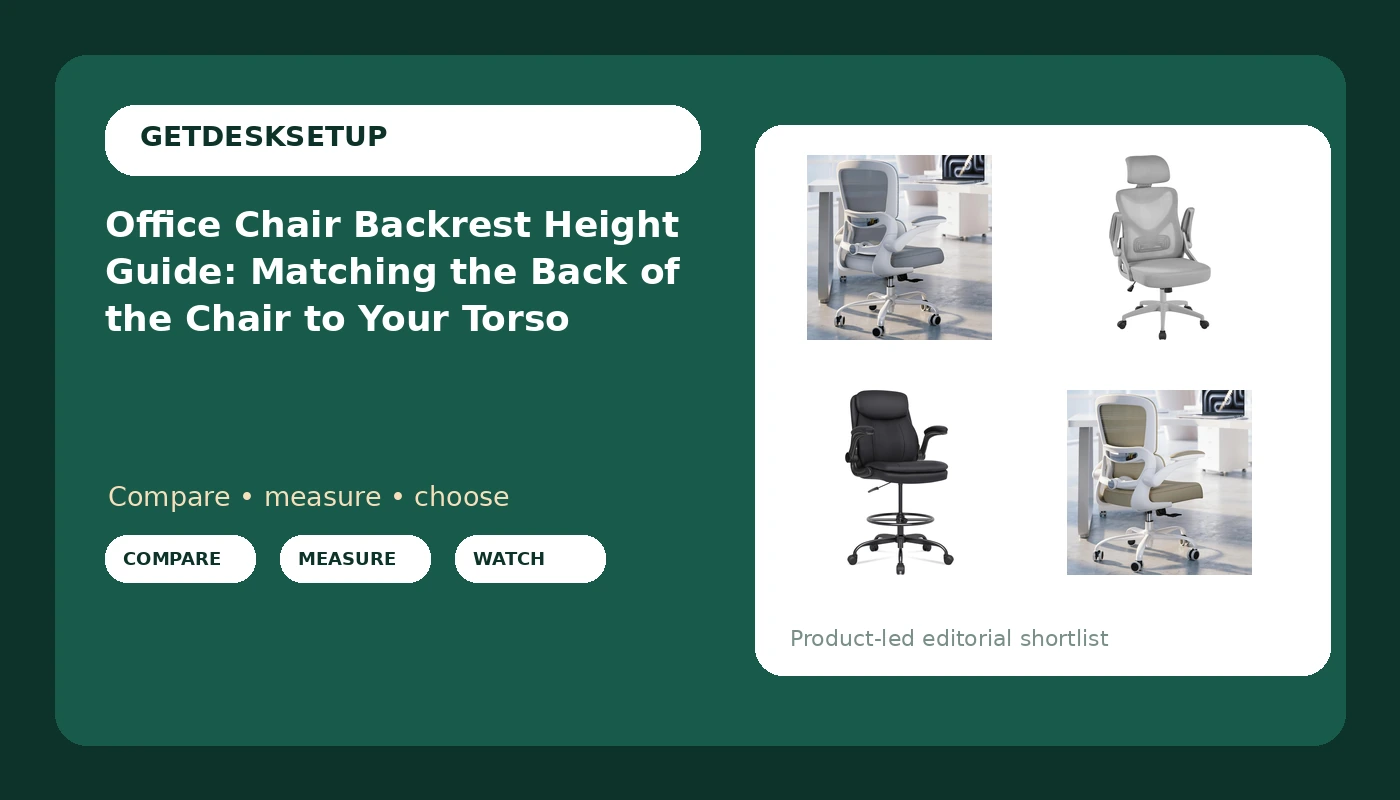
Best Overall: TRALT Office Chair – Ergonomic Desk Chair with Adjustable Lumbar Support, Mesh Computer Chair, Executive Chair for Home Office Comfortable Lumbar Support (1, White)
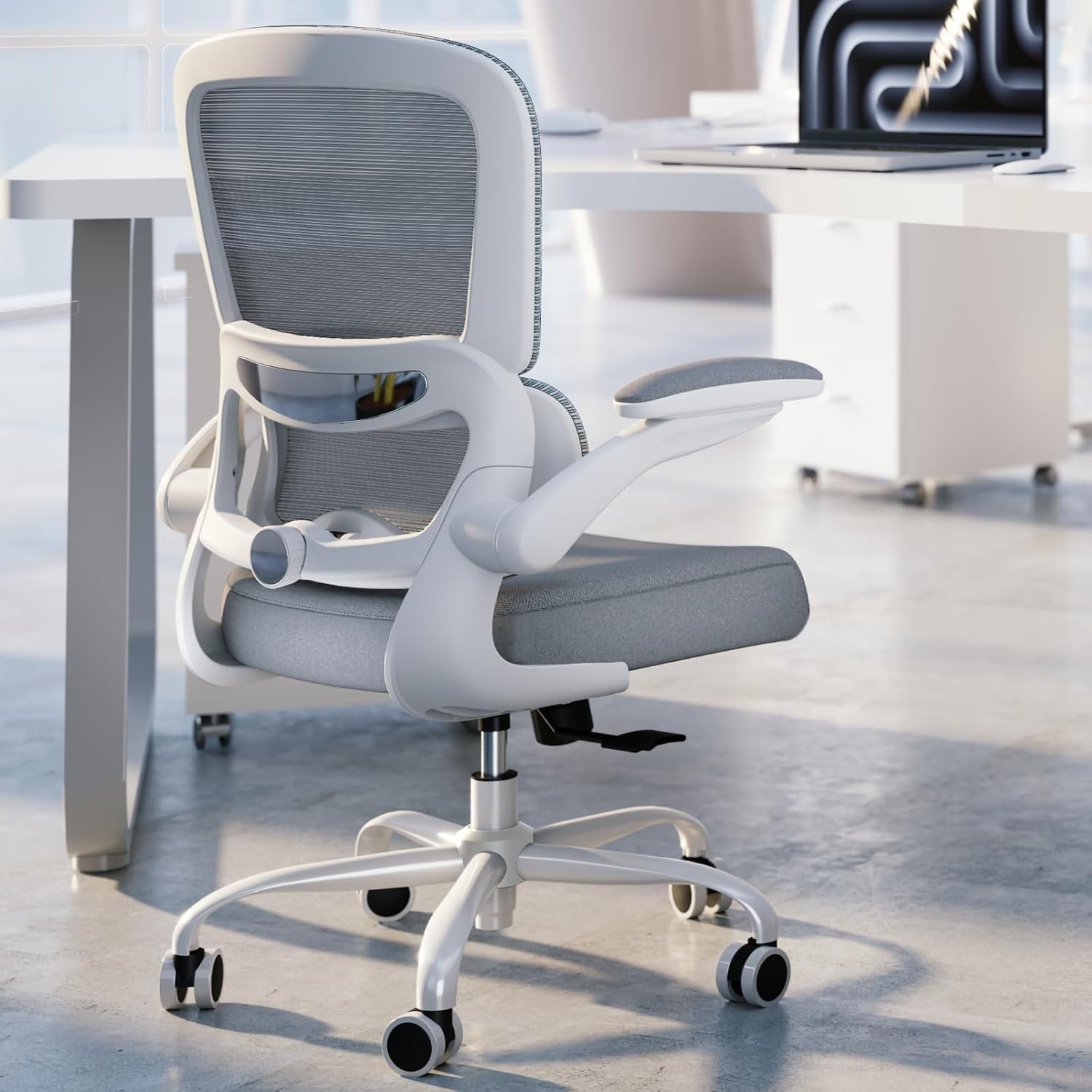
This is the chair I put in a client's office when the complaint is upper back pain by mid-afternoon. Not because of the mesh or the look, but because of the adjustable lumbar support. That is a pad on a track that slides up and down the backrest independent of the shell, and it is the only honest fix for backrest height, because on nearly every chair the shell is welded where it is welded. You cannot change where the top of the backrest sits. You can change where the support lands on your spine.
Task chair backrest height is the phrase people search when the mid-back is the problem, and this is the chair that answers it. Sit down, slide the pad until it sits in the small of your back, then sit for an hour and check whether it stayed. On a fixed-lumbar chair you get one position and you live with it.
The mesh back breathes. In a Seattle apartment with one window and a monitor that runs warm, that matters more than any marketing claim about airflow.
What it does not have is a headrest, and that is the honest reason to skip it. If your version of a good chair is one you tip back and rest your neck on, no lumbar adjustment will fix that. Skip it if you want the shell to run all the way to your neck, or if you want a padded executive look. Buy it if you want the support to be adjustable rather than the shell.
The same chair also comes in a khaki cover, and the fit is identical. Check current Amazon price.
Best Value: Yaheetech Ergonomic Office Chair with Headrest, Lumbar Support, Grey
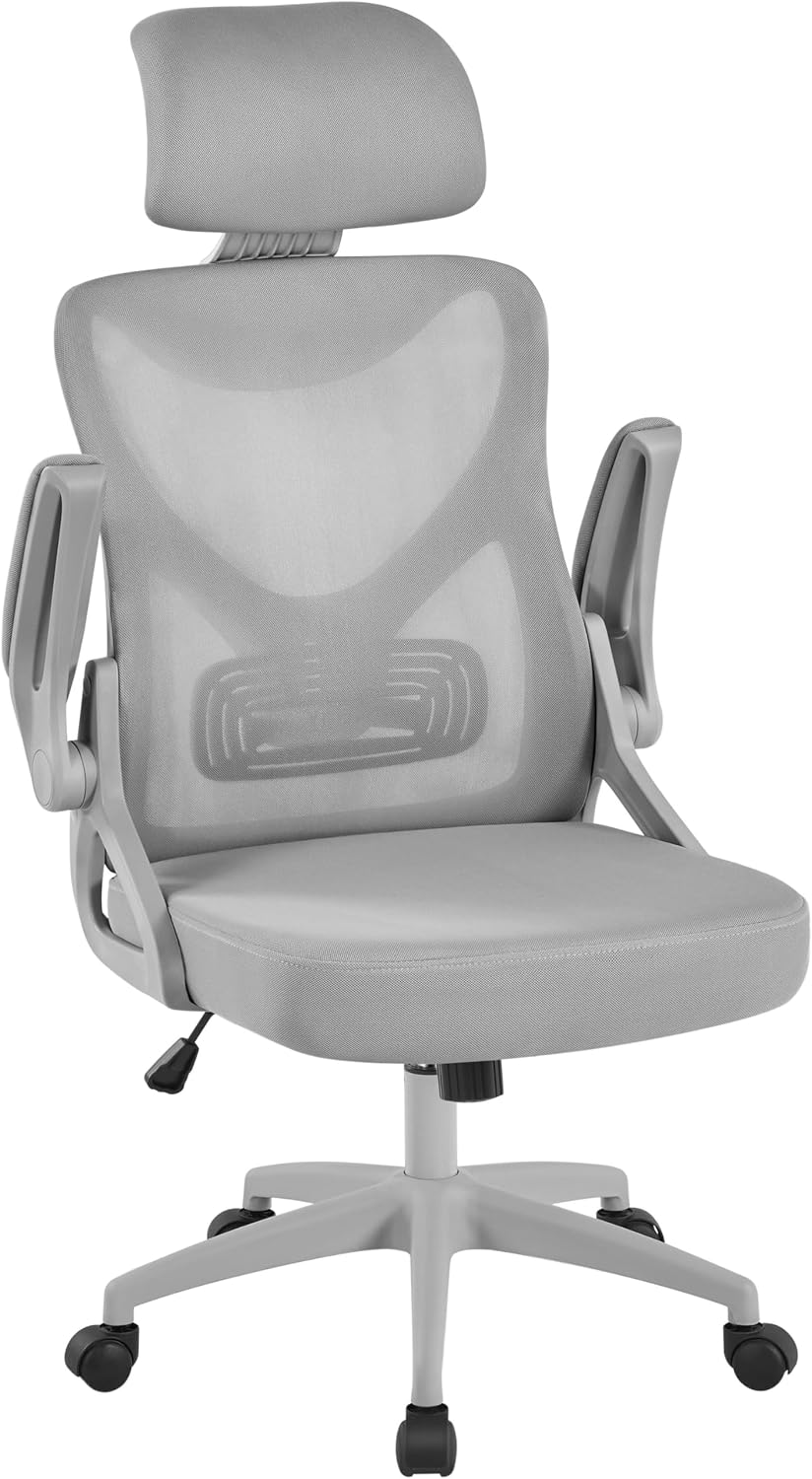
The cheapest chair in this guide is also the one with the tallest usable backrest, and that is not an accident. A headrest is cheap to bolt on and expensive to engineer away, so budget chairs lean into it while expensive mesh chairs pretend your neck does not exist.
Here is how it fits into a backrest height conversation. The shell runs higher than a standard mid-back, and the headrest adds usable surface above that. If your problem is that every chair stops at your shoulder blades and leaves your neck hanging, this is the shape you want. The lumbar support is built into the shell rather than mounted on a track, so the support sits where the factory put it. For a lot of people that is fine. If your back complains about the exact spot, that is the reason to spend more.
The grey fabric is fine, and the chair looks like what it is. Skip it if you want the lumbar pad to move, if you want a mesh back in a warm room, or if you have a long torso and the headrest pushes your head forward instead of cradling it. That last one is the failure mode of every budget chair with a headrest, and it is worse than no headrest at all. Check current Amazon price.
How I tested
I check chairs in the order a body meets them, because a backrest cannot be judged on its own.
- Seat height. Can you get both feet flat with your thighs roughly level, or does the chair bottom out before your heels touch?
- Seat depth. Is there a couple of fingers of gap behind the knee, or is the front edge digging into the back of your calf?
- Backrest top. Where does the top edge land, shoulder blades, mid-back, or neck?
- Lumbar pad travel. Does the pad slide, and does it stay where you put it after an hour?
- Recline and tilt tension. Does the back move without the seat tipping, and can you set the tension so the recline is usable rather than a dumping mechanism?
- Armrest. Do they tuck under the desk edge, or do they hold you away from the keyboard?
- Caster. Carpet, hardwood, a rug with a lip. Does it roll or stall?
That is the sequence for every chair that comes through, whether it is headed to a client office or into my own room. I run it once on the bench and again after somebody has actually lived in the chair for a month, because the failures that matter show up late. A lumbar pad that creeps down overnight. A tilt tension knob that backs itself out. A caster that develops a flat spot on one side.
The step that fails the most chairs is step three, and the reason is almost never the chair. It is the seat height and the seat depth, set wrong, moving the backrest to a place it was never meant to be. Fix those two first and half the backrest complaints disappear before you spend a dime.
Analysis and test results
Every chair in this guide was judged on the same five things: where the top of the backrest lands, whether the lumbar support moves, what the recline does at the end of its travel, how the armrest meets the desk, and whether the caster rolls on your floor without stalling.
Start with the geometry, because it explains everything else. Seat height and seat depth set where your pelvis sits. Your pelvis sets where your spine sits. Your spine sets where the backrest needs to be. So desk chair backrest height is never a standalone number, even though listings publish it like one. A backrest that fits perfectly at one seat depth is a backrest that pokes you in the ribs at another. The office chair backrest height that fits you is the one that matches the seat depth you actually sit at, not the one printed on the box.
Then there is the question of what the backrest is for. A backrest is not a wall you lean on. It is a contact point that holds your lumbar curve while your shoulders stay free. That is why the best chairs here are the ones with the least backrest, not the most. The TRALT in white gives you a shell plus a moving pad, and the pad is doing the work. The Yaheetech gives you a taller shell plus a headrest, and the shape is doing the work. Both approaches can be correct. They just solve different problems.
Recline matters more than people expect. A backrest that only reclines with the seat attached forces you to choose between your feet and your back. A backrest that reclines independently lets the seat stay level while the shell opens up. Check which one you are buying, because the listings do not always say.
Tilt tension is the other half of that. If the tension is set too light, you lean back and the chair dumps you. Too heavy, and you never use the recline at all, which means the backrest is doing nothing after the first hour. Set it so you can push back with two fingers.
The headrest question is separate and worth its own decision. A headrest only helps if it lands at the base of your skull when you are actually reclined. On the Yaheetech it does, for most people, because the shell is tall enough to put it there. On a chair with a short shell, a headrest floats behind your neck and does nothing at all.
Armrest and caster are the last checks, and they are the ones people skip. Armrests should tuck under the desk edge, or you will sit further from the keyboard than you should and drag the backrest out of position. Casters should roll on your actual floor, not the showroom floor. A chair that stalls on a rug gets scooted by the arms, and a chair that gets scooted by the arms never stays where you set it.
The office chair backrest height reference table
This is the table from the notebook, minus my measurements, because the measurements that matter are yours. Four chairs, sorted by what their backrest actually does and who should walk away from it.
| Chair | Backrest and lumbar setup | Best for | Skip it if |
|---|---|---|---|
TRALT Office Chair, White | Adjustable lumbar pad on a track, mesh shell, no headrest | Support you can move to the exact spot your back wants | You want to rest your head on the backrest |
Yaheetech Ergonomic Office Chair, Grey | Tall shell with headrest, lumbar support built into the shell | A backrest that runs past your shoulder blades | You need the lumbar pad to travel |
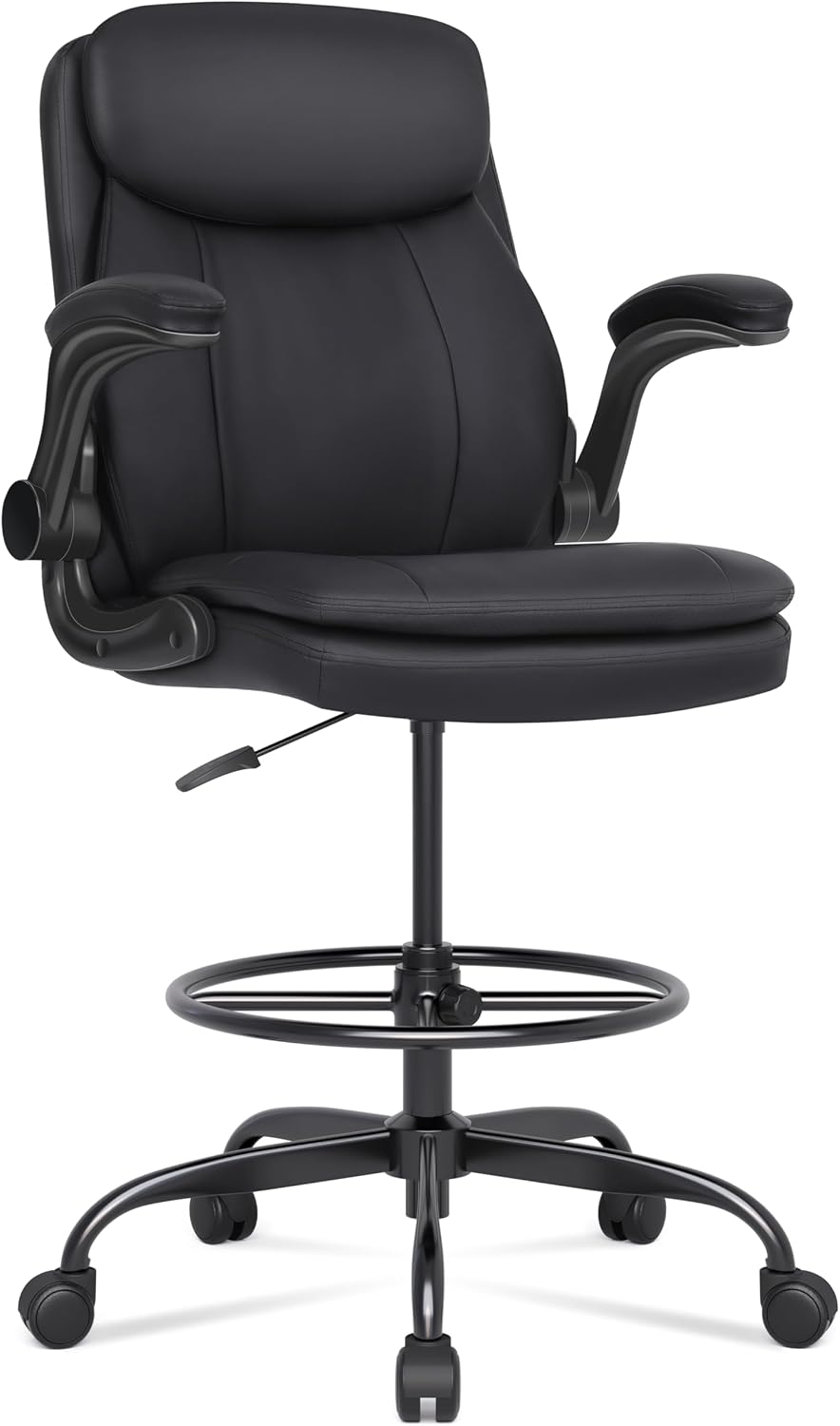 View on Amazon → Misolant Drafting Chair | Tall backrest, high seat, flip-up armrest, built for counter height | Perching at a standing desk or counter | You work at a standard height desk |
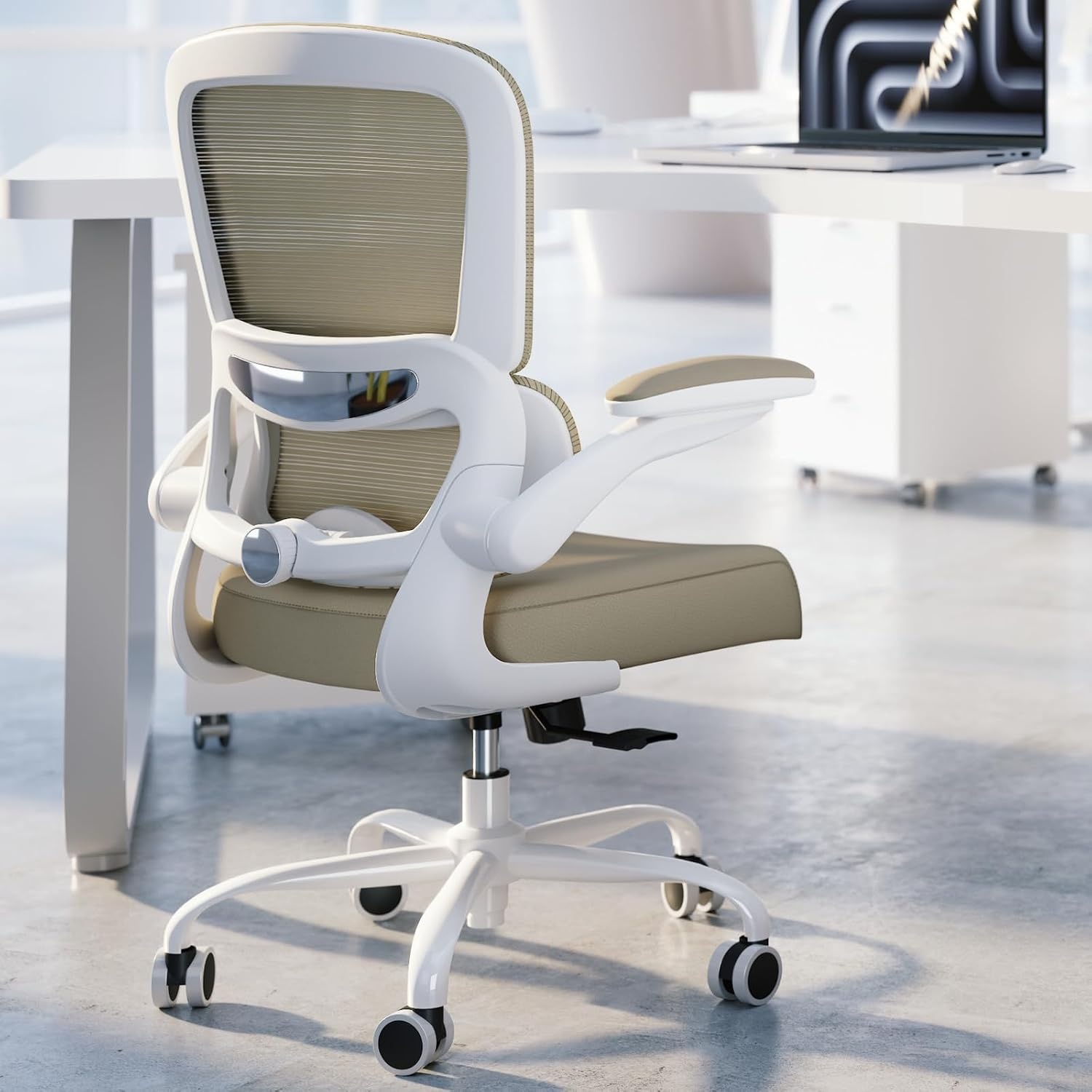 View on Amazon → TRALT Office Chair, Khaki | Same chair as the white one, different cover | The same fit in a warmer color | You want the white cover |
Read the third and fourth columns first. The chair that fits your body is the one whose backrest does the thing your back is asking for, and the skip column is where most people find their answer. Every chair here can be made to work with the right seat height and seat depth, and none of them can be made to work if the backrest lands in the wrong place.
The khaki TRALT is the same chair with a different cover
If you like the fit of the white TRALT and hate the color, this is the same chair. Same shell, same adjustable lumbar support, same mesh back, same geometry, same backrest height. The only difference is the cover. Buy whichever one matches the room, because the fit is identical and the fit is the entire reason to buy it.
The Misolant drafting chair is a different problem entirely
A drafting chair is not a taller office chair. It is a chair for a different desk. This one is built for a standing desk or a counter-height surface, with a high seat, a tall backrest, and flip-up armrests so you can push it under a counter. If you work at a standard desk, skip it. The seat will not go low enough and you will spend the day with your feet dangling off the base.
If you do have a standing desk, the backrest height question changes. You are perched higher, so your knees drop, so your pelvis rotates, and the backrest has to reach higher to do the same job. That is why drafting chairs run tall. The flip-up armrests are the detail that makes it usable at a counter, because a fixed armrest will not clear the overhang. Pair it with a standing desk that holds its height and you have a setup that works standing or perched, which is more than most people get.
Should you buy the TRALT Office Chair – Ergonomic Desk Chair with Adjustable Lumbar Support, Mesh Computer Chair, Executive Chair for Home Office Comfortable Lumbar Support (1, White)?
Yes, if your complaint is mid-back pain that shows up by mid-afternoon and disappears on the weekend. The adjustable lumbar support is the reason. It slides on a track, independent of the shell, so you can put the pressure exactly where your back wants it instead of where a factory decided. That is the whole trick, and it is the reason this chair goes into client offices while prettier chairs stay on the bench.
The mesh back keeps you from cooking in a warm room, and the shell does not try to be a throne. Skip it if you want a headrest. Skip it if you want the chair to look like executive furniture. If you want the support to be adjustable rather than the shell, this is the one. Check current Amazon price.
Should you buy the Yaheetech Ergonomic Office Chair with Headrest, Lumbar Support, Grey?
Yes, if every chair you sit in stops at your shoulder blades and leaves your neck hanging in space. The shell runs higher than a standard mid-back and the headrest adds usable surface above that, which is exactly the shape you want when the problem is a backrest that quits too early.
Understand what you are trading. The lumbar support is fixed in the shell, so the support is where the factory put it. For a lot of people that is perfectly fine. If your back complains about the exact spot, that is the reason to spend more. Skip it if you want a mesh back, or if you have a long torso and the headrest pushes your head forward instead of cradling it. Check the headrest position with your own neck before you commit. Check current Amazon price.