I spent nine years buying and assembling chairs for 400 person floors, and six more years building out 310 home offices with a two person crew, and the failure mode never changes. Someone buys the chair they like the look of, then finds out it does not fit the desk, the room, or their own legs. This compact vs full size office chair comparison exists to put the order of operations back where it belongs: room first, body second, brand a distant third.
Here is what I keep in the notebook. Every chair that comes through a client's office gets its seat depth and seat height range written down in inches, measured with a tape against the actual frame, never copied off a spec sheet. A chair either fits your body or it does not, and full size office chair vs compact is not a quality question and not a price question. It is a question about how much floor you have and how much body the chair has to carry.
The difference between compact and full size office chair shopping comes down to four numbers: seat height, seat depth, the width the armrest set adds to the frame, and how far the back reclines before the room runs out of wall. Get those four right and everything else is preference. Get them wrong and no amount of lumbar support will save your shoulders.
Related: how to measure seat depth before you buy a chair
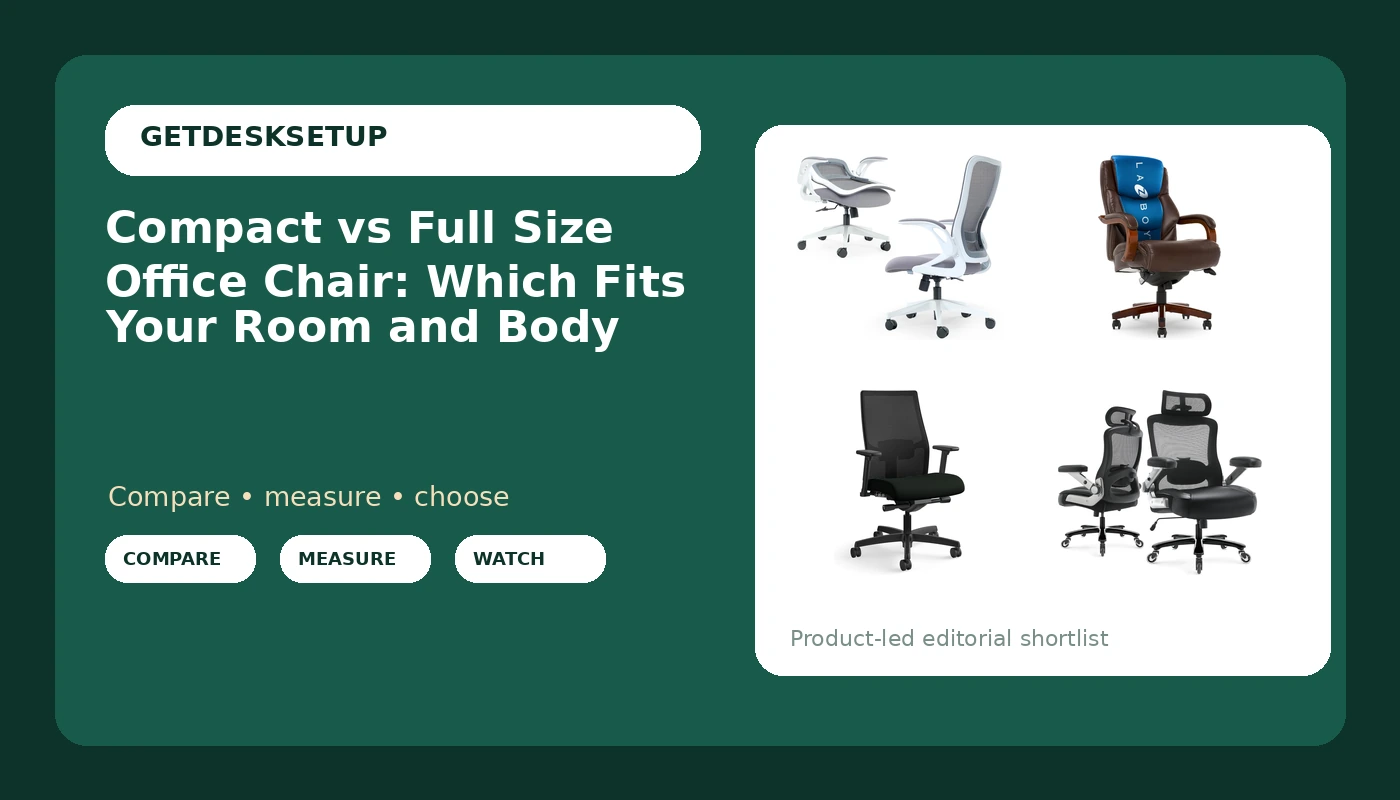
The short answer: if your room is tight, start with a compact folding chair and accept the narrower adjustment range. If your body is large or heavy, skip straight to a big and tall build. If you want one chair that covers both jobs reasonably, the HON Ignition 2.0 sits in the middle of this group, while the La-Z-Boy and the 600 lb heavy duty chair assume you have the floor space to feed them.
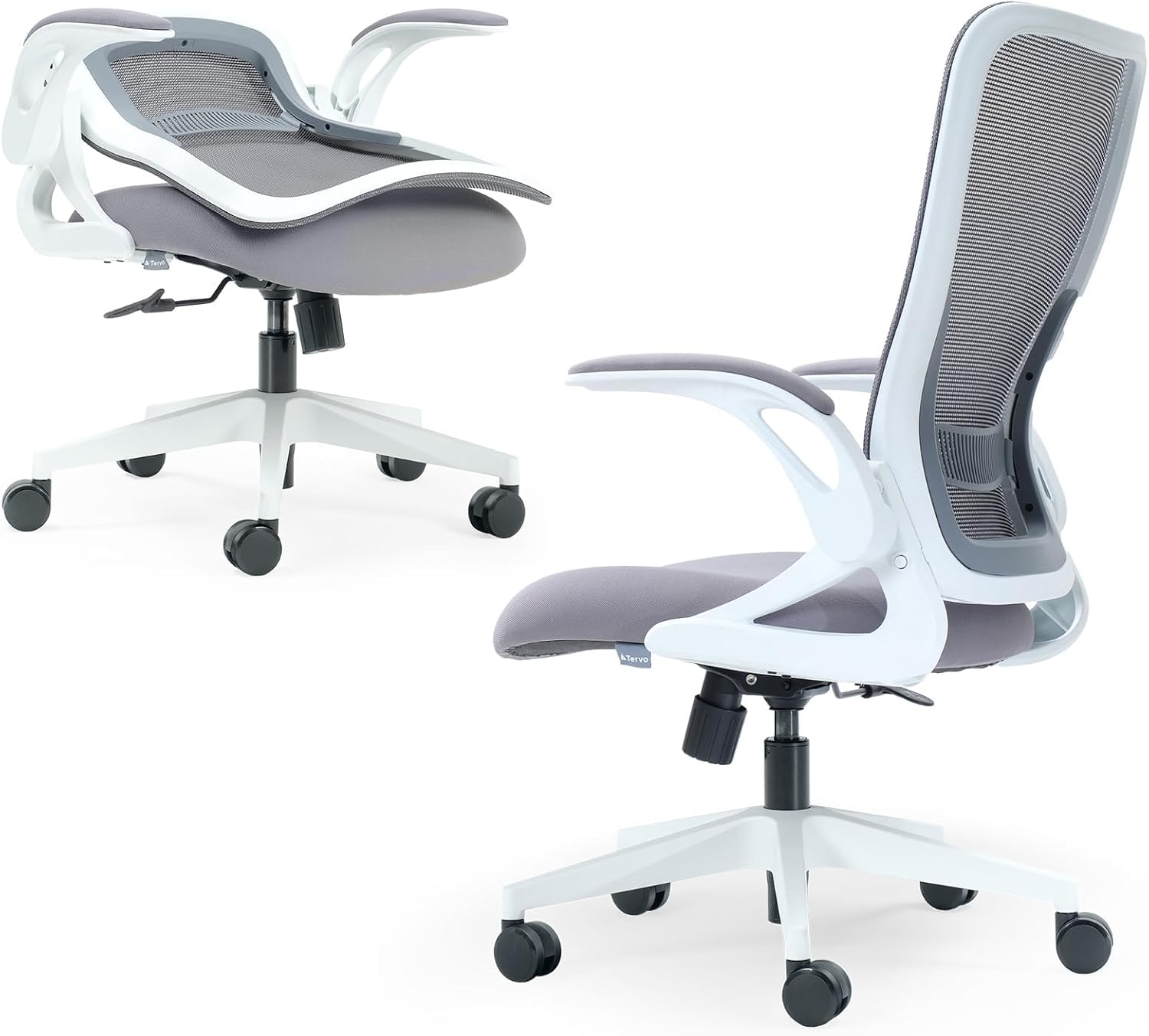
Tervo Model U – Folding Office Chair – Ergonomic Design for Small Spaces
The only chair here designed around a small space footprint, and it folds out of the way when the desk is not in use
A folding frame is a storage solution first; if you need a long recline arc or a big and tall rating, this is the wrong conversation
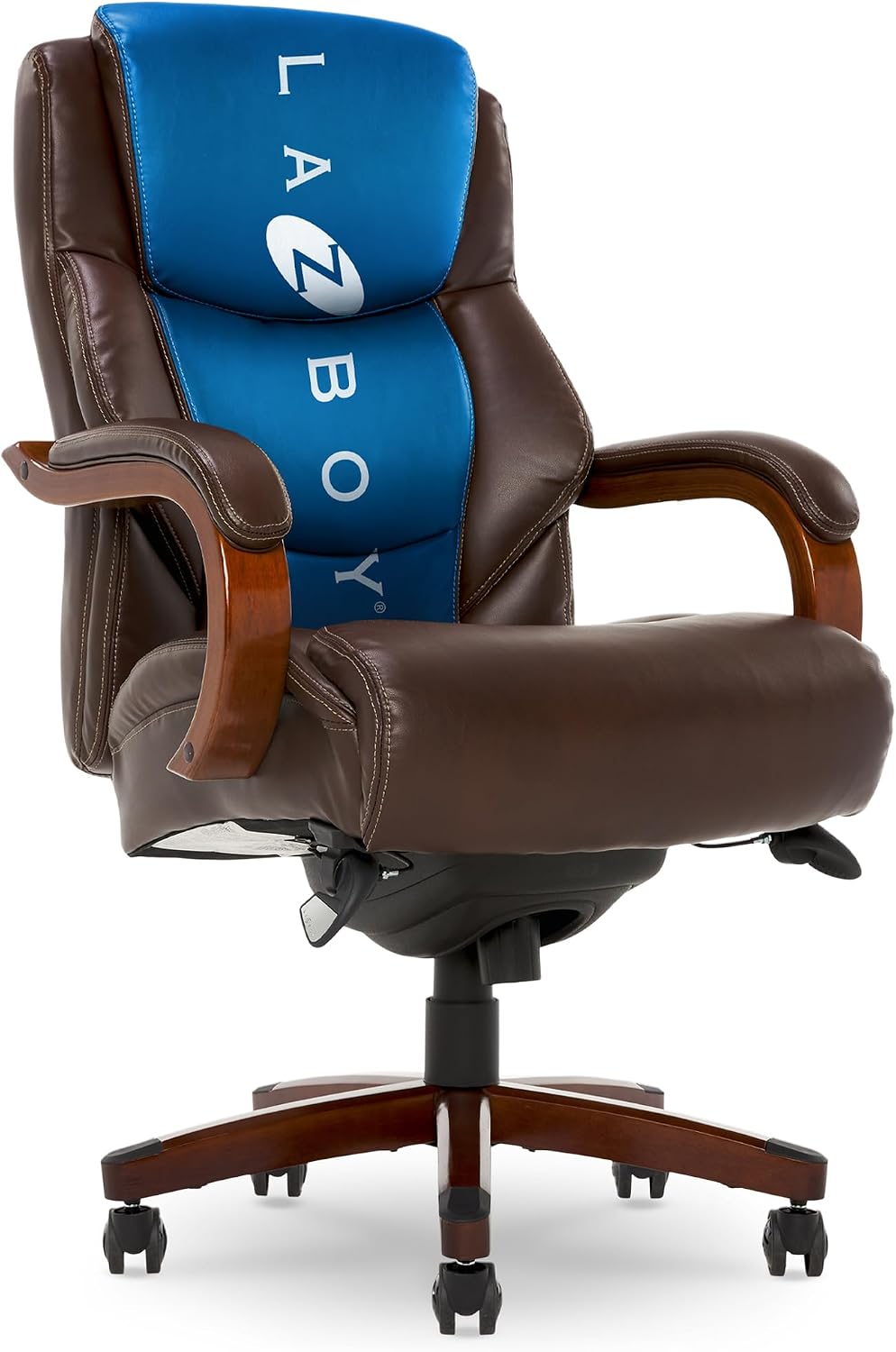
La-Z-Boy Big and Tall Executive Office Chair Lumbar Support, Leather Chair
A named big and tall build with lumbar support and leather, for people who want an executive chair they can settle into
Executive scale cuts both ways: it owns floor space, and leather over deep cushioning is the wrong pick for a small room
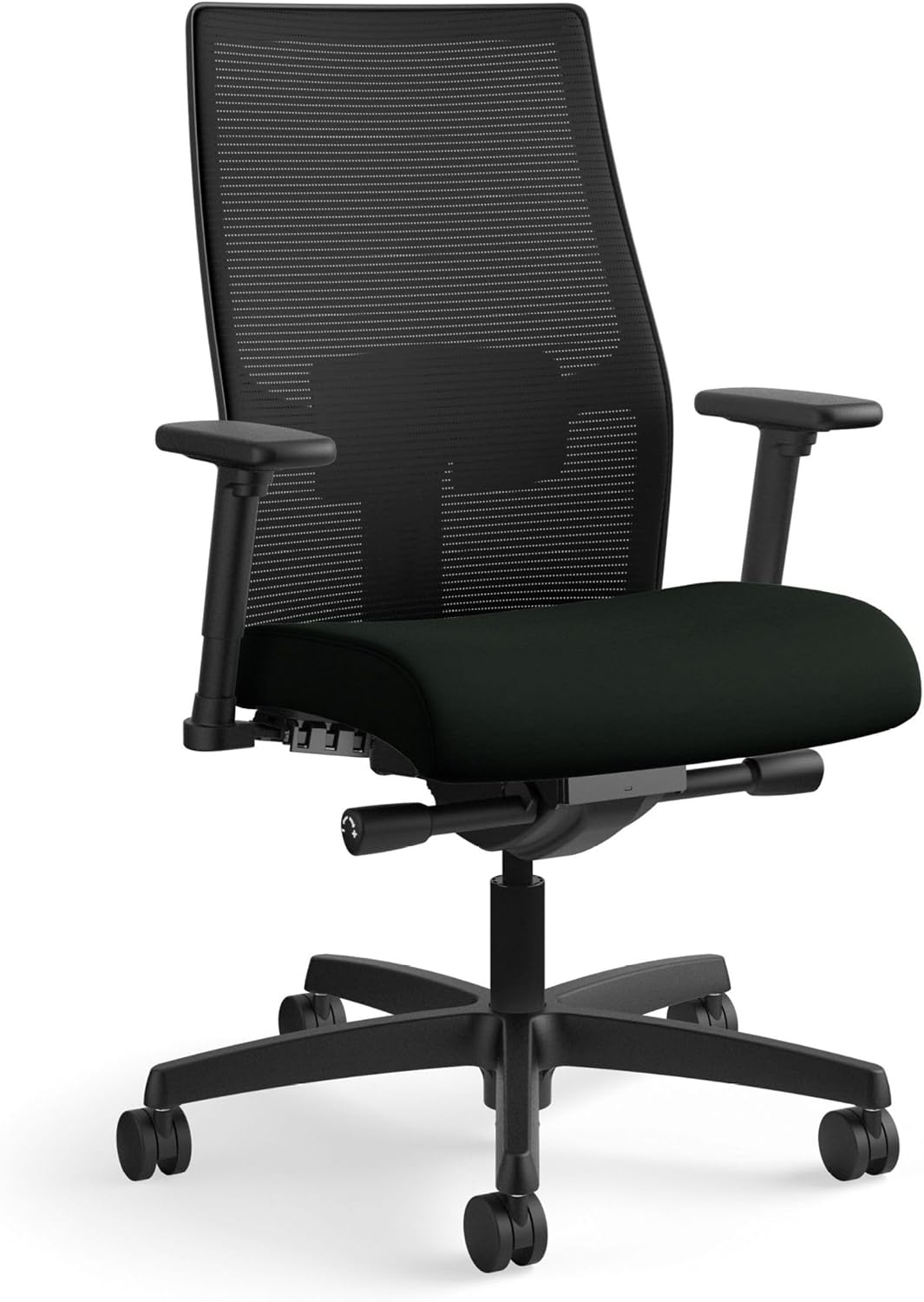
HON Ignition 2.0 Ergonomic Office Chair, Lumbar Support, Desk Chair, Black
Task chair geometry with lumbar support, the middle path between a folding chair and an executive throne
It does not carry a big and tall rating in its name, so very heavy users should start with the two chairs that do
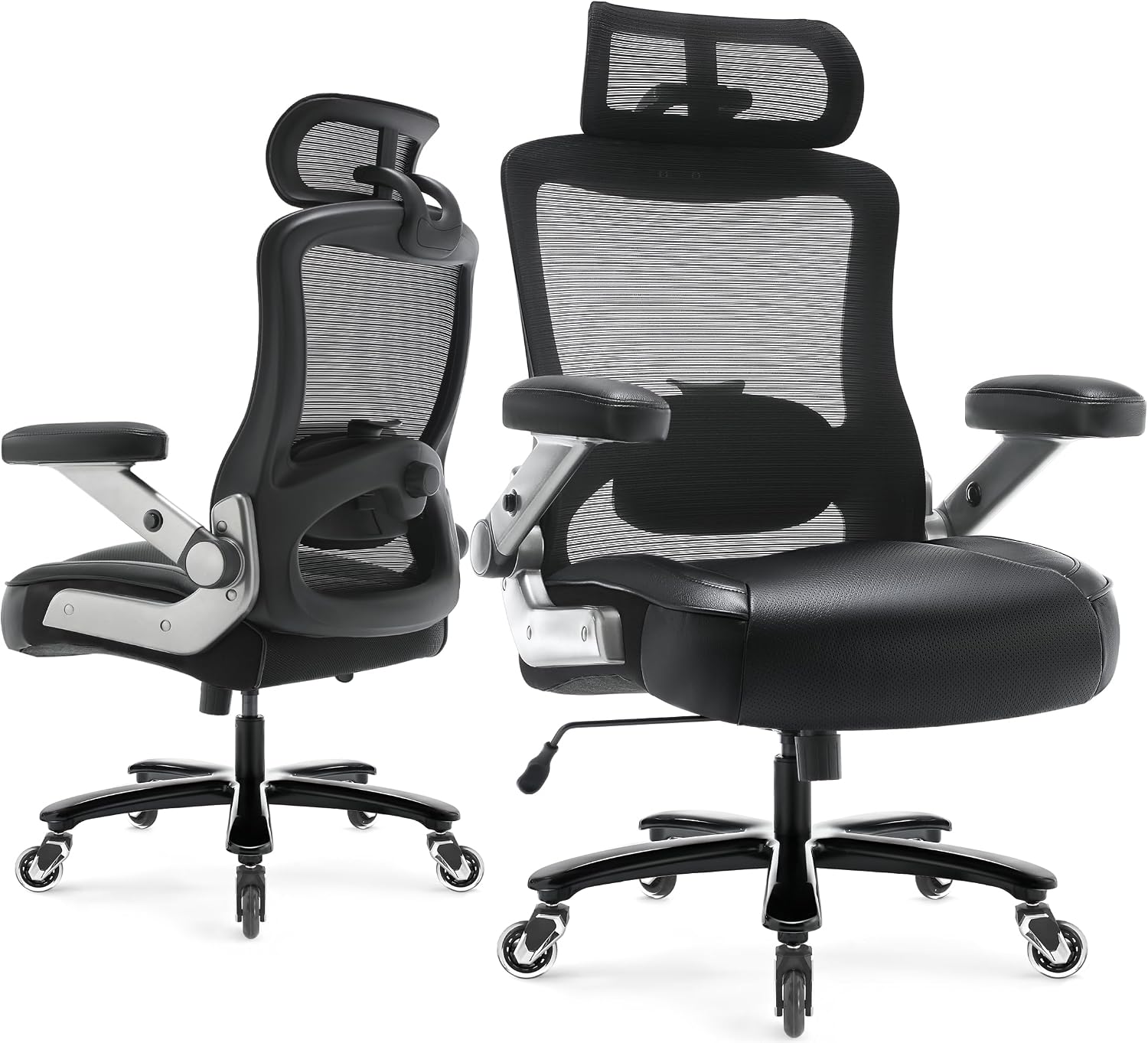
600lbs Big and Tall Office Chair, Heavy Duty Executive Computer Desk Chair
Heavy duty construction with a stated 600 lb capacity, the widest stated weight range in this group
Heavy duty means heavy, and this is the chair that punishes a small room the most
Prices and availability may change.
The compact vs full size office chair decision, in four measurements
Seat height. Your feet should sit flat with your knees roughly level with your hips, and that has to happen inside the chair's height range, not at the very top of it. Compact chairs lose here first. A folding frame typically travels through a shorter seat height range, which is fine if your ideal height sits inside it and miserable if it does not. Measure your ideal seat height at your own desk, shoes on, then check the range before you buy anything.
Seat depth. This is the number almost nobody knows about their own body. I measure from the front edge of the seat pan back to the point where my back meets the lumbar curve, and I want two fingers of clearance behind the knee. Too deep and you slide forward to reach the keyboard, which loads the neck. Too shallow and your thighs carry the weight instead of your sit bones. Compact chairs tend to run shallower, which suits shorter users and punishes taller ones.
Armrest width and height. The armrest set is the widest part of most chairs, and it decides whether the chair tucks under the desk at all. Measure the gap between your desk legs, subtract the armrest width, and if the number comes out negative you are buying a chair that lives three inches away from your keyboard. If the armrests do not adjust, you are also stuck with whatever elbow height the factory chose for you.
Recline and tilt tension. Recline range and tilt tension are the two adjustments people ignore until week three, when the lower back starts complaining. A full size chair usually reclines further and lets you dial the tension so the back follows you instead of fighting you. A compact chair often has a shorter recline arc, which is fine for upright work and useless for the afternoon lean-back.
Whether you land on a compact or full size office chair, the measurement step is identical. What changes is how much slack the frame gives you when your numbers sit at the edge of the range.
What you give up when you go compact
When a room is 8 by 10 and the desk already owns two walls, a compact chair is not a compromise. It is the only thing that works. I will not put any chair in a room where the desk is narrower than 48 inches, because the chair has to tuck under it, not sit beside it.
A folding chair like the Tervo Model U is the clearest expression of that thinking. It is designed for small spaces, and when the workday ends it gets out of the way entirely, which matters in a room that also has to be a bedroom or a dining table. That is a real gain, and it is not marketing language. Storage is a feature.
What you trade for it is adjustment range. Compact frames generally offer fewer points of tune: a shorter seat height range, a shallower seat depth, a shorter recline arc, and usually no headrest. Casters on a compact chair are often smaller, which is fine on hardwood and less fine on thick carpet where a small caster digs in and the chair stops rolling mid-session.
None of that makes a compact chair worse. A compact vs full size office chair trade is not about build quality, because both categories contain badly made chairs. It is about how much of your body and how much of your room the frame is designed to serve. If your measurements fit inside a compact range, you are paying for footprint, not settling.
What a full size office chair actually buys you
A full size chair spends floor space and gives you range. The seat pan is wider, the cushioning is deeper, the recline arc is longer, and the frame is built to carry more weight. That is where the big and tall category lives, and the two heaviest chairs in this comparison sit there: the La-Z-Boy Big and Tall Executive chair with its named lumbar support, and the 600 lb heavy duty executive chair with its stated 600 lb capacity.
A headrest only really appears in this category. On a compact chair you rarely get one, and on a full size executive or big and tall chair it is a normal part of the design, which matters if you recline during calls. The same goes for tilt tension you can actually feel working, and for a lumbar support panel you can adjust rather than a curve molded into the foam.
The trade is obvious and physical. A full size chair is heavier, harder to slide out of the way when you want to vacuum, and it needs more pull-back room behind the desk. If your room is tight, a deep seat pan and a wide frame will push you away from the keyboard, which is the exact opposite of what you wanted.
The other thing to watch: if you are on the smaller side, a full size seat depth can be too much chair. That is the case where a shorter seat pan and a compact footprint win, no matter how good the bigger chair looks in a photo.
The four chairs in this comparison
Tervo Model U folding office chair
The Tervo Model U is the compact pick, and it is honest about it. The name says folding and small spaces, and that is the job. If your office shares a wall with a bed or a dining table, this is the chair that stops being furniture the moment you stop working. Check the seat height range against your own measured ideal before you commit, because a folding frame is the least forgiving place to be at the edge of the range. Check current Amazon price.
La-Z-Boy Big and Tall Executive Office Chair
The La-Z-Boy is the full size executive answer: big and tall build, named lumbar support, leather. This is the chair for someone who has the floor space and wants to settle into it rather than perch on it. I would put this in a client's office for a year without hesitation for a user inside its stated range, and I would not put it in a 9 by 9 bedroom at all. Measure the armrest width against your desk legs first. Check current Amazon price.
HON Ignition 2.0 Ergonomic Office Chair
The HON Ignition 2.0 is the middle chair, and for a lot of people the middle chair is the right chair. It is a task chair with lumbar support and a black frame, which means it is built around posture adjustment rather than around being a throne. If you want a seat you can tune through the day, and you do not need an explicit big and tall rating, this is where I would start. Check current Amazon price.
600lbs Big and Tall Office Chair
The 600 lb heavy duty executive chair is the widest stated range in the group, and the name tells you why: heavy duty construction with a 600 lb capacity. That is a stated figure from the product, and it is the reason this chair exists in the comparison at all. It is also the chair most likely to crowd a small room, so measure the pull-back space behind your desk before you order it. Check current Amazon price.
Who should skip each chair
Skip the Tervo Model U if you need a long recline arc, a headrest, or a frame carrying a big and tall rating. It is a small space chair, and small space is the whole point.
Skip the La-Z-Boy if your room cannot spare the footprint, or if you want a task chair you tune rather than an executive chair you sink into. Leather and deep cushioning are a choice, not a default.
Skip the HON Ignition 2.0 if you are outside the mainstream weight range and want the manufacturer to state a capacity, or if a headrest is on your must-have list. Those two things point you at the other two full size chairs.
Skip the 600 lb heavy duty chair if your desk sits in a tight corner, or if you move your chair between rooms. Heavy duty frames are not meant to be carried up a stairwell every week.
How I set up a chair in a small room
Order matters here, and it is the same order every time.
First, measure the underside of the desk to the floor and compare it to the armrest height at its lowest setting. If the armrests are taller than that gap, the chair never tucks, and no adjustment fixes it.
Second, set the seat height with your feet flat, then set the lumbar support, then the tilt tension, then the recline stop. Doing the lumbar first means you are adjusting it from a seat height you are about to change, and you will do the whole job twice.
Third, check the caster against the floor. Hard casters on hardwood will mark it over a year, and small casters on thick carpet stop rolling, which is the quiet reason people start shifting their weight around by 3 p.m.
Fourth, leave yourself pull-back room. I want at least a hand's width between the back of the chair and the wall at full recline, and more if the chair has a headrest. In a compact chair you can get away with less, and that is a genuine advantage of the category.
The bottom line
Compact and full size chairs solve different problems, and neither one is a downgrade. The compact side of this compact vs full size office chair question is about footprint, storage, and fitting a small room without giving up the desk. The full size side is about range, capacity, and comfort for larger bodies over longer sessions.
If you measure one thing before you buy, measure your seat depth. If you measure two, add the armrest width against your desk legs. Those two numbers decide more of your working day than the brand name on the backrest ever will, and they are the reason I still carry a tape in my bag on every install.