Related: Small Home Office Desk Setup Ideas That Survive a Real Room
I have built out 310 home offices, and the corner nook is the spot that goes wrong most often. An office chair for a corner nook has to answer three questions before anything else counts: how wide is the gap between the two walls, how much floor you have to roll in and out over, and whether the seat height lands your elbows at the desk top. Miss on those three and no amount of lumbar support saves the setup.
I measure with a tape, not a spec sheet: seat height range, seat depth, the width across the armrests, and where the casters sit when the chair is pushed into the angle. A nook is a triangle and a chair is a rectangle, so something has to give. Usually it is the armrests. Sometimes it is the recline. Once in a while it is the chair itself, and the fix is a different kind of seat altogether.
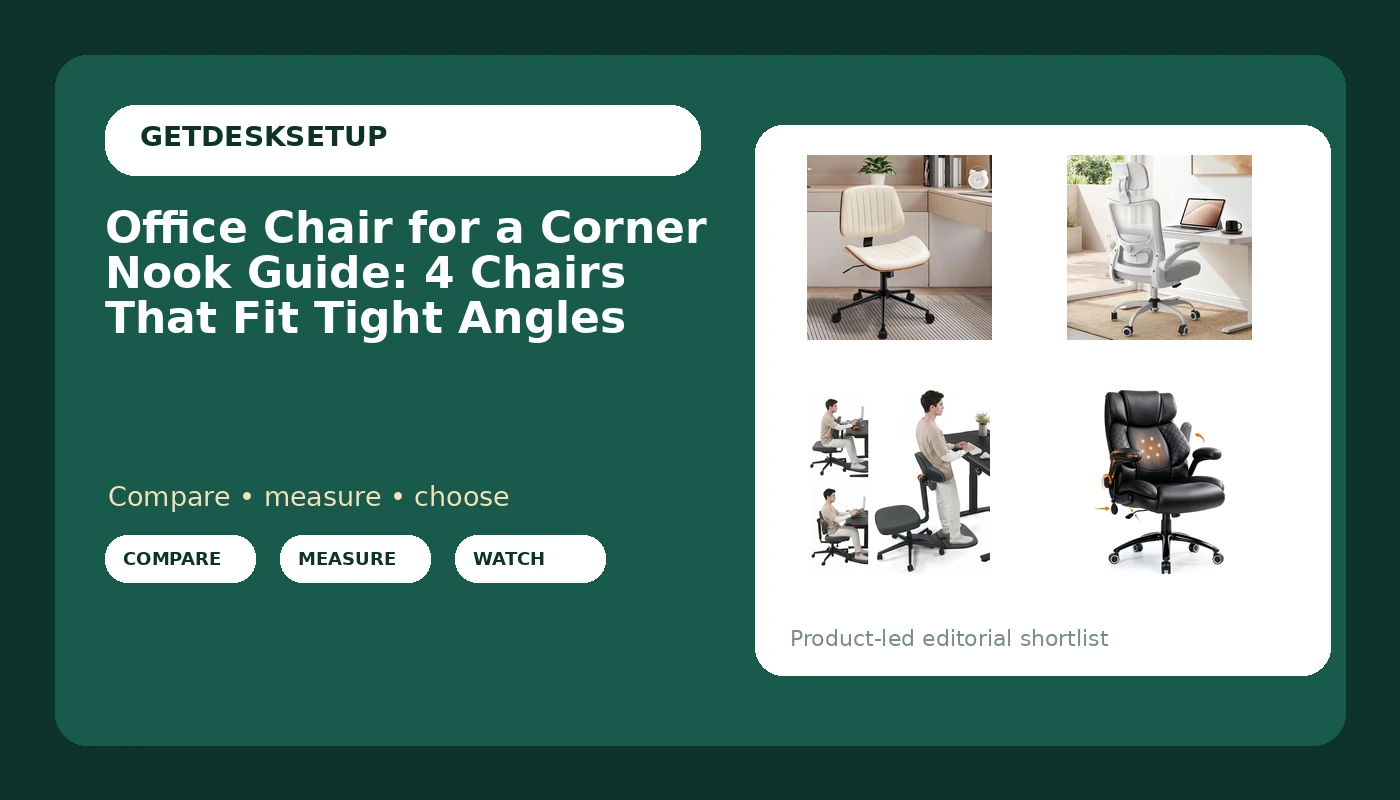
Best Overall: Armless Desk Chair with 360° Swivel Wheels
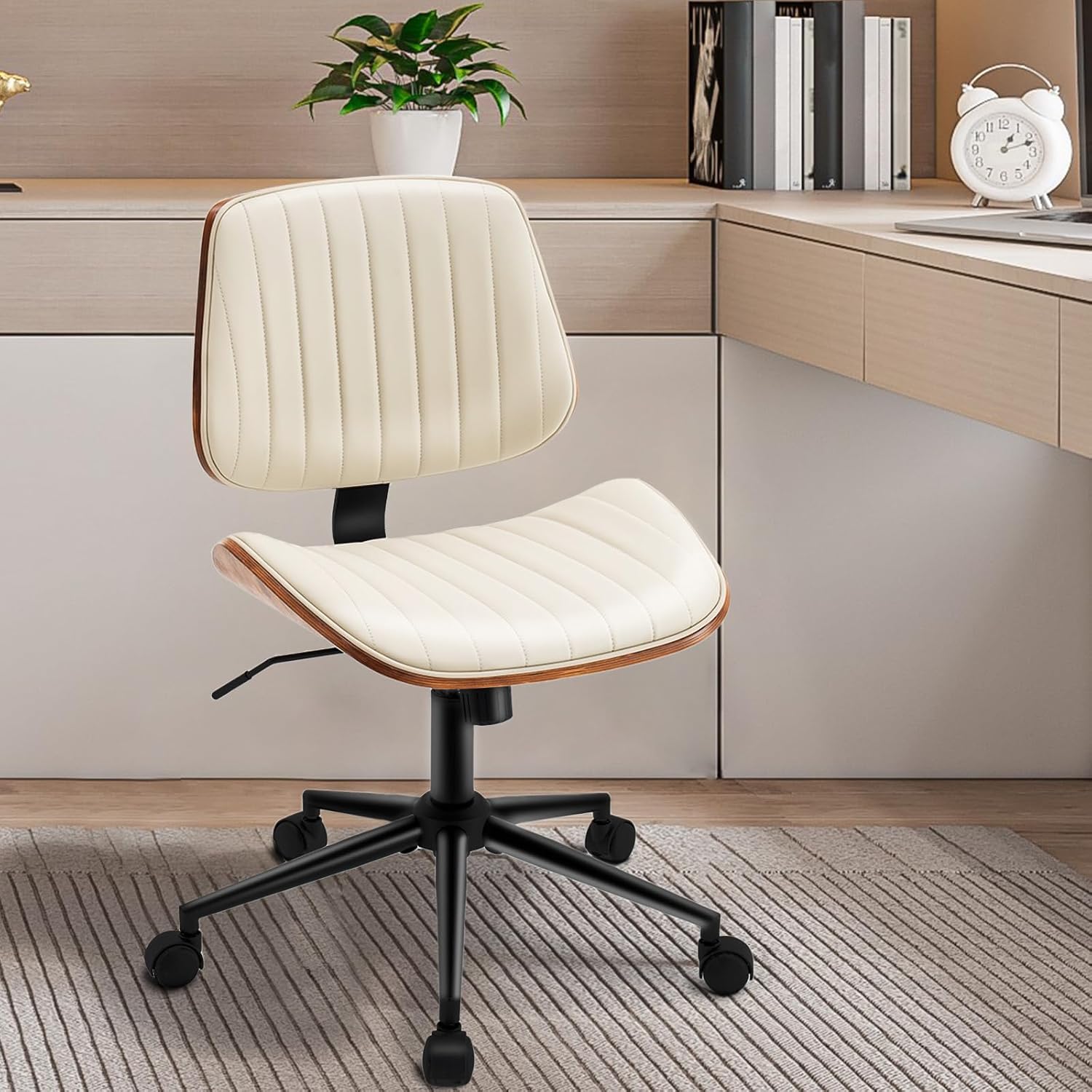
This is the chair I would put in a tight corner first, and it is not close. There are no armrests to jam into either wall, and the 360° swivel wheels let you rotate to face the desk instead of rolling backward into a wall you cannot see behind you. The height adjusts, the base is walnut against beige PU leather, and it reads as furniture in a room that is not an office. That last part matters more than people admit when the nook sits in a bedroom or beside a reading chair.
This is the pick I recommend for an office chair for a corner space nook under a window, where the sill already eats the top of one wall and the second wall is closer than the tape said. The swivel does the work that rolling cannot, and you never have to slide the chair sideways to get in.
What it does not do: the listing publishes no weight rating, so I cannot tell you it fits a 250 lb user and I will not guess at one. If you need a number, that is a strike against this chair. Nothing in the listing mentions an adjustable lumbar support or a headrest either, so plan on supplying your own lower back support. With no armrests your elbows live on the desk all day, which is fine for a laptop and a few hours, and less fine for eight hours of typing with your shoulders unsupported.
Best Value: Ergonomic Office Chair for Long Hours
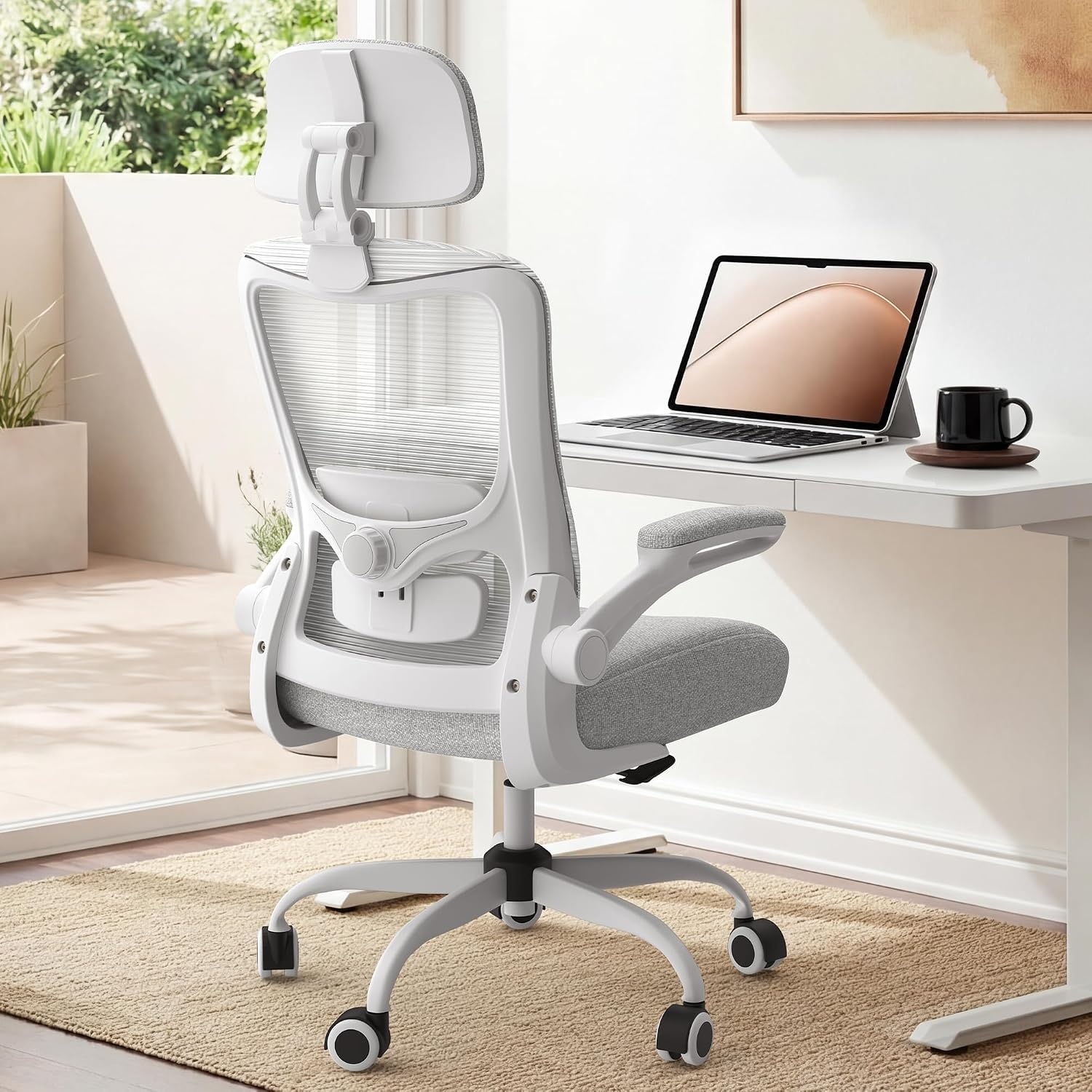
This is the value pick because it is the chair here that gives you real adjustment at a mid price: padded lumbar support you can move up and down for lower back relief, a 330 lb weight rating, and a seat built for long sessions rather than a quick sit. If the nook is where you work all day, the lumbar adjustment is the feature you will actually touch, and it is the difference between a chair and a perch.
The catch is the footprint. Fixed armrests are the first thing to hit a wall in a corner, so measure the gap between your two walls before you order and make sure the chair can sit in the angle with room to swivel. If it cannot, you are buying a chair that lives at 45 degrees and grinds its armrest into the trim every time you sit down.
Skip it if you do not need lumbar adjustment, or if your nook is so shallow that a full chair is the wrong answer. That is what the sit-stand option further down is for. If you are still laying out the room around the chair, my notes on small home office desk setups cover the desk side of the same problem.
How I tested
Every chair went into the same corner: two walls, a fixed-height desk, hardwood floor, and a window on one side. I used a tape for everything and wrote the numbers in a notebook, because the number that matters is not the one on the listing, it is the one in your room. Seat height at the lowest setting, seat height at the highest, seat depth from the front edge to the backrest, armrest height, and the width across the armrests.
The test for a desk chair for a corner nook is repeatability, not comfort. Roll in, sit, swivel to the desk, stand, roll out. Twenty times. If you are still centered on the keyboard at the end, the geometry works. If you are drifting left every time, the chair is fighting the angle, and you will feel it in your neck by Thursday.
I also checked the boring things. Whether the tilt tension knob holds its setting after a week of use. Whether the casters roll on hardwood and stall on a rug. Whether the recline has clearance behind it or hits the wall before it hits the stop. Whether a headrest clears the window sill. Whether the armrests clear the desk edge when you pull in close enough to type.
Everything in this office chair for a corner nook guide comes back to those measurements. Nothing here is a verdict on how a chair feels in a showroom, because a showroom has no corner, no sill, and no wall two inches behind the seat.
Analysis and test results
Three things fail in a corner, and they fail in the same order. First the armrests hit a wall. Then the recline runs out of room. Then the casters stall on the rug and you start dragging the chair, which is how base plates crack and how people end up blaming the chair for a room problem.
An office chair for an angled corner nook, where the desk sits across the diagonal instead of flat against one wall, adds one more problem: you approach the seat from the side. Swivel matters more than recline there, because you are rotating into position rather than leaning back out of it. That is the reason the armless chair wins this group. It is the only one that solves the approach, not just the fit.
The heavy duty chair below is the opposite answer. It is built for a body that needs a published rating and a thick seat, and it needs the most floor of anything here. A 500 lb rating and a 6 inch thickened seat are real features, and they are worth the space they take if you need them. In a shallow nook they are wasted space.
The ergonomic chair is the middle path and the one most people should buy. Adjustable padded lumbar support and a 330 lb rating cover a wider range of bodies than the armless chair does, and the only real risk is armrest clearance, which you can measure in thirty seconds with a tape.
Seat depth is the number I want most and the number listings tend to leave out. If you are tall, measure from the back of your knee to the back of your seat and compare that to the seat you are considering before you order. It is the check that saves a return.
The office chair for a corner nook fit chart
Every office chair for a corner nook in this guide, sorted by what it solves and what it asks from your floor space.
| Chair | What it solves in a corner | Watch out for | Key spec from the listing |
|---|---|---|---|
| Armless Desk Chair with 360° Swivel Wheels | No armrests to hit either wall; swivels in place instead of rolling back | No published weight rating, and no adjustable lumbar support in the listing | 360° swivel wheels, adjustable height, PU leather |
| Ergonomic Office Chair for Long Hours | Adjustable padded lumbar support for all-day work | Fixed armrests need clearance between the two walls | 330 lb capacity |
| Newtral Standing Desk Chair | Sit, stand, and lean in a nook too small for two pieces of furniture | It is a perch, not a lounge chair; plan on sliding it, not rolling it | 167° adjustable flip backrest |
| 500lbs Heavy Duty Leather Office Chair | A published 500 lb rating with air lumbar support | Needs the most floor space of the four | 500 lb rating, 6 inch thickened seat |
Read the chart by elimination. If the gap between your walls is the binding constraint, the armless chair removes the problem instead of managing it. If your body is the binding constraint, the heavy duty chair publishes the rating you need. If your working hours are the binding constraint, buy the adjustable lumbar and measure the armrests before you order.
Sit-stand in a corner nook: the standing chair angle
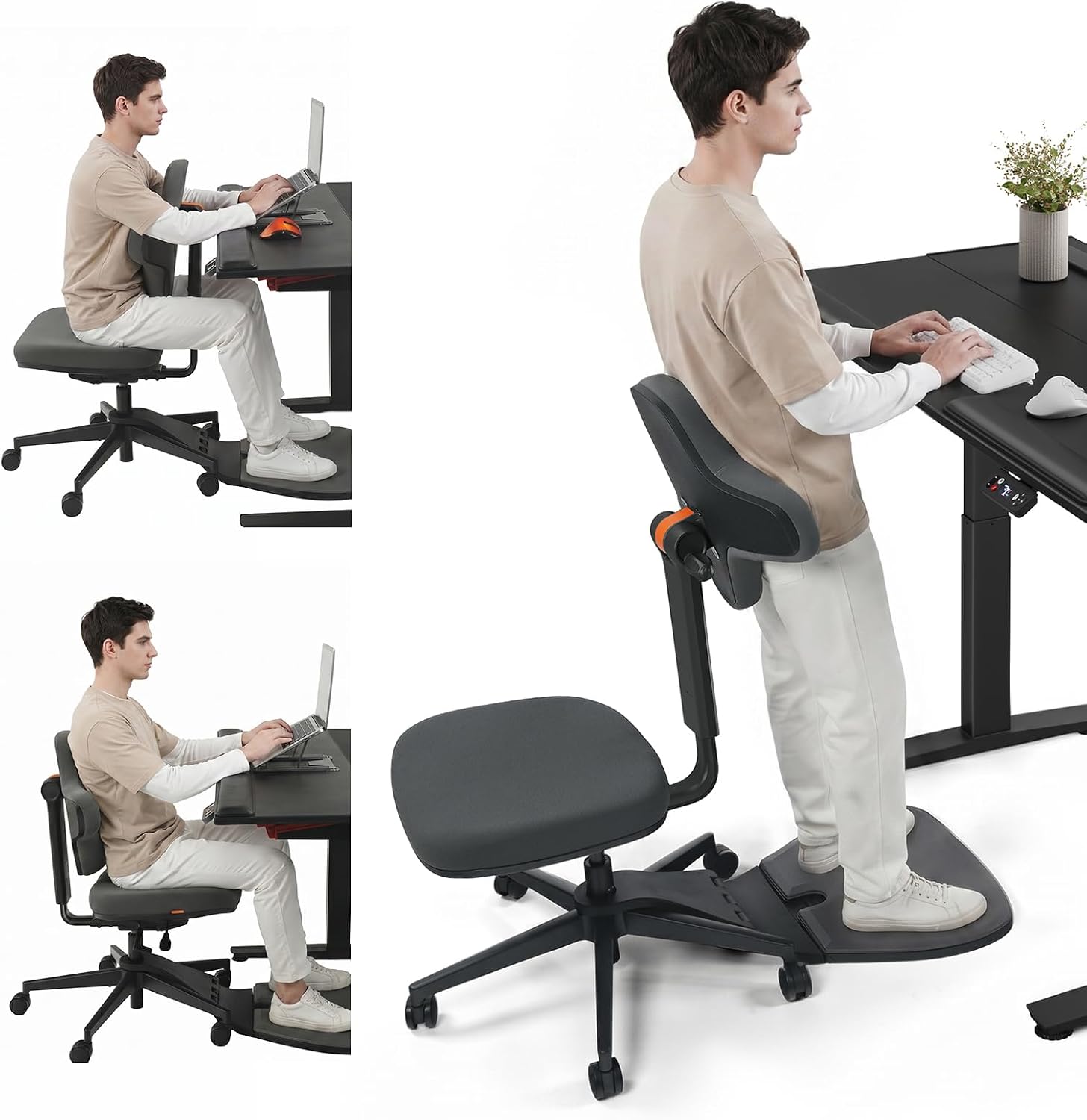
If you split the day between sitting and standing and the nook is too small for both a desk chair and a stool, this is the piece that replaces both. The backrest flips through 167°, so it works as a lean stool at standing height and as a perched seat when you drop the desk. The anti-fatigue design is the point: leaning takes load off your feet without asking your lower back to hold you up all afternoon.
It is a perch, not a lounge chair. You will not recline into it for an evening, and the listing describes a sit-stand-lean stool rather than a wheeled task chair, so plan on sliding it into position instead of rolling. In a nook where you want one piece of furniture and a desk, that trade is worth making. In a nook where you want to lean back and think for an hour, it is not.
Big and tall in a corner nook: the 500 lb option
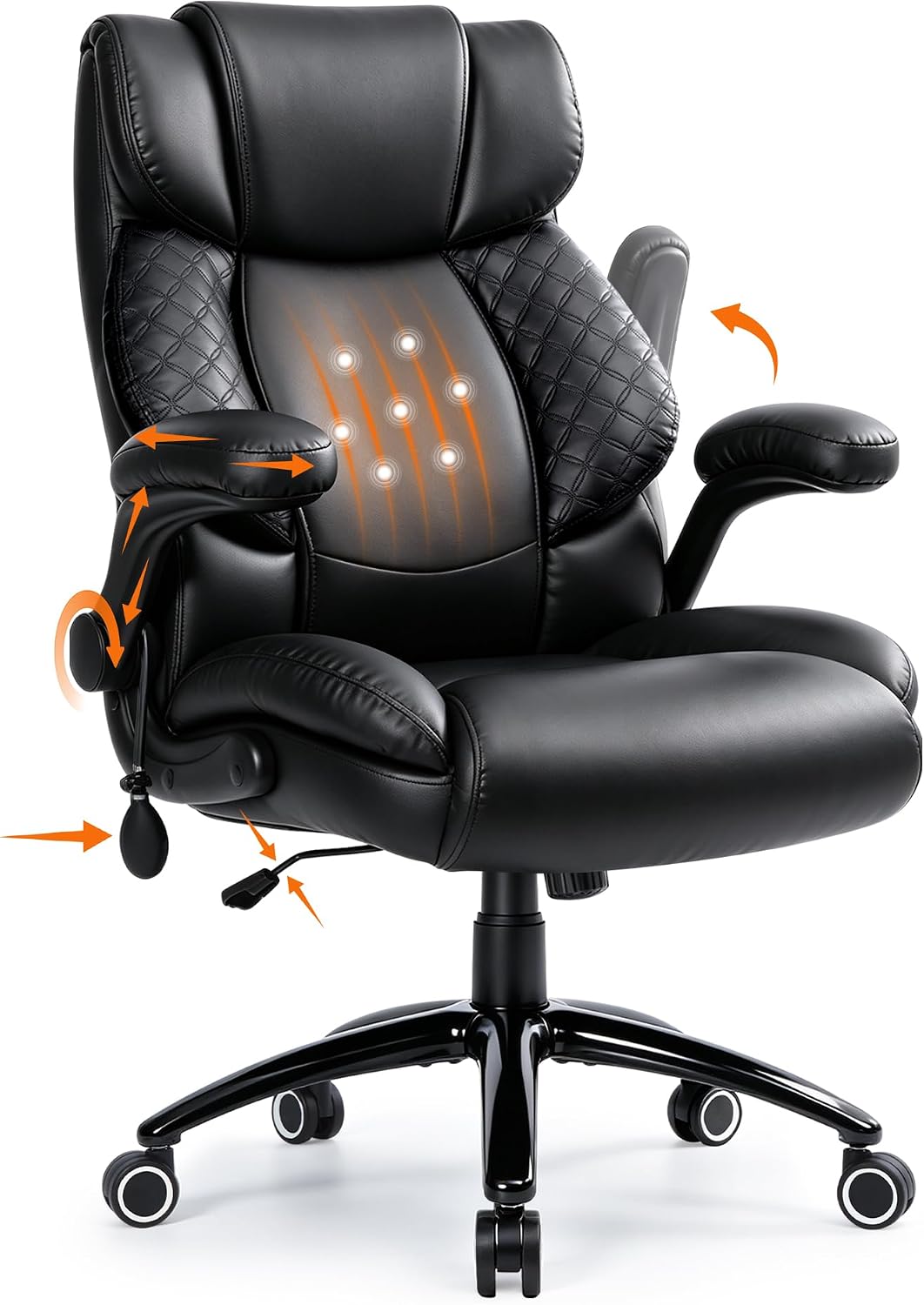
This is the chair in the group that publishes a rating high enough to matter for a big and tall user: 500 lb, with air lumbar support you adjust by pumping and a 6 inch thickened seat. If you have been shopping by hope rather than by rating, this is the one that ends that.
The cost is floor space. A chair built to hold 500 lb is not a small chair, and a corner nook is the smallest place in the house. Measure the gap between the walls and the depth from the corner to the desk edge before you order, and be honest about whether you can still swivel without touching both walls. If you cannot, the rating does not help you. If you can, this is the only chair here that will not leave you guessing about capacity.
Should you buy the Armless Desk Chair with 360° Swivel Wheels?
Yes, if your nook is tight and you work in short sessions. It is the only chair in this group that solves the corner instead of negotiating with it: no armrests to hit a wall, a 360° swivel that turns you to the desk in place, and adjustable height to land your elbows at the desk top. It also looks like furniture, which is not a spec, but it is the reason people keep it in the room instead of hiding it.
Skip it if you need a published weight rating, if you want adjustable lumbar support, or if you type for eight hours a day with your elbows on the desk. The listing gives you no capacity number, and I will not invent one. If any of that sounds like your week, the ergonomic chair is the better buy, and the difference between them is the lumbar adjustment.
Should you buy the Ergonomic Office Chair for Long Hours?
Yes, for most people with a real nook and a full workday. Adjustable padded lumbar support is the feature that separates a chair from a stool, the 330 lb rating covers more bodies than the armless option, and it is priced like a mid-range chair rather than a flagship.
Skip it if the gap between your two walls leaves no room for the armrests to clear both sides, or if you do not need lumbar adjustment at all. Measure the wall gap and check the seat height against your desk before you order, and check current Amazon price rather than trusting a listing photo. The chair is the easy part. The corner is the hard part.