I spent nine years as a facilities manager, which means I have signed chair leases for a 400-person floor and I have also stood on a loading dock at 6 a.m. watching those same chairs come back on a truck. Then I spent six years building out 310 home offices, where nobody leases anything, every chair gets bought outright, and every chair gets measured against an actual human being before the box is opened. That is why I do not answer the leasing vs buying an office chair question with a philosophy. I answer it with a tape measure and a return-condition clause.
Related: Office chair sizing: seat depth, seat height, and who actually fits
The short answer: leasing wins when the chair is a fixed cost you will hand back within three years and you have no opinion about the parts. Buying wins the moment your seat depth, your lumbar support, or your own floor matters, because a lease gives you a chair, not your chair.
Here is the part most comparisons skip. A lease and a purchase are not competing products. They are two different contracts wrapped around the same object, and the object does not change when the contract does. To show that, I picked four items at four very different price positions: a compact armless chair, a set of replacement arm pads, a mid-range task chair with built-in lumbar support, and a heavy-duty big and tall chair. Two of them make the buy case on day one. The other two show you exactly what a lease is really selling.
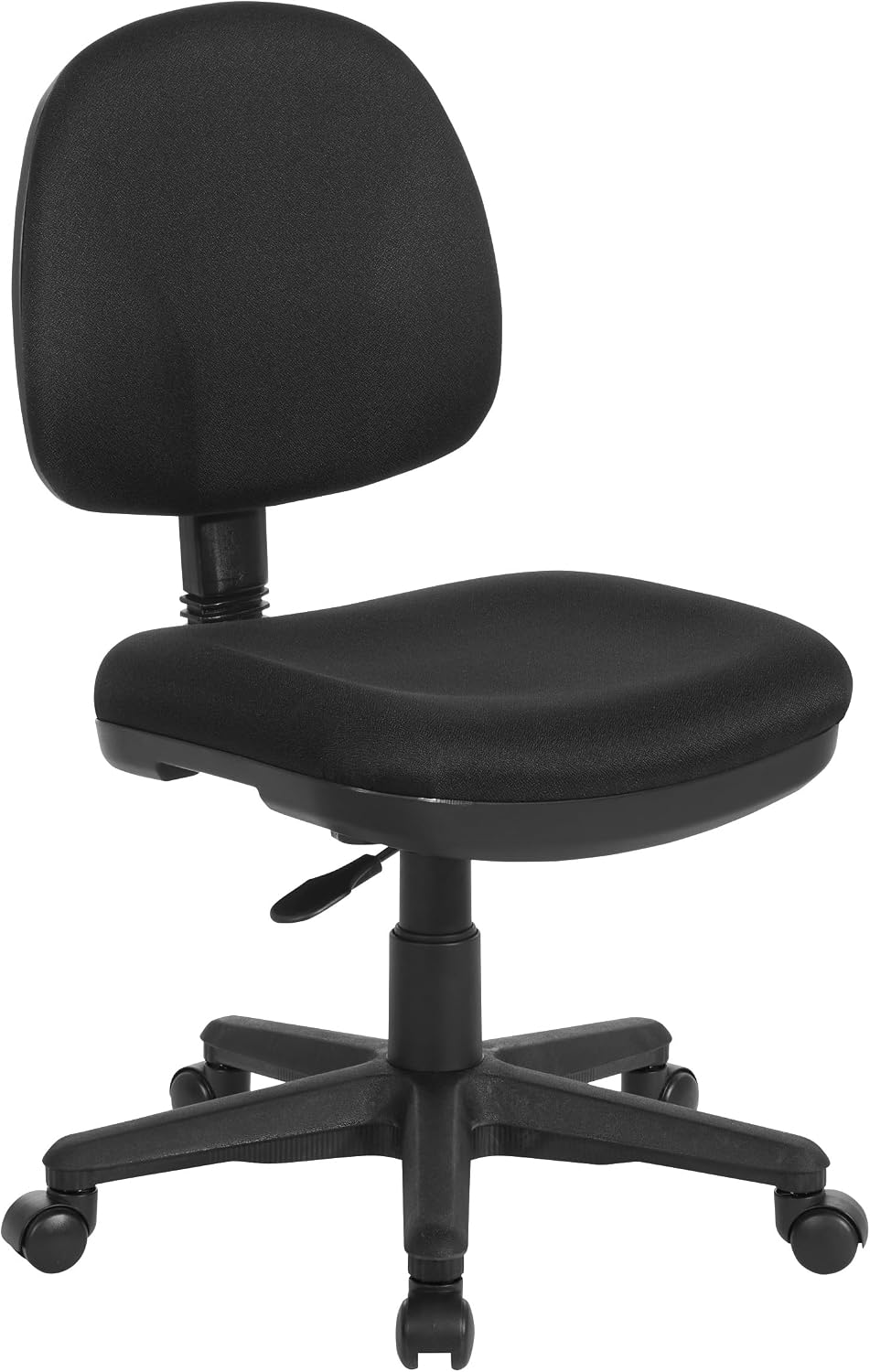
Office Star Pneumatic Sculptured Office Task Chair with Thick Padded Seat and Built-in Lumbar Support, Black
Owned outright it is the chair you keep past the term, and the lumbar support is built into the back rather than bolted on
Nothing in the listing states a seat depth, so it is a gamble for anyone outside an average build
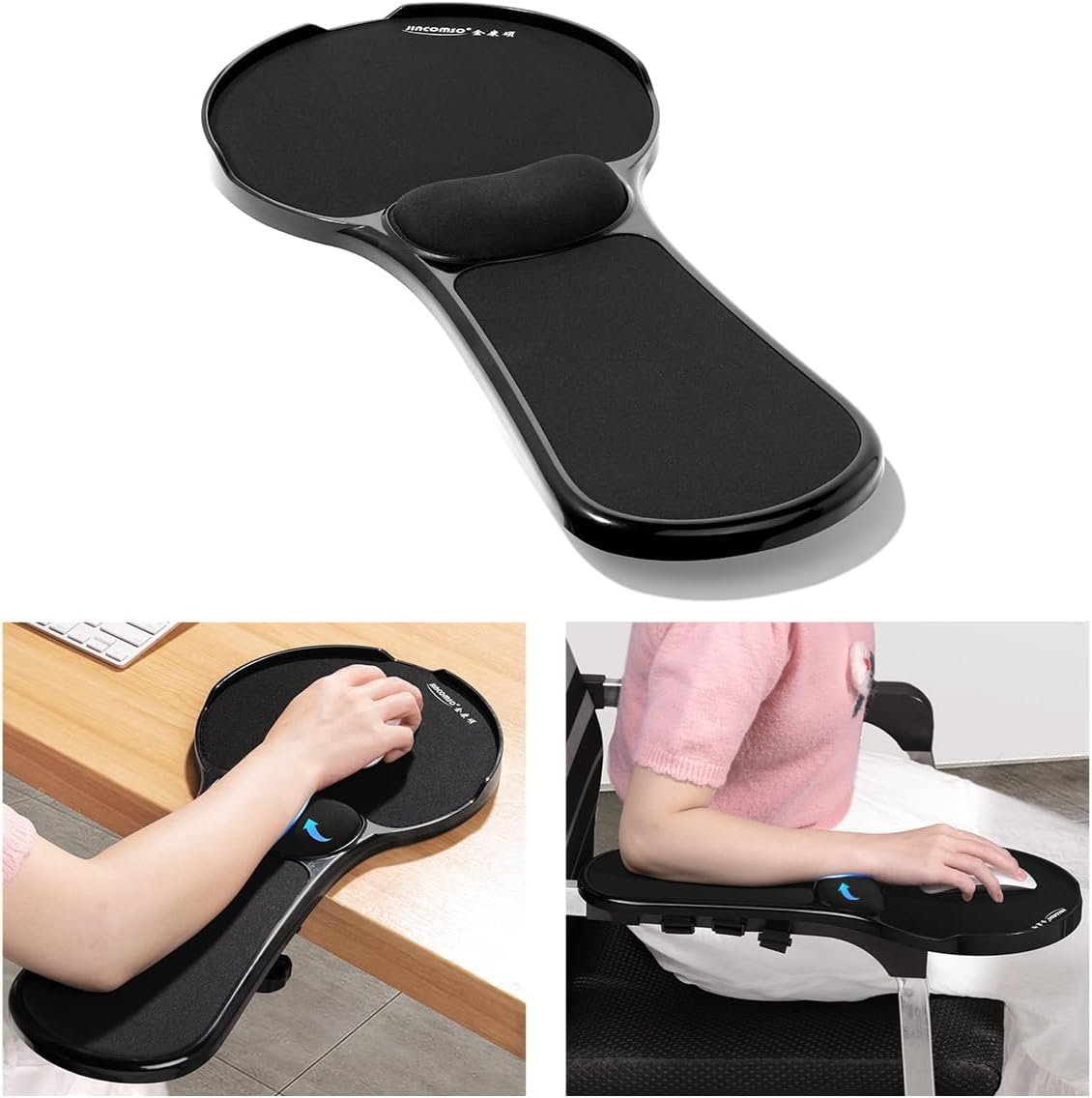
Black Office Chair Arm Pads Mouse Arm Rest with Baffle to Prevent Falling
Turns a worn chair back into a serviceable one, and it is the repair a lease agreement will not let you make
It is a part, not a chair. On its own it holds up nothing
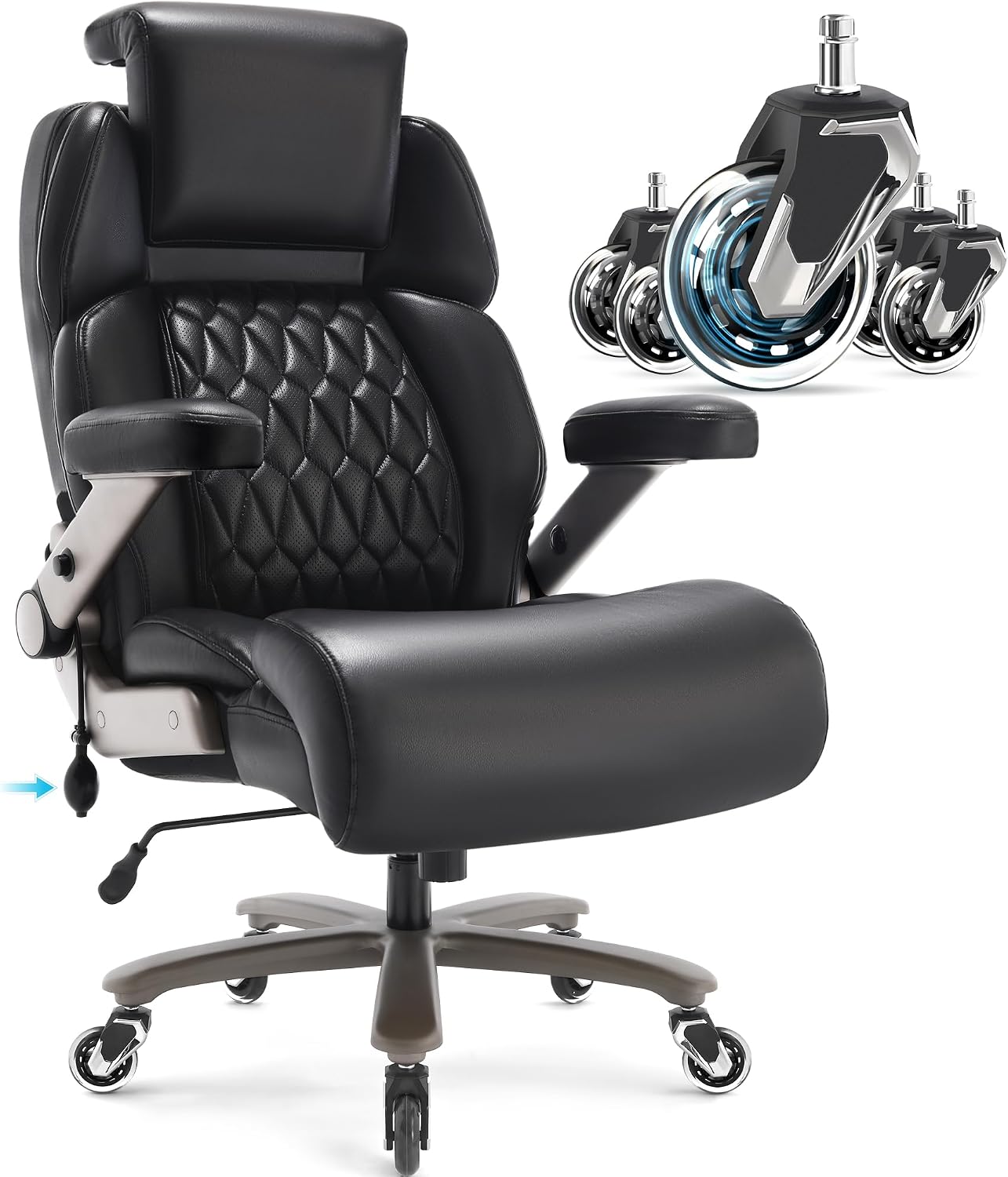
Big and Tall Office Chair 700lbs, Ergonomic High Back Computer Desk Chair
The stated 700 lb capacity is a spec you can actually check, and heavy-duty chairs are the worst fit for a standard lease catalog
A high back plus recline needs room behind the desk, and special-order chairs are a negotiation at return
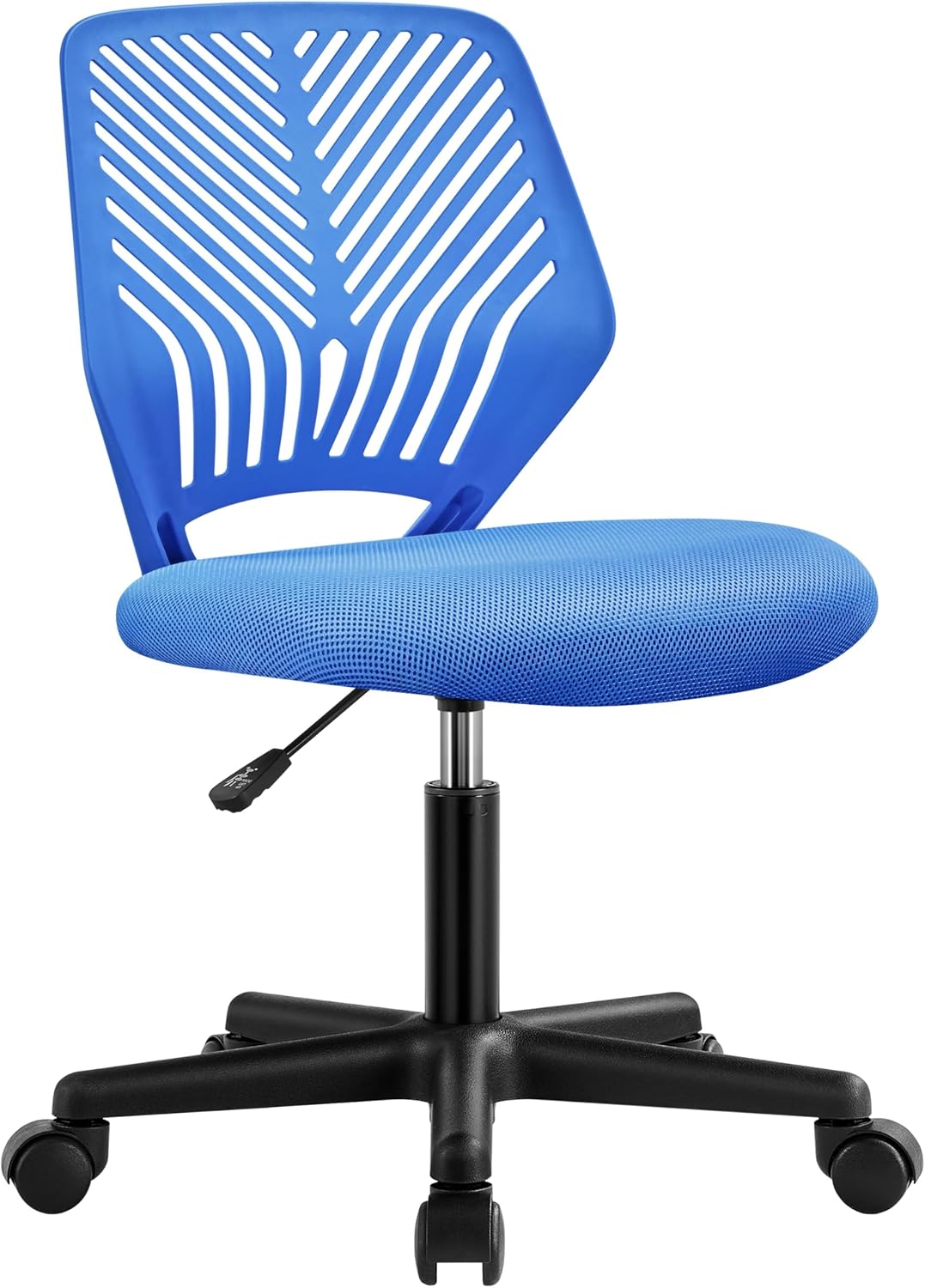
Yaheetech Armless Home Office Chair, Compact Adjustable Swivel Seat, Blue
Armless means no arm pads to replace, which removes the single most common lease-return charge
No lumbar support or recline is named, so it is a guest chair, not an eight-hour chair
Prices and availability may change.
What a lease actually covers, and what it does not
A chair lease is a service contract with a chair attached. On the floors I ran, the per-chair rate bought delivery, assembly, a repair line you could call, and end-of-term pickup. That is not nothing. When a pneumatic cylinder fails in month 28 on a floor of 400 people, having one phone number is worth real money, and buying 400 chairs outright is not the same decision as buying one.
What the lease does not cover is fit. Nobody in a leasing office will measure your seat depth, and nobody will ask whether you sit with your feet flat or tucked under the chair. You get the chair in the catalog, in the size in the catalog, and if your knees end up higher than your hips after eight hours, that is a you problem. You also do not own the residual. At the end of the term the chair goes back on the same truck I watched at 6 a.m., and the only thing you keep is the invoice history.
The difference between leasing and buying an office chair is not the monthly number. It is who owns the failure, and who owns the chair when the term ends.
The math on leasing vs buying an office chair
Run the test in this order, and do not skip a step.
First, multiply the quoted monthly rate by the term length. That is your real cost, not the rate. Second, ask what the lease charges for a repair after month 12, and what early termination costs if you move or shrink. Third, price the same class of chair outright, which is easy enough because any listing tells you with a click. Fourth, and this is the one people skip: ask how long you actually need the chair.
Under 36 months with a move on the calendar, the lease side of the ledger is doing real work. Past 48 months, you are usually just paying for the same chair twice, because the rate never stops and the chair never becomes yours. Buying an office chair vs leasing is also a question about your time. If you are a two-person office, the maintenance you are outsourcing is roughly one phone call every other year, and you can make that call yourself.
The rule I use: if the rate times the term is more than the purchase price plus one repair, buy. If it is less, and you genuinely will hand the chair back, lease. For one to ten chairs in a home office, that test almost always lands on buy.
Seat height and seat depth: the numbers a lease never asks for
Seat height and seat depth decide whether a chair fits you, and they are the two numbers no lease contract requests. Measure yourself before you look at anything else.
Sit on a hard chair with your feet flat on the floor. Measure from the back of your knee to the back of your buttock. That is your seat depth. Write it down. A chair whose seat pan runs longer than that will press into the back of your knee and push you forward all day; a chair whose pan is much shorter will leave you carrying your own weight in your thighs. Both are fixable only by buying a different chair, which is precisely the thing a lease makes hard.
For seat height, put your shoes on and set the chair so your knees sit level with or slightly below your hips and your feet rest flat. If the lowest setting still leaves your feet dangling, that chair is too tall for you and no amount of lumbar support will rescue it. If the highest setting leaves your knees above your hips, it is too short.
The compact chair: armless, adjustable, and the buy case in one box
Yaheetech Armless Home Office Chair, Compact Adjustable Swivel Seat, Blue Visit on Amazon (Check current Amazon price)
This is the least expensive way to test the buy side of the ledger. It is armless, which matters more than people expect. No armrest means no arm pad to crack, no height mechanism in the arm to strip, and nothing for a return inspector to flag. It is compact, so it fits a spare room where a full-size task chair would eat the walkway. The name states an adjustable swivel seat, so you get height adjustment and rotation, and that is the whole adjustment list.
Which tells you exactly who should skip it. If you need adjustable lumbar support, if you recline to think, or if you want your forearms supported at desk height, this is not your chair. It is a guest chair, a second desk chair in a spare bedroom, or the chair for a short-term rental where you do not want to move furniture at the end of a year. The blue is a real decision too. If the rest of your setup is black and walnut, you already know.
The arm pads: the cheapest argument for buying
Black Office Chair Arm Pads Mouse Arm Rest with Baffle to Prevent Falling Visit on Amazon (Check current Amazon price)
This is the item that wins the argument for buying, and it is not even a chair. Replacement arm pads exist because arm pads are the first thing to fail on any chair: the foam flattens, the surface cracks, the mounting holes strip, and suddenly a perfectly good chair looks three years older than it is. On a chair you own, a set of pads with a raised baffle edge is a cheap way to put it back into service for another two years.
On a leased chair, you usually cannot do that. Third-party parts on leased equipment are a return-condition problem, and I have watched a facilities team get billed for exactly that kind of swap. If you are weighing leasing vs buying an office chair for a small office, price the wear parts before you price the chairs. Arm pads, a caster set, and a gas cylinder are the three line items that decide the real cost of ownership over five years.
The task chair: pneumatic height, padded seat, built-in lumbar support
Office Star Pneumatic Sculptured Office Task Chair with Thick Padded Seat and Built-in Lumbar Support, Black Visit on Amazon (Check current Amazon price)
This is the class of chair a lease quote's mid-tier line usually points at: a pneumatic height adjustment, a thick padded seat, and lumbar support built into the back rather than added as a strap-on cushion. Built-in matters. An add-on lumbar pad shifts every time you move, and you end up adjusting it more than you sit in it, which is the opposite of what ergonomics is supposed to do.
What the name does not state is a seat depth or a weight range, so I will not invent one. Take the number you measured earlier and compare it against the listing before you commit. The honest skip: if you are 6'4" and 280 lb, this is not the chair you are looking for, and no lease rate turns it into one. This is the chair for an average build at a fixed desk, bought outright, kept past year three, with a replacement caster set when the floor wins.
The heavy-duty chair: the one spec a lease handles badly
Big and Tall Office Chair 700lbs, Ergonomic High Back Computer Desk Chair Visit on Amazon (Check current Amazon price)
The one hard number in this article is in the product name: a stated 700 lb capacity. That is the kind of spec a lease handles badly. Heavy-duty chairs are usually special-order, they are usually not in a standard catalog, and when a lease covers them at all the rate reflects the fact that the leasing company has to buy a chair it cannot easily reuse on the next floor.
If you need that capacity, the arithmetic flips hard toward owning. You keep it past the term, you replace a caster or a cylinder yourself when the time comes, and you are never arguing about what counts as normal wear on a chair that was never standard issue. The high back also changes the room. Check the wall behind your desk before you order, because a high back plus a recline is where a chair stops being a chair and becomes furniture with a footprint.
tilt tension, recline, and the knobs a lease will not let you touch
Tilt tension and recline are the two adjustments that decide whether you actually move in a chair over an eight-hour day. A chair with no tension adjustment is a chair you sit still in, and a chair you sit still in is a chair your back complains about by Thursday.
Here is where ownership shows up in a way that never appears on a lease quote. On a chair you own, the tension knob is yours to set, reset, and set again when someone else uses the desk. On a leased chair, the adjustments are usually tuned once at delivery and then left alone, because a service ticket for a tension preference is not something a facilities team wants to file. If you share a desk, buy, because two people need two settings.
headrest, armrest, caster: the three wear items that set your term
In nine years of lease returns, the inspection list was always the same three items: arm pads, casters, and anything that had been added.
A caster that has rolled on hardwood for three years shows it, and a set of replacement casters for a hard floor is the first thing I buy for any chair in a client's house. An armrest takes the wear of every push away from the desk, and the pad is the part that gives up first. A headrest gets leaned on, and a headrest mount is where a crack starts. On a chair you own, those three items are a maintenance list you work through once every two years. On a leased chair, they are the reason a return gets billed.
If you lease anyway, photograph every chair on delivery, keep the condition standard in writing, and budget for casters and pads at the end. That budget is part of the true lease rate, and it never appears in the quote.
leasing or buying an office chair: who should do which
Lease if you are fitting 20 chairs or more, you have a move or a headcount change inside the term, you want one invoice and one phone number, and you genuinely will hand the chairs back. Lease also makes sense if you are furnishing a space you do not own and cannot move furniture out of.
Buy if you are fitting one to ten chairs, you know your seat depth in inches, you want to keep the chair past three years, you need a heavy-duty or otherwise non-catalog size, or you want to swap arm pads and casters yourself instead of filing a ticket. Buy also if you share the desk with a second person, because tilt tension and seat height are personal settings and a service contract cannot store them.
Related: Cable management that survives a monitor arm
How I would run the decision
Measure yourself first, before you read a single quote. Seat depth, then seat height. Then decide which chairs are even eligible, because a lease catalog that cannot supply your size is not cheaper, it is just unavailable. Then run the rate times term test against the purchase price plus one repair, and let the number make the call.
That is the whole method. Ergonomics is a measurement, not a feeling, and a lease is a contract, not a chair. The cheapest correct setup beats the most expensive wrong one every single time, and the four items above cover the full range: a compact armless chair for the guest spot, arm pads to keep an owned chair alive, a mid-range task chair with built-in lumbar support, and a heavy-duty chair whose stated capacity is the one spec you can check before you spend anything.