Related: Under-desk footrest vs. foot hammock: which one survives a corner
A corner desk breaks the one assumption every platform footrest makes: that there is a straight run of floor between two legs. Drop a rigid wedge under a corner return and it either fights the corner leg or slides back until your heels find the baseboard. This is a footrest for a corner desk guide, and it starts with geometry, not with a product page.
I spent nine years as an office facilities manager, buying and assembling chairs and desks for 400 person floors, then six more years running a two person desk setup service that has built out 310 home offices. Through all of it I kept one notebook: every desk height range and seat depth I measured with a tape, plus the exact spot where each corner desk pinches. The footrest for a corner desk problem turns up in about one build in four, and it is almost never solved by buying the biggest platform rest on the shelf.
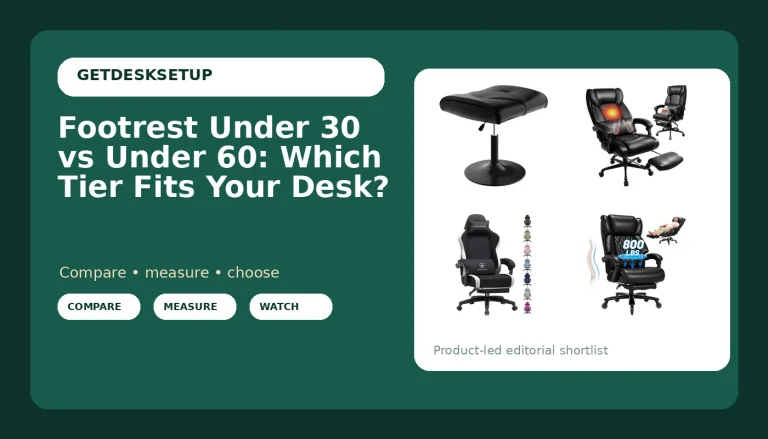
Best Overall: Home-organizer Tech Portable Adjustable Foot Hammock for Corner Desk Office Foot Rest Mini Under Desk Foot Rest Hammock for Home, Office, Airplane, Travel, Study and Relaxing (Black)
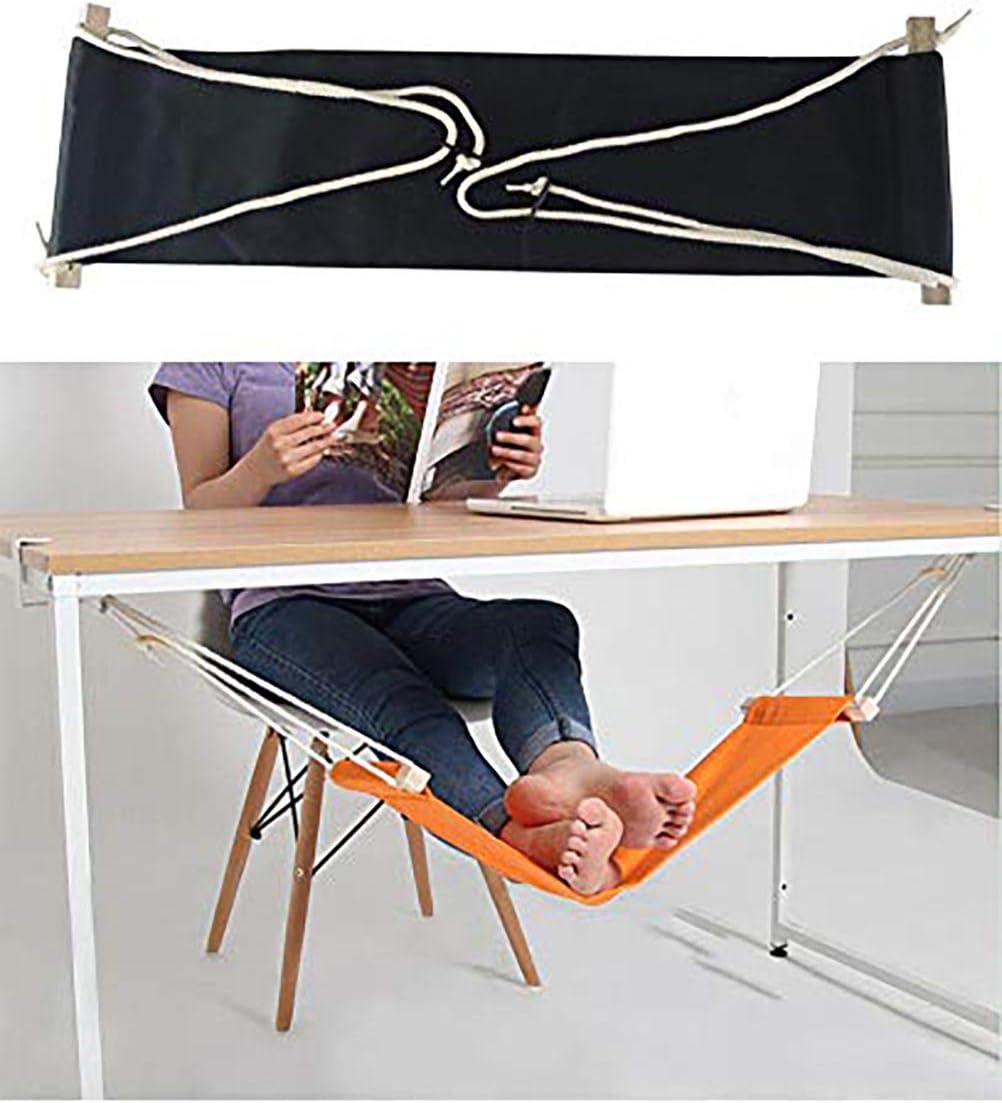
If your corner desk has a corner leg, a raceway running down the back, or a return that meets the main top at an angle, a floor platform is the wrong tool. This hammock hangs from the desk edge on two straps and holds your feet in the air, so it uses no floor area and never touches the corner leg. That one design choice is why it takes the top spot.
The straps are the adjustment. Shorten them and the hammock rides high, close to the underside of the top. Lengthen them and your feet drop toward the floor. That changes your footrest angle more than most people expect, and it is the reason this works as a footrest for an angled corner desk: you hang it on the long side of the return, angle your feet into the corner, and keep your knees under the desk instead of splayed around a platform.
It also rolls up small. The name mentions airplane and travel for a reason, and I have used one on a tray table when the seat in front took all the legroom. At a desk, the useful part is that there is nothing to measure first. No minimum desk width, no floor clearance to check, no fight with the cable sleeve and the adhesive clips you already have running down the back leg.
Who should skip it: anyone who wants firm pressure under the arches. A hammock gives. If you have plantar fasciitis, or you reset your posture by pushing your heels down hard, that give works against you. My rule is that over 6 feet 2 or over 240 pounds, go rigid, because a strap hung rest will not take the same load as a steel frame, and the last thing you want is a strap letting go at hour four.
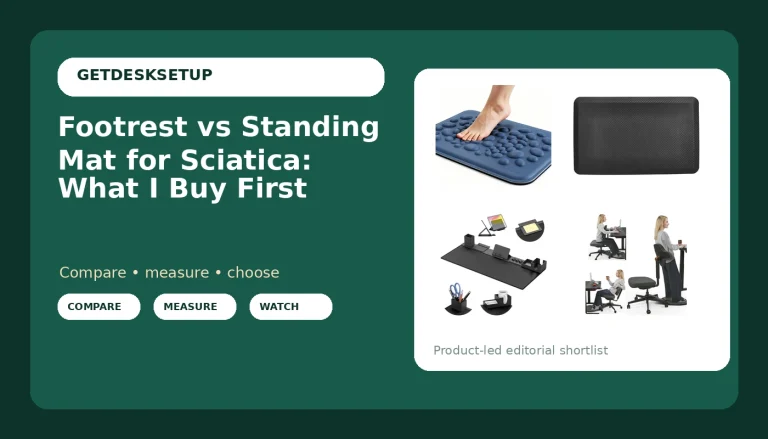
Best Value: Drafting Chair, Tall Office Chair with Flip-up Armrests Executive Ergonomic Computer Standing Desk Chair, Office Drafting Chair with Lumbar Support and Adjustable Footrest Ring
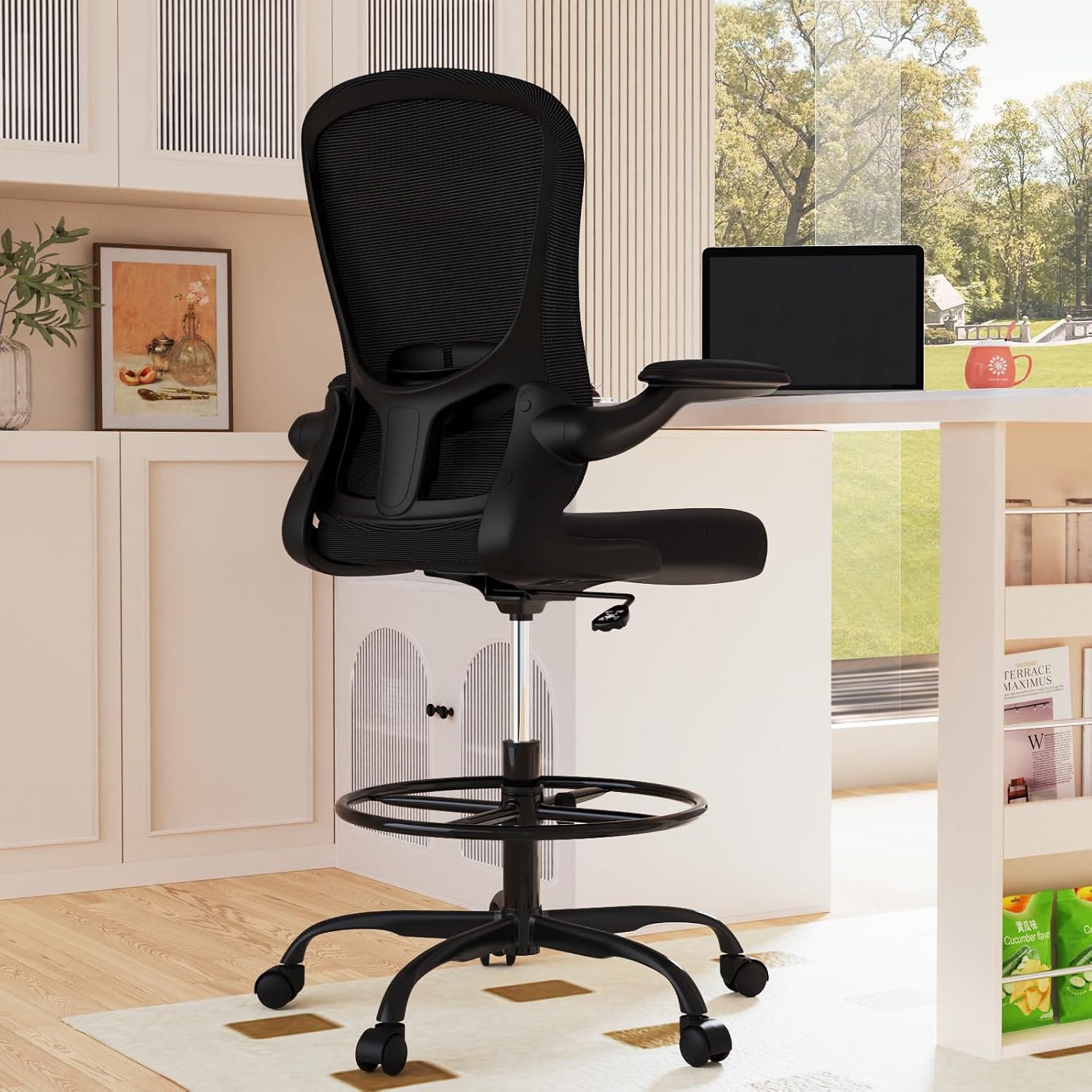
If you are already shopping for a chair, the math changes. A corner desk set at standing height leaves your heels hanging, and no floor rest fixes that, because your feet are nowhere near the floor. You need the support attached to the chair.
This drafting chair is the value pick. It has a footrest ring that adjusts up and down the cylinder, flip up armrests, and lumbar support. The flip up armrests matter more at a corner than anywhere else. A corner return is usually shallower than the main top, so arms that stay down either hit the underside of the return or hold you a few inches too far from the keyboard. Flip them up and you can pull the seat into the corner where the work actually is.
The ring is what ties this to the topic. It travels with the chair, so you can spin from the long side of the desk into the corner and keep your feet supported the whole way. Nothing sits on the floor to kick, and nothing sits in your walking path when you stand up. For a footrest for a corner space desk, that is the whole point: the support follows you instead of waiting in one spot.
Who should skip it: anyone on a standard sitting desk. Drafting chairs start high, and most of them bottom out well above a normal sitting position, so a shorter user on a normal desk ends up with knees above hips and feet parked on the ring all day. My rule: this one is for desk tops set for standing or drafting work, and for users roughly 5 feet 4 and up. Under 5 feet 4 on a standard desk, the hammock above is the better buy.
How I tested
I run the same five checks on every foot support that goes into a build, and I run them at the corner, not at the middle of the desk.
Desk height at the corner, measured with a tape from the floor to the underside of the top, on the long side and on the return. Those two numbers are rarely the same, and the difference decides whether a floor rest has any room at all.
Floor clearance, marked with painter's tape: the footprint of the corner leg, plus any raceway or cable tray running down the back. If a platform cannot sit flat without touching either one, it is out.
Footrest angle across a full day. I check it in the morning and again after lunch, because a rest that feels fine for 20 minutes can have your ankles in a bad position by hour three.
Load and movement. I put my full weight on it, push off the way you do when you stand, and watch the strap, the frame, or the ring.
The stand up test. Anything parked in the walking path at a corner desk gets tripped over, so I check whether you can leave the desk without moving the rest first.
Then I lived with each option through a month of real work days, which is where the small annoyances show up: a strap that creeps, a ring that spins loose, a chair that needs a wrench every two weeks.
I do not trust a fit claim without a stated height and weight range, and I do not call anything comfortable without naming who should skip it. Both rules are why every pick in this footrest for a corner desk guide comes with a skip list instead of a star rating.
Analysis and test results
The corner is the whole test. A straight desk gives a platform rest a long, flat run of floor, and almost anything works. A corner desk gives you a leg, an angled return, and often a raceway, all inside the footprint where a platform wants to sit.
That is why the hammock wins on geometry. It is not a better footrest than a steel platform in the abstract. On a straight desk I would take a platform every time, because firm pressure and a fixed footrest angle beat a swinging strap. On a corner, the platform loses before the comparison starts, because it cannot sit where your feet actually are.
Desk height decides the second question. If your corner top is set at standing height, every floor option is out, and the answer is a tall chair with a footrest ring. If your top is at sitting height, the hammock and a platform are both live options, and the hammock wins on clearance.
Then there is the floor itself. If you put a mat under a corner desk, mat thickness changes your chair height relative to the desk, and mat density decides whether the mat stays where you put it. A thick, soft mat raises your feet and lets the chair sink, which quietly undoes the seat depth you set that morning. If you go that route, keep the mat thin and firm, and put it under the desk rather than across the whole room.
Cable management matters here too, and not for looks. A rest that presses a cable against a leg will pull on whatever is at the other end of that cable. That is how a monitor arm drifts out of position within a week. Keep the run inside a raceway or a cable sleeve, hold it to the leg with an adhesive clip, and route it above the height where your feet move. This is the same reason I check desk wobble at standing height before I trust any setup at the top of its range.
And be skeptical of the word ergonomic. A chair listing that says ergonomic with no lumbar adjustment is marketing, not engineering. The same goes for footrests that promise to fix posture. Foot support does one job: it stops your feet from dangling or from pushing your chair away from the desk. Nothing in this guide changes your monitor height or your desk lamp lumens, and that is fine. One variable at a time.
The footrest for a corner desk fit table
If you searched for a foot rest for a corner desk and got pages of identical platforms, this is the shortcut. Desk height is the first column I check, because it eliminates half the options before brand or looks enter the conversation.
| Product | Type | Desk height it suits | Who should skip it |
|---|---|---|---|
Home-organizer Tech foot hammock | Strap-hung foot rest | Any height, including angled returns | Anyone who needs firm pressure under the arches |
Drafting chair with flip-up armrests | Tall chair with adjustable footrest ring | Standing and drafting height | Standard sitting desks, and users under 5 feet 4 |
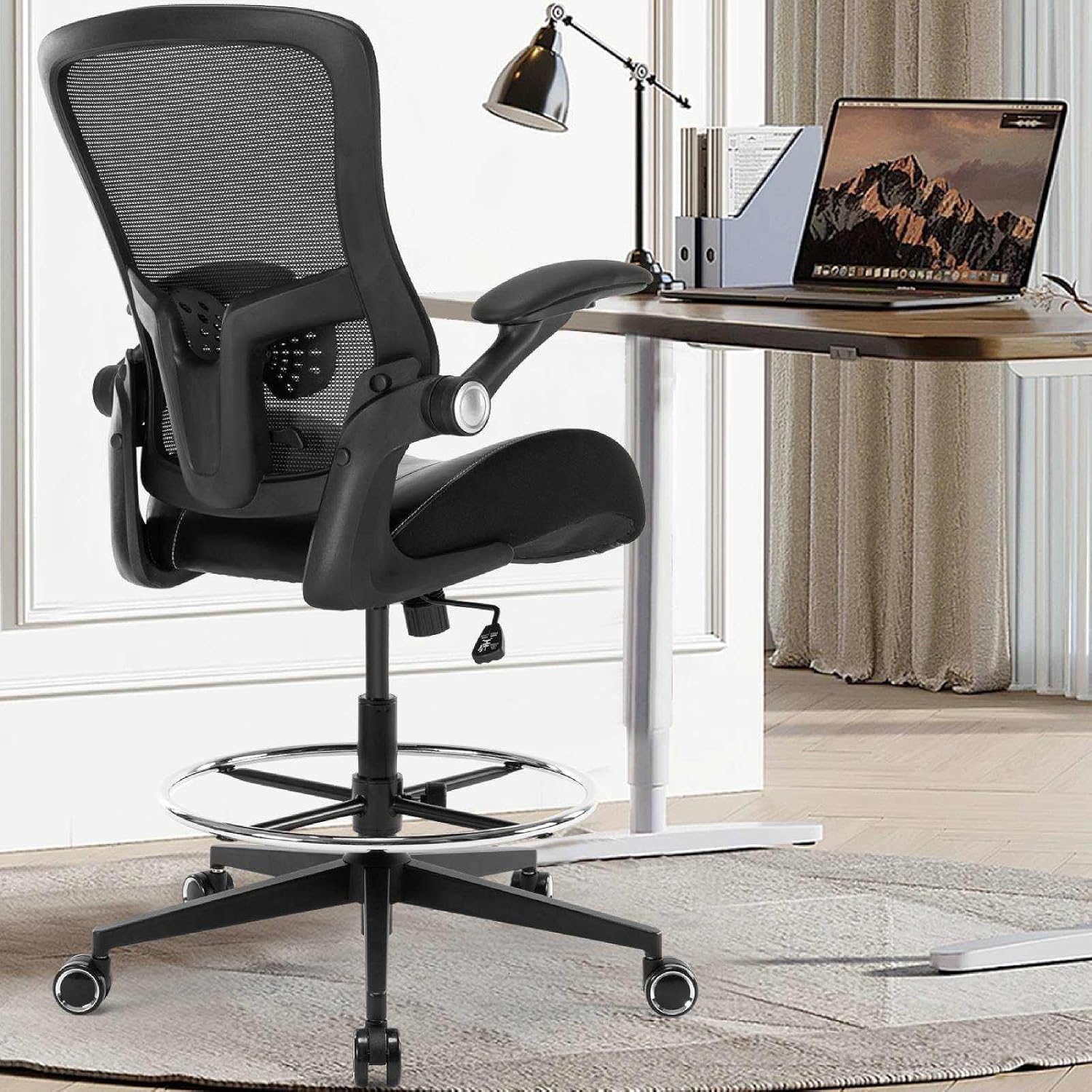 View on Amazon → PU leather drafting chair with a 21.65 inch footrest ring | Tall chair with a fixed footrest ring | Standing and drafting height | Standard sitting desks, and anyone who wants a low seat |
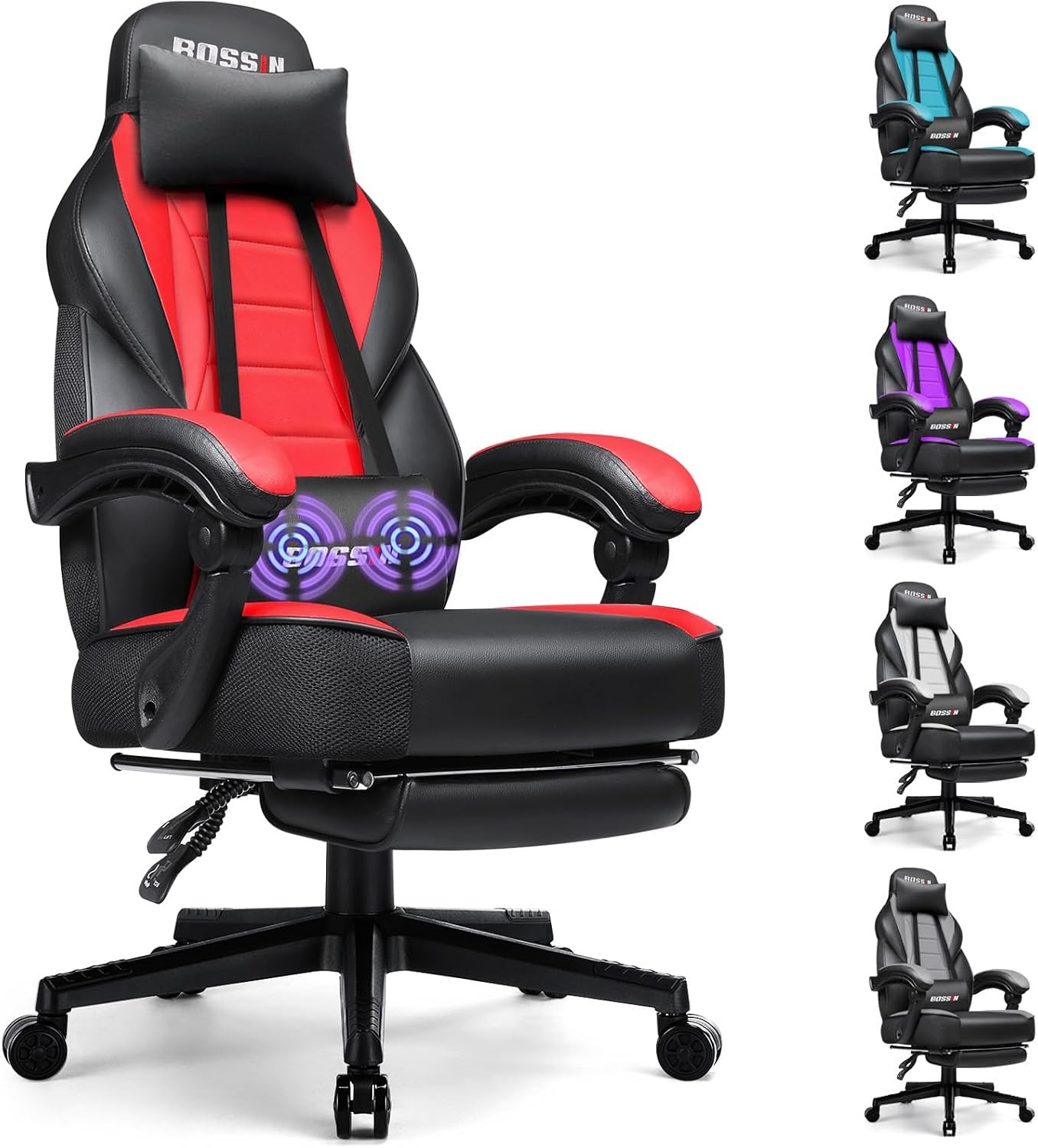 View on Amazon → BOSSIN racing style gaming chair | High-back chair with a built-in footrest | Standard sitting height | Shallow corner returns, and anyone who wants lumbar adjustment |
The step-up drafting chair
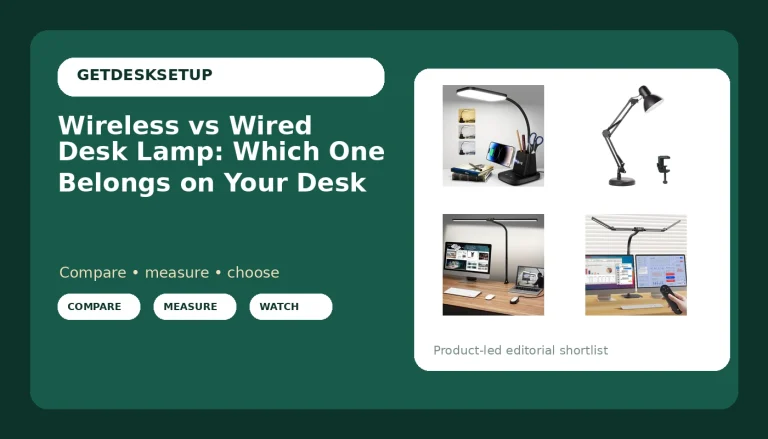
If the value drafting chair is the sensible answer, this is the one for long days. The PU leather seat wipes clean, the footrest ring measures 21.65 inches across, and the lumbar support and armrests adjust. A wider ring is easier to find with your feet when you are shifting around in the corner, which sounds trivial until you have spent a week hunting for a narrow one.
Skip it if your desk is a standard sitting height, if you want a fabric seat for a warm room, or if you are under 5 feet 4 and need the seat to drop low. Everything else here is a fit question, and this chair answers the tall corner desk better than the cheaper drafting chair does.
If you want the footrest built into the chair
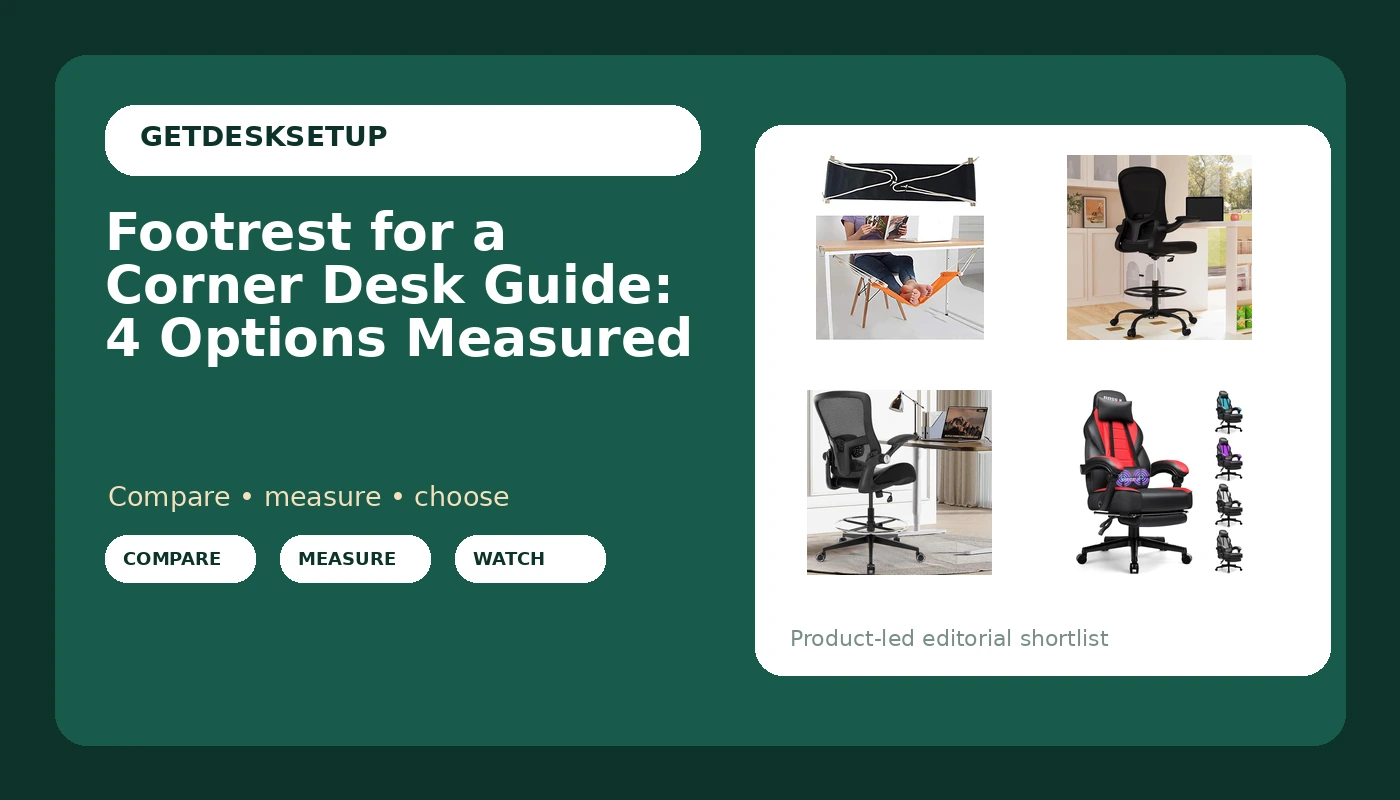
This is the chair route, and it is a chair purchase first and a footrest purchase second. It is a big and tall high-back with a built-in footrest, a headrest, and a heavy duty frame. The footrest pulls out from under the seat, so nothing lives on the floor and nothing fights the corner leg.
Skip it if your corner return is shallow. A large high-back needs depth behind the seat, and a return that is too short will push the chair out past the corner. Skip it too if you want lumbar adjustment, because the name lists a footrest and a headrest, not a lumbar dial, and that is exactly the kind of listing that uses the word ergonomic without earning it.
Should you buy the Home-organizer Tech Portable Adjustable Foot Hammock?
Yes, if your corner desk has a corner leg or an angled return and you want to keep the floor clear. It hangs from the desk edge, the straps set the height and the footrest angle, and it rolls up when you stand. It is the only pick here that fits a corner without a single measurement, which is why it takes the top spot.
The honest limits: it gives under pressure, so it is wrong for plantar fasciitis or for anyone who likes to push hard through the heels. My rule is over 6 feet 2 or over 240 pounds, go rigid. Under that, on a corner desk where a platform will not sit flat, this is the simplest answer you can buy.
Should you buy the Drafting Chair with Flip-up Armrests?
Yes, if your corner desk top is set for standing or drafting work. The adjustable footrest ring moves with the chair, the flip up armrests let you pull into a shallow return, and the lumbar support is actually there rather than implied by a label.
Skip it if your desk is a standard sitting height, if you are under 5 feet 4, or if you want a chair that doubles as a lounge seat. It is a work chair for a tall desk, and it does that one job. If your desk is a normal sitting height and your feet just dangle, buy the hammock instead and keep your money.