Related: Best Desk Accessories for a Small Home Office
This desk lamp arm length guide exists because I have watched the same mistake play out in a few hundred home offices. Someone buys a lamp for the shade, sets it on the desk, and the light lands on the wall, on the far corner of the desk, or on the back of their own head. Arm geometry decides that. Not the finish, and not the review count.
I spent nine years as an office facilities manager, buying and assembling furniture for 400-person floors, and six more running a two-person desk setup service. That is 310 home offices. When a client tells me their desk is too dim, I do not start with desk lamp lumens. I start with where the head sits when the arm is at full stretch, and what the arm does when you push it back. A lamp that cannot fold out of the way ends up on the floor, and then nobody uses it.
Best Overall: TORCHSTAR Metal Desk Lamp
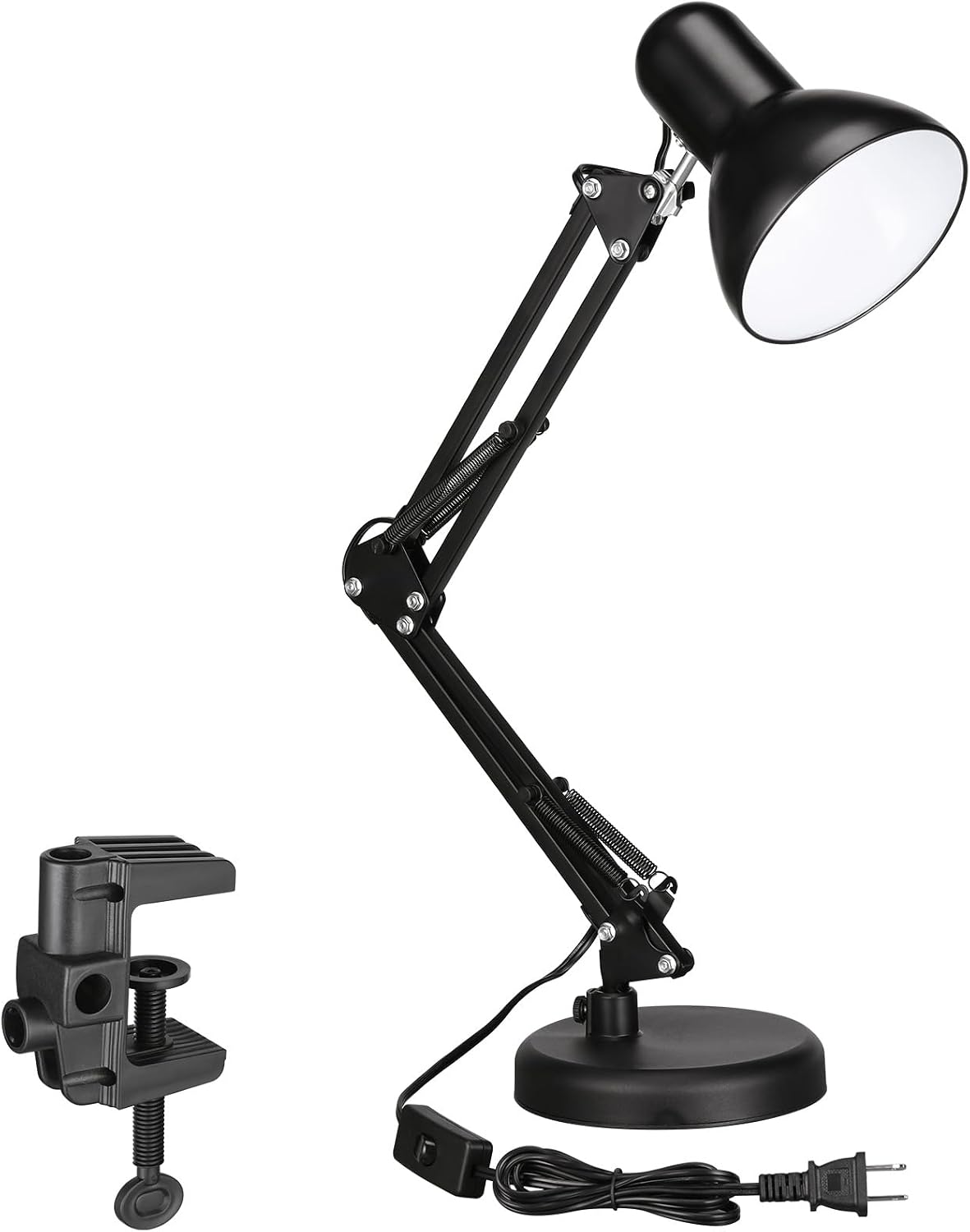
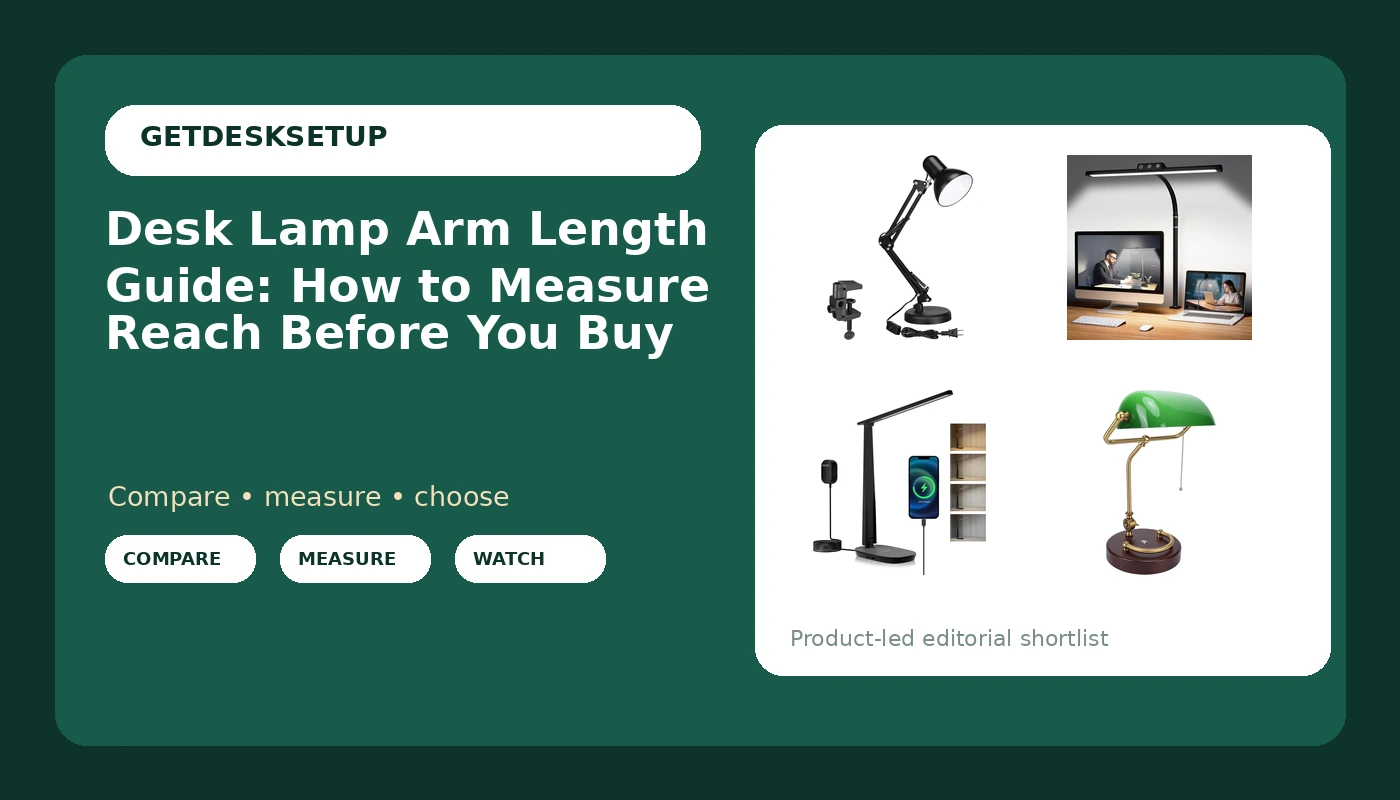
This is the lamp I would put on a deep desk where the work moves around. The arm is a swing arm, so the head can sit over the keyboard for typing and swing back over the rear edge of the desk when the laptop comes out for a call. A hinged arm is the difference between a lamp you position and a lamp you argue with. A fixed head gives you one angle and one distance, and you spend the rest of the year working around it.
The E26 socket is the part most people skip past, and it is the reason this is the overall pick. You choose the bulb, which means you choose the color temperature and the output. When a client says the desk is too dim, I change a bulb instead of a lamp. When a fixture has a sealed LED and no socket, a dim lamp stays a dim lamp until it dies, and then the whole thing goes in the bin. If you want the reasoning on output, my desk lamp lumens notes cover how much light a task surface actually needs.
It is metal, it is black, and it reads as equipment rather than decor. Hinged arms loosen over months, so check the tension at the end of week one, while the adjustment is still in your head, not in month six when the head is already nodding at the desk.
Who should skip it: anyone with a shallow desk. A swing arm needs depth behind the keyboard for the base and for the folded position of the arm. If your desk is tight to a wall and you keep a notebook on the right side, the arm will live exactly where the notebook goes, and you will lose that argument every day.
Best Value: LED Desk Lamp for Home Office
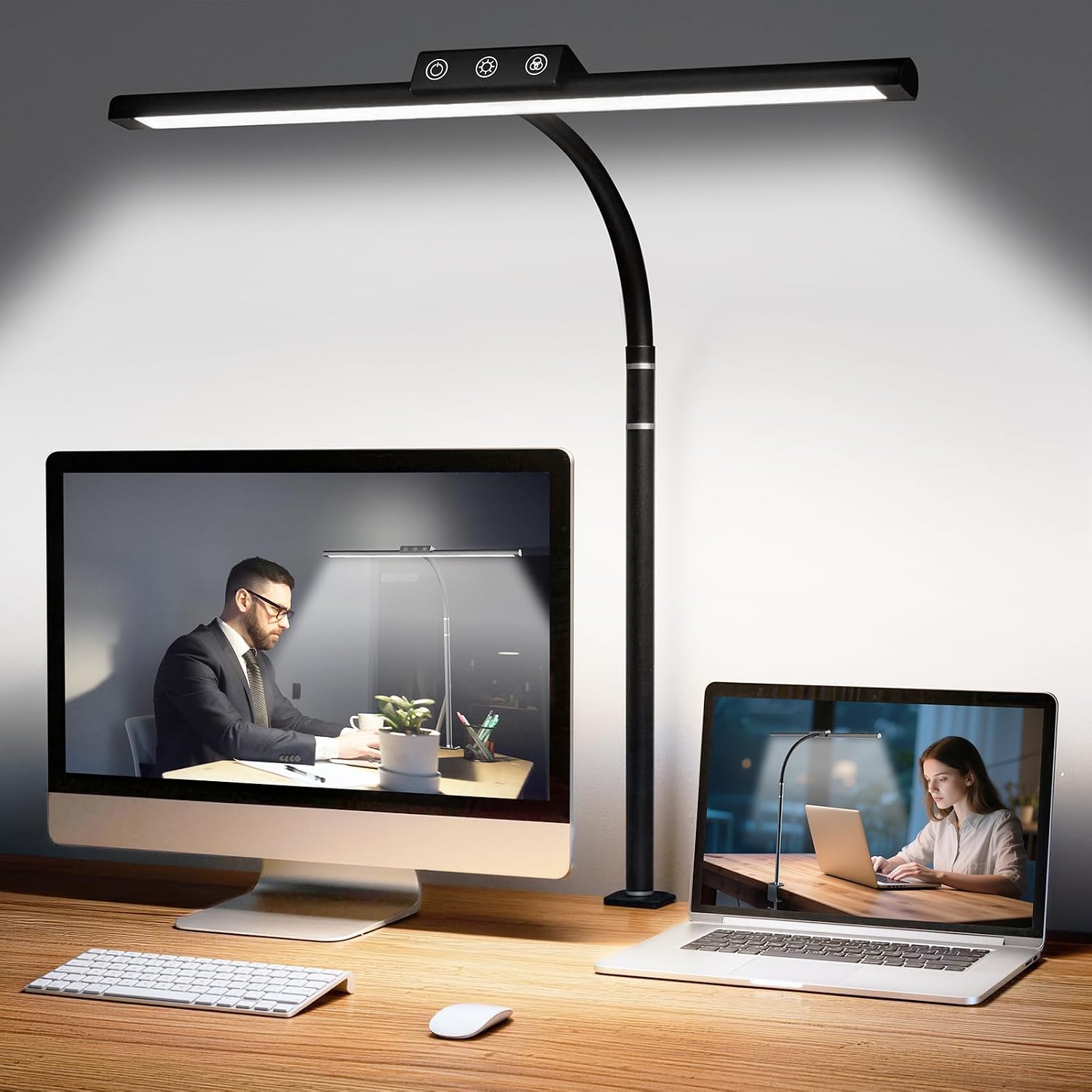
The clamp is the whole idea here. Nothing sits on the desk, so the surface stays clear for the keyboard, the mouse, and the notebook. The gooseneck takes a bend and holds it, which means you can point the head down at the work, sideways at a document, or up at the wall for a softer room. On a narrow desk, that is the difference between a lamp and a shelf ornament.
Install order matters, and this is where I see people break things. Clamp first, with the desk edge clean and dry, then set the gooseneck, then tighten. Load the arm before you tighten the clamp and you will either crack a thin top or strip the pad. On a hollow-core desk, put a scrap of plywood under the clamp face. It spreads the load and stops the dent that shows up three weeks later.
Cord routing is the second job, and it is the part of cable management that people skip. The cord comes off the lamp and wants to fall straight down the front of the desk, which is where your knees go. Run it back along the underside with a cable sleeve or a raceway, and put an adhesive clip where the cord turns. Do that and the gooseneck stops dragging the cord every time you reposition the head. This is not aesthetics. A cord that pulls on the lamp changes the head angle within a week.
Who should skip it: anyone whose desk edge is blocked. A cable tray under the back lip, an apron, or a glass top that is too thick or too thin for the clamp all kill this lamp. Check the edge thickness and the clearance behind it before you buy, because a clamp with nowhere to bite is a paperweight.
How I tested
I measure desk lamp arm length the same way every time, and the tape comes out before the lamp is plugged in. Mount position first. Then the head at full stretch. Then the head in its folded position, because that is where a desk lamp spends most of its life. The number that matters is the distance from the mount to the center of the keyboard, and that is different on every desk, which is why I never trust a reach figure printed on a box.
Then I use it. A full workday for a week, including the evening shift, which is when most people actually sit down at a home desk. I type under it, I read under it, and I check where the shadow of my own hand falls. A lamp that puts your hand's shadow on the page is a lamp you will turn off.
I check bulbs as well as fixtures, since a swing arm with an E26 socket is only as good as what you screw into it. I look at whether the light lands on the work or sprays across the room, and whether the color makes white paper look blue.
It is the same discipline I use for a footrest angle, mat thickness, and mat density: measure first, buy once. A lamp is a cheap thing to get wrong, but the wrong lamp is one of the reasons people give up on a home office and work from the kitchen table. I also check the boring parts, like whether the switch is reachable without standing up, and whether the cord reaches an outlet without a power strip hanging in the air.
Analysis and test results
Arm geometry falls into three shapes, and the shape decides where the light lands.
A swing arm trades compactness for reach. Folded, it takes real depth behind the keyboard. Extended, the head travels over the work and to the side. That side travel is what makes it the right answer for a wide desk with a monitor in the middle and paper on the right.
A gooseneck trades a straight line for a curve. It bends anywhere, which is great for aiming, but a curve eats length, so the clamp has to sit close to the work. Clamp it at the far corner of the desk and the head will not reach the keyboard. Clamp it at the near corner and it will.
A stand-up LED lamp, the shape the Honeywell falls into, trades adjustability for simplicity. There is no arm to fold and no bulb to change. It sits where you put it and lights what it faces. On a small desk that is fine. On a desk where the light has to come from the side to clear a monitor, it is the wrong tool.
Here is where the desk lamp arm length question gets expensive. People buy the lamp first and then discover that the head lands on the far edge of the keyboard instead of the middle. The fix is never a brighter bulb. The fix is moving the mount, which on a clamp lamp means moving the clamp, and on a stand-up lamp means buying a different lamp.
The task lamp arm length you need is set by where your hands sit, not by the size of the shade. There is a second job nobody thinks about until it fails: clearance. An arm that cannot fold back will sit in the space where you put your notebook, your coffee, or the corner of a second monitor. If you cannot describe the lamp's folded footprint, you have not measured it.
In practice, desk light arm length also decides how you sit. When the light is short, people lean in, and leaning in is the start of the neck ache that ends with a chair purchase. And work lamp arm length is the same measurement with a different name, which is worth taking seriously for that reason alone.
The vintage glass lamp in this group is the honest exception. It is built around a shade, an oak base, and a pull chain, and it is the one lamp here that is furniture first. If your desk sits in a room where people see it, that matters. If the light has to land on a keyboard from a lamp parked in the corner, a decorative fixture is being asked to do a task light's job, and it will lose.
The desk lamp arm length reference table
This is the table I keep in the notebook. The middle column is what the listing gives you, not what I wish it gave you. The last column is where the lamp actually fits in a setup. I do not print prices here because they move; the links go to the live listing.
| Lamp | Arm style as listed | Light source | Where it fits in a setup | Price |
|---|---|---|---|---|
TORCHSTAR Metal Desk Lamp | Adjustable swing arm | E26 socket, your choice of bulb | Deep desks where the work moves from keyboard to paper | Check current Amazon price |
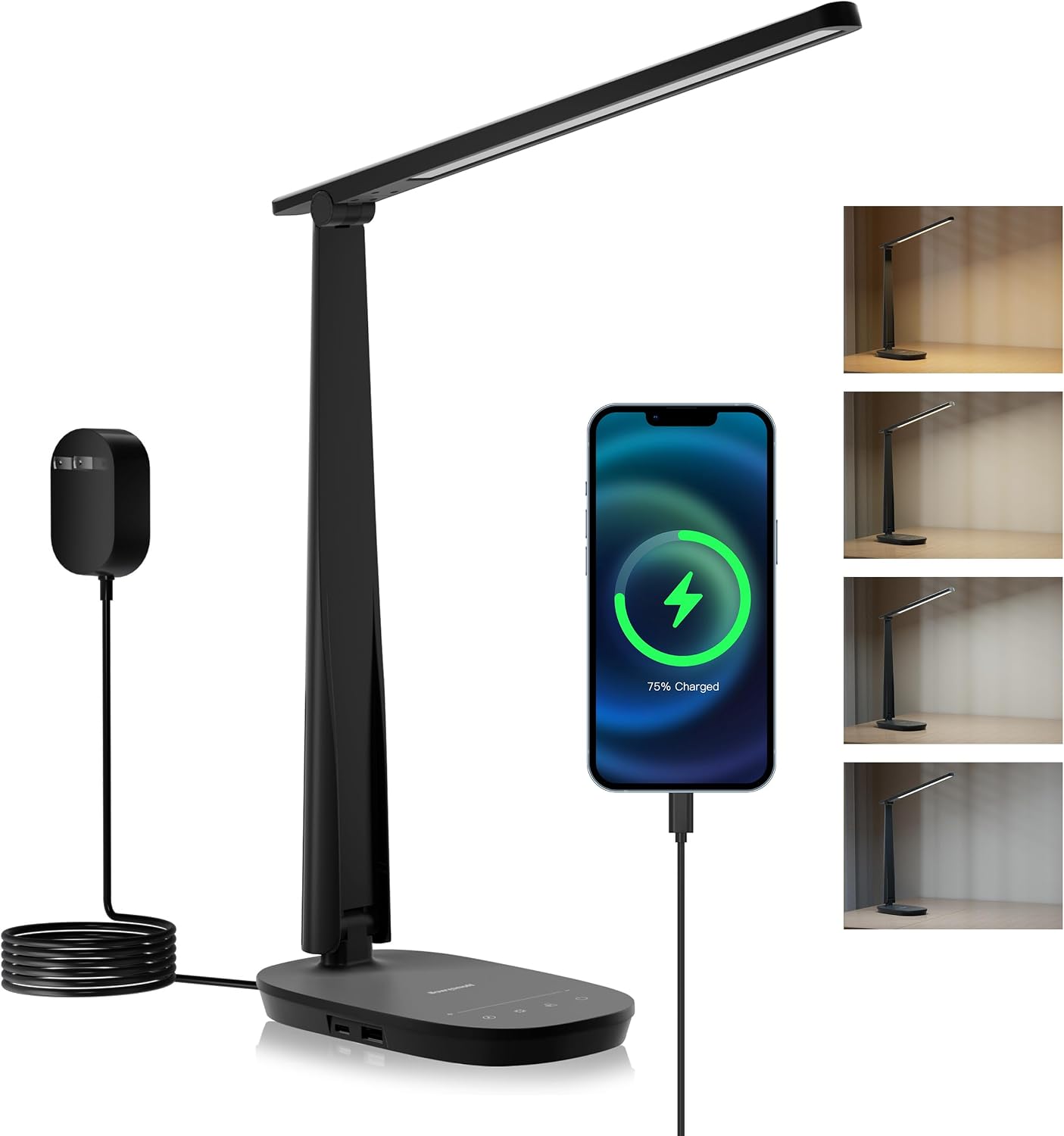 Honeywell HWT-H2 LED Desk Lamp | Stand-up LED, no clamp in the listing | Full-spectrum LED, built in | Desks where nobody wants to think about bulbs or aiming | View on Amazon → |
LED Desk Lamp for Home Office | Flexible gooseneck | LED, built in | Narrow desks where the surface has to stay clear | Check current Amazon price |
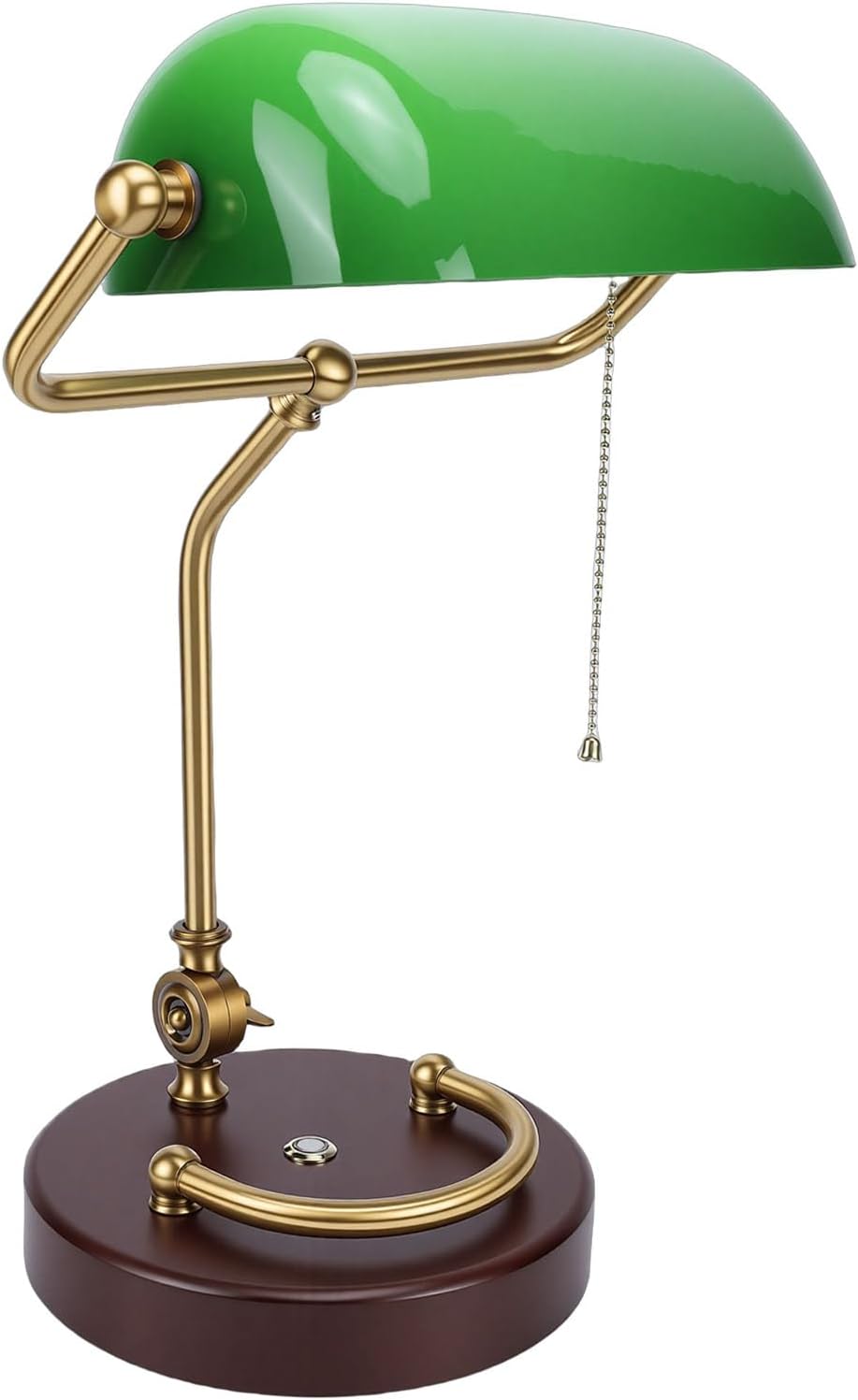 Vintage Green Glass Desk Lamp | Glass shade on an oak base, pull chain | Not stated in the listing | Desks that are also furniture in a room people see | View on Amazon → |
Read the arm column first and the light column second. If you want to choose your own bulb and you have the depth for a swing arm, the TORCHSTAR is the one. If the desktop has to stay clear, the clamp lamp is the one, provided the edge cooperates. If you want to stop thinking about it, the Honeywell is the one. If the desk is also a piece of furniture, the vintage glass lamp is the one, and you should accept that it is decor with a cord.
The Honeywell HWT-H2 and full-spectrum light
The listing calls it eye-caring full spectrum, and the practical version of that claim is color. Full-spectrum LEDs make white paper look white instead of blue, which matters if you read documents at the desk all day. The USB charging port is the other useful part, because it takes a phone charger off the desktop and off the floor, which is one less cable to route.
Who should skip it: anyone who wants to change the light by changing a bulb. The LED is built in, so the lamp's output is the lamp's output. If you need more light in two years, you buy a lamp.
Where the vintage glass lamp fits
Green glass, oak base, pull chain. The pull chain is the detail I like most, because a switch on a cord beats a touch sensor you have to hunt for in a dark room. This is the lamp for a desk that is also furniture. Skip it if you need reach, or if the desk is shared with a monitor that the light has to come around. Buy it because you want it on the desk, then put a task light next to it if the work needs one.
Should you buy the TORCHSTAR Metal Desk Lamp?
Yes, if your desk has depth behind the keyboard and you want a socket instead of a sealed LED. The swing arm is the reason it is the overall pick: the head goes where the work is, and it folds back when the work changes. The metal body and the black finish mean it will still look like equipment in five years.
Skip it if the desk is shallow, if you cannot give up the space behind the keyboard, or if you would rather have nothing on the desktop at all. In those cases the clamp lamp is the better answer, and the swing arm is a lamp that spends its life pushed against a wall.
Should you buy the LED Desk Lamp for Home Office?
Yes, if you have a desk edge a clamp can bite and you want the surface clear. The gooseneck holds the bend you give it, the clamp install takes minutes if you load it in the right order, and the cord routes out of the way with a sleeve and a clip.
Skip it if the back edge of the desk is blocked by a cable tray or an apron, if the top is glass, or if you move the light ten times a day and hate bending a gooseneck. A clamp lamp is only as good as the edge you clamp it to.