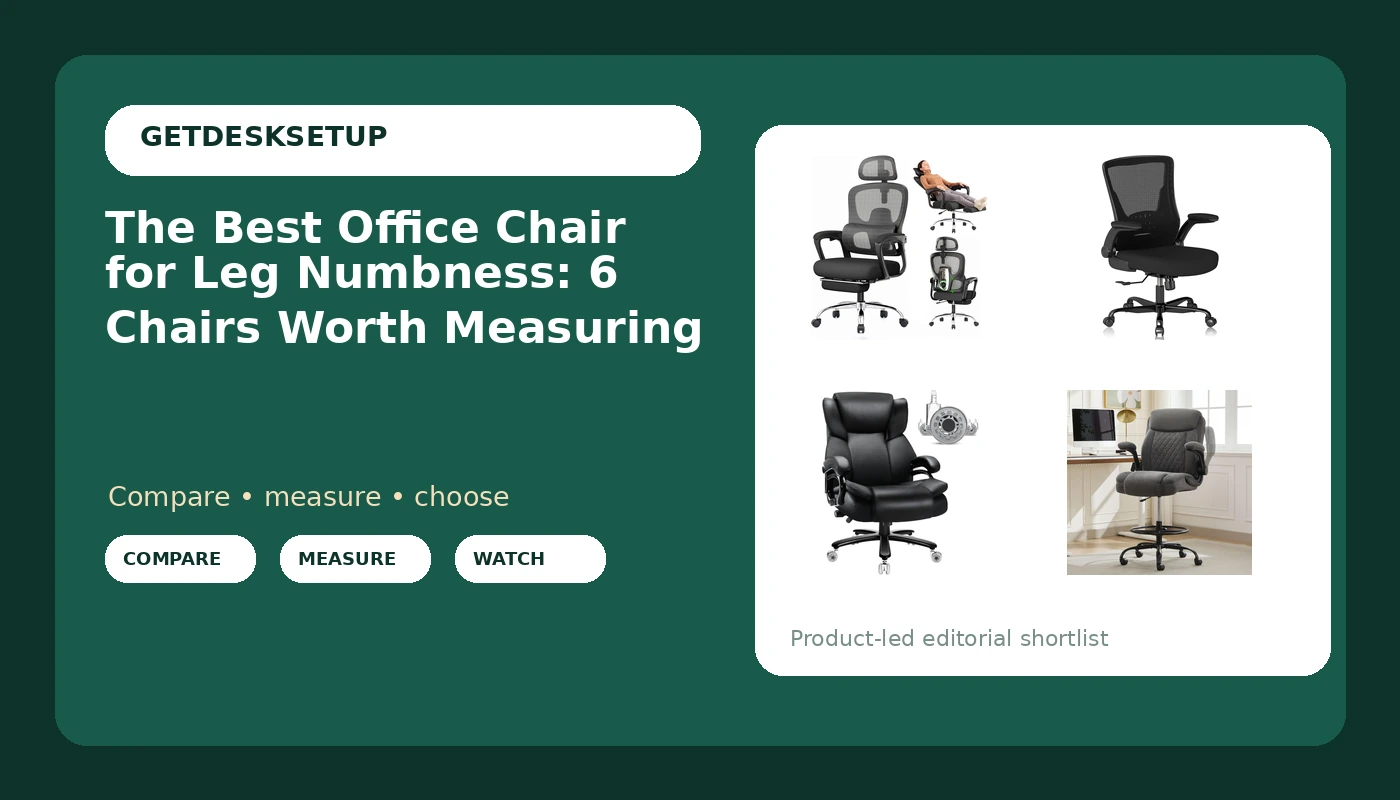
Leg numbness that shows up an hour into a work session is usually a fit problem, not a circulation mystery. The best office chair for leg numbness is the one that stops pressing on the back of your thigh: a seat short enough to leave a gap behind the knee, a seat height that puts your feet flat on the floor, and a front edge that does not cut into the underside of your leg. Brand and price fix none of that. This guide compares six chairs that attack the same problem from different directions, including a footrest recliner, a mesh task chair, a big and tall frame, a drafting chair, a compact armless chair, and a massage chair, and explains which measurements decide the answer for your body.
Related: Best Office Chair for a Standing Desk Setup
Quick answer
The Ergonomic Office Chair with Footrest, 90-145° Reclining Desk Chair is the strongest fit for most desk workers chasing the best office chair for leg numbness because its built-in footrest and 90 to 145 degree recline let you move your legs through the day without standing up, which is the practical answer to pressure that builds in a single position. Choose the Drafting Chair for Standing Desk, Tall Office Chair with Foot Ring instead when your work surface sits at standing height and your feet need a ring to rest on rather than the floor.
What to compare in an office chair for leg numbness
Seat depth is the number that decides it. Measure from the back of your buttocks to the back of your knee while your back is against the backrest, then subtract one to two inches. If the seat pan is longer than that figure, the front edge presses into the underside of your thigh, right where the blood vessels and the sciatic nerve run. Held for three hours, that pressure is what most people describe as their leg going numb. A long seat cannot be rescued with a cushion, because a cushion raises you and can push your feet off the floor.
Seat height has to let your feet land. Your feet should rest flat on the floor, or on a footrest, with your thighs roughly parallel to it. When the lowest seat setting stops above where your feet can comfortably reach, your legs hang and the front edge of the seat carries your body weight. That is why a desk chair for leg numbness should be judged on its stated seat height range against your own floor-to-knee measurement, not against a photo of a model sitting in it.
The front edge and the foam matter together. A rounded or waterfall front edge softens the contact line under your thigh. Firm foam that holds its shape keeps your hips level; foam that bottoms out drops you onto the seat frame, and you feel the frame edge instead of the cushion. A task chair for leg numbness has to pass both tests at once, because a soft edge on a collapsed cushion still leaves you sitting on structure.
Foot support changes the angle. A footrest or a foot ring lifts your feet, which opens the angle between your hips and knees and moves pressure off the seat pan. This is the single cheapest change you can make. A drafting chair exists for exactly this reason: a tall seat and floor-level feet do not coexist, so the ring takes the load instead of the front edge of the seat.
Recline and tilt tension keep you moving. Reclining even a few degrees shifts weight from the seat pan to the backrest, and unlocking the tilt lets the chair follow you instead of holding you in one posture. Tilt tension controls how much effort that takes; set too stiff, you will not use it. A headrest matters only if you actually recline far enough to need neck support.
Lumbar support and armrests change where you sit. Lumbar support that pushes your lower back forward also slides your hips toward the front of the seat, which shortens your effective seat depth and can put the edge back under your thigh. Armrests set too high lift your shoulders and tilt you sideways; set too low, they let you slump. An ergonomic chair for leg numbness is a measurement match, not a label on a listing, and plenty of listings use that word without a single adjustable part.
Casters are not a detail. If the chair will not roll easily, you twist and drag yourself toward your keyboard, monitor, or printer, and that twist loads one hip and one thigh all day. Hard casters on a hard floor also transmit every small movement straight into the seat. Dual-wheel or softer casters roll with less effort, and a chair that glides is a chair you reposition instead of endure.
Who should skip which type. Skip any fixed-height chair if your feet do not reach the floor at its lowest setting. Skip a deeply cushioned executive seat if you are short in the leg, because you will perch on the front edge to reach the floor and defeat the cushion entirely. Skip a drafting chair unless your desk is high, since the foot ring only helps when the seat is genuinely tall.
Office chairs worth comparing
Top pick
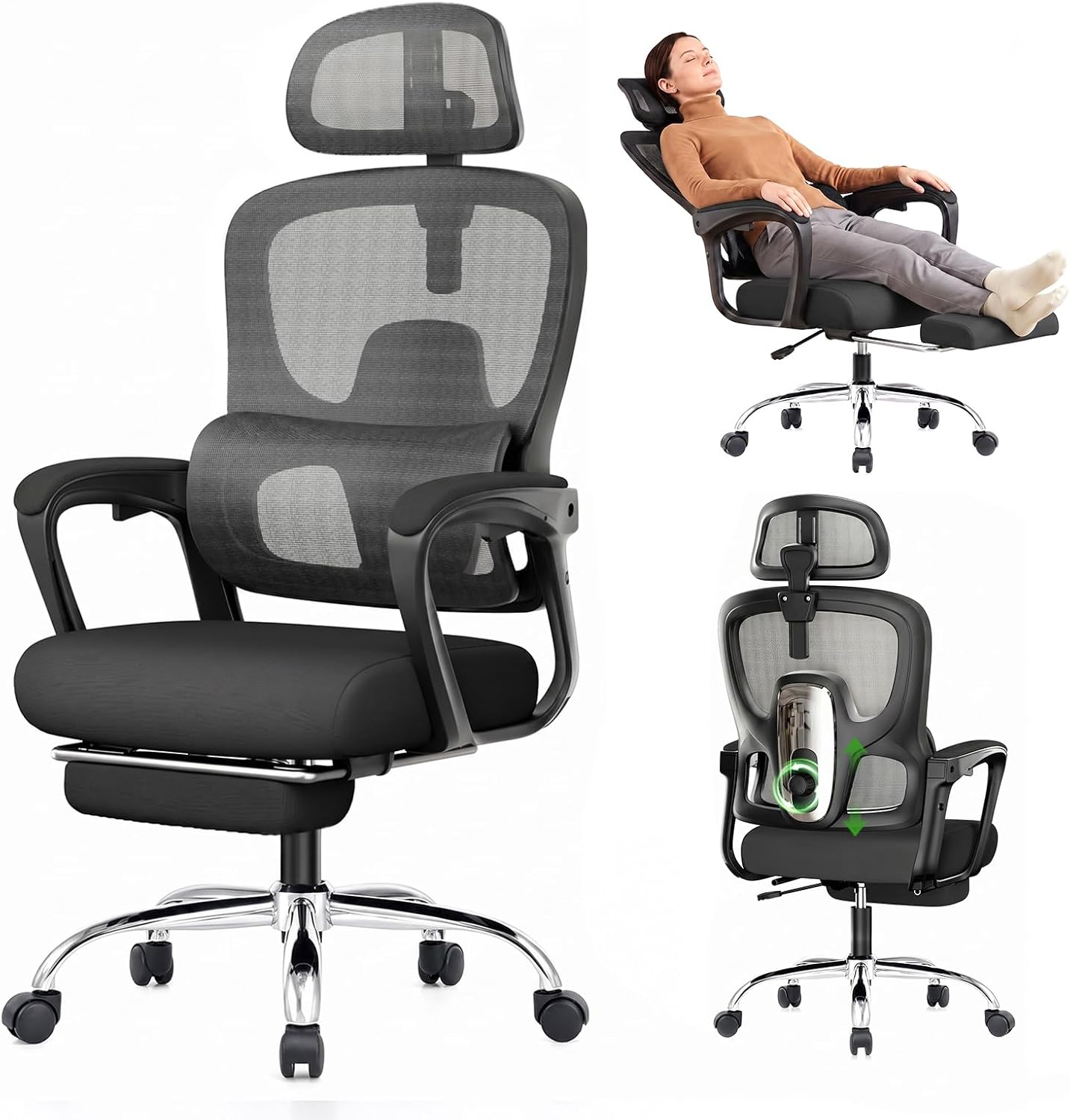
Ergonomic Office Chair with Footrest, 90-145° Reclining Desk Chair
Check current price
An ergonomic desk chair with a built-in footrest and a 90 to 145 degree recline range. The footrest and the recline let you change leg position during the day instead of holding one angle for hours.
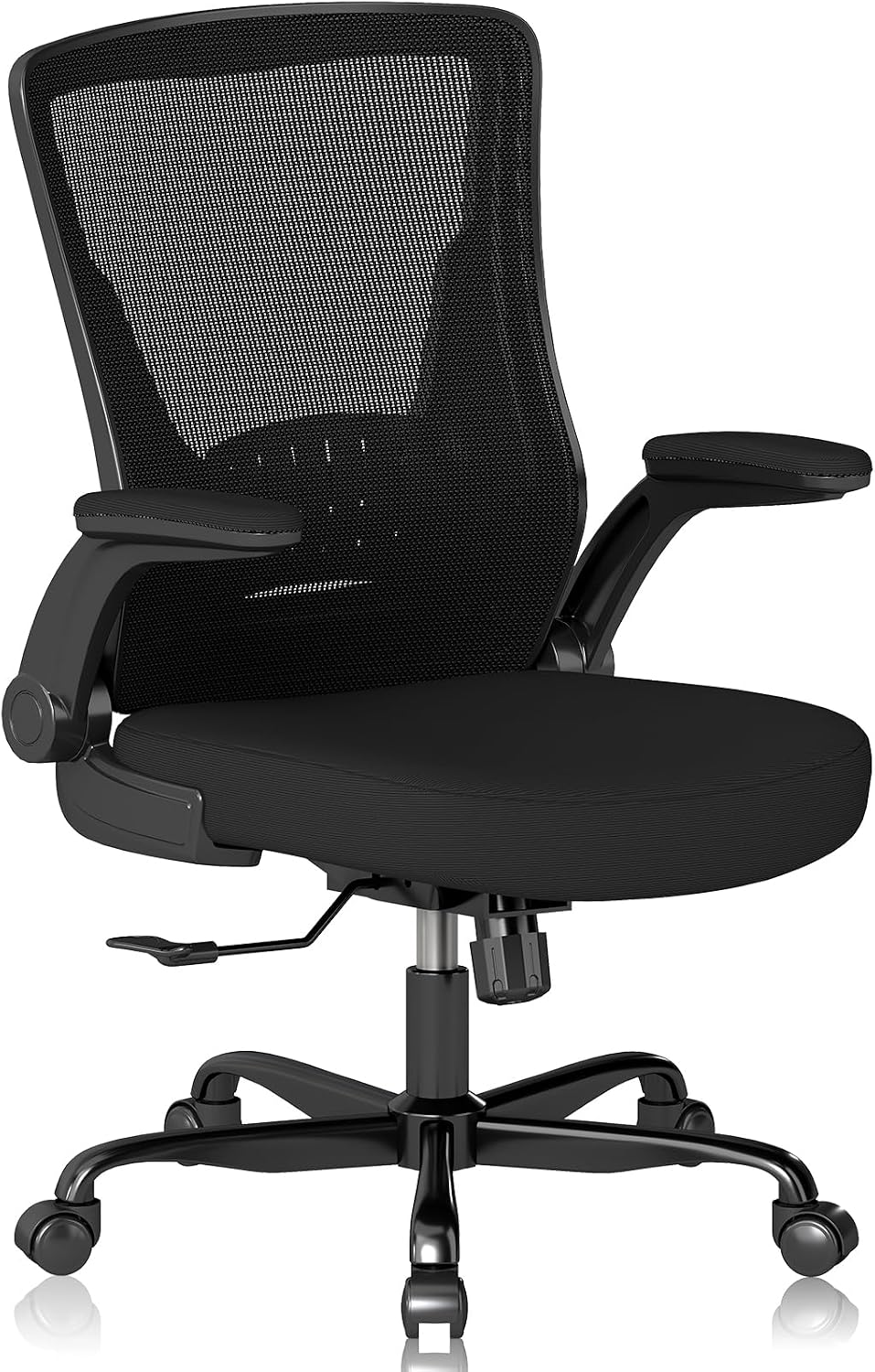
Ergonomic Office Chair, Comfy Mesh Desk Chair with Flip-up Armrests
Check current price
A mesh desk chair with flip-up armrests. Mesh keeps air moving across the seat, and the arms fold up and out of the way when you want the chair pulled close to the desk.
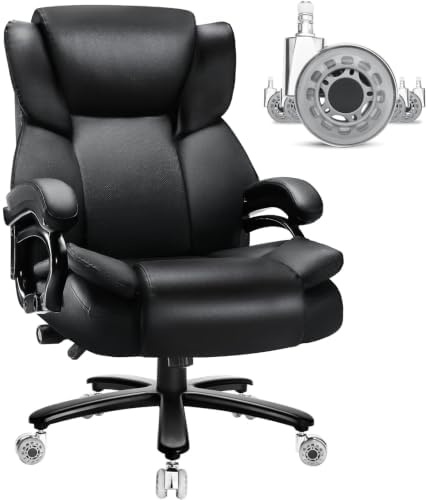
Big and Tall Office Chair, Heavy Duty Office Chair for Heavy People
Check current price
A big and tall office chair built for heavier users, with a wider and more heavily built frame than a standard task chair. The extra width spreads load across a broader seat surface.
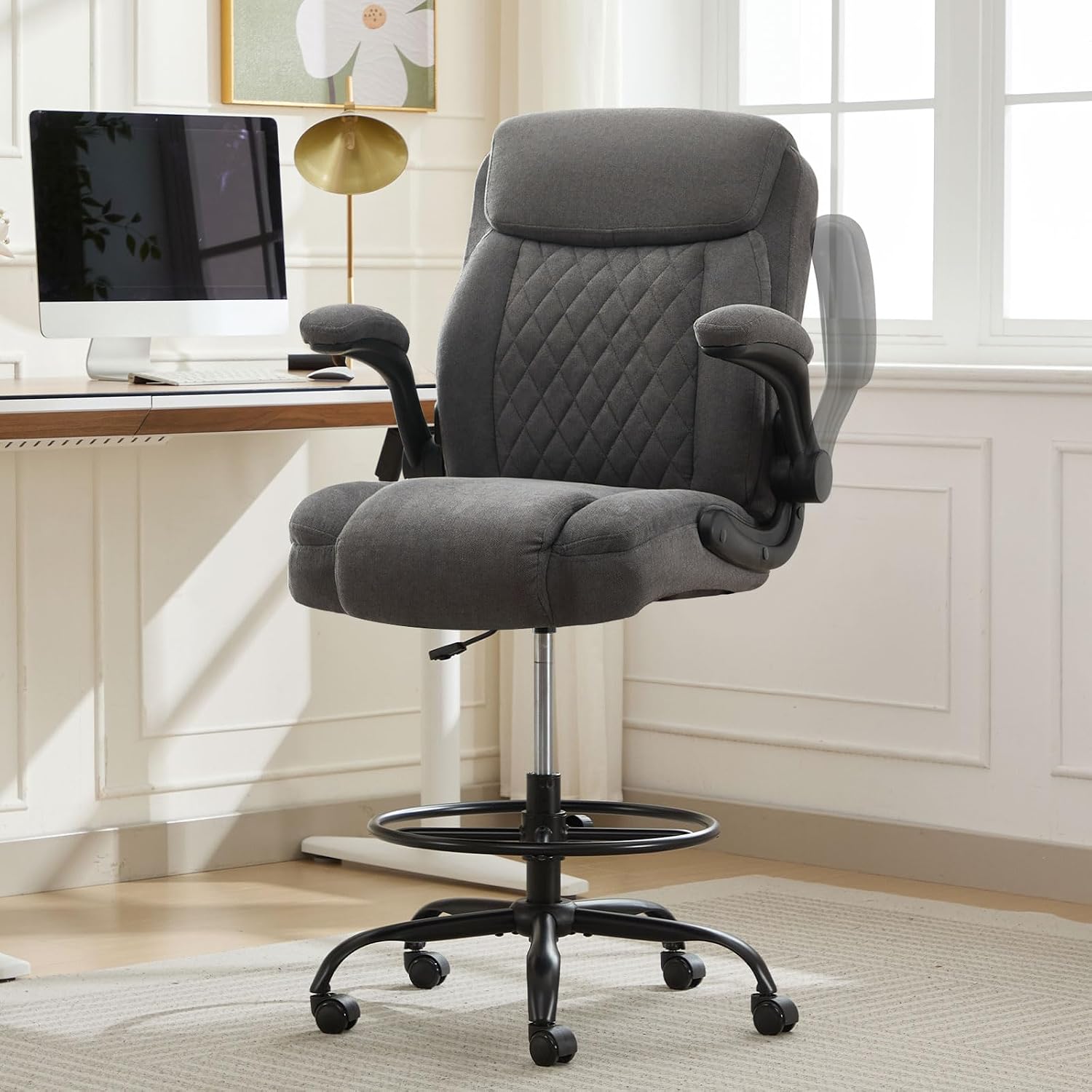
Drafting Chair for Standing Desk, Tall Office Chair with Foot Ring
Check current price
A tall drafting chair with a foot ring, made to pair with a standing desk. The ring gives your feet somewhere to rest when the seat sits well above floor level.
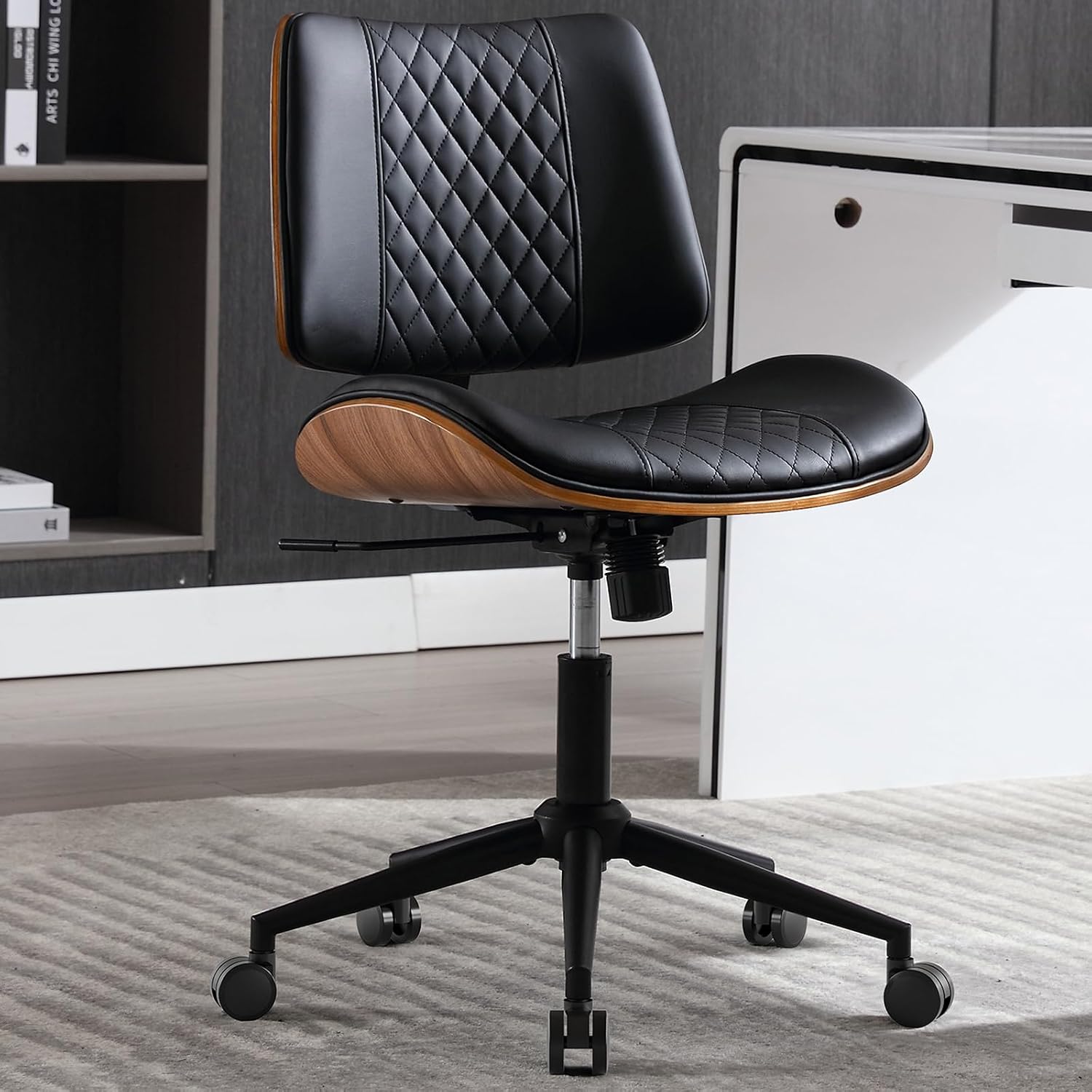
Home Office Chair No Arms with Wheels, Mid Back Walnut Style, Black
Check current price
A mid-back home office chair with no arms, on casters, in a walnut and black finish. With no armrests to catch the desk edge, it slides under a narrow or shallow work surface.
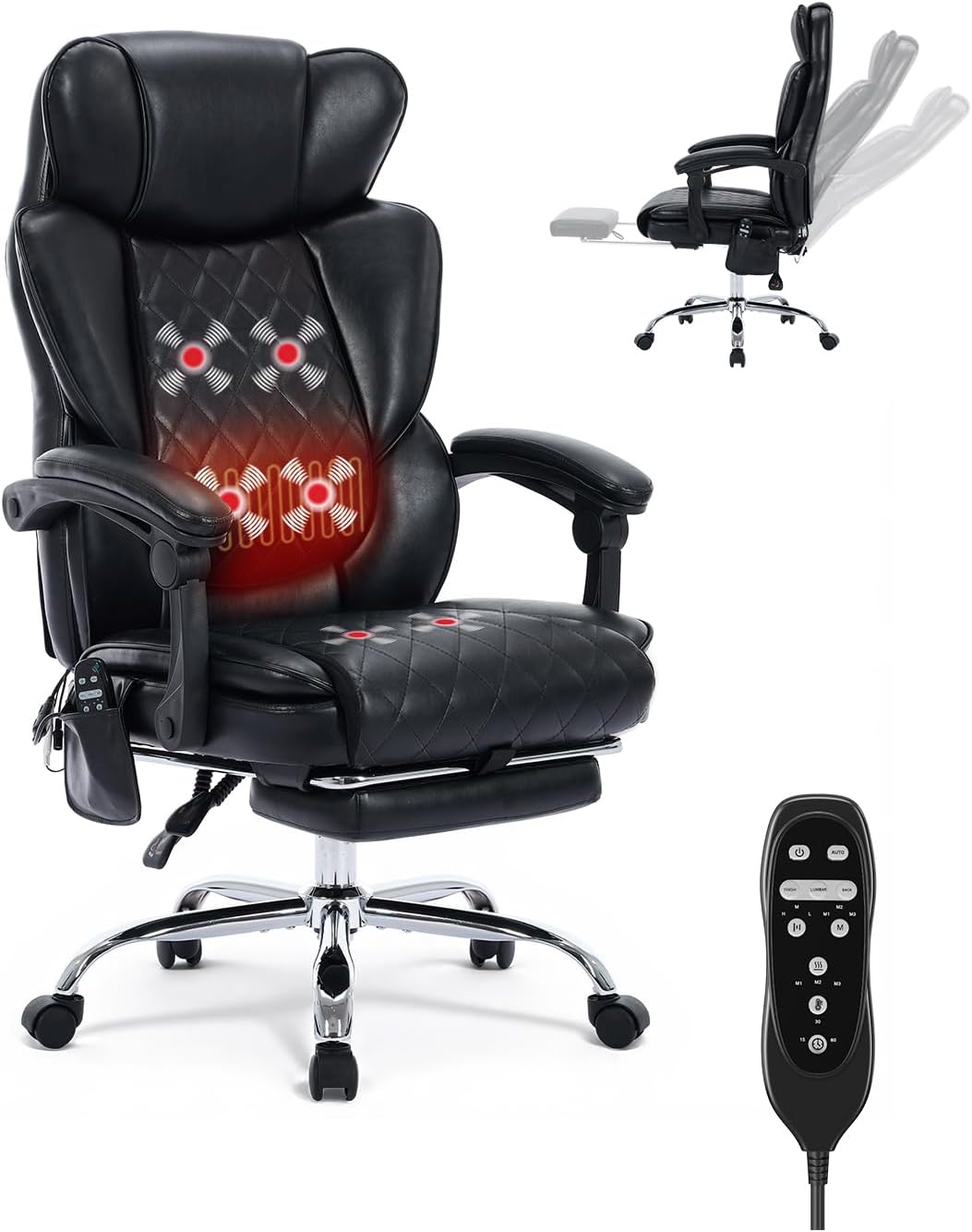
COLAMY Massage Office Chair with Foot Rest, 6 Points Vibration and Heat
Check current price
A massage office chair with a footrest, six vibration points, and heat. The massage and heat functions are the differentiator here, not the adjustability of the seat.
How these products were compared
This guide compares published seat height range, seat depth as listed, how each chair handles foot support, the adjustable parts named for each model (lumbar support, armrest, recline, and tilt tension), and the user each chair is designed for. Product names, images, and retailer links are matched to the same listing so that every card points to the product shown.
What is not here: laboratory pressure mapping, caliper measurements of foam density, or a claim that one seat is objectively softer. Those would be testing claims, and this comparison rests on published specifications and design features instead. Readers should confirm current price and availability through the retailer link rather than relying on a figure quoted anywhere else, because prices move and stock changes.
How to choose the right office chair
Start with two numbers you take yourself. Sit on a hard chair with your back straight against the backrest and measure from the back of your buttocks to the back of your knee. That is your seat depth target, and you want a seat pan one to two inches shorter than it. Then measure from the floor to the crease behind your knee with your feet flat and your thighs level. That is your seat height target. Write both down before you open a product page, because choosing the best office chair for leg numbness comes down to matching those two figures, not to picking the highest-rated listing.
Then check the range, not just the midpoint. A chair with a stated seat height range that brackets your target number can be set correctly. A chair whose lowest setting sits above your target keeps your feet dangling no matter what you do, and no amount of lumbar support or headrest padding compensates for that. If your desk is fixed and low, a chair that will not drop far enough is the wrong chair even if everything else about it is right.
Finally, decide how you want to support your feet. If your desk is at a normal seated height and your feet reach the floor, you need nothing extra beyond a correctly sized seat. If your desk is fixed at standing height and you work seated part of the day, you need either a tall chair with a foot ring or a footrest under the desk. If you want to change leg position without getting up, a recline range with a footrest does that job. Sizing a desk and chair together is its own exercise, and the same measurement logic applies to choosing a standing desk height range.
Ergonomic Office Chair with Footrest, 90-145° Reclining Desk Chair
This is the top pick because it combines the two features that address leg pressure directly. The built-in footrest gives your feet a raised surface, which opens the hip and knee angle and lifts weight off the seat pan. The stated 90 to 145 degree recline range means the chair is designed to move through a wide arc rather than lock in one upright position, so you can shift from task posture to a reclined posture and back without leaving the desk.
For leg numbness specifically, the value is the position change. Sustained pressure in one spot is what causes the tingling, and the most reliable countermeasure is changing the angle regularly. A chair that reclines and a footrest that raises your legs do that in seconds. Neither feature requires you to stand up, which matters on days when the work does not allow breaks.
The trade-off is what this chair is not. It is an ergonomic desk chair with a footrest, not a big and tall frame, so heavier users should compare it against the heavy duty model in the grid before deciding. It is also not a drafting chair, so it does not solve the tall-seat problem for a standing desk. And because no seat depth figure is printed in the name or summary here, you still have to confirm that number against your own measurement before ordering. If the listed seat depth runs longer than your target, this chair will not fix the problem, footrest or not.
Alternatives to consider
The Ergonomic Office Chair, Comfy Mesh Desk Chair with Flip-up Armrests is better suited to buyers who want a breathable mesh seat and arms that fold out of the way, while the Big and Tall Office Chair, Heavy Duty Office Chair for Heavy People is a stronger fit when the priority is a wider, heavier-built frame for a larger body rather than a footrest.
The Drafting Chair for Standing Desk, Tall Office Chair with Foot Ring covers the case where the seat has to sit high and the feet need a ring instead of the floor. The Home Office Chair No Arms with Wheels, Mid Back Walnut Style, Black covers tight footprints, because removing the armrests lets the chair slide under a shallow desk, and it suits a home office where the chair is visible as furniture. The COLAMY Massage Office Chair with Foot Rest, 6 Points Vibration and Heat covers buyers who want heat and vibration functions built in, and its footrest overlaps with the top pick's approach to leg position.
Day-to-day use and maintenance
Set the chair once and then verify it against your body, not against the instruction sheet. Drop the seat until your feet are flat, then check that you have a two-finger gap behind each knee. If the front edge touches the back of your leg, either the seat is too deep for you or you are sitting too far forward on it.
Move on purpose. Use the recline, use the footrest, use the tilt tension adjustment so the chair actually rocks when you lean. If your chair has a foot ring, rest your feet on it at the same time each session so the habit sticks. If it does not, put a footrest under the desk. Five minutes of changed angle every hour does more for leg sensation than any single cushion upgrade.
Keep the moving parts clean. Hair, dust, and carpet fiber wrap around casters and slow them down; a chair that will not roll gets dragged, and dragging is what puts a twist into your hip. Wipe caster wheels and check that the height cylinder still travels through its full range. On mesh seats, vacuum the surface rather than scrubbing it, and follow the manufacturer's cleaning instructions for the fabric or mesh panel and for any heat or vibration function.
Buying checklist
- Measure your seat depth and your floor-to-knee seat height before you compare anything.
- Choose the seat height range based on your normal working posture rather than an occasional edge case.
- Confirm that the exact model includes the adjustable parts you need, whether that is lumbar support, armrest, tilt tension, or a footrest.
- Check whether the seat depth listed for the model is shorter than your measured target by one to two inches.
- Read the cleaning and maintenance instructions, especially for mesh panels and any electrical massage or heat function.
- Verify the current retailer price, availability, and return terms before you order.
Final recommendation
Choose the Ergonomic Office Chair with Footrest, 90-145° Reclining Desk Chair when your feet reach the floor at a normal desk height and you want a footrest plus a wide recline range to keep changing leg position through the day. Choose the Drafting Chair for Standing Desk, Tall Office Chair with Foot Ring when your desk sits at standing height and your feet need support above floor level. Choose the Big and Tall Office Chair, Heavy Duty Office Chair for Heavy People when frame capacity and seat width matter more than a footrest.
The honest version of this decision is that the best office chair for leg numbness is the one whose seat depth and seat height range match your own two measurements. Everything else on this page is a preference layered on top of that. If a listing does not tell you the seat depth, treat that as a missing number rather than a small one, and keep looking until you find a chair you can size against your body before you buy it.