I spent nine years as a facilities manager buying chairs for 400-person floors, and six more years building out home offices one desk at a time. In that stretch I have filed more warranty claims than I can count, and I have learned that the term length is the least interesting number on the page. When you weigh an office chair with 1 year vs 5 year warranty, you are comparing two bets: how long the seller expects the frame, the gas cylinder, and the foam to survive, and how much of your money you are willing to risk on that expectation.
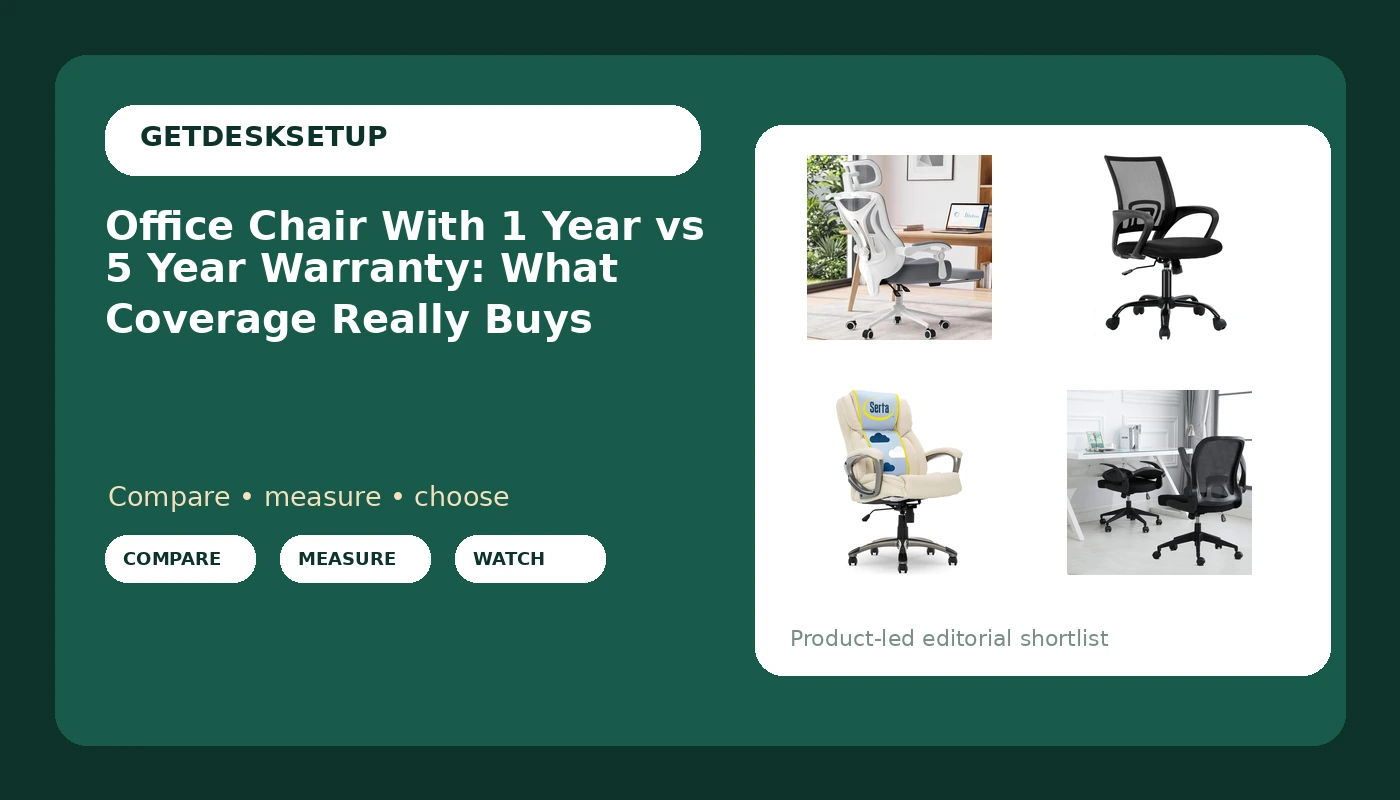
The rest of this article is about the chairs. I keep four of them in the notebook for this price band: a budget mesh chair, an executive leather chair, a folding mesh chair with flip-up arms, and a heavy-duty mesh chair with a footrest. Each one asks you to accept a different kind of risk, and the warranty term is only one line in that ledger.
Related: Mesh vs leather office chairs for a home office
The short answer: on a chair in this price band, a 5 year term is worth roughly the cost of one replacement gas cylinder and one set of casters. Buy the fit first. If the seat depth and seat height are wrong for your body, five years of coverage on a chair you cannot sit in is worth nothing.
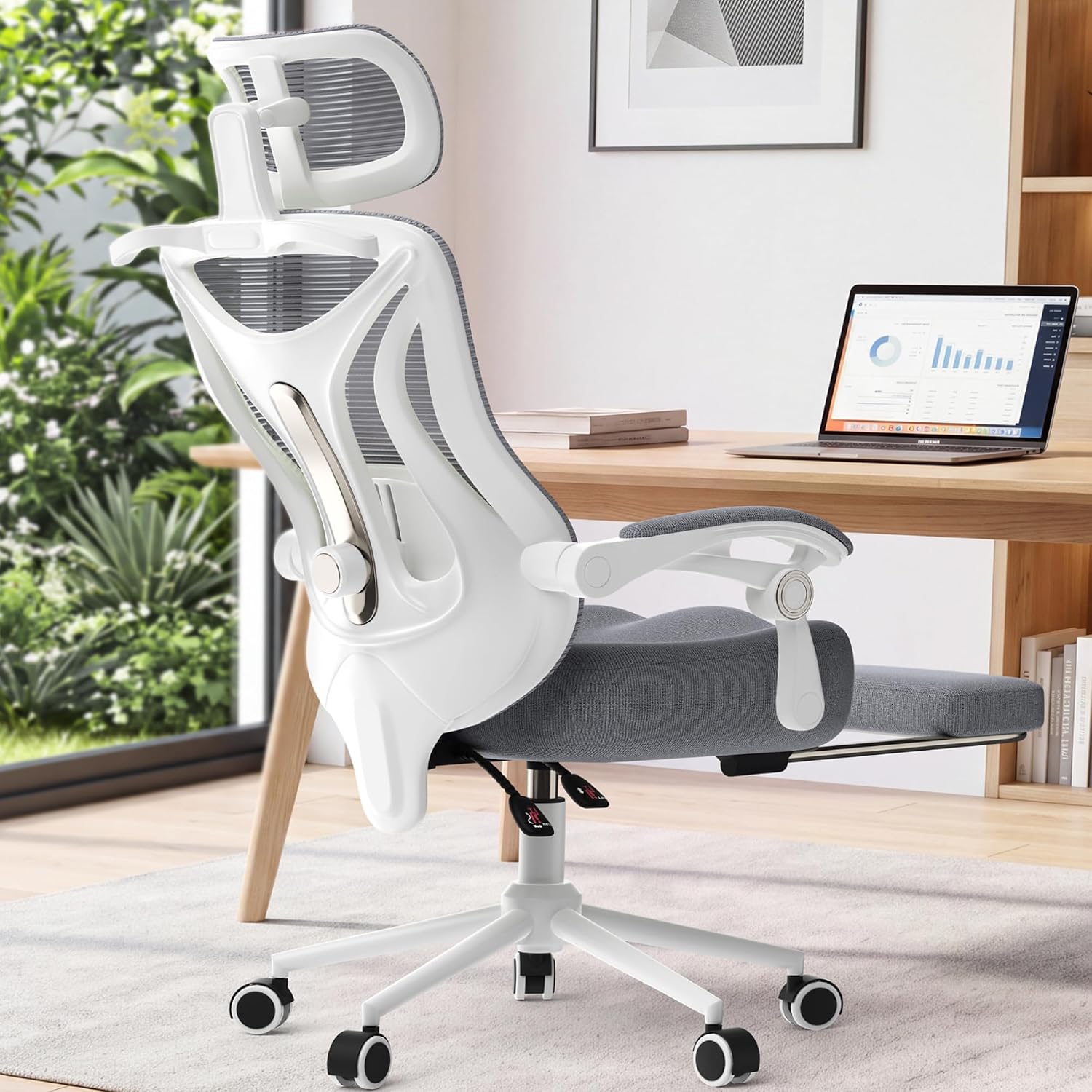
CYKOV Ergonomic Office Chair with Footrest, Reclining Mesh Back, 350 Lbs
The only chair here rated to 350 lb, with a recline and a footrest, so it covers a heavy user and a leaning-back afternoon
The footrest needs clearance behind the seat, and the recline mechanism plus the footrest hinge are the parts I would expect to need coverage first
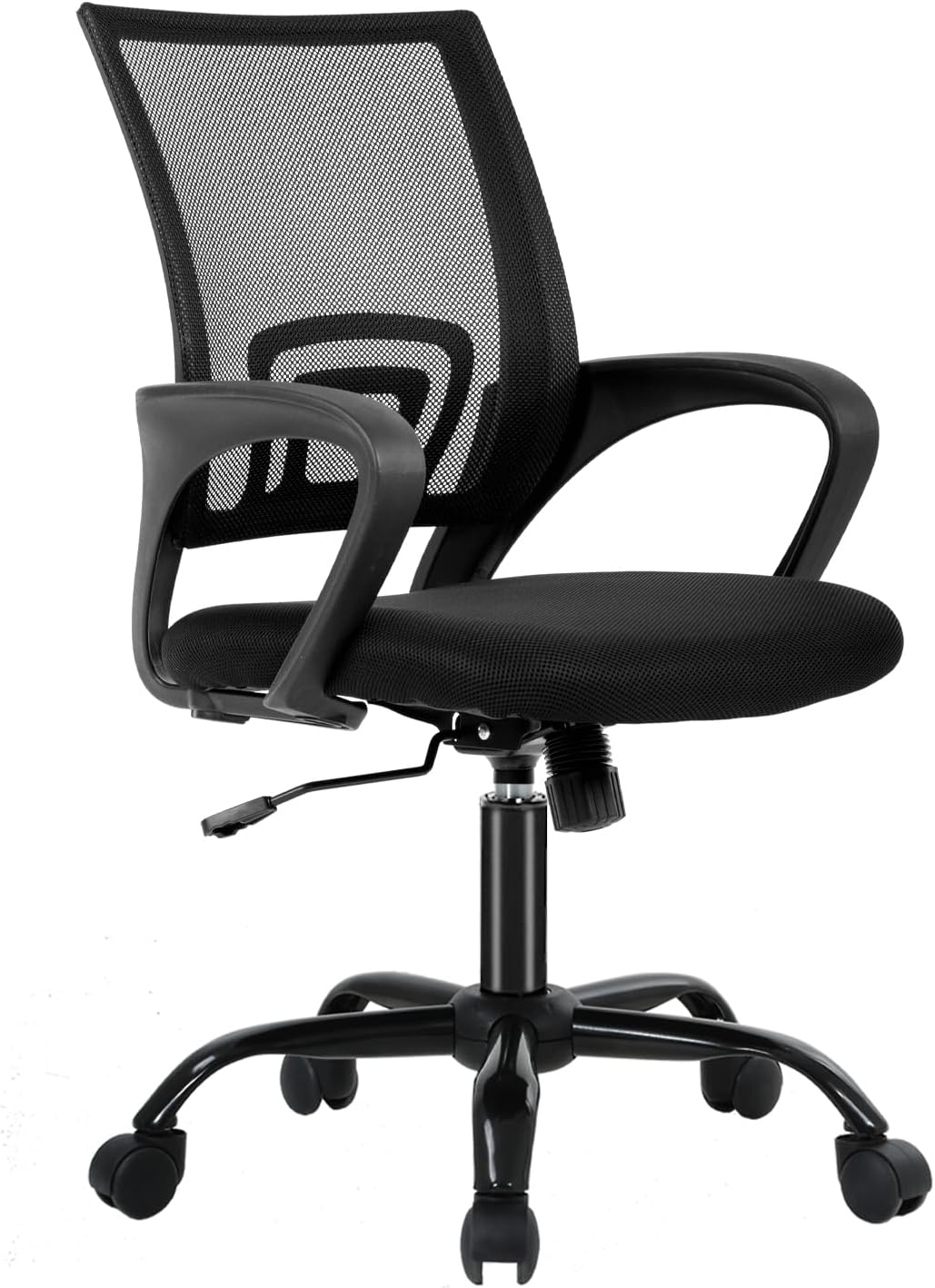
Ergonomic Office Chair | Black | Pack of 1 | Mesh Desk Chair
Lowest entry cost of the four, a simple mesh back, and few moving parts to break
The name promises ergonomic and the listing never calls out a lumbar adjustment, which is my first filter on any chair
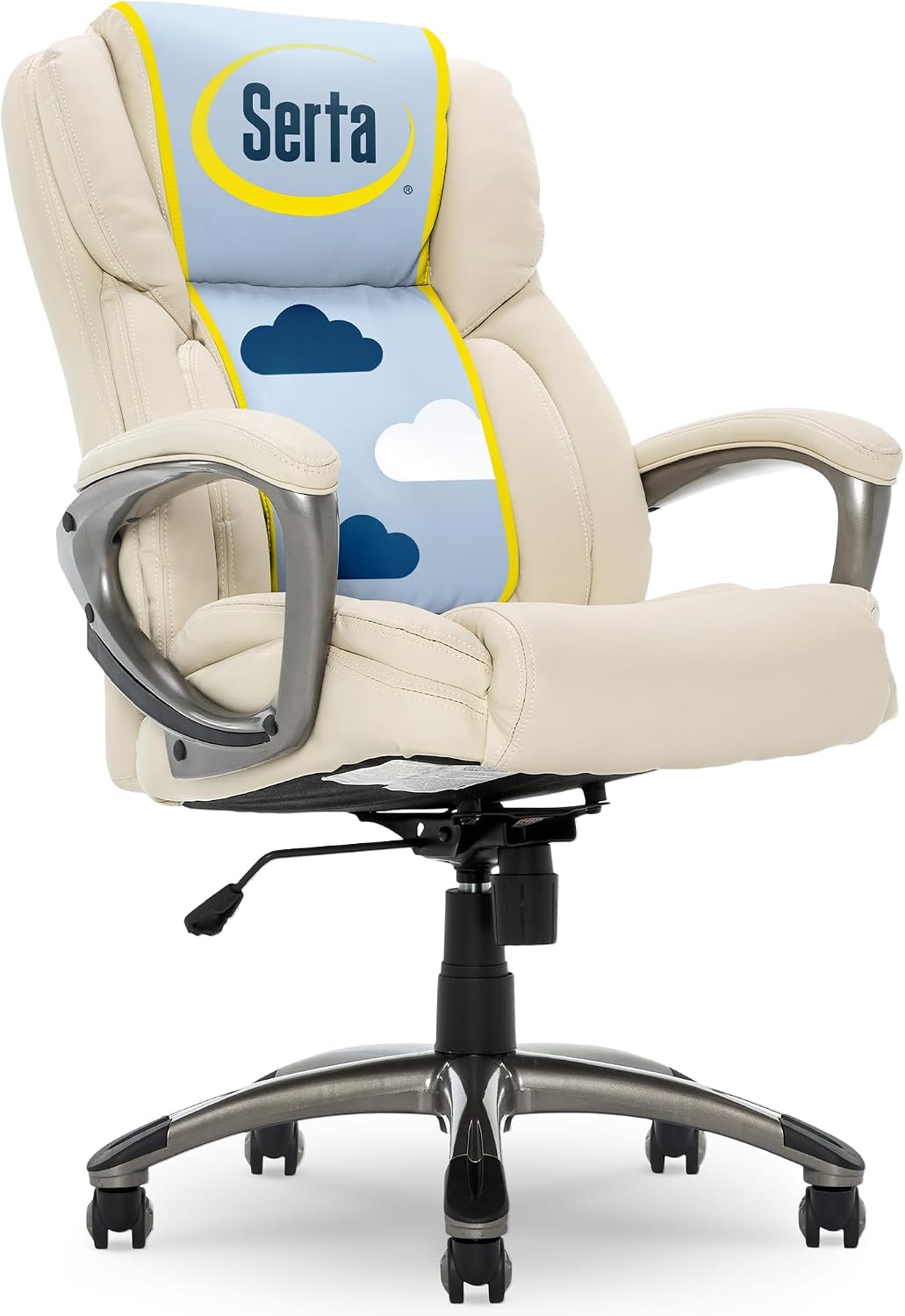
Serta Ergonomic Executive Office Chair with Lumbar Support, Leather Chair
Lumbar support is called out, the executive back is taller, and the brand has a service channel to file a claim with
Leather holds heat in a small closed room, and the padded executive shape reclines less than a mesh back
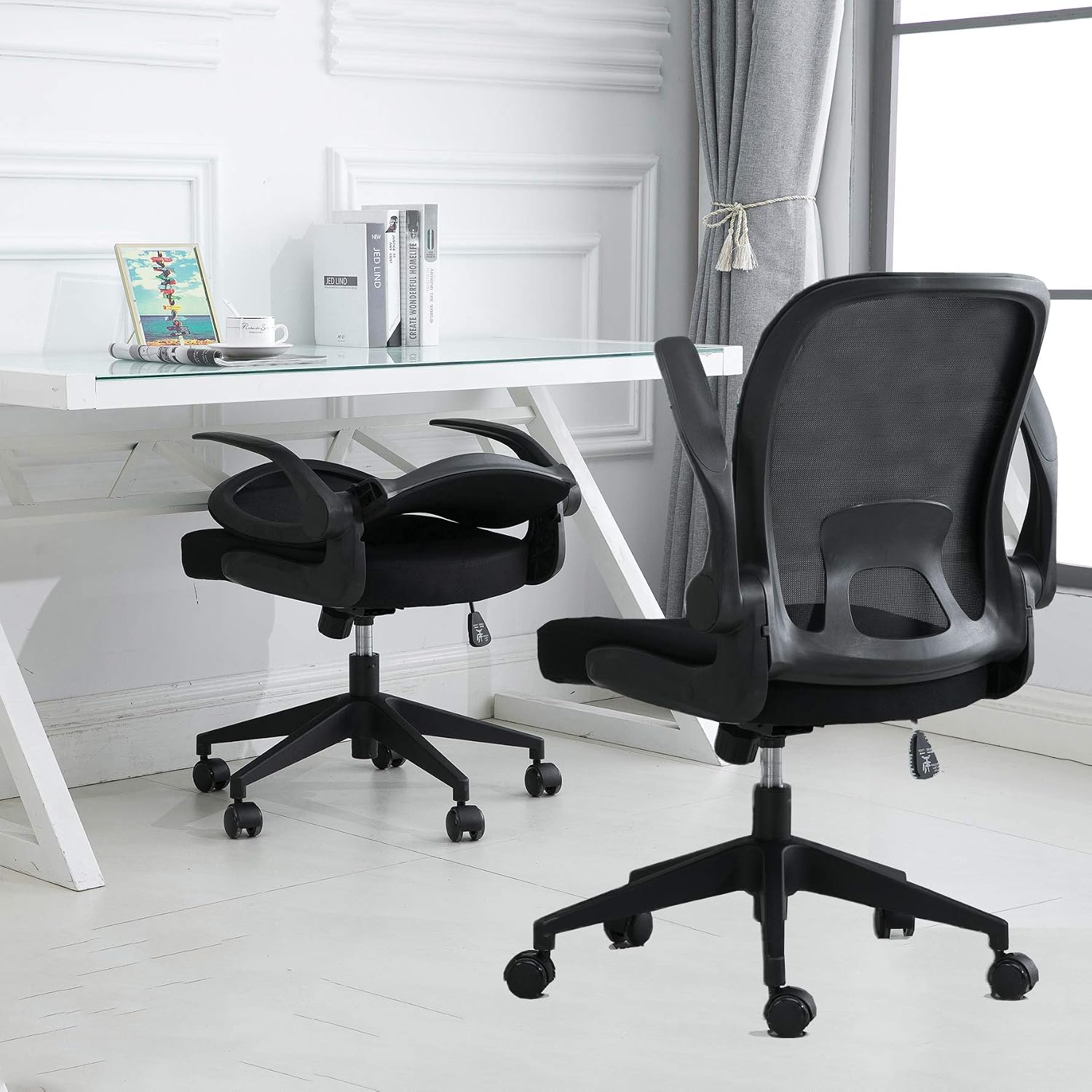
IPKIG Foldable Office Chair, Ergonomic Mesh Desk Chairs with Flip-Up Arms
Folds flat and the armrests flip up, which makes it the only chair here that suits a room doing two jobs
Every fold joint and armrest pivot is a failure point, so the coverage terms matter more on this one than anywhere else in the list
Prices and availability may change.
Office chair with 1 year vs 5 year warranty: what the term actually covers
Warranty length is a signal, not a spec. A one-year term tells me the seller expects the frame and the mechanism to clear twelve months without a claim. That is the whole promise. A five-year term tells me somebody cycled the gas cylinder more times than a one-year seller was willing to stand behind, or at least that the company is willing to ship parts for longer than most people keep a budget chair.
Here is what these documents cover, roughly in the order they matter.
- Frame and base. The star base and the seat plate. A crack here ends the chair.
- Gas cylinder. The part that fails most often, usually somewhere between month 18 and month 36.
- Mechanism and tilt tension. The spring and the locking plate under the seat.
- Casters. Frequently excluded, which is annoying, because a caster is the cheapest part to replace and the easiest to lose.
- Foam and mesh. Rarely covered past year one, because every company classifies normal compression as normal wear.
- Upholstery. Almost always excluded.
Then there are the terms people skip. Original purchaser only. Registration inside 30 days. Parts only, no labor. You pay shipping both ways. Commercial use voids it. Exceeding the rated weight voids it.
So when you compare an office chair with 1 year vs 5 year warranty, read three things before the number: which parts are named, who pays shipping, and what voids the coverage. I have seen a five-year term that excluded the cylinder, which is the same as covering nothing that matters.
The difference between office chair with 1 year and 5 year warranty in practice
Practically, the difference between office chair with 1 year and 5 year warranty shows up in year two and year three, not year one. Almost every failure I have logged happens after the first anniversary. Foam flattens around month 14. The cylinder starts sinking around month 20. Mesh sags where your sit bones land around year three. Casters get flat spots whenever they feel like it.
That timeline matters because a one-year term expires right before the interesting part. If your cylinder dies at month 20 with one year of coverage, you are buying a replacement cylinder and installing it yourself, or you are buying a chair. With five years, you file a claim and wait for a box.
The timeline also tells you what the seller believes. Companies do not hand out five-year terms on parts they expect to replace constantly, so a long term on a metal base and a tested cylinder is a real signal. A long term on a chair with a plastic seat plate and no lumbar adjustment is a marketing decision, not an engineering one.
My rule: the warranty term decides between two chairs that already fit you. It never decides whether a chair fits.
The four chairs, and what each one asks you to risk
I keep these four in the notebook because they cover the shapes people actually buy: two mesh, one leather, one folding. None is a premium task chair, and all four are sold to people who sit for eight hours. Here is what each one asks you to accept, and where I would look first if something broke.
CYKOV Ergonomic Office Chair with Footrest, Reclining Mesh Back, 350 Lbs
The CYKOV is the only chair in this group rated to 350 lb, which puts it in a different category for heavier users. It has a mesh back, a recline, a footrest, and a top section that acts like a headrest. The footrest is the interesting part and also the risk: it extends behind the seat, so you need clearance behind the chair, not just under the desk. In a room where the chair backs against a wall, that footrest is dead weight. The recline mechanism and the footrest hinge are the two parts I would expect to need coverage first, which is why the term on this one is worth reading closely.
Ergonomic Office Chair | Black | Pack of 1 | Mesh Desk Chair
This is the lowest entry cost of the four, and it looks it: mesh back, simple frame, basic armrests. The product name says ergonomic, and the listing does not call out a lumbar adjustment, which is my first filter on any chair. A mesh back without adjustable lumbar support is a shape, not an ergonomic feature. That does not make it a bad chair. It makes it a chair for someone who already knows their seat depth and seat height work in a fixed position, because there is very little to adjust. Fewer moving parts also means fewer things to break, which is the one place a budget chair beats a feature-heavy one.
Serta Ergonomic Executive Office Chair with Lumbar Support, Leather Chair
Serta is the brand name here, and the listing calls out lumbar support, which is more than the budget mesh chair manages. The executive shape means a taller back, padded arms, and leather. Leather runs warm in a small room with the door closed, and padded executive backs usually recline less than a mesh chair, so test that before you commit if you lean back through the afternoon. The upside is a company with a service channel, which is easier to file a claim with than a marketplace seller with a web form. If you are weighing an office chair with 1 year vs 5 year warranty and the brand actually answers claims, the longer term is worth more here than on a no-name chair.
IPKIG Foldable Office Chair, Ergonomic Mesh Desk Chairs with Flip-Up Arms
The IPKIG folds, and its armrests flip up, which makes it the only chair here that can disappear into a closet or tuck fully under a desk. For a room that is an office at 9 a.m. and a guest room at 9 p.m., that is the whole feature. The trade is obvious: every fold joint is a place where a chair loosens, and a folding frame has more of them than a fixed one. Flip-up armrests add a second pivot. That is not a reason to skip it. It is a reason to care which parts the warranty names and how long it runs, because the parts most likely to need it are the parts that make this chair different.
Seat height and seat depth come before any warranty term
Coverage is a repair policy. Seat height and seat depth are fit, and fit is not covered by anything.
Seat height is the floor to the top of the compressed seat, measured with a tape while you sit, not read off a listing. If your feet dangle or your knees ride above your hips, no warranty term fixes it. Seat depth is the front edge of the seat to the backrest. Too deep and you slide forward to reach the backrest, which drops your lumbar support into the wrong place. Too shallow and your thighs carry your weight instead of your sit bones.
Two of these four chairs are mesh with fixed or barely adjustable geometry, one is a padded executive shape, and one is built for a 350 lb user. Those are four different bodies, and the fit question comes first for each. Measure the seat depth of the chair you sit in today, then compare. If you cannot say your seat depth in inches, you are guessing, and guessing is how people end up filing claims on chairs they never should have bought.
Related: Seat depth and seat height: how to measure a chair to your body
Lumbar support, armrest, recline, tilt tension: where the warranty gets used
These four adjustments are the ones people actually wear out.
Lumbar support is the first thing I check on a listing. Fixed lumbar is a shape; adjustable lumbar is a feature. A chair only earns the word ergonomic in a useful sense if the lumbar position moves, or if the chair was sized for you.
Armrest height and width decide whether your shoulders stay down through a long afternoon. Flip-up armrests solve a desk clearance problem and add a pivot that can loosen.
Recline range is comfort, but the mechanism behind it is what breaks. Tilt tension is the adjustment most people never touch and the one that decides whether the chair fights you when you lean back. If the tension spring is not adjustable, you live with the factory setting for the life of the chair.
None of this shows up in a warranty term. A five-year term on a chair with fixed lumbar and fixed tilt tension covers a chair you may not want in year three.
Headrest, caster, and the parts that fail first
Two small parts cause most of the complaints I hear.
Casters fail quietly. A flat spot on one caster makes the whole chair pull to one side, and it feels like a frame problem. Casters are usually excluded from coverage and are also the cheapest thing to replace, so budget for a set regardless of the term.
Headrests fail at the pivot, especially on chairs where the headrest hangs off a flexible top section. If you recline hard and use the headrest for support, that joint takes load every day. On the CYKOV, with its reclining mesh back and top section, that is a part I would inspect at month six.
The gas cylinder and the seat plate are the expensive failures. If the cylinder is covered for five years and the casters are not, you got the important half of the deal.
5 year warranty vs office chair with 1 year: the replacement math
Run the numbers on parts, not on the chair.
A replacement cylinder and a set of casters cost less than a new budget chair, but swapping a cylinder takes tools and about half an hour, and some chairs use a cylinder that is not standard. That labor is the hidden cost of a one-year term. If you would rather not own a mallet and a pipe wrench, coverage is worth more to you than it is to someone who enjoys the repair.
Then add shipping. A five-year parts warranty where you pay freight both ways can cost more than the part. A one-year warranty that ships free and answers email in a day can beat a five-year term with a web form and a three-week wait.
The real comparison is not five years against one year. It is five years of parts against the price of the one part that actually fails, and in this price band that part is usually the cylinder. If the cylinder is covered, the term is doing its job. If it is excluded, the number on the box is decoration.
Who should skip each of these four
- Skip the CYKOV if you cannot leave clearance behind the chair for the footrest, or if you are short enough that the lowest seat height leaves your feet off the floor. Check the seat height range before buying.
- Skip the budget mesh chair if you need adjustable lumbar support or adjustable armrest height. There is almost nothing to dial in.
- Skip the Serta if you run hot or want a deep recline. Leather and an executive back are not a nap setup.
- Skip the IPKIG if you never fold a chair and never raise the arms. You would be paying for a hinge you do not use and adding a failure point for nothing.
- Skip all four if you exceed the rated weight on the one you are looking at. The CYKOV is rated to 350 lb; for the others, read the listing rating and stay under it, because exceeding it voids coverage.
Office chair with 1 year or 5 year warranty: how I decide for a client
When a client asks me to choose between an office chair with 1 year or 5 year warranty, I ask three questions before I look at the term.
First, who sits in it and for how long? Eight hours a day, five days a week, pushes every part harder than two hours a night.
Second, what is the failure path? If the cylinder dies under a five-year term, the client gets a part and keeps working. If it dies under a one-year term, the client is buying a chair and I am assembling it again.
Third, is the fit already settled? If the seat depth and seat height are wrong, the warranty is irrelevant, because the chair goes back or goes to the curb long before coverage matters.
For a shared office, I lean toward the longer term and a brand with a service channel. For a single home desk where the chair gets two hours a night, the shorter term is fine if the fit is right and the entry cost is low.
The bottom line
Warranty length is a tiebreaker, not a reason to buy. Fit comes first: seat depth, seat height, and a lumbar support you can actually position. Then build: a metal base, a covered cylinder, and casters you can replace. Then the term.
If you are deciding between an office chair with 1 year vs 5 year warranty and both chairs fit you, take the longer term when the cylinder and frame are included and shipping is not on you. If the long term excludes the parts that fail, it is not worth a premium. And if neither chair fits, buy neither one, because five years of coverage on the wrong seat depth is just a longer wait before you admit it.