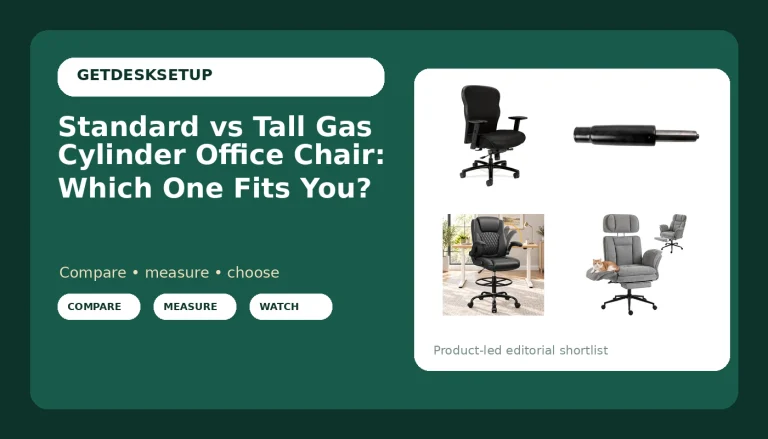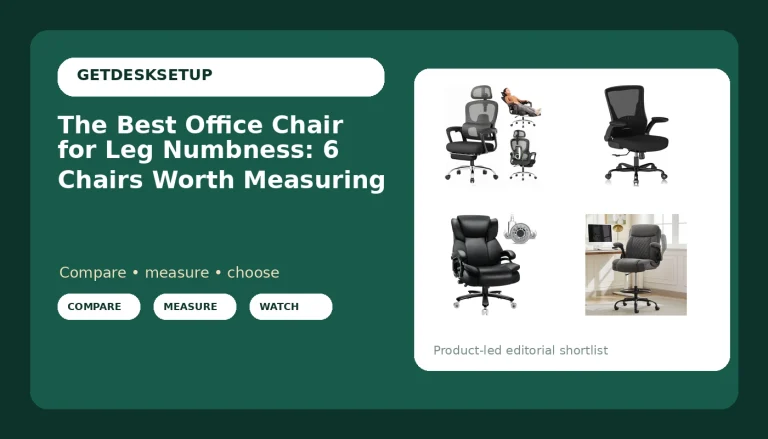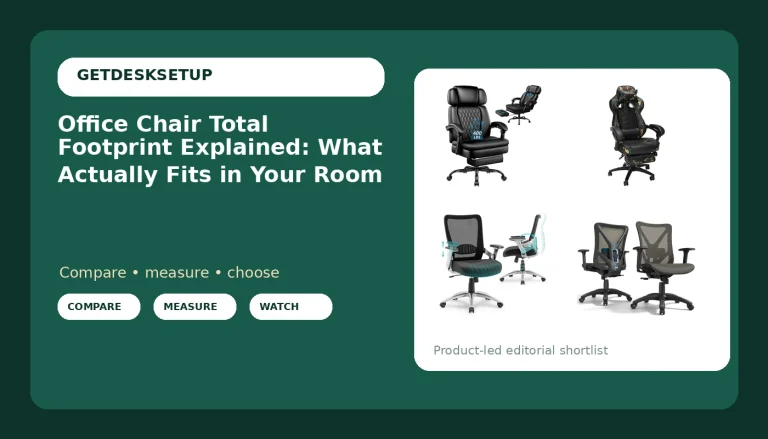
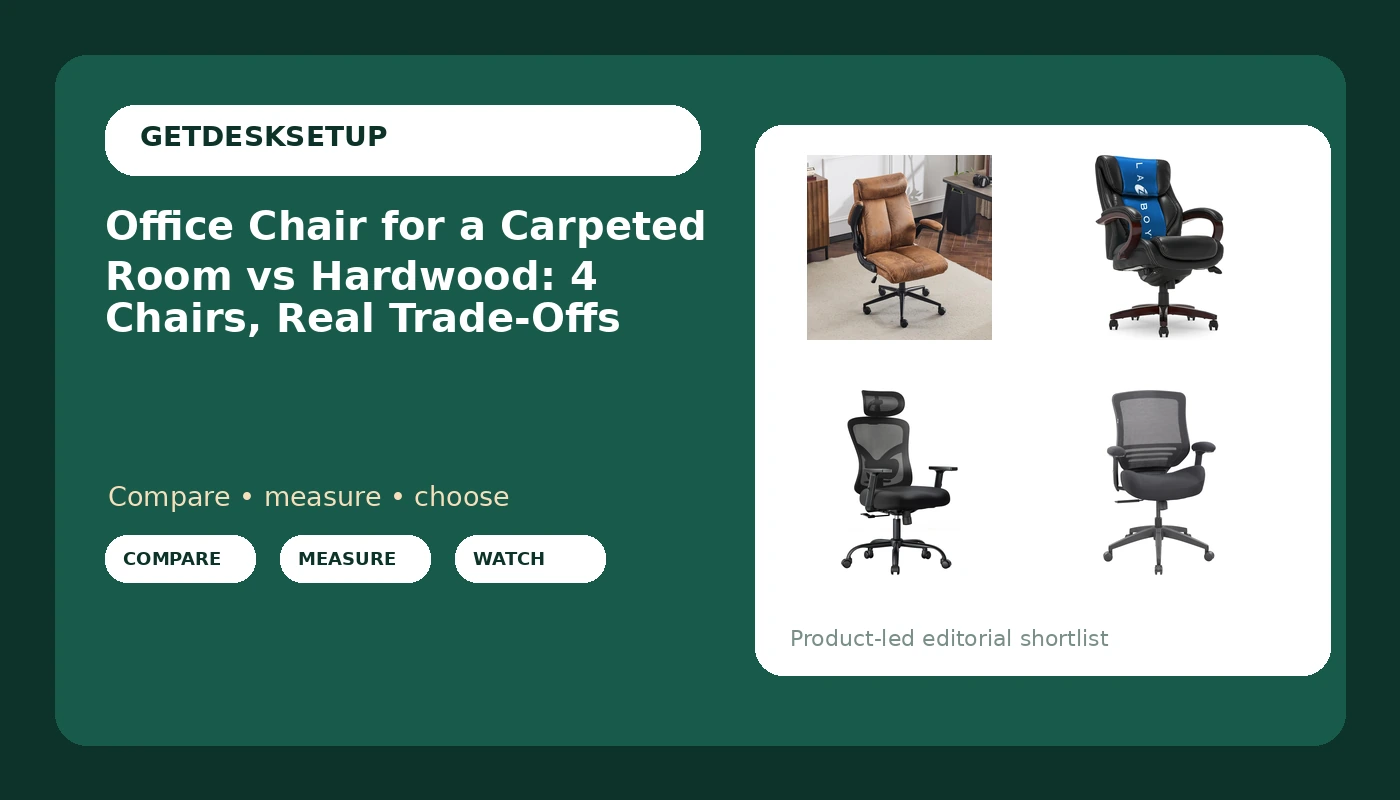
I spent nine years as a facilities manager buying chairs and desks for 400-person floors, then six years running a two-person crew that has built out 310 home offices. I have installed the same chair on low-pile carpet tile in a downtown tower and on a client's oak floor in Ballard, and it behaved like two different products. The office chair for a carpeted room vs hardwood question is not a style question. It is a caster question, a seat height question, and a tilt tension question, in that order.
Here is the part that never makes it into the listing: your floor is part of the chair. A caster on hardwood sits on a hard, flat, low-friction surface. The same caster on a plush cut pile sits on a compressible mat that swallows part of the wheel, adds rolling resistance, and fights the swivel every time you turn. Nothing about the chair changed. Everything about how it feels changed.
I keep a notebook of seat depths and desk height ranges measured with a tape, not read off a spec sheet. Every entry has three lines. First line is the person: height, weight, inseam, and the seat depth that actually fits them. Second line is the floor. Third line is the desk. Buy in a different order and you end up with a chair that fits you and a setup that does not, which is the most expensive outcome in this category.
Two things I will not do here. I will not call a chair comfortable without telling you who should skip it. And I will not make a fit claim for a chair that has no published height and weight range. If I do not have the range, I say so, and you measure instead.
The short answer: on plush carpet, buy the firmest seat you can stand, budget for a rigid mat, and expect your effective seat height to drop. On hardwood, buy the chair you want and swap the casters for soft-tread wheels before the first roll. All four chairs below work on both floors, but none of them ships tuned for both.
Related: Caster Types And Floor Protection Explained
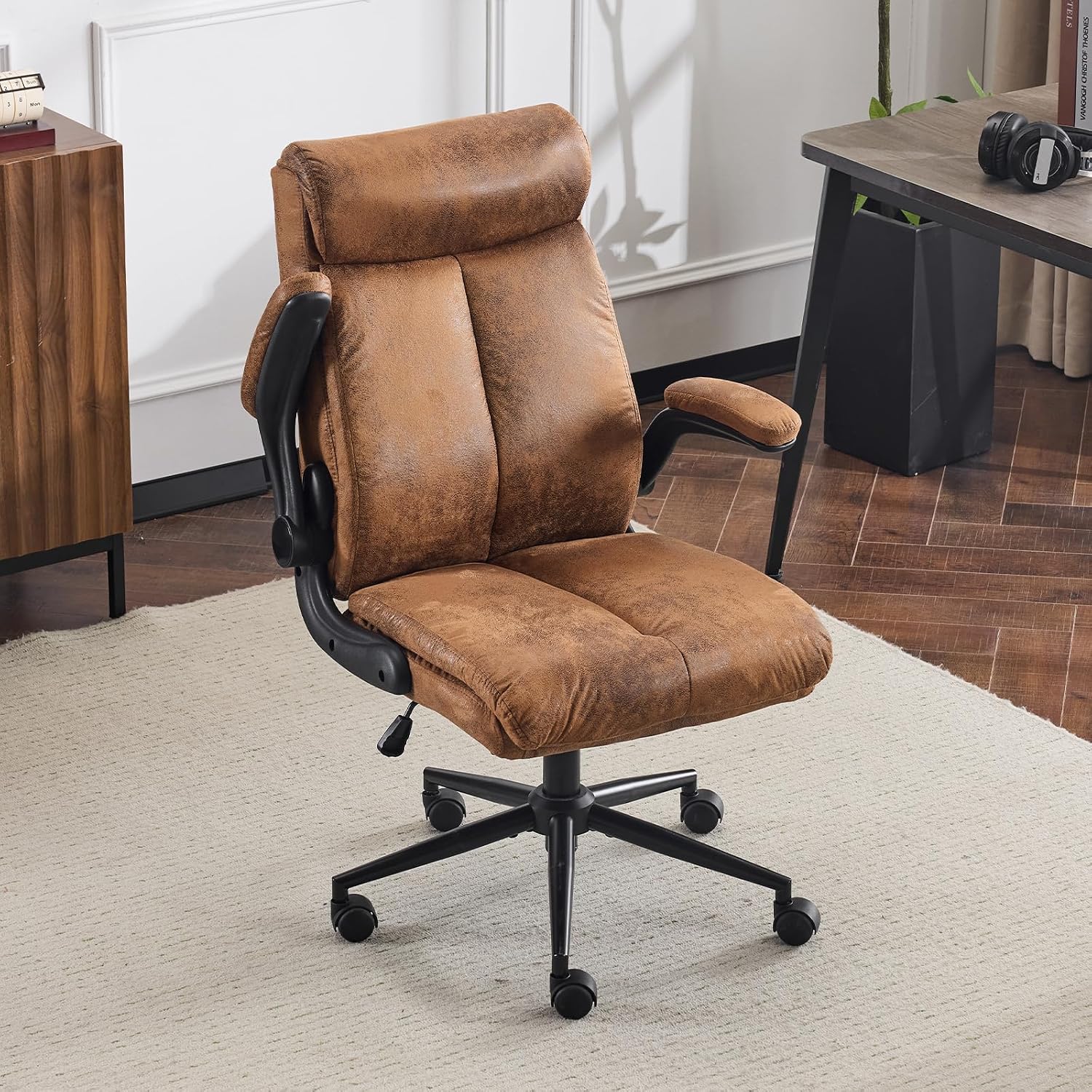
VINGLI Microfiber Brown Rolling Ergonomic Office Desk Chair
Flip-up arms clear a narrow desk, and the light frame rolls easily once it is on a mat
Microfiber holds pet hair, and a light chair skates on hardwood
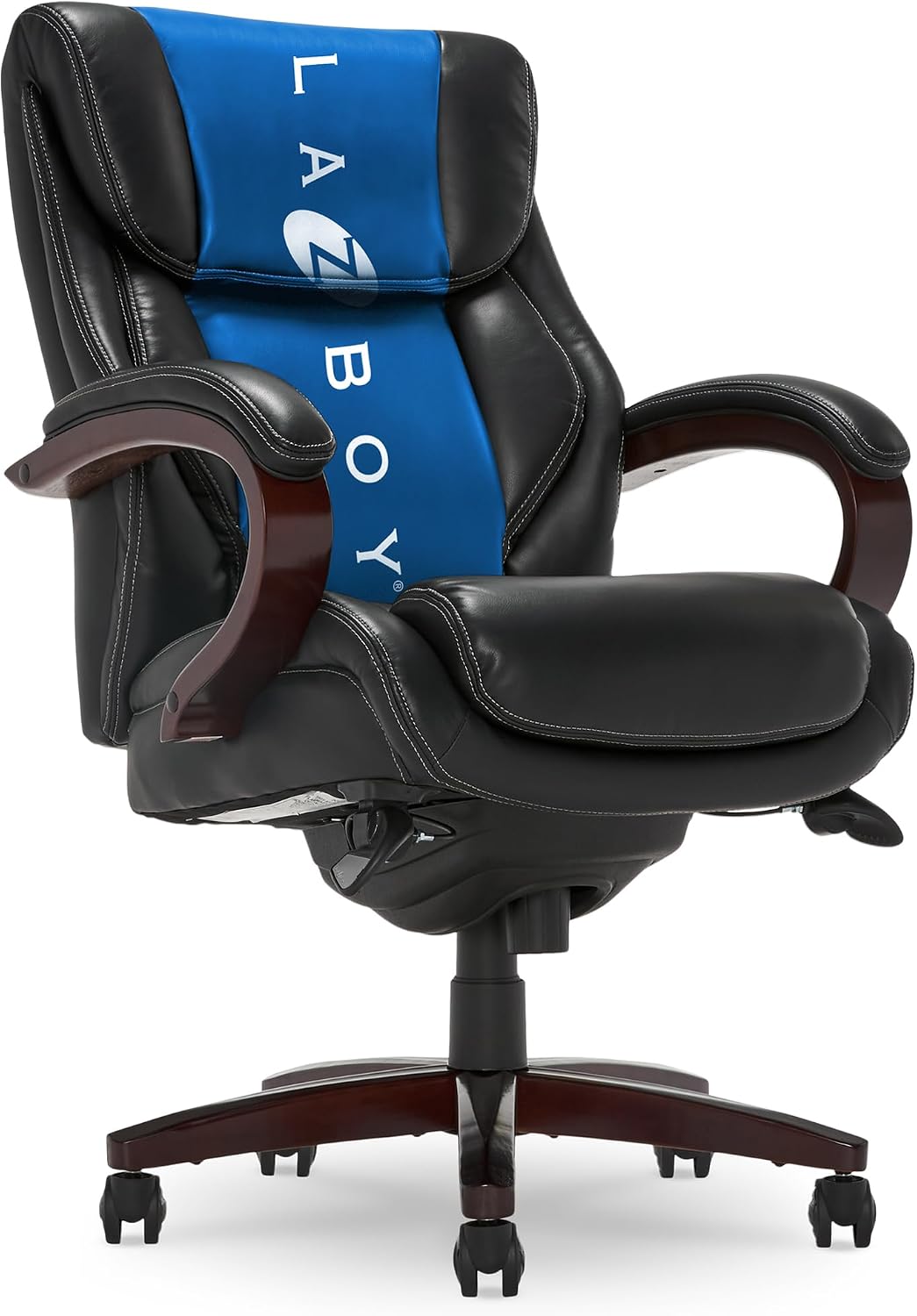
La-Z-Boy Executive Ergonomic Office Chair with Lumbar Support, Leather Chair
Leather wipes carpet fuzz and hair off in one pass, and the lumbar support is the reason to buy it
Heavy to roll on pile, and no headrest is listed on this model
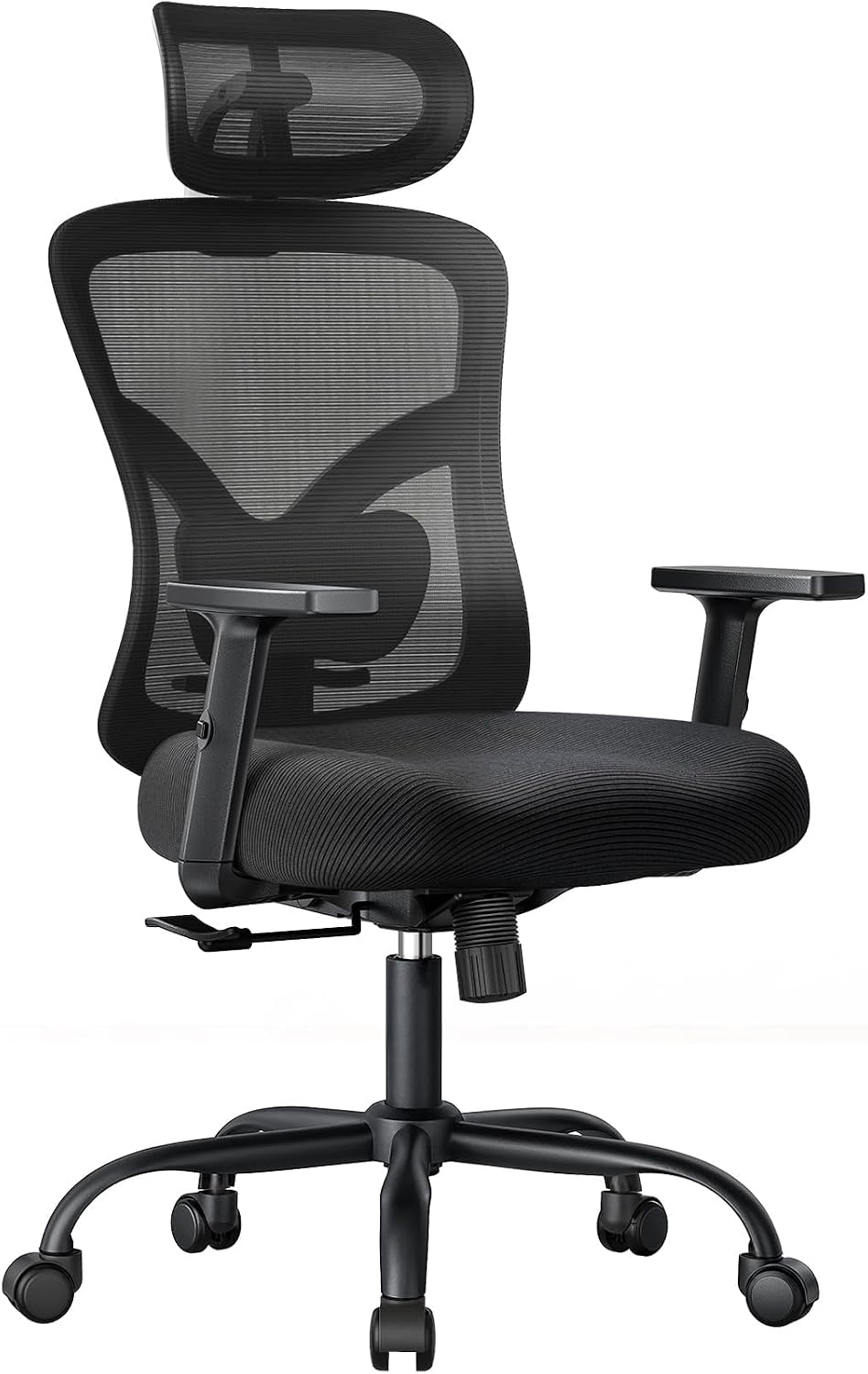
NOBLEWELL Ergonomic Office Chair with Padded Lumbar Support and 2D Headrest
The 2D headrest plus padded lumbar support make a real recline work, especially on hardwood
The headrest does little if you never lean back, and I have no weight rating to cite
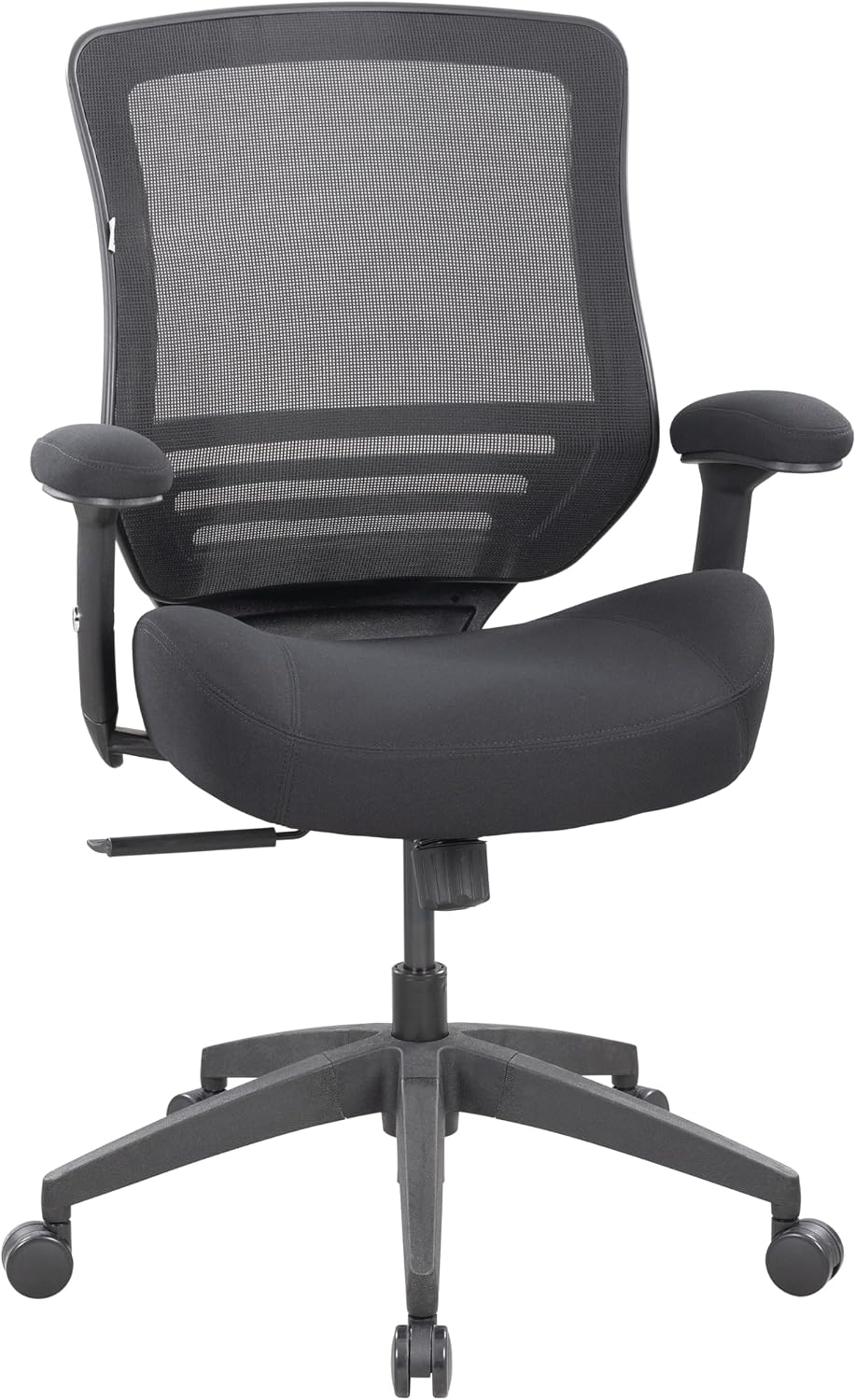
BOLISS 400lbs Ergonomic Office Chair Soft Thick Seat with Mesh Back (Black)
The only stated weight rating in this batch, at 400 pounds, plus a mesh back for hot rooms
The thick soft seat compresses, and on carpet that stacks with caster sink
Prices and availability may change.
What changes with an office chair for a carpeted room vs hardwood
Four things change when you move a chair from one floor to the other, and only one of them is about the chair itself.
Effective seat height. A caster on carpet does not sit on top of the floor. It presses into the pile, so the whole chair rides lower than the number you set on the gas cylinder. On low-pile commercial tile the difference is small enough to ignore. On a thick cut pile or a shag it is not, and a chair already sitting near the bottom of its height range ends up below the desk. If your keyboard ends up above your elbows, this is usually why.
Rolling resistance. Carpet eats momentum. Larger diameter wheels and dual-wheel casters roll over pile far better than small hard singles, and hard nylon wheels on a loop pile like Berber will catch, drag, and eventually fray the loops. On hardwood you get the opposite problem: the chair rolls too easily, picks up grit, and grinds that grit into the finish. The hardwood vs office chair for a carpeted room argument is really a caster argument, and most buyers never get that far into it.
Tilt feel. Set your tilt tension on the floor you actually use. On carpet, leaning back drives the base into the pile, so the chair feels like it resists the recline and the tension knob reads heavier than it is. On hardwood, the base skates, so the same setting lets the whole chair slide backward as you lean. I have watched people chase this for weeks and blame the chair.
The floor itself. Carpet crushes into a ring under the base and takes months to recover, if it recovers at all. Hardwood gets a wear ring plus scratches, and the scratches come from grit carried by hard wheels, not from the wheels themselves. Both problems have the same two fixes: a mat or a caster swap. Neither fix is a new chair.
The measurements to take before you spend anything
Four numbers, about 20 minutes, and a tape. Skip this and the office chair for a carpeted room vs hardwood question is guesswork dressed up as research.
Seat height. Sit in any chair with your shoes on, feet flat, and measure from the floor to the crease behind your knee. That is the seat height you need. Measure it on the floor the chair will live on. If you measure on hardwood and then roll onto thick carpet, you measured the wrong room.
Seat depth. Same seated position, measure from the back of your hip to the back of your knee, then subtract about two fingers. That is the seat depth you want. A seat that is too deep pushes you forward until your lumbar support sits behind you instead of in your back, which is the most common fit failure I see in home offices.
Base diameter and roll distance. Measure across the base at its widest point, then measure how far back you roll when you stand up. A mat has to hold the entire base plus that roll distance. A mat only as big as the base drops a caster off the edge every time you move, and a mat that slides is worse than no mat.
Caster stem. Pull one caster and measure the stem with calipers before you order replacements. The common sizes are close enough that guessing gets you a set that will not seat, and a caster that falls out mid-roll is how floors get dented.
Once you have those four numbers, the difference between office chair for a carpeted room and hardwood stops being an opinion and becomes arithmetic. Carpet costs you seat height, so you need a chair with adjustment range to spare. Hardwood costs you finish, so you need soft treads or a mat. Your desk does not move, so the floor decides where your elbows land.
The four chairs on carpet and on hardwood
Every chair below is in the current batch. Images and links go to the listing, and you check the price there because prices move. What follows is how each one behaves on each floor and who should skip it.
VINGLI Microfiber Brown Rolling Ergonomic Office Desk Chair
Microfiber, brown, high back, 360 degree swivel, padded flip-up arms, and wheels. The flip-up arms are the whole reason to look at this one. If your desk is narrower than about 48 inches, fixed armrests are the difference between a chair that tucks under and a chair that lives in the middle of the room. Flip them up, push the chair in, and a small room gets its floor back.
On carpet, microfiber is a magnet. It holds fuzz, pet hair, and dust, and a brown fabric chair shows every vacuum pass. If you have pets and light carpet, this is the wrong fabric. The wheels are also the part I would replace first on anything deeper than a low pile, because the chair is light enough that a bigger caster transforms it.
On hardwood, the light frame rolls easily, which is good until you sit down and the chair slides. Check the tilt tension on your actual floor, not in the store.
I do not have a published height and weight range for this chair, so I am not going to hand you a fit claim. Measure your seat depth, measure the seat, and let the tape decide.
La-Z-Boy Executive Ergonomic Office Chair with Lumbar Support, Leather Chair
This is the one I would put in a carpeted home office where a dog sleeps under the desk. Leather wipes clean of fuzz and hair in one pass, and the lumbar support is the reason to pay for the executive frame instead of a mesh chair with a pillow strapped to it.
On carpet, the chair is heavy, and heavy plus hard casters plus pile is the hardest combination to roll. Budget for a mat on anything thicker than a low pile, or plan on standing up to move instead of rolling. The upside is that a heavy chair does not skate when you recline, so the tilt tension you set on carpet stays honest.
On hardwood, the weight is a liability. A heavy chair on hard casters wears a ring into a finish faster than a light one, so swap to soft treads before the first roll, not after the first scratch.
Who should skip it: anyone who wants a headrest, since none is listed on this model, and anyone who runs hot, because leather does not breathe the way mesh does. This is also the chair I would measure most carefully for seat depth, because leather gives you no forgiveness if the seat runs deep.
NOBLEWELL Ergonomic Office Chair with Padded Lumbar Support and 2D Headrest
Padded lumbar support and a 2D headrest put this in a different category from the other three: it is the recliner of the group.
On hardwood, that is its best floor. The base skates a little, the recline arc goes further, and the headrest actually contacts your head instead of hovering behind it. If you take calls leaning back, this is the one that makes that posture work.
On carpet, the headrest is fighting the floor. The base digs into the pile when you lean, the recline arc shortens, and the headrest ends up behind your neck rather than under it. You can fix most of that with a mat and a slightly looser tilt tension, but you cannot fix it with the chair alone.
Who should skip it: anyone who sits bolt upright all day. If you never recline, the headrest is decoration and you are paying for it. I also do not have a published weight rating for this chair, so if you are a heavier user, look at the next one instead of guessing.
BOLISS 400lbs Ergonomic Office Chair Soft Thick Seat with Mesh Back (Black)
This is the only chair in the batch with a stated weight rating, 400 pounds, and that alone decides it for a lot of buyers. Mesh back, thick soft seat.
On carpet, the thick soft seat is the thing to think about. Foam compresses over the first few months, and carpet already steals seat height at the casters. Two drops stack, so buy this chair only if you have adjustment range left above the height you measured. On a low-pile floor with a mat, that is easy. On plush carpet, it is the difference between sitting at your desk and sitting under it.
On hardwood, the mesh back is the feature that matters, because a hard floor and a warm room is where mesh earns its price. Put soft casters under it and the floor survives.
Who should skip it: anyone who wants a firm seat, and anyone who wants a fabric look in a room guests see, because mesh reads as office equipment. Skip it too if you are nowhere near the top of that weight range and you want a smaller footprint, since this is a big chair for a small room.
The floor fix costs less than the chair
The cheapest correct setup beats the most expensive wrong one, and in this category the cheap fix is the interface between the chair and the floor.
For carpet: a rigid mat sized to your base plus your roll distance, and larger dual-wheel casters if you are on anything deeper than a low pile. Do not buy a thin flexible mat for thick carpet. It ripples under the casters and slides out from under the base. Measure the base first, then buy the mat.
For hardwood: soft polyurethane or rubber-tread casters, or a mat with a smooth back that will not slide. Skip felt glides. Felt is for furniture that stays put, and a chair that swivels on felt pads is a chair that will not roll when you want it to and will still skate when you do not.
For both: clean the casters. Hair and grit wind around the axle, and a caster that will not spin is a caster that drags, and a dragging caster is what dents a floor and frays a carpet edge.
If you are weighing office chair for a carpeted room or hardwood, spend the extra money here first. A budget chair with the right casters and the right mat beats an expensive chair with the wrong ones on either floor, and I have watched that play out in client offices more times than I can count.
Would I put it in a client's office for a year?
That is my test for every chair, and it is why I care more about the floor than the brand.
- Carpeted home office, pets, someone who wants to wipe the chair down: the La-Z-Boy, with a mat, and soft casters if the pile is deep.
- Carpeted office, heavier user: the BOLISS, because 400 pounds is a stated number and I do not have to guess, plus a mat sized to the base.
- Hardwood office, someone who leans back on calls: the NOBLEWELL, with the tilt tension set on the hardwood itself.
- Small room, narrow desk, hardwood or low-pile carpet: the VINGLI, because flip-up arms are the only feature on this list that buys back floor space.
The office chair for a carpeted room vs hardwood math is the same every time. Measure your seat height on the floor you will use, measure your seat depth, measure the base, then buy the interface before you buy the upgrade. If you cannot say your seat depth in inches, you are guessing, and guessing is how a chair ends up in the corner of a room with a rug bunched under it. For the other half of the setup, see Standing Desk Wobble At Standing Height, because a desk that shakes at 44 inches undoes everything a good chair gets right.