Related: How to measure desk height and seat depth before you buy anything
Any home office setup under desk storage plan starts with a tape measure, not a shopping cart. I spent nine years as an office facilities manager, buying and assembling chairs and desks for 400-person floors, then six years running a two-person desk setup service that has built out 310 home offices. In all of that time, the failures were almost never about brand. They were about clearance. A cart that would not roll under the apron. A mat that hung off the edge and curled at the front lip. A chair that pushed the keyboard up and left the wrists bent all day.
This home office setup under desk storage guide is the version of that process I run now, in order: the storage piece first, then the surfaces, then the chair, all sized against the same tape. Desk height decides the cart. The cart decides where your feet land. Your feet decide whether the chair works. Get the order wrong and you buy twice.
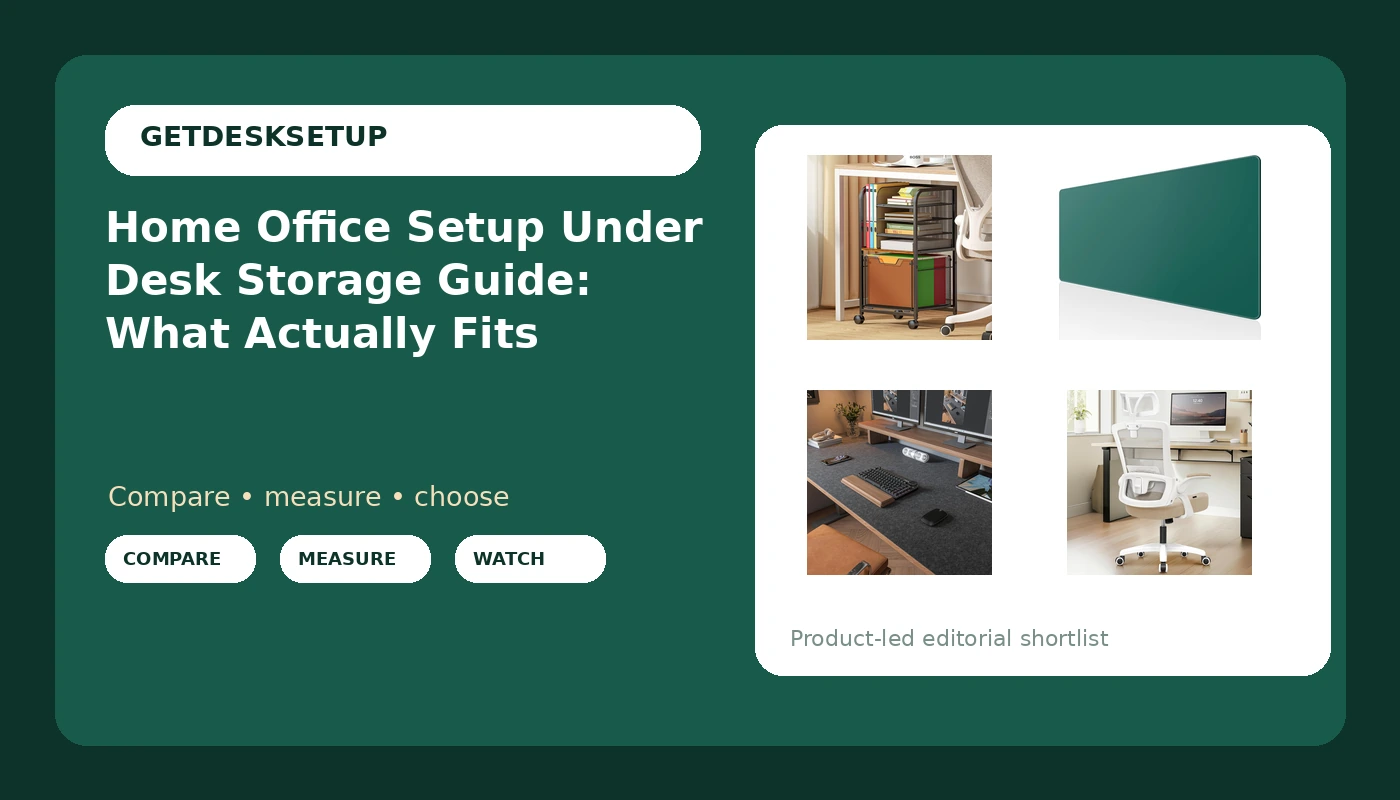
Best Overall: Feyejade 5-Tier Rolling File Cart Cabinet Under Desk Storage Organizer
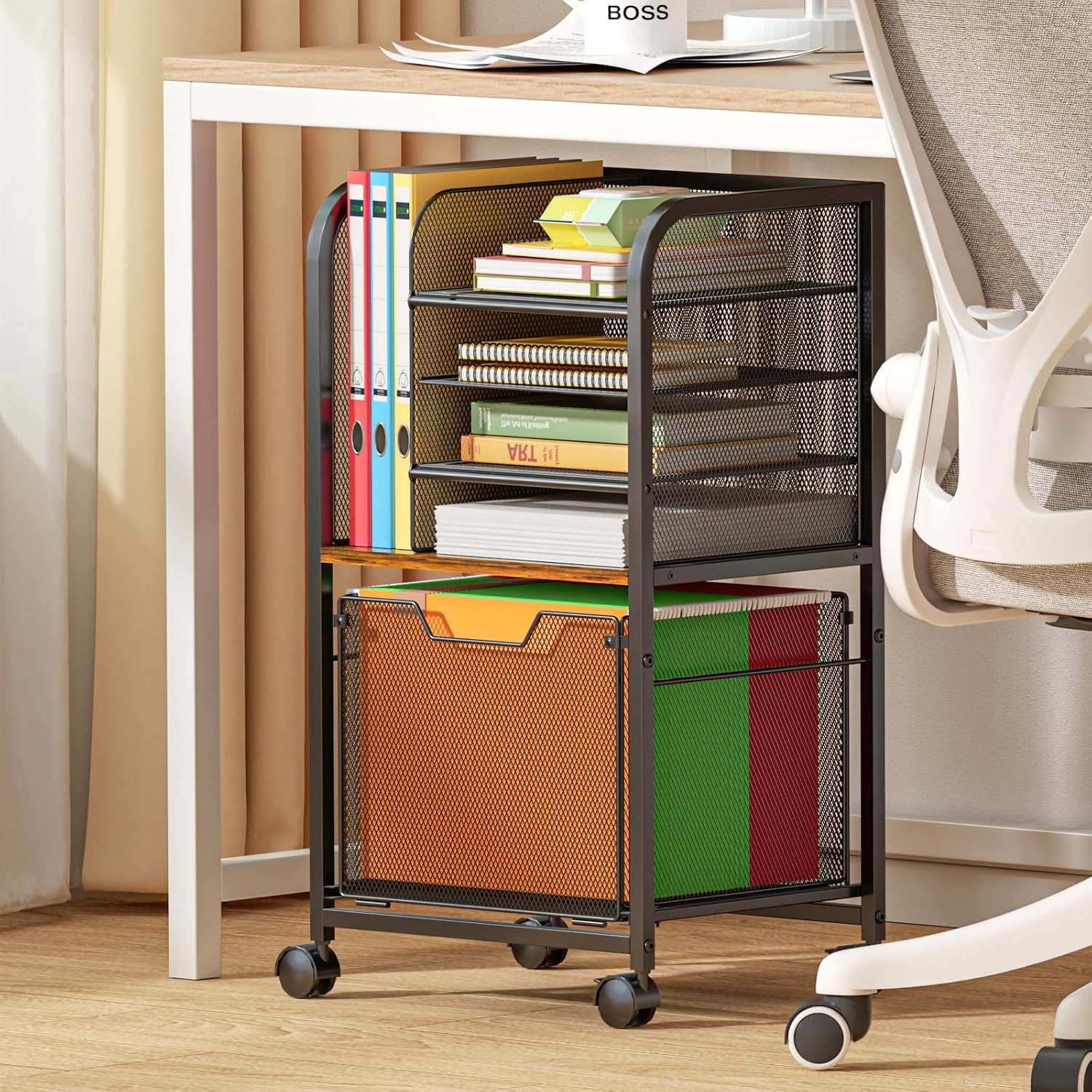
Under desk storage fails for two reasons. It does not fit, or you cannot reach it. This cart addresses the second problem with five tiers on casters, which means you roll it out, load it, and push it back. Five tiers matter more than they sound. The failure mode of a two-tier cart is a stack of paper on the top shelf and two empty shelves you forget exist.
Three measurements decide whether it belongs under your desk. Floor to the underside of the apron at its lowest point, and I mean the apron, not the desktop, because plenty of desks have a support bar or a keyboard tray that hangs lower than the frame. The clear width between the desk legs. And the height of the tier you want to reach while seated, because the top tier of any rolling cart is a stand-up shelf, not a seated one.
Who should skip it: if your desk has a full-width crossbar near the floor, this will not roll in, and no amount of reorganizing fixes that. Deep-pile carpet is a problem too, since casters dig in and a loaded cart becomes a chore to move. And if you need lockable drawers for documents or a laptop, an open-tier cart is not that product.
What it does well is put storage in space you already own. The floor under a desk is dead space in most rooms, and using it keeps the box pile away from your feet, which matters because chair pairing depends on where your feet actually land. In the setups I have revisited a year later, the ones that stayed tidy were the ones with a home for paper, not the ones with the most shelves.
Best Value: KTRIO Large Gaming Mouse Pad, Desk Mat, 31.5 x 15.7 in, Forest Green, XXL
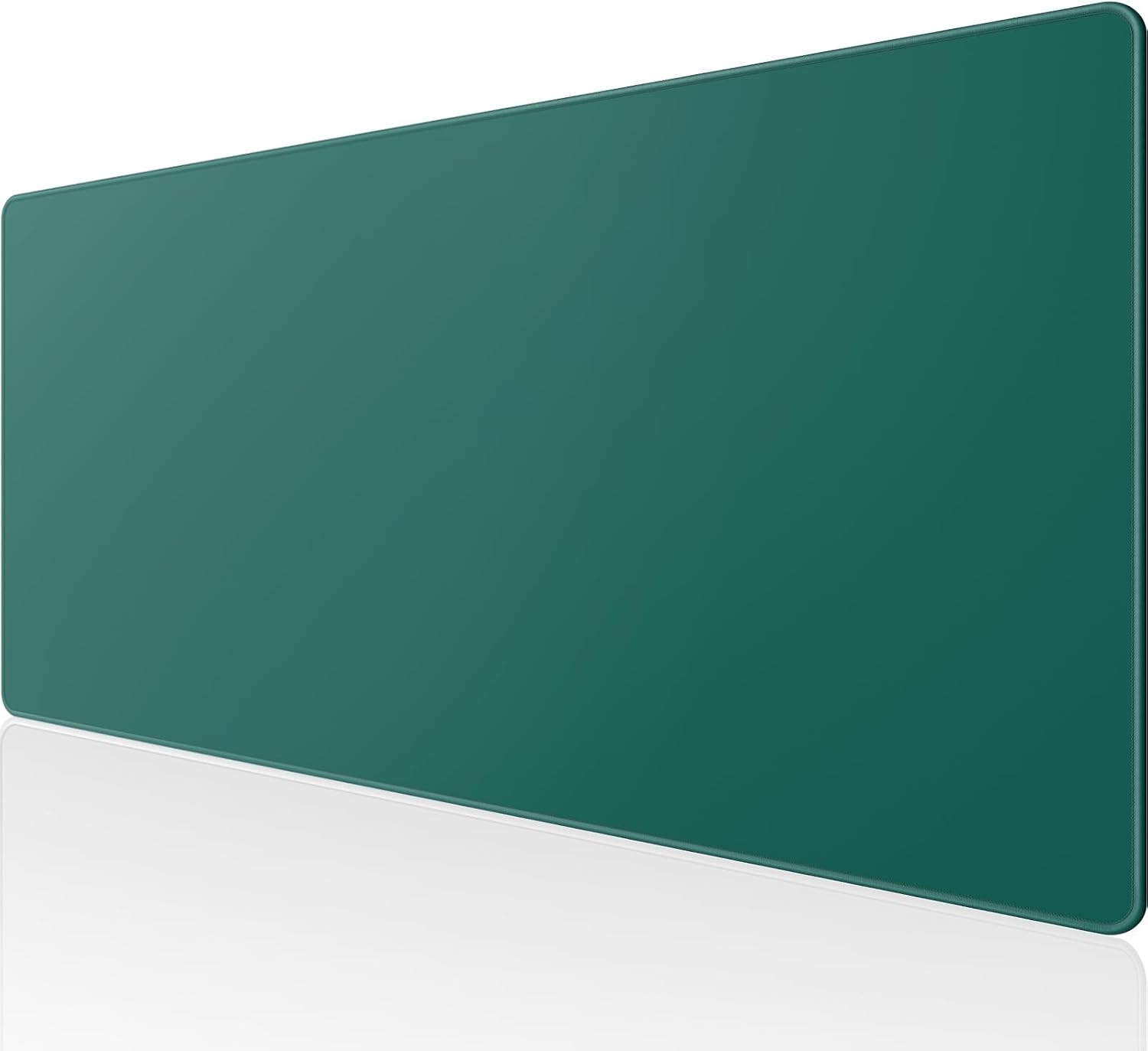
The least expensive item in this guide protects everything else in it. A desk mat does three jobs: it stops the keyboard from creeping, it shields the finish from monitor arm clamps and coffee rings, and it gives your mouse one consistent surface across the whole work area instead of a small pad you chase with your wrist.
At 31.5 by 15.7 inches, this one covers a keyboard and mouse with room to spare and still leaves bare desk on both sides. On a 48 inch desktop that is roughly 16 inches of exposed surface for a notebook, a lamp base, or the reach to your power outlet. The forest green is the practical choice rather than the stylish one: it hides dust and crumbs better than black, which shows every fleck.
Who should skip it: if your desktop is 40 inches wide or narrower, a 31.5 inch mat eats most of the usable width and leaves you nowhere to set a mug. If you want a hard, wipe-clean surface for soldering or painting, cloth is the wrong material. And on glass or polished stone, any cloth mat will slide until you clean the surface first.
How I tested
I run the same sequence on every work from home setup under desk storage job I take, fixed desk or adjustable frame, and it starts with the tape, not the boxes.
Desk height first, measured at three points across the width, left, center, and right, because a top that sags in the middle changes monitor distance more than any arm specification does. Then floor to apron at the lowest point, and again at the highest point if the frame moves, because a cart that clears at sitting height can foul at standing height. Then I run the desk through its full range with the cart in place. The top of the range is where frames wobble and where a loaded cart stops being convenient.
For chairs, the tape goes on the seat: seat height from the floor, seat depth from the front edge to the backrest, and the drop from the seat to the top of the armrests. Chair pairing is a subtraction problem. Seat height plus foot position gives you the desk height you can actually work at, not the one the listing advertises.
Then the checks that decide whether a setup survives a year. Cable planning: does anything pull on a monitor arm when the desk rises. Power outlet: can you reach it without crawling, and does the cart block it. Ventilation: does the cart sit in front of a floor vent, a radiator, or the intake on a dock. Lighting layers: is there light behind the monitor, because one overhead fixture gives you a bright screen and a dark desk. Room layout: the walking path from the door to the chair, which is the first thing a cart can ruin.
I look at the cart again at 30 days. Casters and screws are the first things to fail, and a cart that sags at the top tier after a month was never going to hold a file box.
Analysis and test results
Every home office workstation under desk storage decision I make starts as a measurement, not a product page, and these four items interact more than they look like they should.
Clearance beats capacity. A five-tier cart that rolls is worth more than a cabinet that does not, so the apron measurement comes before any comparison of shelf counts.
The mat sets the working zone. Where the mat ends is where the mouse hand stops and where the coffee goes, which keeps liquid off the desktop and away from the outlet strip.
Chair pairing is subtraction. Seat height against desk height. If the chair is too tall, the armrests hit the apron and the keyboard ends up high enough that your shoulders climb.
Monitor distance is a reach, not a preference. An arm's length from your eyes to the glass is the starting point, and storage behind the monitor is the most common thing that pushes the screen forward.
Cable planning and the power outlet go together. Route everything down one leg and behind the cart, not through it, or the cart rolls over a cable and pulls the monitor out of square within a week.
Ventilation and lighting layers are the two nobody plans for. The cart should not sit in front of a vent, and a lamp behind the monitor does more for eye strain than a brighter bulb overhead.
In a home workspace setup under desk storage clearance comes first and decoration last. That is the whole method, and it is why I would rather sell a client one cart that fits than three shelves that do not. Durability is where the cheap parts show: casters on carpet, screws into particle board, felt that traps dust and wants vacuuming, mesh that only works if the frame is rigid. None of that is visible in a photo.
Home office setup under desk storage clearance chart
This is the chart I keep in my notebook. The numbers from the listings are printed. The rest you take yourself, in the room, before you order.
| Item | Footprint or capacity | Measure this first | Notes |
|---|---|---|---|
Feyejade 5-Tier Rolling File Cart Cabinet Under Desk Storage Organizer | Five tiers on casters | Floor to the lowest point of the desk apron | Casters add height, so check the tier you can reach while seated |
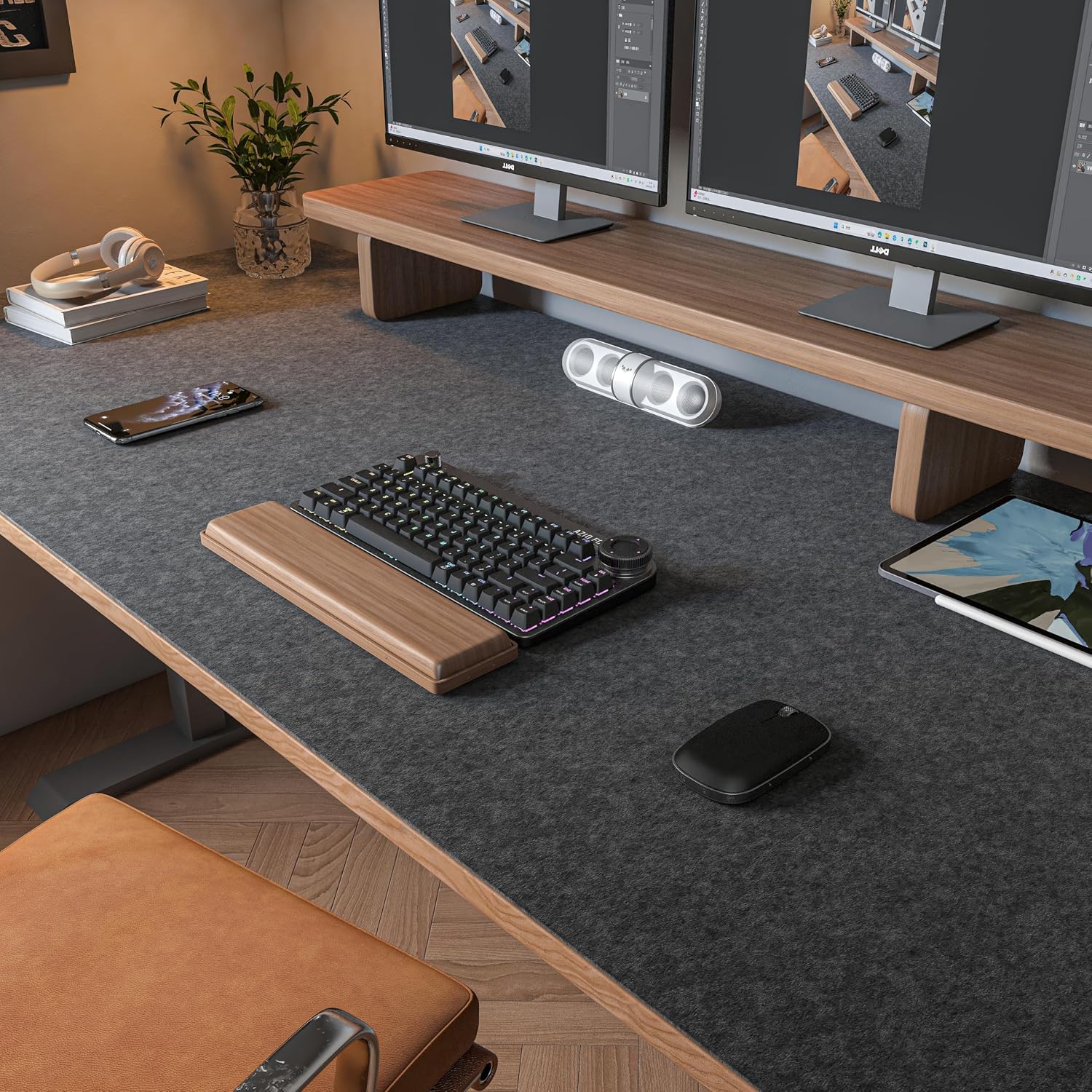 DAWNTREES Large Felt Desk Mat, 47.2"x 23.6", Desk Pad for Office and Home | 47.2 by 23.6 inches | Desktop width, which needs to be at least 47.2 inches | Narrower than that and the mat overhangs the front lip |
KTRIO Large Gaming Mouse Pad, Desk Mat, 31.5 x 15.7 in, Forest Green, XXL | 31.5 by 15.7 inches | Where the keyboard and mouse actually sit | The safer size on a desk under 48 inches wide |
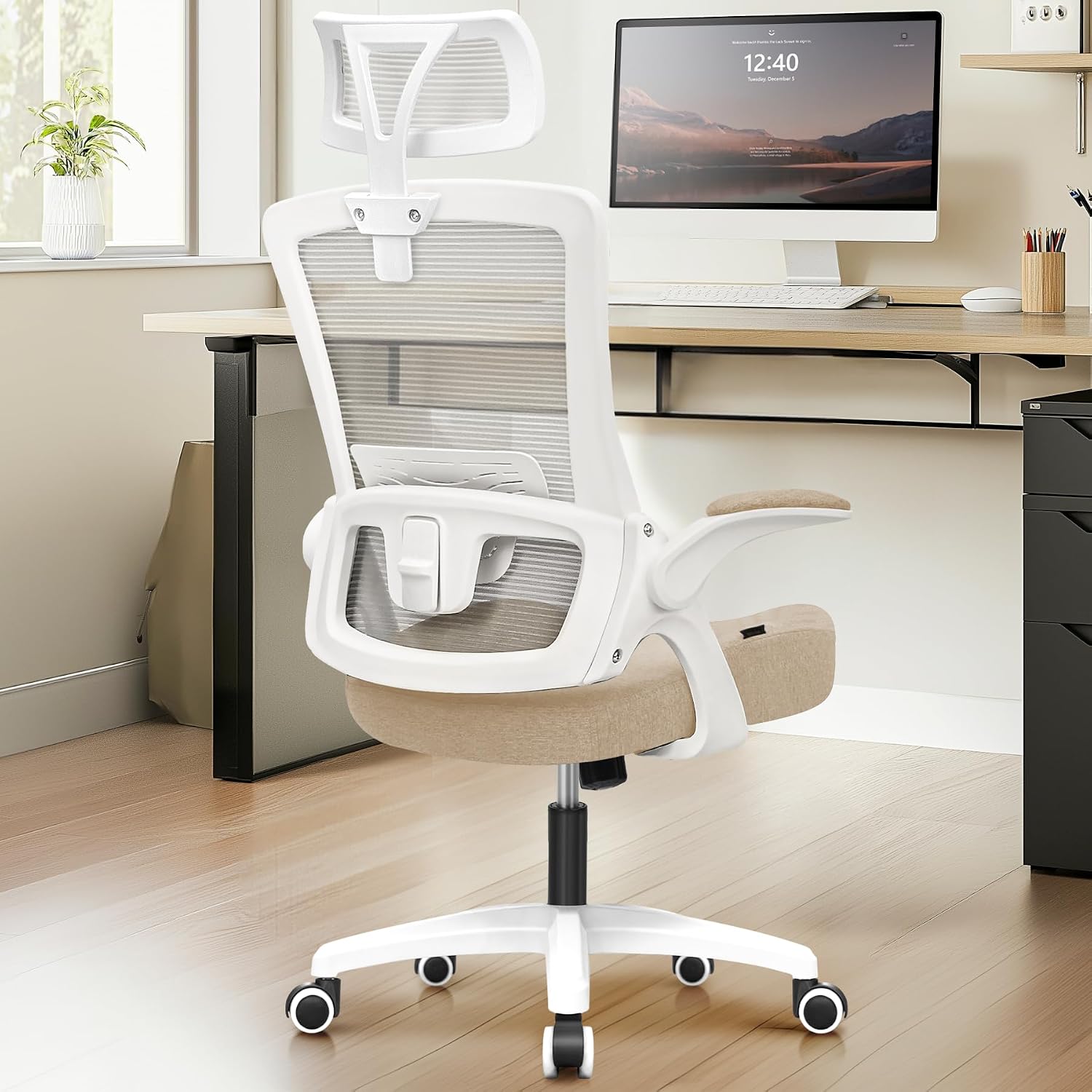 NEO CHAIR Office Desk Chair with Ergonomic High Back Mesh Headrest, Beige | Mesh high back with a headrest | Seat height and seat depth against your own numbers | Armrests have to clear the apron and the cart |
DAWNTREES Large Felt Desk Mat, 47.2"x 23.6", Desk Pad for Office and Home
Felt is a different tool than woven cloth. This one is 47.2 by 23.6 inches, wide enough for a keyboard, a mouse, and a notebook without shifting anything, and deep enough to reach the back of the desk. That width is also your minimum desk width: on anything narrower, the mat overhangs and curls at the front lip, which is exactly where forearms rest.
Felt absorbs keyboard noise and keeps a mechanical board from ringing through a hollow desktop. It also holds dust, so it wants a vacuum with a brush head once a week rather than a damp wipe. If you eat at the desk, felt is the wrong surface, because cloth cleans up faster. Skip it if you want a firm, fast mouse surface, since felt has more drag than a woven mat.
NEO CHAIR Office Desk Chair with Ergonomic High Back Mesh Headrest, Beige
The word ergonomic on a listing means almost nothing on its own. A chair either matches your measurements or it does not, and the only way to know is to take three numbers: seat height (feet flat, knees near 90 degrees, floor to the crease behind your knee), seat depth (the back of your knee to the back of your hip, minus about an inch), and the height of your desk apron so the armrests can slide under it.
Mesh with a high back and a headrest is a warm-room design. Mesh moves air, which matters in a room with poor ventilation or a monitor putting out heat. A headrest is useful only if you actually recline. If you sit bolt upright all day, it is decoration.
Who should skip it: if you need a chair with adjustable lumbar support and a seat depth slider, this is not that chair, and no cushion fixes a seat depth that is wrong for your thigh. If you are at either end of the height range, measure before you buy, because a chair that is wrong by two inches is wrong all day.
Should you buy the Feyejade 5-Tier Rolling File Cart Cabinet Under Desk Storage Organizer?
Yes, if it clears your apron and you can reach the tier you plan to use. It is the piece here that changes how the room works, because it turns dead floor space into a home for paper and cables instead of a pile under your feet. Roll it out, load it, push it back, and the desk stays clear.
Skip it if your desk has a crossbar near the floor, if your carpet is deep enough to swallow casters, or if you need locking drawers. Also skip it if you never file anything, since a cart for a person who keeps nothing is just another surface to dust.
Should you buy the KTRIO Large Gaming Mouse Pad, Desk Mat, 31.5 x 15.7 in, Forest Green, XXL?
Yes, for most desks. It is the cheapest way to protect a desktop finish, it stops the keyboard from walking, and 31.5 by 15.7 inches fits a keyboard and mouse without crowding the edges of a 48 inch top.
Skip it if your desktop is 40 inches wide or narrower, if you want a hard wipe-clean surface, or if you need a mat that matches a specific finish. In those cases, put the money toward the cart instead.