I spent nine years as an office facilities manager, buying chairs by the pallet for a 400-person floor, then six more years building out 310 home offices. In that time the cheap office chair vs mid range office chair question came up on almost every call, and it was never settled by the price tag. It was settled by a tape measure, a notebook, and twenty minutes of sitting still while somebody wrote numbers down.
Here is the part people skip: a chair either fits your body or it does not. Brand is noise. Price is noise. What matters is whether the seat depth and the seat height range land on your measurements, and whether the parts that touch your back can move when your posture changes at hour four.
Related: How to Measure Your Desk Height Before You Buy a Chair
The short version: buy into the middle of the range if you need a lumbar support you can move, a seat depth that matches your thigh, and a tilt tension you can dial in. Stay at the value end if a fixed seat already fits you and you need a small footprint more than you need adjustment. Everything below is the detail work on that sentence.
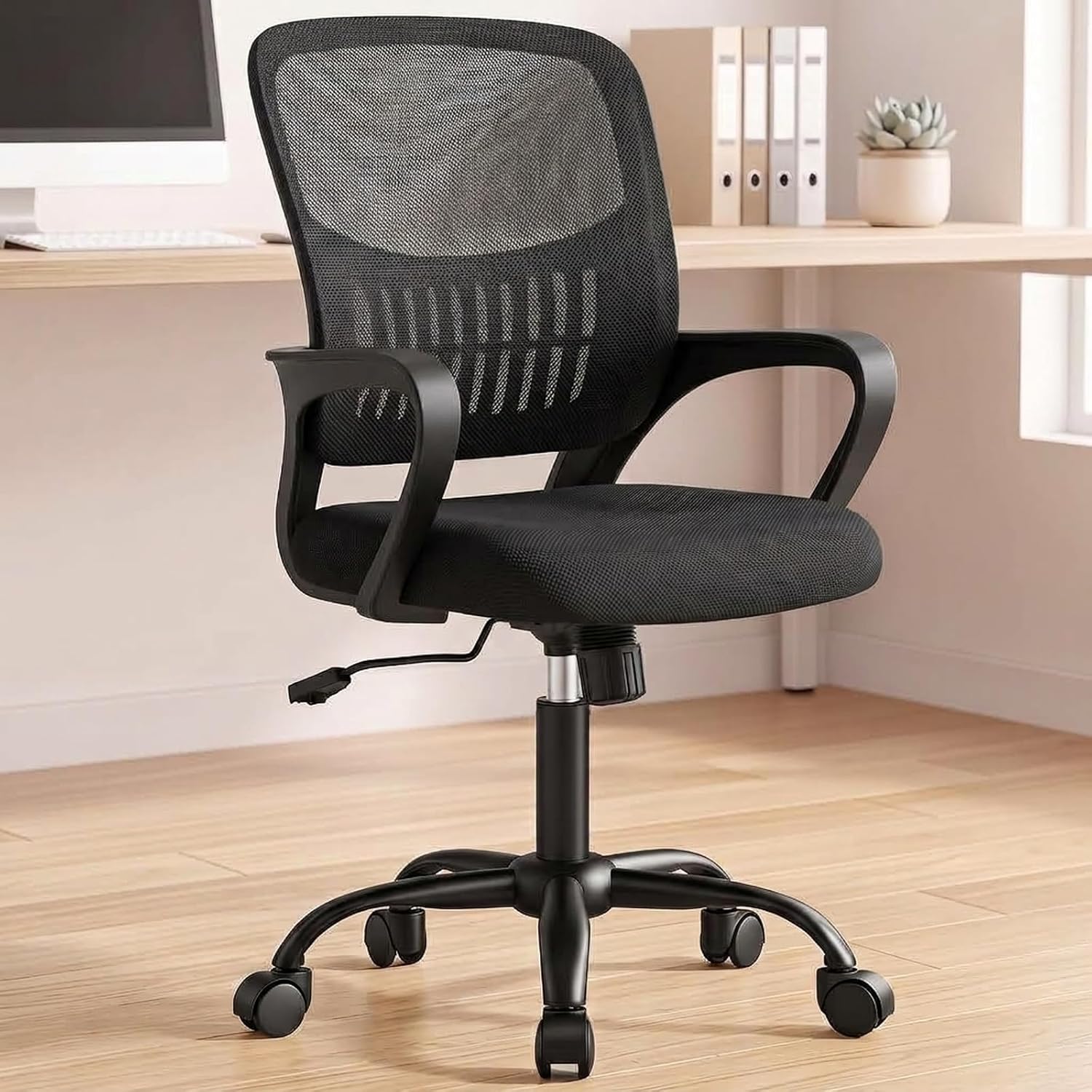
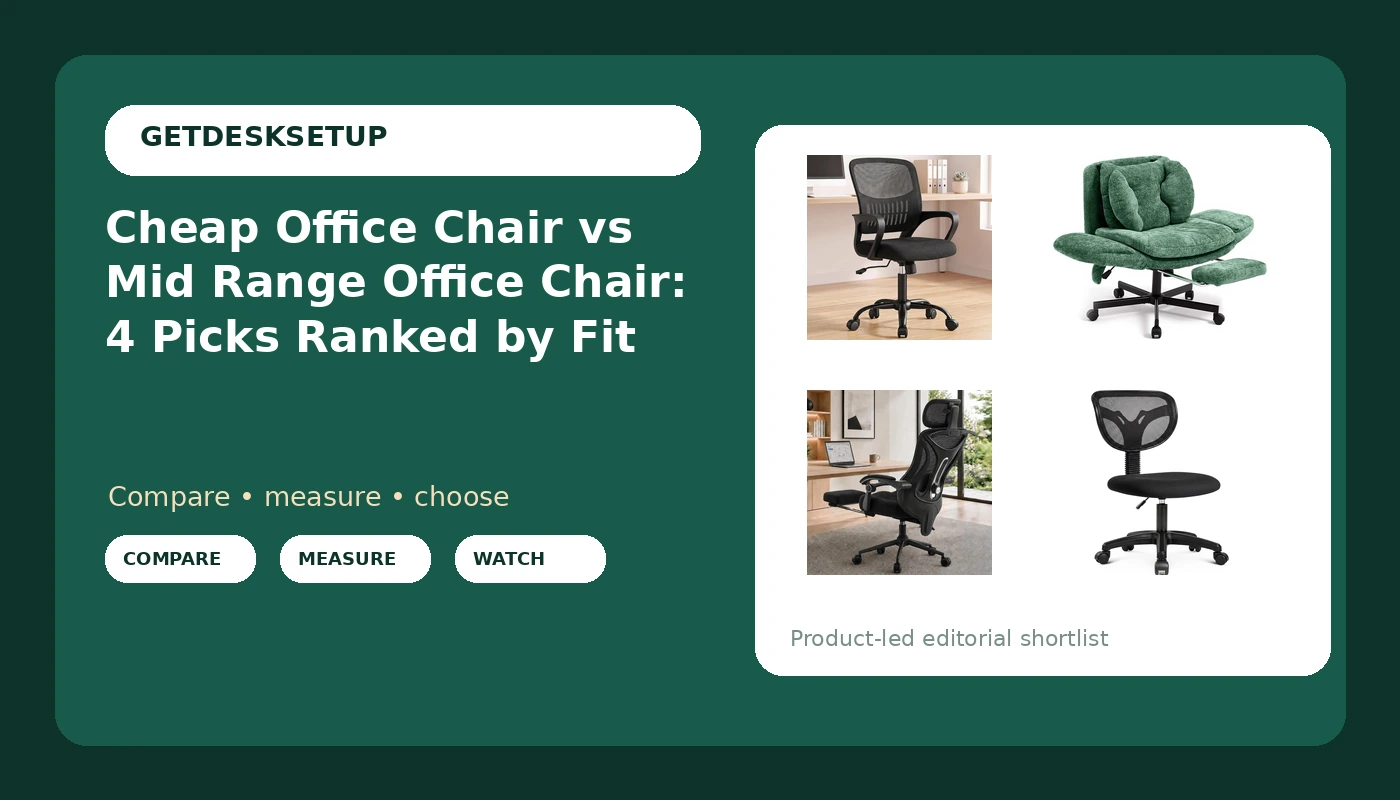
OLIXIS Ergonomic Office Desk Chair, Mid-Back Executive Computer Chair
Entry-level path to a padded mid-back seat, and the low profile keeps a small room open
Fixed geometry, no footrest, and the ergonomic label does not promise a lumbar support that moves
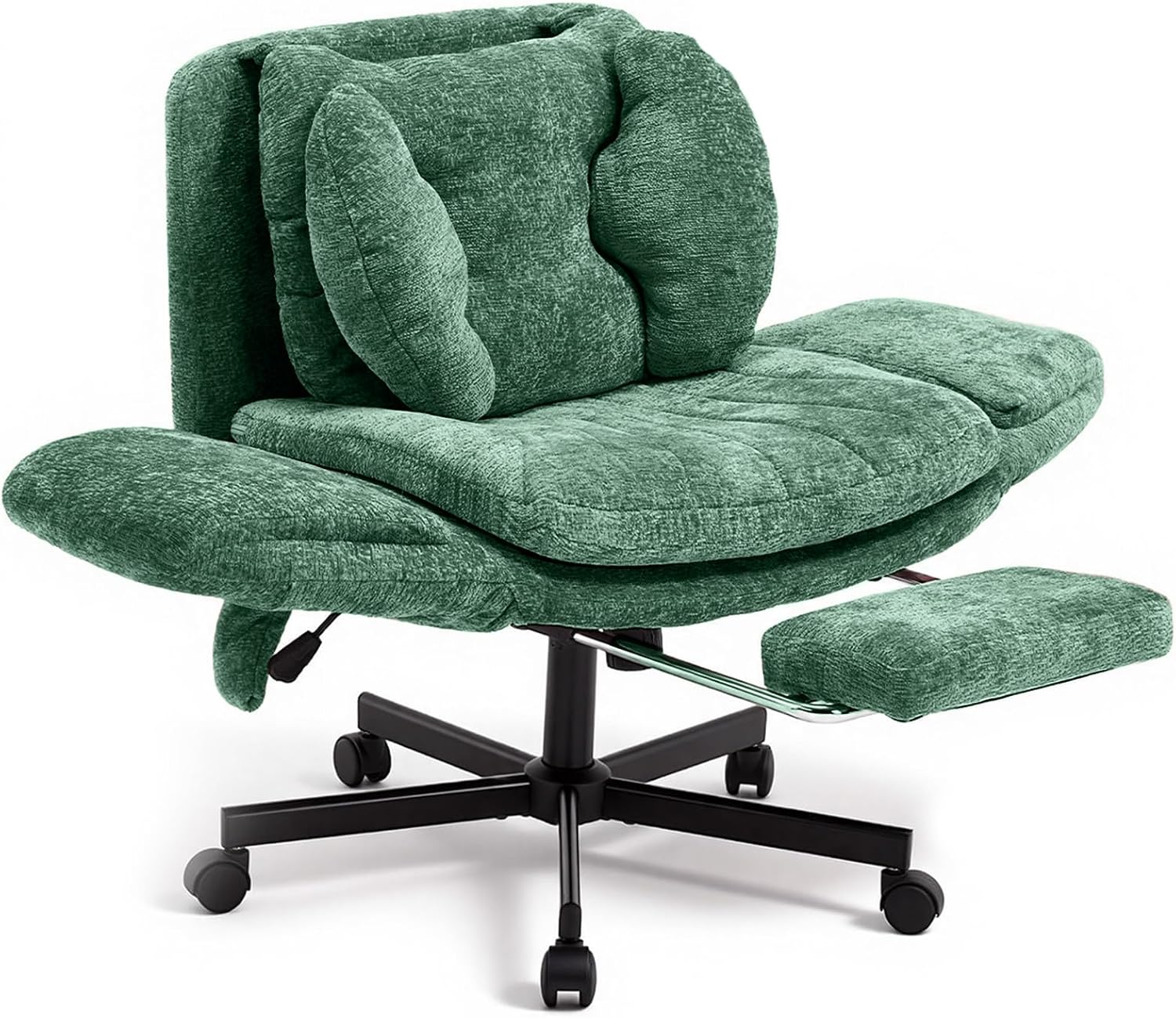
Criss Cross Office Chair with Footrest and 5-Gear Adjustable Arms, Green
Five-gear armrest height plus a footrest, so you can change posture without standing up
Cross-leg frame and green fabric are a style commitment, and the footrest needs floor space
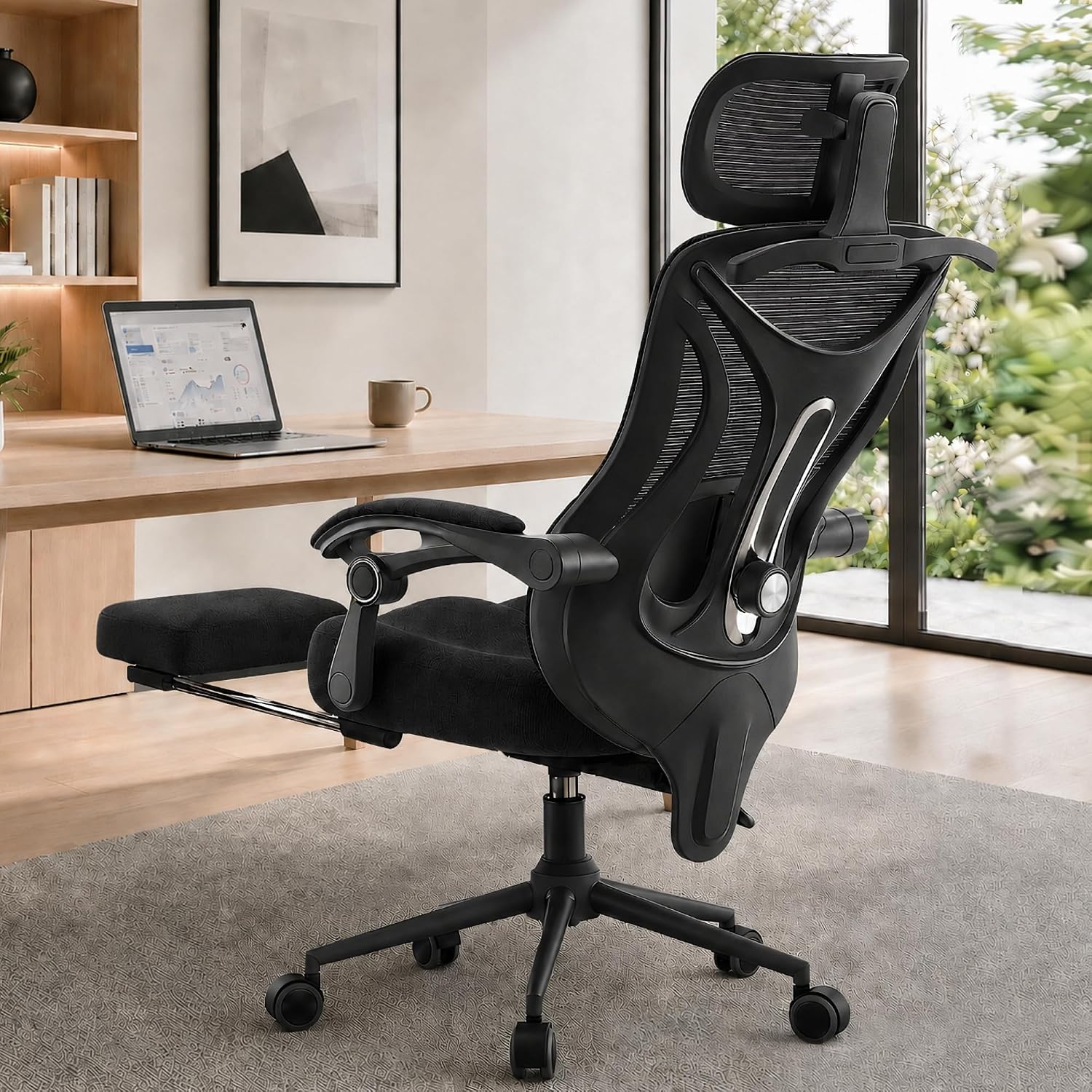
CYKOV Ergonomic Office Chair with Footrest, Reclining Mesh Back, 350 Lbs
350 lb stated capacity, mesh back, and a recline paired with a footrest for long sessions
Biggest footprint here, so it needs room and a surface the casters can roll on
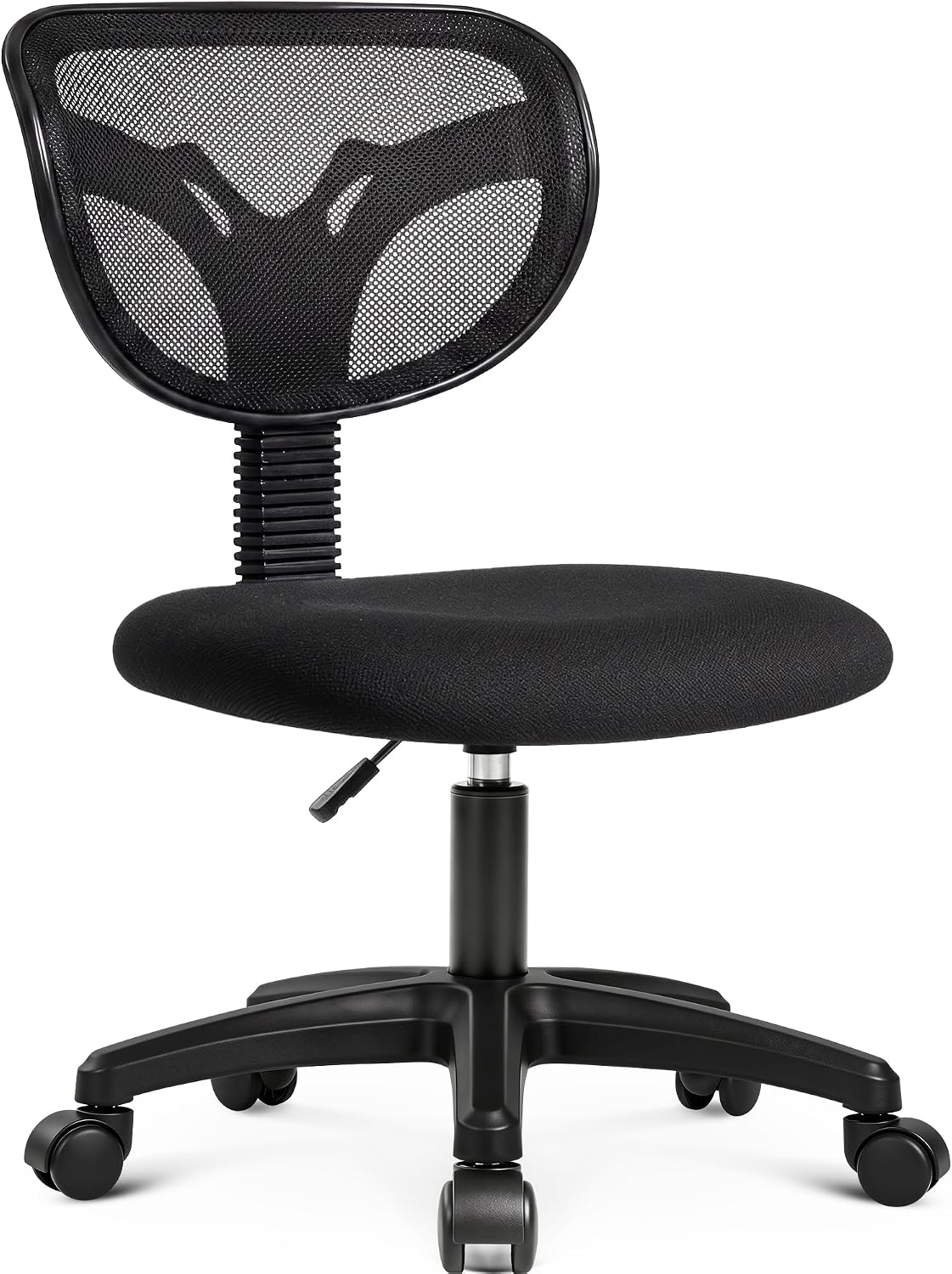
NEO CHAIR Small Office Chair with Wheels, Armless Mesh Desk Chair, Black
Armless and small, so it tucks under a shallow desk in a tight room
No armrest and no recline, which rules it out as a full-day typing chair
Prices and availability may change.
What the price gap actually buys you
Strip the marketing language off any office chair and you are paying for four things: the frame, the foam, the mechanism, and the shipping weight. A cheap office chair spends most of its budget on the frame and the look. It has to survive a truck, a stairwell, and a photograph on a product page. The mechanism, which is the part that touches your body all day, gets whatever is left.
A mid range chair spends the money on the mechanism. That means a lumbar support that slides up and down instead of a foam bump sewn into place. An armrest that moves in height, and sometimes in depth and angle. A tilt tension knob you can turn so the chair stops pushing you forward. A recline that locks in more than one position, so leaning back at 2 p.m. does not turn into a slow fight with a spring.
The difference between cheap office chair and mid range office chair is almost never visible in a photo. Both look like a chair. One of them lets you change four things about how it meets your body, and the other one lets you change the height and hope.
If you have read a mid range office chair vs cheap office chair breakdown that ranked products by price, this one runs the other way. Price comes last here, after the four numbers that decide whether a chair is worth owning.
The measurements that decide cheap office chair vs mid range office chair
Four numbers, and you can take all of them at home in fifteen minutes with a tape and a wall.
Seat height. Sit in the chair you own now, wearing the shoes you work in, and measure from the floor to the crease behind your knee. That is the seat height you want at the low end of the range. If the chair cannot go that low, you spend the day on your toes or with your feet dangling, and neither one is a posture you can hold for six hours.
Seat depth. Sit all the way back against the backrest, then measure from the back of your knee to the point where your backside meets the seat. You want a seat depth close to that number, with roughly two fingers of gap behind the knee. A seat that is too deep pushes you forward until you slouch. A seat that is too shallow puts your weight on a smaller area than your body wants.
Lumbar support. Measure from the seat surface up to the small of your back. That is where the lumbar support has to land. On a fixed chair you get one shot at it. On an adjustable chair you get to move it when your posture changes.
Armrest height. Sit with your shoulders relaxed and your elbows at 90 degrees, then measure from the floor to the underside of your forearm. That is your armrest height. An armrest that is two inches off pulls one shoulder up all day.
Two of those four numbers are adjustable on almost any chair: seat height and, if the arms move at all, armrest height. Seat depth and lumbar support are where the money goes, and they are the two things a cheap chair usually locks in place. That is the entire trade in one paragraph.
The four chairs, ranked by what they change
OLIXIS Ergonomic Office Desk Chair, Mid-Back Executive Computer Chair
This is the value-end chair I would hand someone who wants a padded seat, a backrest that stops below the shoulder blades, and a profile that does not dominate a small room. The mid-back cut is the practical part. A low back keeps sightlines open, and if you have a window behind the desk, a chair that does not rise above your shoulders keeps the light where you can use it.
What to check before you buy: whether the lumbar support is a fixed curve or a moving pad, and whether the armrests adjust at all. The ergonomic label does not answer either question, and those two answers decide whether this chair works for a long day or only a short one. Visit on Amazon
Skip it if you want a footrest or a headrest, because neither is part of this build, and skip it if your seat depth measurement needs a seat pan that slides.
Criss Cross Office Chair with Footrest and 5-Gear Adjustable Arms, Green
Five gears on the arms is the detail that matters most here, and it is the reason this chair sits in the middle of the range rather than at the bottom. Armrest height is the adjustment people actually use every day, because shoulders creep up without anyone noticing.
The footrest is the second feature worth paying for. Changing your sitting position at hour three is the cheapest way to take load off your lower back, and a footrest gives you a second posture without standing up. The cross-leg frame and the green fabric are a style decision you have to want, and the footrest needs floor space in front of the chair.
Skip it if the desk is against a wall and the chair has to tuck in tight, because the footrest and the leg frame both want room. Visit on Amazon
CYKOV Ergonomic Office Chair with Footrest, Reclining Mesh Back, 350 Lbs
The 350 lb stated capacity is the headline, and it is the reason I would put this chair in front of a heavier client before any of the others. A higher capacity rating usually means a heavier frame, a stronger gas lift, and a wider seat pan, which is exactly the set of parts that fails first on a cheap chair.
The mesh back is the second thing. Mesh breathes, and a back that breathes matters more than a back that feels soft for the first ten minutes. The recline and the footrest together make this the chair in the group built for leaning back with something on your screen, which is how most people spend the last hour of a workday.
Skip it if your workspace is a tight corner or a room with thick carpet, because a bigger chair with a bigger base needs both floor space and a surface the casters can roll on. Visit on Amazon
NEO CHAIR Small Office Chair with Wheels, Armless Mesh Desk Chair, Black
Armless is the entire pitch. Arms are what stop a chair from sliding under a shallow desk or a return, and in a small room an armless mesh chair is often the only thing that fits the geometry. It rolls, it is light, and it disappears under the desk when you are done.
The trade is forearm and shoulder support. If you type for six hours a day, an armrest is one of the cheapest ways to keep your neck and shoulders out of the equation, and this chair does not have one. Visit on Amazon
Skip it if you want arm support at all, or if you need a recline and a footrest for long sessions. This is the second seat, the small-room chair, the guest chair, not the chair you sit in for a full working week.
Seat height and seat depth: the two numbers you cannot fake
Seat height decides whether your feet reach the floor. Seat depth decides whether your back ever touches the backrest. Neither one is negotiable, and neither one is fixed by a cushion in a way that makes anything better.
Here is the trap with cushions. A seat cushion raises your seat height by its thickness and eats your seat depth in the same motion. If you are already at the top of the chair's height range, adding a cushion puts you higher and further from the backrest. If the chair is too high and your feet dangle, the fix is a footrest, not a cushion, because a footrest gives your feet something to stand on without changing the geometry of the seat.
Casters are part of the same problem. The same chair rolls differently on hardwood and on thick carpet, and a chair that will not roll means you drag it, which puts a sideways load on the gas lift every time. On carpet, you want larger, harder caster wheels. On hardwood, you want softer wheels that will not mark the finish.
This is where cheap office chair vs mid range office chair stops being a price argument and starts being a geometry argument. A cheap chair with the right seat height beats an adjustable chair set two inches wrong, every time.
Lumbar support, recline, and tilt tension
Lumbar support is the feature most often claimed and least often adjustable. A foam bump sewn into the back of a cheap chair is lumbar support the way a speed bump is traffic control. It is there. It does not move. If it lands in the wrong place on your back, you will notice it at hour two and resent it at hour five. A mid range chair usually gives you a pad that slides on a track, and sometimes a knob that changes how far it presses. That adjustment is worth more than any amount of extra foam.
Recline is the second half of the story. Almost every chair leans back. The question is what happens while it leans. A cheap chair with fixed tension leans back at whatever rate the factory picked, and if that rate does not match your weight, you either fight the chair all day or you never lean back at all.
Tilt tension is the knob under the seat that fixes this. Turn it and the chair resists more or less. Pair it with a recline lock and you get to pick a working angle instead of accepting one. If a chair has a recline but no tilt tension and no lock, the recline is a demonstration feature, not a working one.
Mesh backs fit here too. Mesh flexes with you and moves air. Foam holds its shape for a while and then holds your shape, which is not the same thing.
Armrest, headrest, and caster details
Armrests come in three useful levels. Fixed arms do nothing. Height-only arms let you set the top of the arm to your forearm and stop there. Arms that move in height, depth, and angle let you pull the pad under your elbow and keep your shoulders down. The five-gear arm on the Criss Cross chair sits in the middle of those three levels, and the middle level is where most people should stop.
One thing to check on any armrest: whether it collides with the desk edge. Arms that are too high keep the chair from tucking in, and a chair that will not tuck in means you sit further from the monitor than you planned.
A headrest only earns its space if you recline past about 110 degrees. Below that it is decoration that pushes your head forward. If you recline and read, a headrest matters. If you sit upright all day, put that money into the lumbar support instead.
Casters are the last detail and the one people replace first. Hard casters for carpet, soft casters for hardwood, and check the stem size before you order a set. A caster that seizes mid-roll will tip a chair, and a chair that tips once gets replaced.
Who should skip each chair
- Skip the OLIXIS if you need a moving lumbar support, an adjustable armrest, or a footrest. It is the padded, mid-back, fixed-geometry option.
- Skip the Criss Cross if you cannot give the footrest room in front of the desk, or if the green fabric and cross-leg frame are not the look you want.
- Skip the CYKOV if floor space is tight or your floor is thick carpet. It is the biggest chair here, and the 350 lb rating is the reason.
- Skip the NEO CHAIR if you want arm support, a recline, or a footrest. It is the small-room, second-seat, armless option.
How to choose a cheap office chair or mid range office chair without a showroom
Take the four measurements first, in this order: seat height, seat depth, lumbar height, armrest height. Write them down. Then decide which one you cannot compromise on. For most people it is seat depth, because seat depth is the number that decides whether your back ever touches the backrest.
Then match the chair to the number, not the other way around. If a cheap chair already matches your seat height and seat depth, buy it and put the savings into a footrest and a better caster set. If it does not match, no amount of adjustment elsewhere will save it, and the mid range chair with a sliding lumbar pad and a tilt tension knob is the cheaper purchase over three years.
Two practical notes before you order. First, check the return policy and the box weight, because a chair that arrives and does not fit is a chair you have to disassemble and ship back. If you are setting up the whole room, my small home office desk setup guide covers the desk side of the same measurements.
Second, assemble in the right order: base and casters first, gas lift into the base, then the seat pan, then the arms last with the chair sitting upright. Tighten the arm bolts while the chair is upright and loaded, not upside down on a table, or they will loosen within a month.
That is the whole method. Choosing a cheap office chair vs mid range office chair is not a question about brand or budget. It is a question about whether four numbers match, and the chair that matches is the one you should buy.