I have run cable for 310 home offices, and about a third of them were rentals. That is where the cable tray vs floor raceway in a rental question stops being theoretical. The lease controls what you may attach, and every decision downstream of that gets easier or harder depending on which side of the comparison you land on. A tray holds the bundle under the desk, out of sight and out of the leg path. A floor raceway moves the bundle across the room along the baseboard or the carpet line. Both are legitimate products. One of them is usually wrong for a renter, and it is not always the one people expect.
Related: Under Desk Cable Management for a Standing Desk
The short answer: for a rental, start with a no-drill under-desk raceway, and the Yecaye 62.8in kit is the one I install first, because it is the only product in this group whose listing documents adhesive mounting instead of fasteners. The metal baskets are better trays in a space you own. The wire mesh pieces are a specialty part, not a starting point. The long answer is about adhesive cure time, load, and what happens on move-out day.
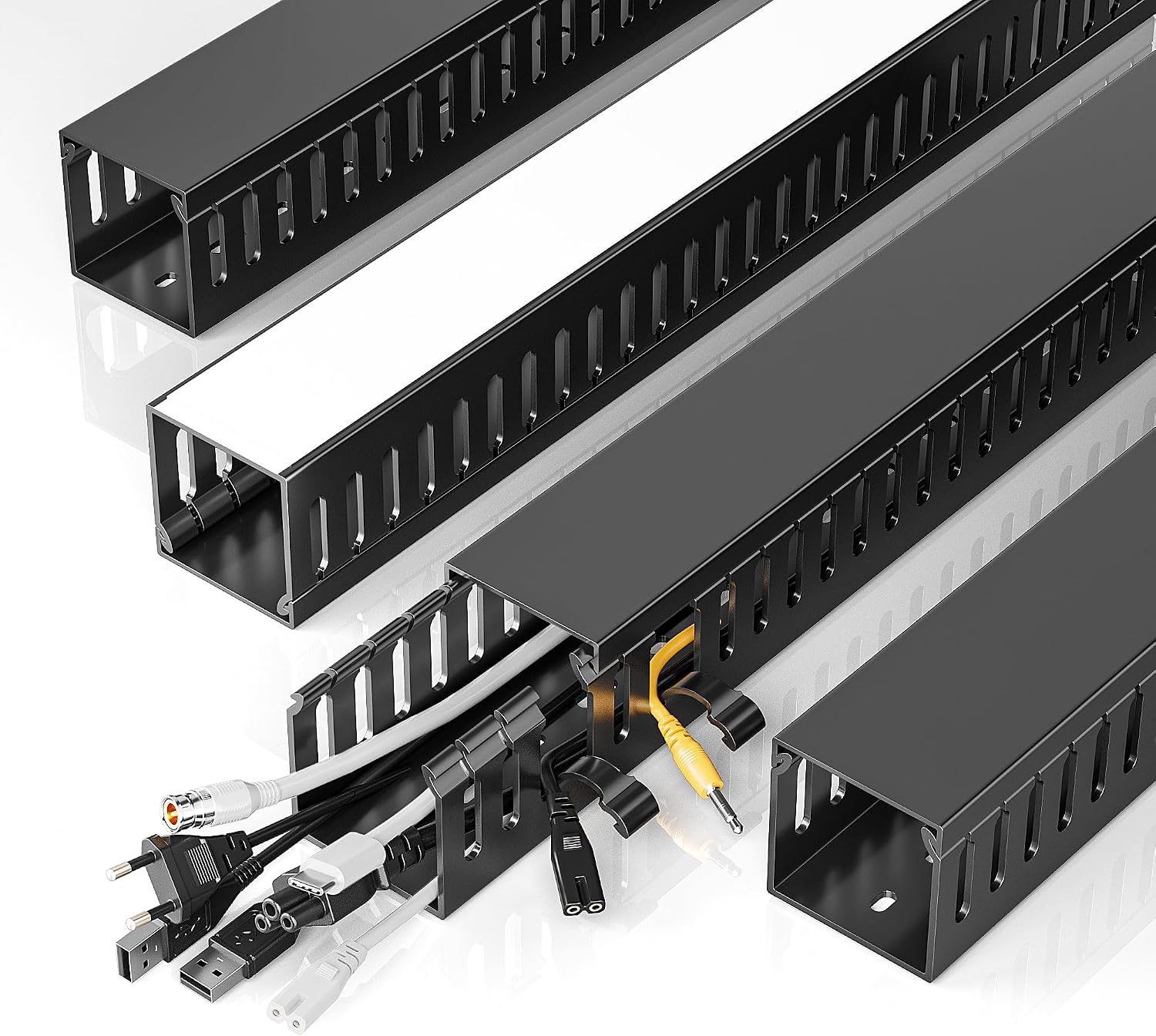
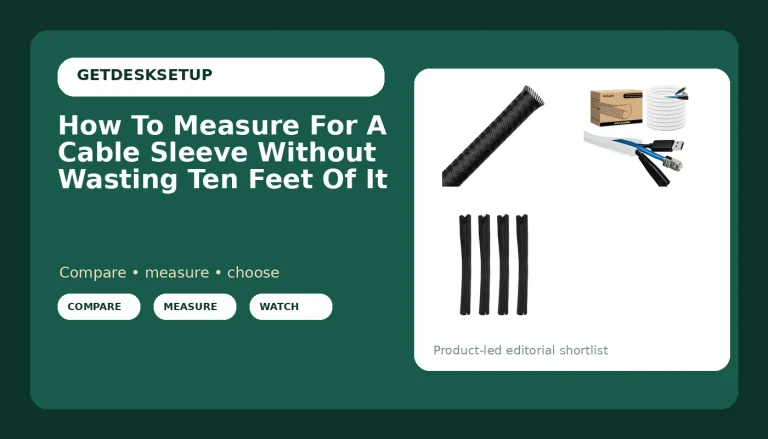
Yecaye 62.8in (4×15.7in) No-Drill Cable Management Raceway
Four 15.7 in sections, adhesive mount, open slot so you can add a cable later
Adhesive fails on a dusty or oily underside, and it is not the place for a heavy power brick
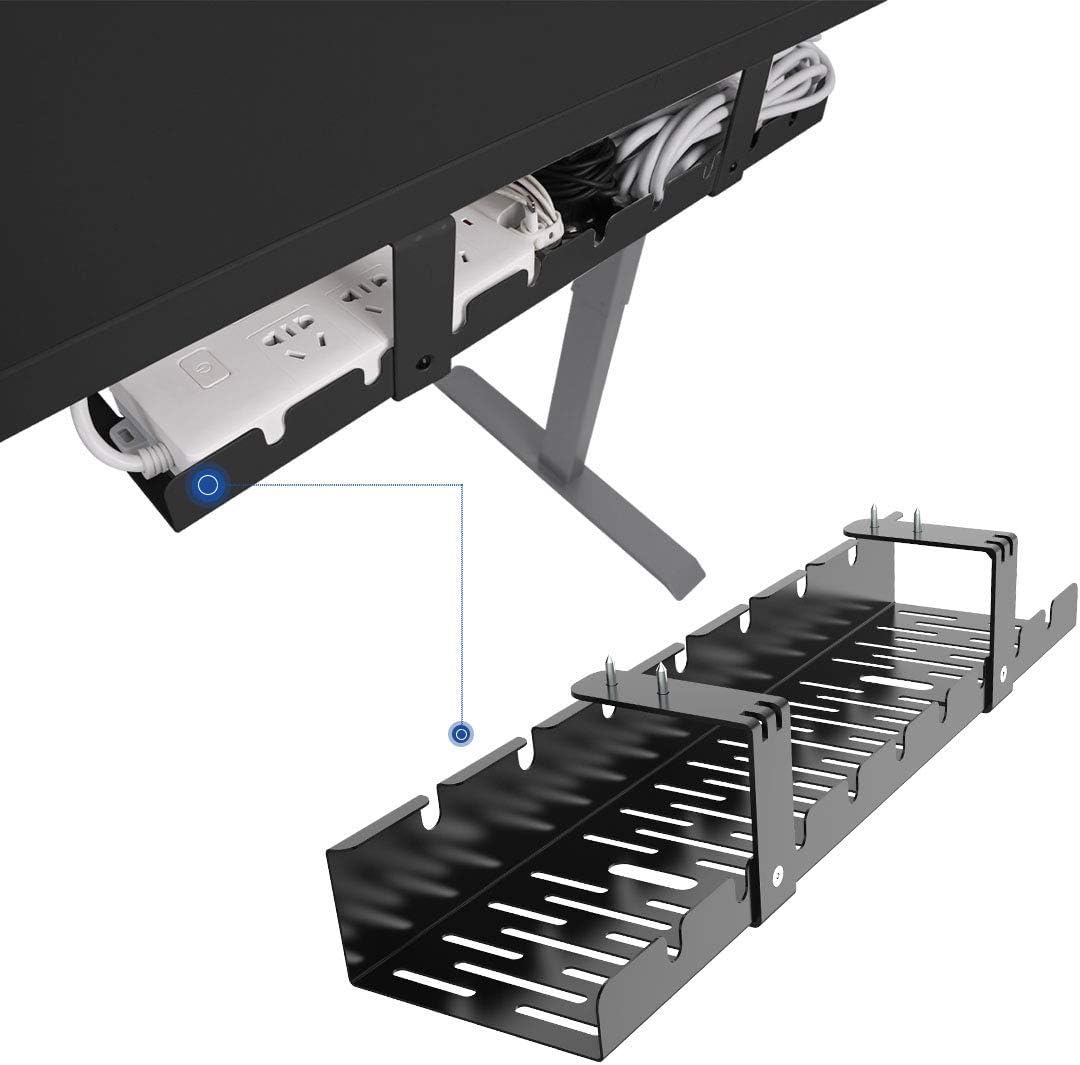
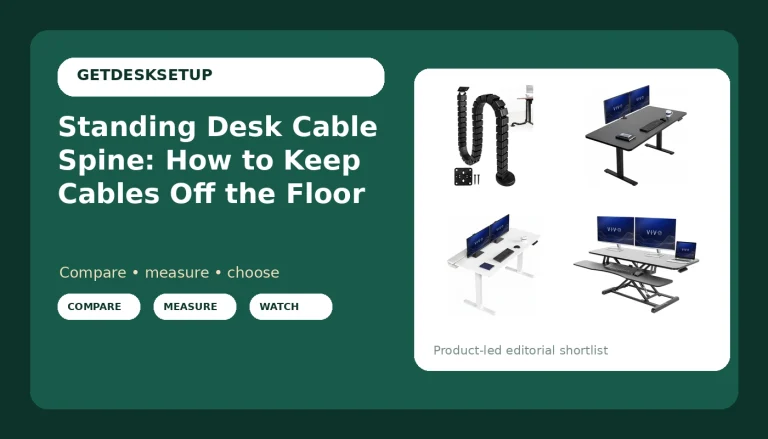
FLEXISPOT Under Desk Cable Management Tray
Purpose-built for a standing desk frame, so it sits between the rails instead of fighting them
Needs fasteners unless the listing says otherwise, and not every lease allows them
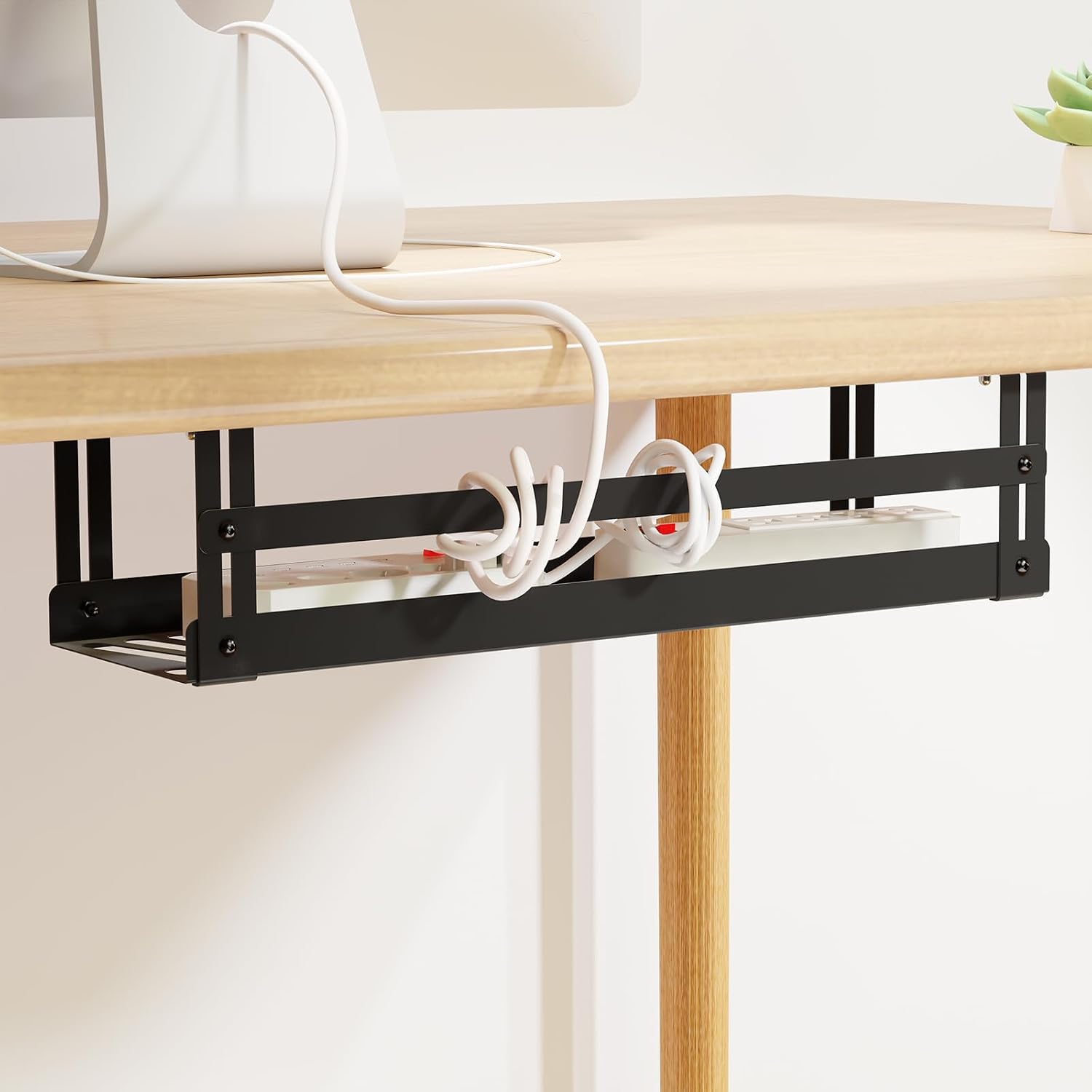
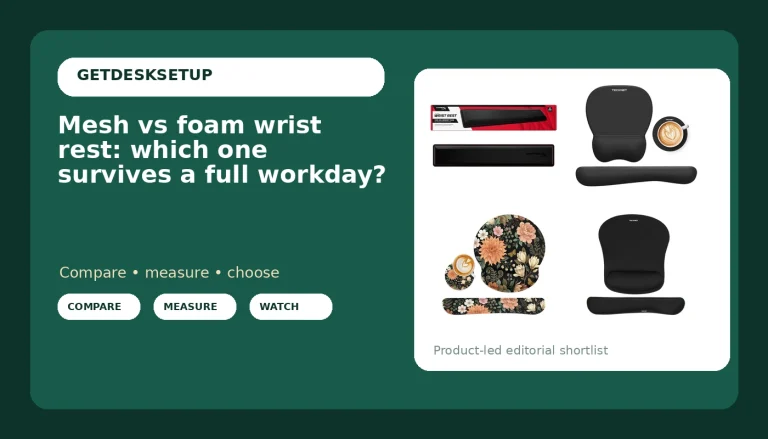
PAVSTINE Under Desk Cable Management Tray, 17 in Metal Basket
Short 17 in footprint fits a narrow desk where a long run will not
Short run, so a wide desk needs two, and mounting still means fasteners
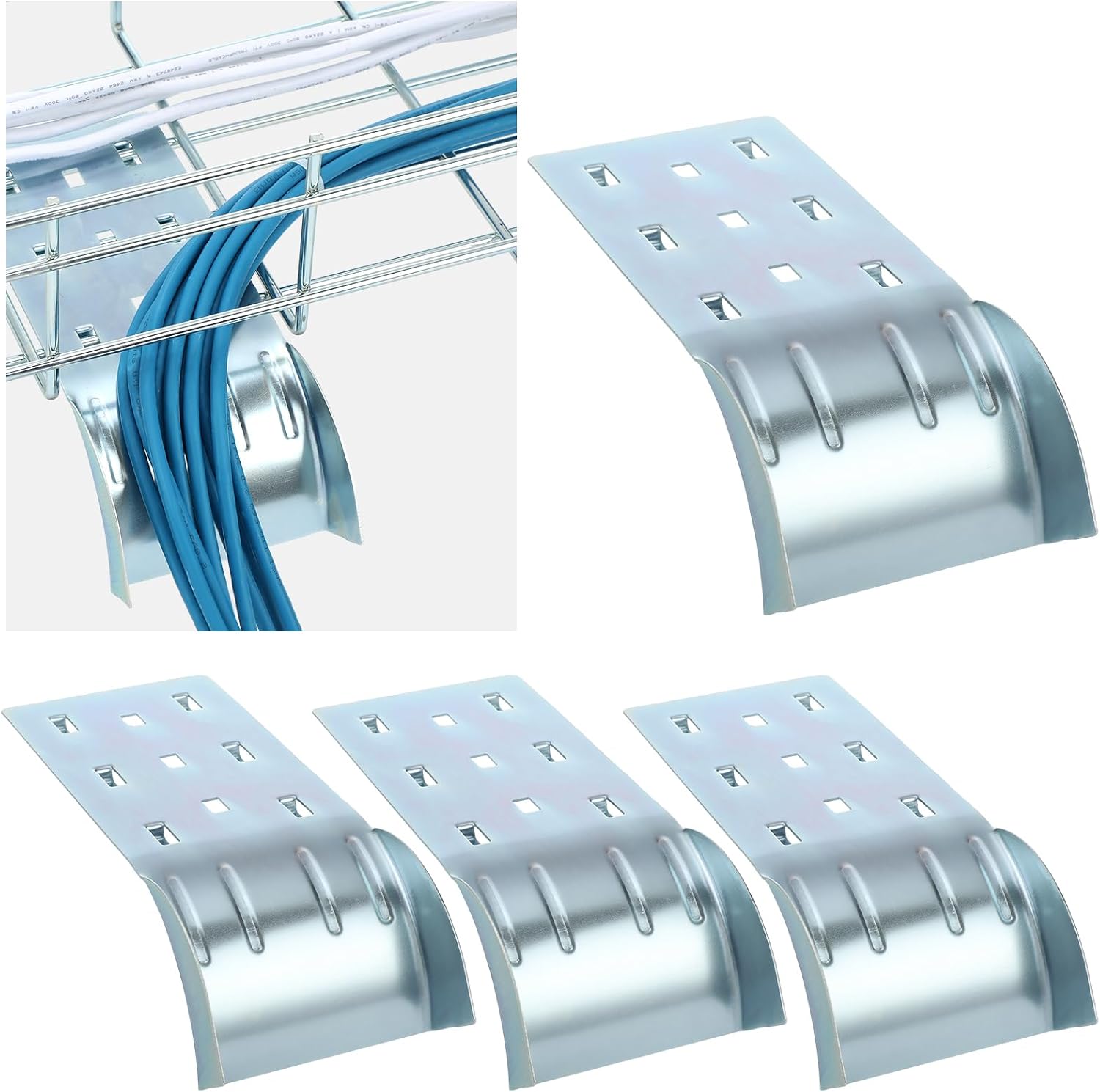
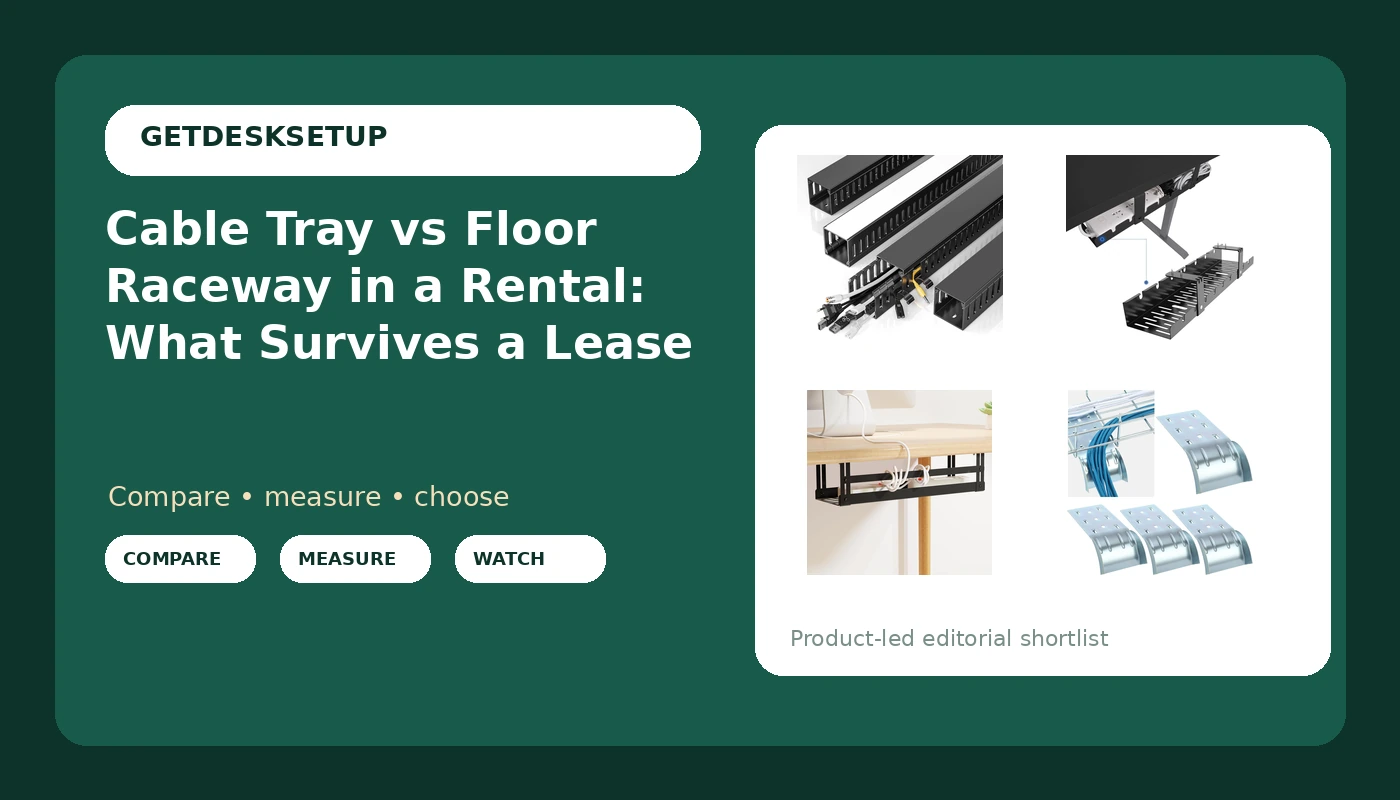
Zonon 4pcs 90 mm Wide Wire Mesh Cable Tray Waterfall Guider
90 mm width takes a thick bundle, and the waterfall edge holds the bend radius
A component, not a desk solution, since it needs a tray or raceway feeding it
Prices and availability may change.
How the cable tray vs floor raceway in a rental decision actually gets made
My install order never changes: clamp first, load second, tighten last. Reversing that order is how people crack a desktop or strip a screw hole in particleboard. In a rental there is a step in front of all three: read the lease. I have seen leases that ban wall holes and say nothing about the underside of a desk, and leases that treat any adhesive residue as damage. Those two documents lead to different purchases, and no product listing can tell you which one you signed.
Three numbers decide the install for me. The clear span between the desk frame rails, the thickness of the top, and the depth from the front edge to the first rail. I write all three in the notebook before I order anything. A tray wider than the clear span will not sit flat. A raceway that lands where your knee goes at standing height is a raceway you will rip off in week two. Cable management is not decoration. A cable that pulls on a monitor arm changes the monitor angle inside a week, and you will spend a month wondering why your neck hurts.
Adhesive raceways: the no-drill default
The Yecaye kit is four 15.7 in segments of open-slot raceway with adhesive backing, and the four-piece format is the part that matters. You can run one long line under a 60 in desk, or split the run between two desks in the same room. The open slot means you press a cable in from the side instead of threading it through an end, which is the difference between adding a monitor in four minutes and re-running the whole bundle.
Adhesive is not magic. It fails on a dusty underside, on an oily one, and on a surface that has been wiped with a silicone polish. I clean with isopropyl alcohol, press, and wait before I load. Load too early and the tape creeps, and a creeping raceway drops the bundle onto your shins. If the desk underside is a rough veneer, add a couple of adhesive clips at the ends as insurance rather than trusting the strip alone.
The honest limitation: an open-slot raceway holds signal cable and thin power leads well, and it is not the right home for a heavy power brick. That is what the baskets are for.
Under-desk metal baskets: the option for a room you own
Baskets hold what a raceway will not: the power brick, the coiled slack, the spare cable sleeve you have not needed yet. The FLEXISPOT tray is built around a standing desk frame, and that is a real distinction. On a sit-stand desk the underside geometry changes with the frame, and a tray designed for it sits between the rails instead of fighting them. The PAVSTINE 17 in basket is the short, simple version: a metal basket with a compact footprint.
Two caveats, and both are the reason a renter should think twice.
First, mounting. Neither basket in this group advertises a no-drill adhesive mount the way the Yecaye does. If a tray does not say no-drill, plan on fasteners, and confirm the lease allows them. Some do not, and a screw hole in a rental desk is a charge you pay twice, once for the hole and once for the replacement top.
Second, sag. A metal tray loaded with a brick and a strip will pull on its own fasteners over time, and the trays that sag after a month are usually the ones that were driven into particleboard with no pilot hole. Drill a pilot, use the shortest screw that reaches, and do not over-torque. If the desk has a hollow core, a basket is the wrong product no matter how good the basket is.
Wire mesh trays and waterfall guiders
The Zonon set is four pieces of 90 mm wide wire mesh tray with waterfall guider edges. Read that as a specialty component, not a desk organizer. The waterfall edge exists to hold a minimum bend radius at the point where a bundle leaves the tray, which matters when you are running thick power cable or anything with a stiff jacket. The 90 mm width takes a real bundle rather than two thin leads.
Where it earns its place: a long run along a wall, under a shelf, or behind a cabinet, where the cable would otherwise bend hard over a metal edge and eventually crack. Where it does not: as the only thing under your desk. There is nothing here to hold a brick or catch slack, so you still need a tray or a raceway feeding it. Most renters will never need this part, and the ones who do usually know it before they order.
Floor raceway and the rental problem
Floor raceway is the other half of this comparison, and in a rental it is the half with the asterisk. The difference between cable tray and floor raceway in a rental comes down to where the wire is allowed to live. A tray keeps everything above the floor and behind a desk edge, where it is invisible and where nobody trips on it. Floor raceway puts the run on the floor, along a baseboard or under a rug, where it is visible, walkable, and far more likely to be inspected.
That is not a knock on floor raceway. It solves a problem nothing else solves: a desk in the middle of a room with no wall within reach, where the run has to cross open floor to get to an outlet. If that is your layout, floor raceway is the answer, and the adhesive-backed versions come up cleanly with a little heat and patience.
What I would not do in a rental is drive a floor raceway into a baseboard. That is a permanent modification to somebody else's trim, and it is the fastest way to lose a deposit over a cable. If you are choosing a cable tray or floor raceway in a rental, count the doorways and the walking paths first. A run that crosses a doorway is a trip hazard, and a trip hazard is a liability, not a cable management decision.
Adhesive, clips, and move-out day
The whole rental argument rests on one property: reversibility. An adhesive clip is reversible. A no-drill raceway is reversible. A screw is not, or at least not without filler and paint.
For removal, warm the adhesive with a hair dryer on low, slide dental floss or a thin plastic card under the strip, and pull slowly at a shallow angle. Adhesive remover handles the residue. Do this in the last week, not the last hour, because you want time to see whether the finish underneath has changed.
Cable management in a rental is a series of small bets on how the next landlord will read a mark on a desk. Take the bets you can undo.
What the measurements say
When I weigh floor raceway in a rental vs cable tray, the deciding factor is almost never capacity. It is geometry. I have never once needed more cable storage than a single tray provides. I have frequently needed a tray that fits the space I actually have.
So measure before you buy. Clear span between the frame rails. Depth from the front edge. Height from the floor to the underside at standing height, because a tray that clears at sitting height can hit your knee at 44 inches. Then match the product to the number, not the other way around.
I keep the same discipline for everything else on the desk: a footrest angle, mat thickness, mat density, desk lamp lumens. Write the number down, then decide. Guessing is how you end up buying twice, and the cheapest correct setup beats the most expensive wrong one every time.
Should you buy both?
Sometimes, yes. A tray and a raceway do different jobs, and the combination covers almost every layout: the tray takes the brick and the slack under the desk, the raceway takes the visible run from the desk to the wall. That is what I install in most client offices, and it is roughly the cost of one mid-range desk accessory.
Who should skip it: anyone in a furnished rental with a glass or veneer desktop that cannot take adhesive, anyone whose desk sits against the wall with a single cable, and anyone who is moving again in three months. If you are in that last group, buy the raceway only, or nothing at all and a couple of clips. The cable tray vs floor raceway in a rental call is a mounting question long before it is a storage question, and the answer that survives a move is the one you can peel off.
What I am installing next
The next build on my list is a sit-stand desk in a rented office with the Yecaye raceway on the underside and a basket for the brick, watched through a full winter of Seattle humidity. Adhesive is the part I do not fully trust yet, and I would rather find the failure mode on a test panel than on a client's desk.
The other layout I want to work out is a wall-to-desk run where the only path crosses a doorway. That one may end up as a floor raceway with a cord cover at the threshold, and I will write it up once I have lived with the number rather than the guess.