I bought chairs for 400-person floors for nine years as a facilities manager in Seattle, and I have built out 310 home offices since, and the bonded vs top grain leather office chair question comes back every fall when the leather executive chairs go on sale. It is a good question. It is also the second question. The first one is whether the seat depth and the seat height fit the person who will sit in the thing for eight hours. A flawless hide on a chair that is two inches too deep is still a chair you will resent by month three.
Related: Office Chair Seat Depth And Height Guide
Short answer: top grain leather is the better surface and it is not close, but only one of the four chairs here uses it, and for most home offices the weight rating and the seat geometry matter more than the hide. What follows is the long answer, plus the four chairs I would actually put in front of a client, with the sizing notes and the skip conditions attached.
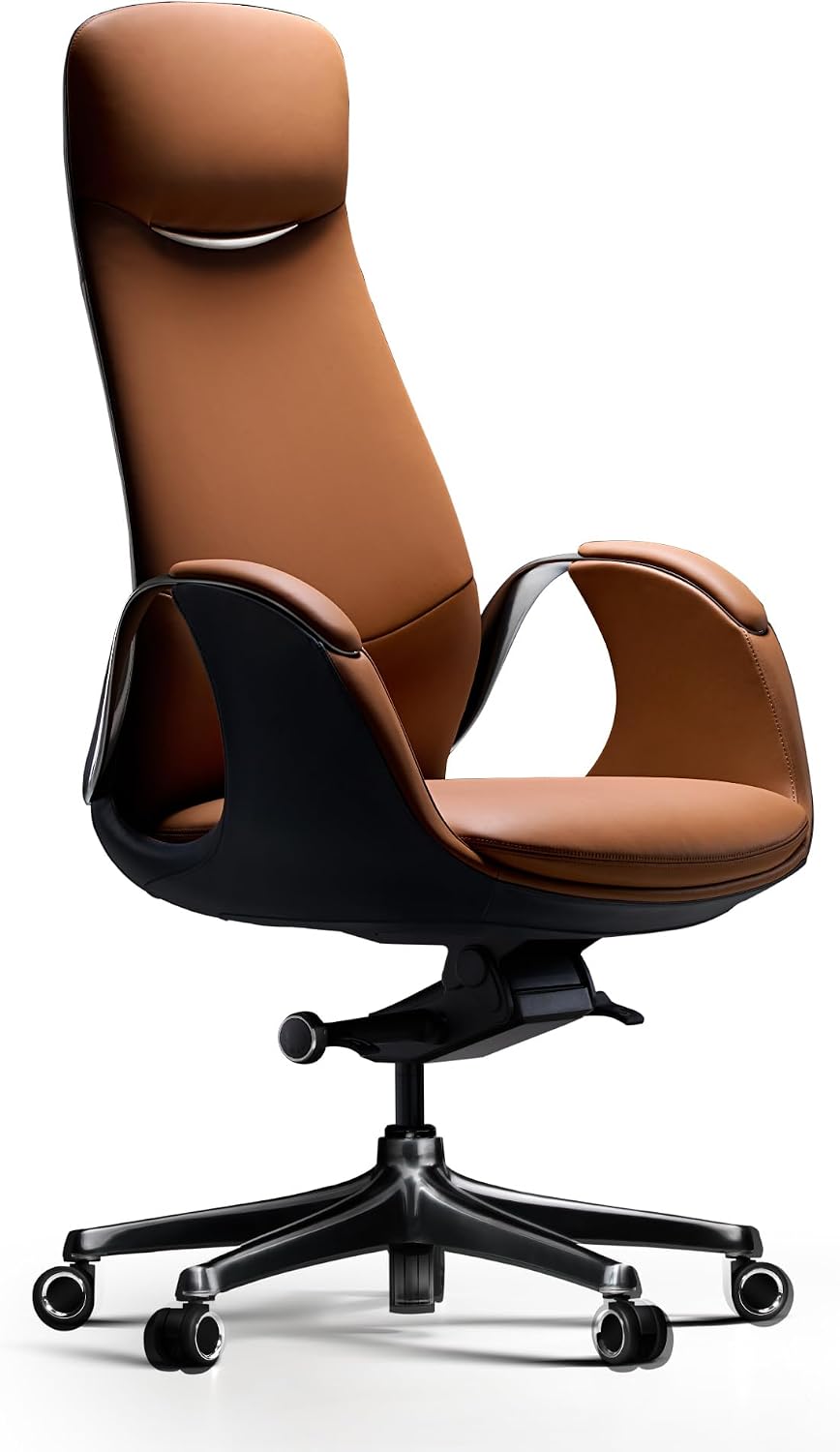
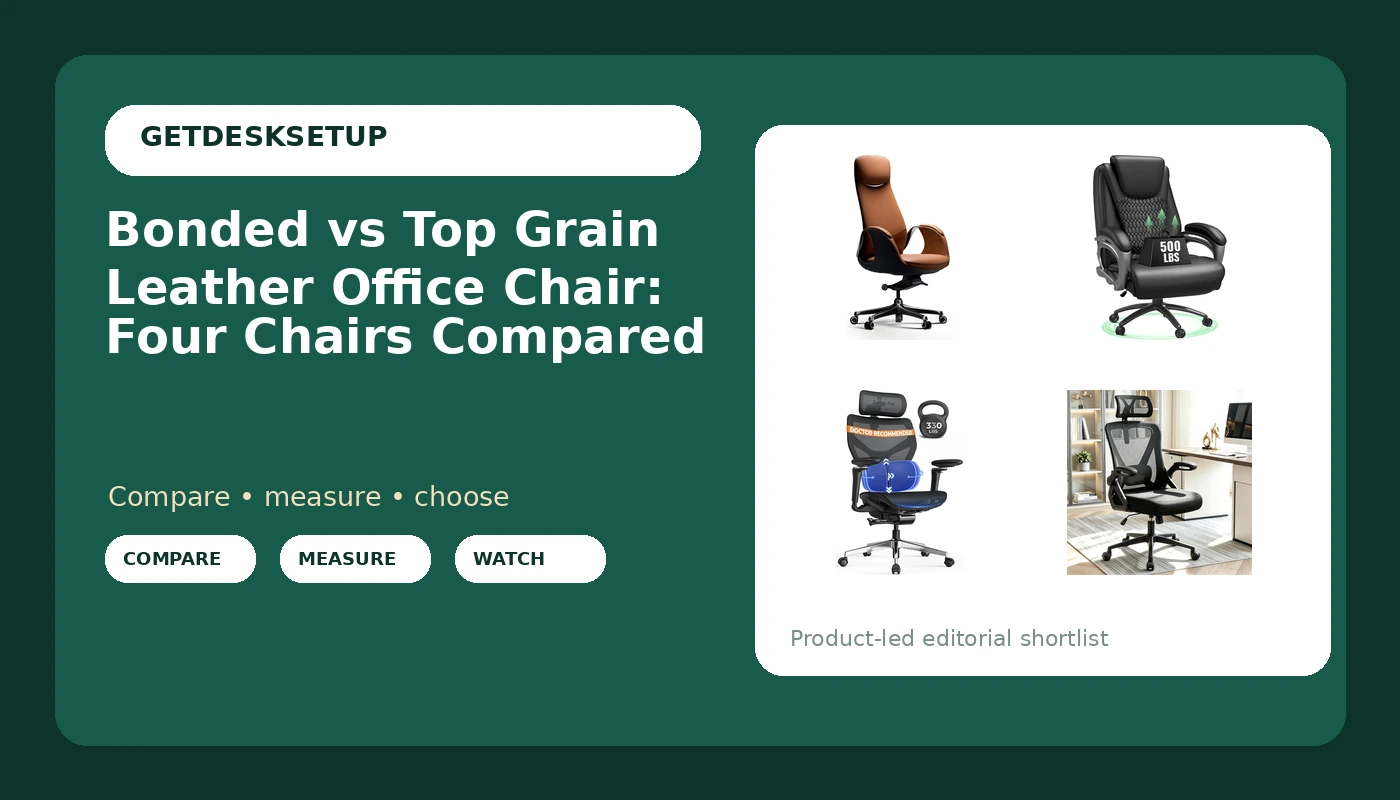
TOMU Top Grain Genuine Leather Executive Office Chair Brown
The only genuine top grain leather chair here, with an aluminum base and a high back aimed at long hours
The most expensive of the four, and the listing states no weight capacity to size a heavy user against
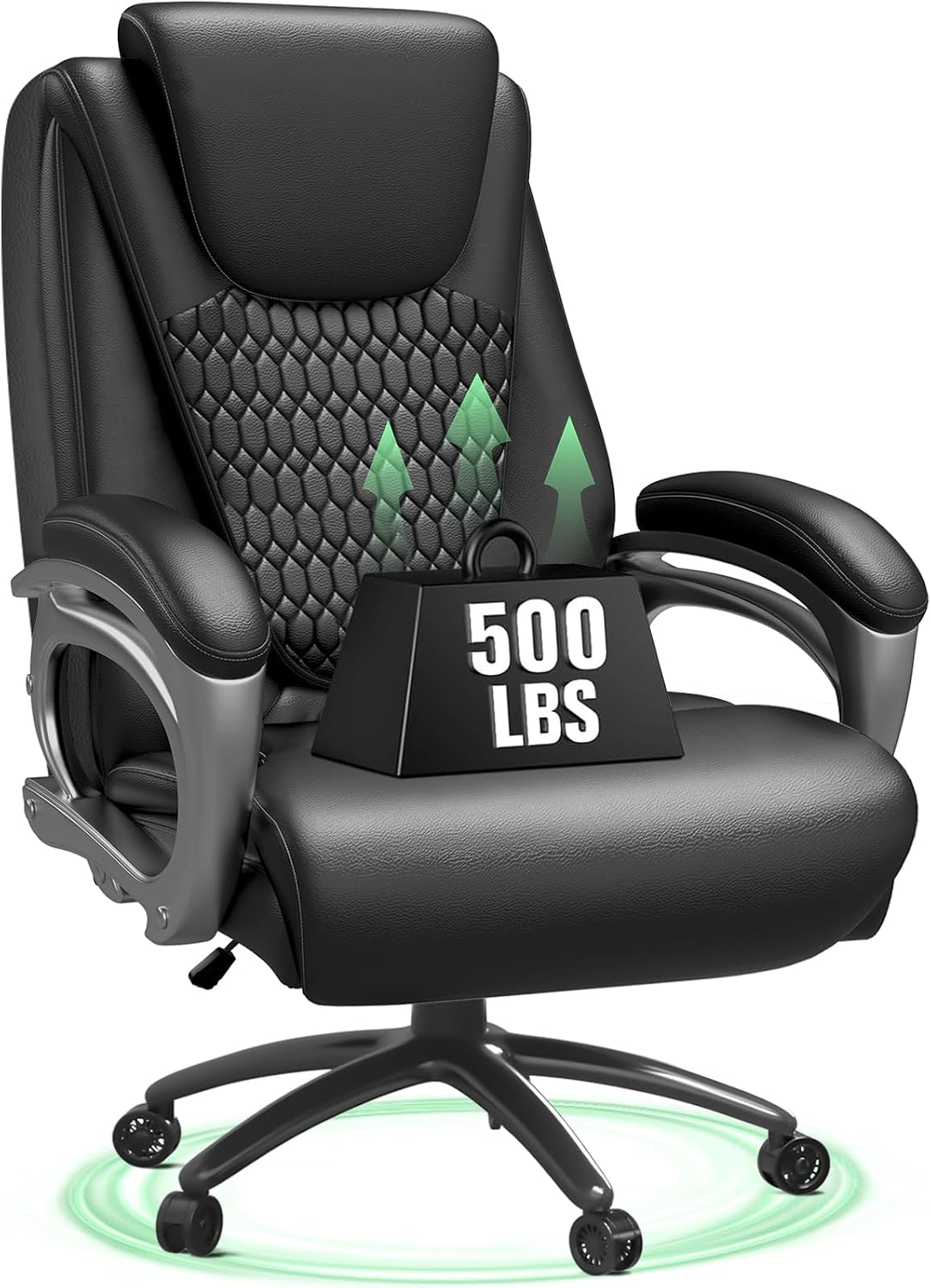
Vogue Furniture Direct Big and Tall Office Chair 500lbs, Heavy Duty, Black
The highest stated weight rating in this group by a wide margin, on a frame built for it
Makes no leather claim, so it does not answer the leather question at all
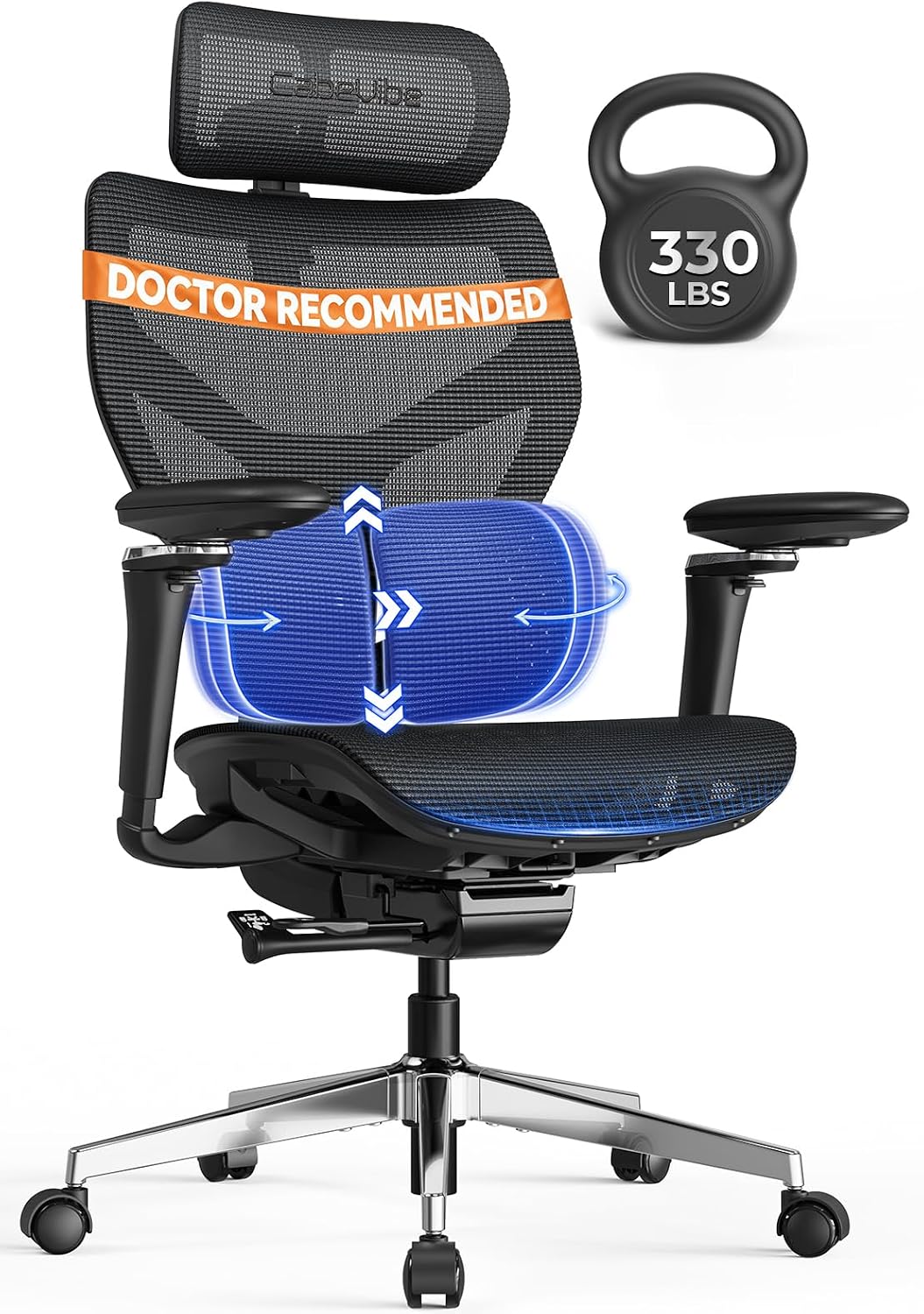
Ergonomic Mesh Office Chair – 10 Hours Comfort Dual Lumbar Support, 330lbs
Dual lumbar support and a 330 lb rating, and the mesh back breathes in a warm room
Mesh, not leather, and the listing names no headrest for reclined use
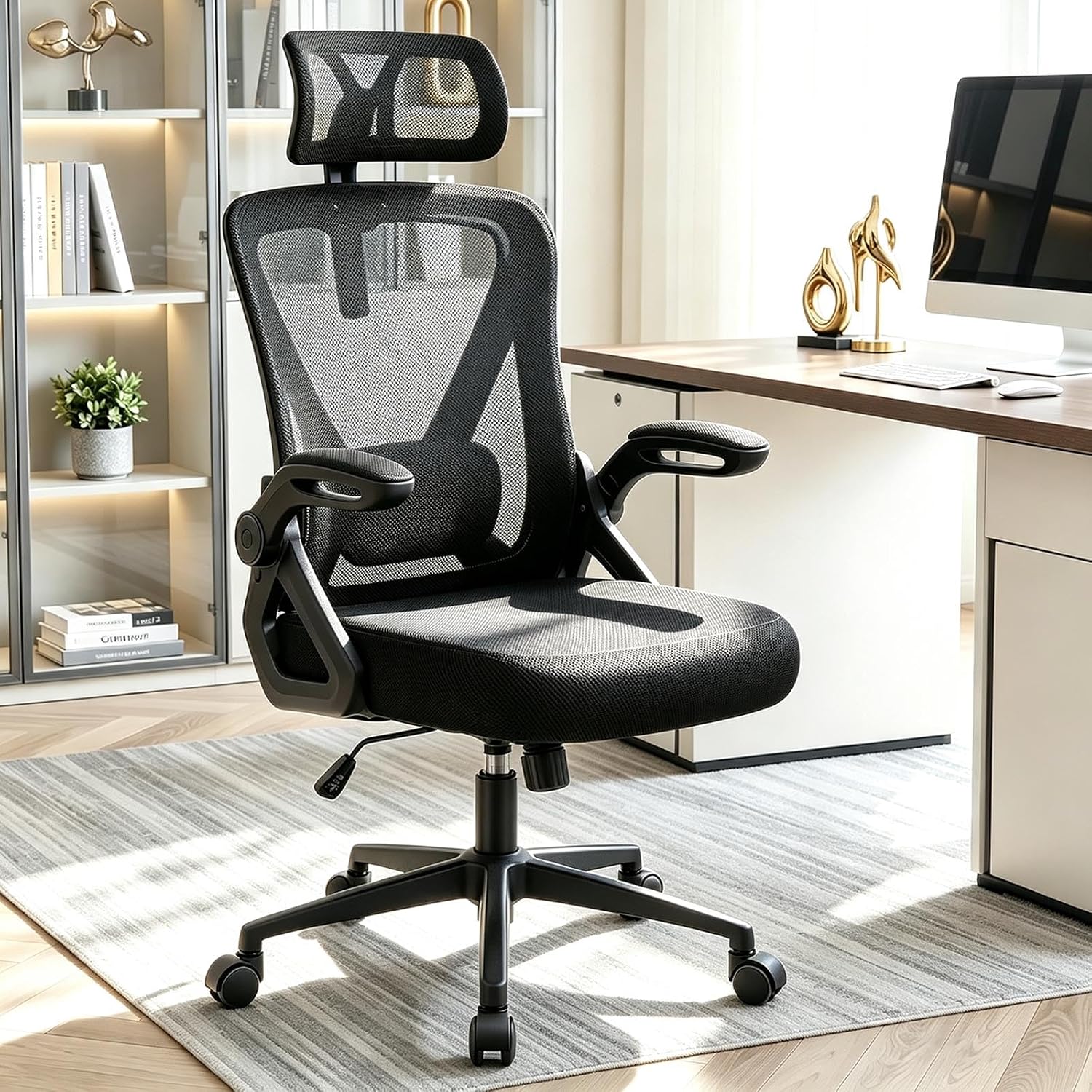
Brage Living Mesh Office Chair, Computer Desk Chair with Flip-up Arm Black
The lowest cost entry here, and the flip-up armrests clear a keyboard tray or a desk
No weight rating named, and the fewest adjustments in the group
Prices and availability may change.
What bonded vs top grain leather office chair construction actually means
Here is the difference between bonded and top grain leather office chair construction in one sentence: top grain is the top layer of the hide with the grain still on it, and bonded leather is leather fiber and dust glued together with a polyurethane binder and rolled onto a fabric backing.
That sentence is the whole argument, but the consequences are what you live with.
Top grain takes a crease where you sit and keeps it, which is why a good leather chair looks better at year five than it did at year one. It breathes, so your back does not sweat against it in July. It takes a conditioner twice a year and stays supple. The grain is real, so it scuffs and marks instead of peeling, and a scuff on top grain can usually be buffed down.
Bonded leather has a binder layer, and the binder is the failure point. On an armrest, where a forearm sits and sweats for hours, and along the front edge of the seat, where you slide in and out, the binder goes first. I have pulled bonded chairs off office floors at year three with the seat edge curled back to the foam, and once it starts there is no repair, only a slipcover or a new chair.
There is a third thing you will see in listings, and it is neither of the two: polyurethane, sometimes labeled PU or leather gel. It is a plastic film. It is fine for a guest chair. It is not leather, and it does not age like leather, it ages like a couch in a waiting room. That third category is why the bonded vs top grain leather office chair question is really a question about what the seller means by the word leather.
So if you are searching top grain leather office chair vs bonded, you already know which way you are leaning. The honest note is that only one chair on this page is top grain, and the rest are not leather at all.
How I size a chair before I care about the upholstery
I size in this order: weight rating, seat depth, seat height range, then everything else.
Weight rating first, because it is the one number that is a safety claim and not a comfort claim. A chair rated to 330 lb and a chair rated to 500 lb are built on different frames, different gas cylinders, and different bases. If you weigh 260 lb, a 330 lb rating gives you 70 lb of headroom, which is thin for a chair you drop into forty times a day.
Seat depth second. Sit all the way back. You want two to three fingers of space between the back of your knee and the front edge of the seat. Less than that and the edge presses into the underside of your thigh and cuts circulation. More than that and you slide forward to reach the desk, which rounds your lower back no matter how good the lumbar support is. This is the number people never check, and it is the number that decides whether the chair works for you.
Seat height third. Feet flat, thighs roughly parallel to the floor, elbows at or just above desk height. If the chair will not go low enough for your leg length, no armrest adjustment saves it, and if it will not go high enough you end up stacking books under your feet.
Then the adjustables. Lumbar support that moves up and down is worth more than lumbar support that is merely present. Armrests that go up and down matter if you type a lot; armrests that only go in and out are decoration. Recline and tilt tension are the two settings that decide whether you can shift position at hour six, and a chair that only locks upright will have you fidgeting by hour three. A headrest only matters if you actually lean back, which is why it matters on a reclining leather executive chair and almost never on a task chair at a desk. Casters are the last thing and the cheapest fix: hard casters on a hardwood floor will mark it, and a set of soft roll casters costs less than the damage does.
If you cannot say your seat depth in inches, you are guessing. Measure your current chair with a tape before you order the next one.
TOMU Top Grain Genuine Leather Executive Office Chair Brown
This is the one chair here that answers the leather question directly. The name says top grain genuine leather, and it says it in the right order: the top layer of the hide, grain intact. That is the surface that creases and patinas instead of peeling.
The other thing I look at on an executive chair is the base. Aluminum, as named here, is the right call. I have replaced more nylon bases than I can count, and they always fail the same way: a slow flex that turns into a creak, then a crack at the leg. An aluminum base under a heavy high back chair is a build decision, not a styling decision.
Reclining and rolling smoothly are both named in the listing, and for a chair in this class the recline is the feature that earns the money. A long hours chair that only sits upright is a chair you will leave. A high back with a working recline lets you change the load on your lower back without leaving the desk, which is the actual reason executive chairs exist.
Who should skip it: if you are under about 5'6" and light, a tall-backed executive shell is usually deeper than you need, and a seat that is too deep is worse than a seat that is too firm. Sit in it, or confirm the seat depth before you buy. Second skip condition: the listing does not name a weight capacity, and I will not put a chair under a user over 250 lb without a number in writing. Ask, or look at the big and tall option below. Third skip: if you want a headrest, confirm that one exists. The listing names a high back, not a headrest, and those are not the same thing.
One assembly note, because it saves people a headache: bolt the base up loosely, set the chair on the floor, and tighten the base bolts last. Tighten them on the bench and you will chase a wobble that is really a twisted base.
Vogue Furniture Direct Big and Tall Office Chair, 500 lb rated
If the number in your head is a body weight over 250 lb, start here and stop reading the leather sections. This chair is named to 500 lb, the highest stated rating in this group by a wide margin, and big and tall chairs are built differently where it counts: thicker frame steel, a heavier gas cylinder, a wider seat, and a base that does not flex under load.
Who should skip it: if you are under about 200 lb and under 6 feet, the big and tall shell is more chair than your body needs. A wider, deeper seat on a smaller frame means you sit forward on the front edge to reach your desk, and sitting forward loads your lower back no matter how good the foam is. Buy the chair that fits you, not the chair with the biggest number.
Also note what the name does not say. It makes no leather claim, so if you came here for leather, this is not your answer. It is the answer for a heavy user who needs a frame that will still be straight in five years.
Ergonomic Mesh Office Chair with dual lumbar support, 330 lb rated
This is the middle of the group and it is the one I would put in most home offices, with one caveat. The name lists a 330 lb rating and dual lumbar support, which means two separate lumbar contacts rather than one pad, and on a long day that matters: a single fixed pad either fits the curve of your back or it does not, and when it does not you feel it at hour four.
Mesh is the other half of the argument. A mesh back breathes and a leather back does not. If your office runs warm, or you sit in a closed room with a monitor putting out heat, mesh keeps you dry in a way leather cannot, and a dry back is a back that does not slide forward.
The 10 hour claim in the name is a comfort claim, not a measurement, and I treat it as one. What I can say is that a chair rated to 330 lb with a mesh back and dual lumbar support is aimed at long days, and the named features line up with that.
Who should skip it: if you want the look and the feel of leather, mesh is not a substitute and you will not be happy with it. Skip it too if you want a headrest, because the listing does not name one, and skip it if you like a plush padded seat pan, because mesh seat pans are firm and you will feel the front edge if the seat depth is wrong.
Brage Living Mesh Office Chair with flip-up arms
This is the lowest cost chair in the group and it earns its place for one specific feature: the flip-up armrests. If you use a keyboard tray, or you play an instrument at your desk, or you want to push the chair fully under the desk at the end of the day, arms that flip up out of the way solve a problem that armrest adjustment alone does not.
The rest of it is a basic mesh task chair, and that is fine at this price. It is light, it moves, and it does the job for a secondary desk, a guest spot, or a kid doing homework.
Who should skip it: the listing does not name a weight rating, and I would not put a user over about 200 lb in a chair with no stated capacity. That is not a knock on the chair, it is a rule. If you are a heavy user, pay for the rating. Also skip it if you need a lot of adjustment: the named features are the mesh back and the flip-up arms, and there is no headrest, no named lumbar adjustment, and no named tilt tension control.
Bonded or top grain leather office chair: the buying decision
When a client asks me bonded or top grain leather office chair, I ask two questions back: how many hours a day, and what do you weigh? The answers sort it out almost every time.
If you want leather because you like the way leather ages, buy top grain or buy something else. Bonded leather at a low price buys you the look for two to four years, and then the peeling starts at the seat edge and the armrest and there is no fix. I have never once seen a bonded chair come back from that.
If you want leather because it wipes clean and looks professional, and the chair is going to get light use in a home office, bonded is a defensible budget choice, as long as you go in knowing it is a wear item with a clock on it.
If you sit eight hours a day and your budget is in the middle, mesh beats cheap leather every time. Mesh breathes, it does not peel, and the money in a mesh chair goes into the frame and the adjustments instead of into a surface that fails. That is the trade: a leather surface that ages, or a mesh surface that does not, at roughly the same money.
If you weigh 250 lb or more, the leather question drops to third place behind the frame. Buy the rating first, then the seat depth, then worry about the hide.
What I would put in a client's office
For a 5'9" to 6'1" client at 180 to 240 lb who wants a chair that looks like an office and sits like one, the TOMU top grain leather executive chair is the one I would order, with a tape measure on the seat depth before it ships and a note that the weight capacity needs confirming first.
For a client over 250 lb, the Vogue Furniture Direct big and tall chair rated to 500 lb, no hesitation. The frame is the feature.
For a client who works ten hour days in a warm room and does not care about leather, the mesh chair with dual lumbar support and the 330 lb rating.
For a second desk, a homework station, or a guest chair that has to tuck under a desk, the Brage Living mesh chair with the flip-up arms.
That is the bonded vs top grain leather office chair question answered as far as any listing can answer it: the leather matters, the frame matters more, and the seat depth matters most. Measure your current chair, write the number down, and buy the chair that matches it. Check current Amazon price on each of the four before you decide, because the gap between them moves with the season.