Hard vs soft office chair casters is the question I field at least once a week, always right after a new chair has either scratched a wood floor or refused to roll off the edge of a rug. I spent nine years as a facilities manager buying chairs by the pallet for 400-person floors, then six more years building out 310 home offices, and the caster argument has never really been about the chair. It is about the floor under it, the load sitting on it, and the stem that drops into the socket. Get those three right and a modest chair rolls better than an expensive one set up wrong.
Related: Office Chair Seat Depth: How to Measure Yours
For most home offices, the short answer to hard vs soft office chair casters is this: soft polyurethane wheels on hardwood, laminate, tile, or vinyl plank, and hard nylon or polypropylene wheels on carpet and rugs. Hard wheels crush pile and slide on hard floors with a plastic scrape that dulls a finish. Soft wheels drag on carpet, collect grit, and leave gray trails. Choose wrong and you will be buying felt pads and floor polish inside a month.
Below are the four chairs I set in front of a client while we make that call, ordered from tallest to most conventional.
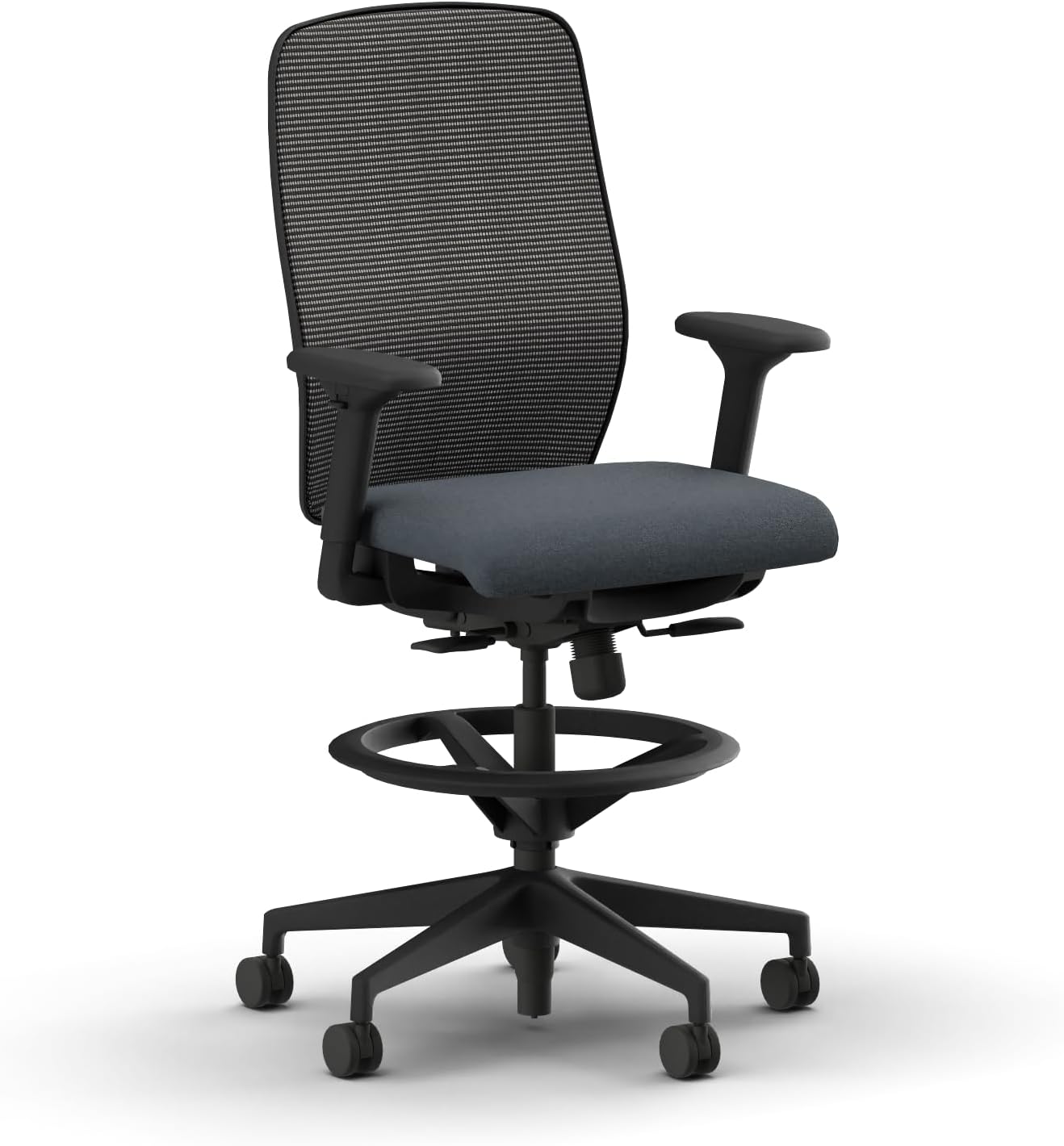
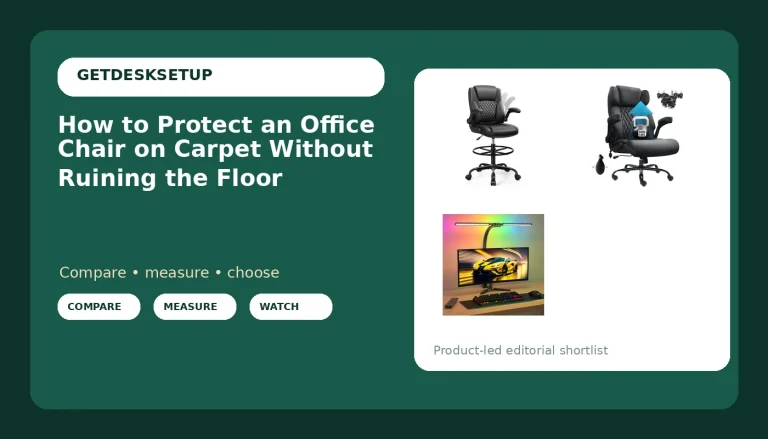
HON Nucleus Ergonomic Stool, Footring, Office Desk Chair, Darkness
A stool built with a footring, which is the only honest way to sit at counter height without your legs dangling
The biggest spend in this group, and the wrong tool if your desk is a standard 29 inches
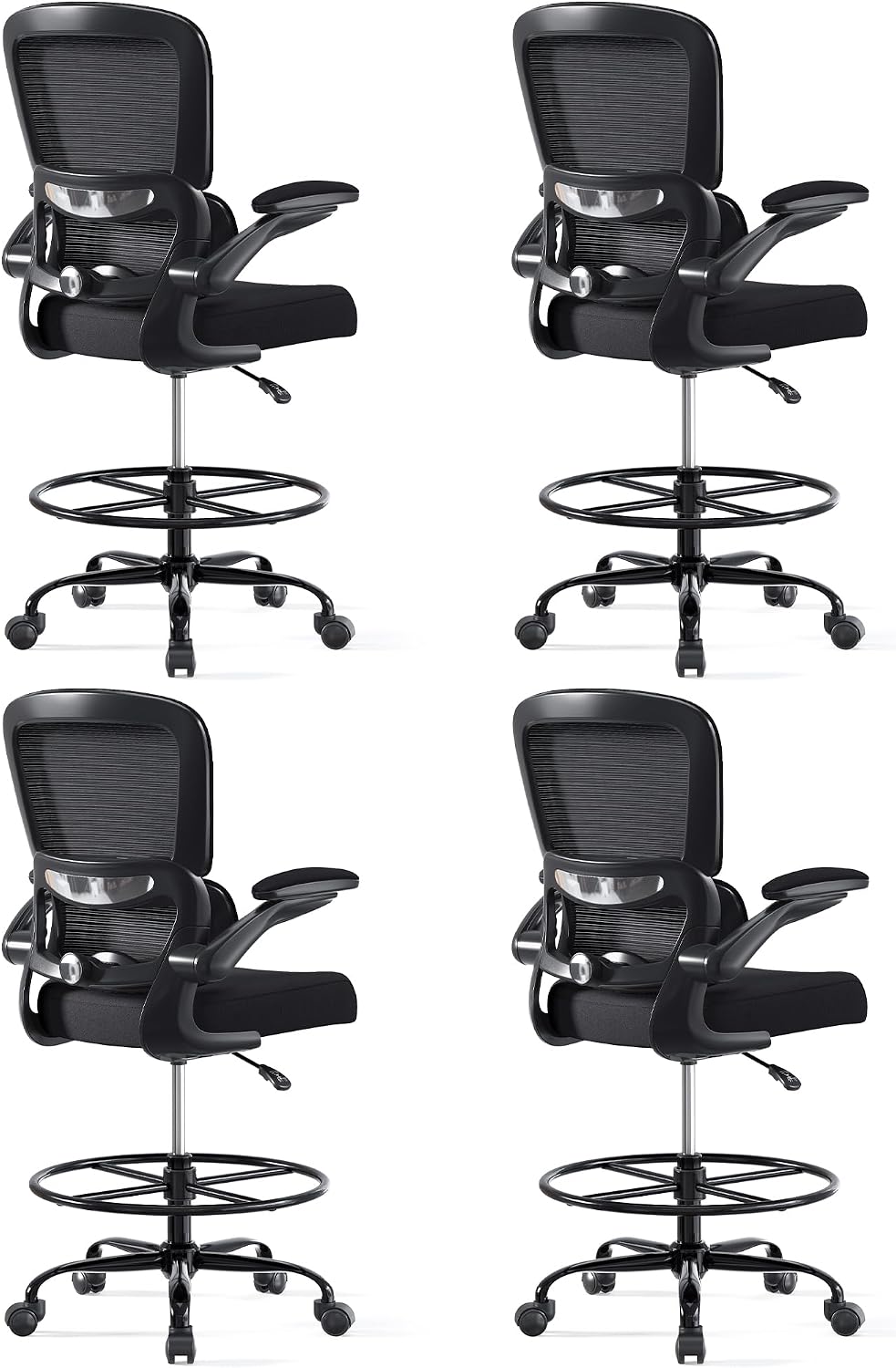
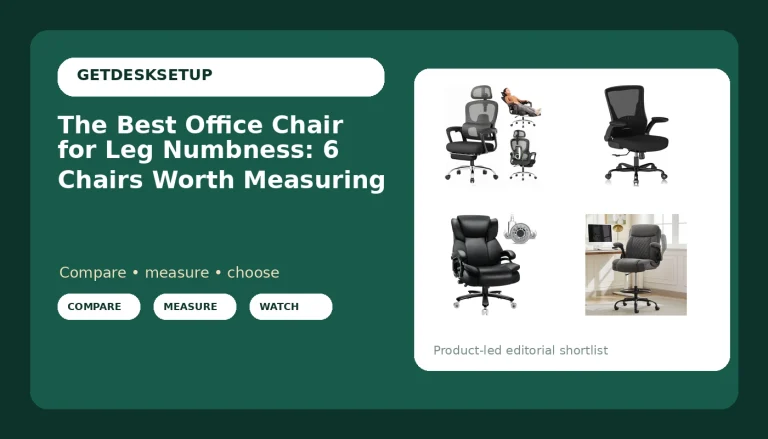
TRALT Drafting Chair – Tall Office Chair with Lumbar Support for High Desk
A tall drafting chair with lumbar support, which is the pairing a high desk actually needs
Built for high desks only, so at a standard desk you would be sitting above your work
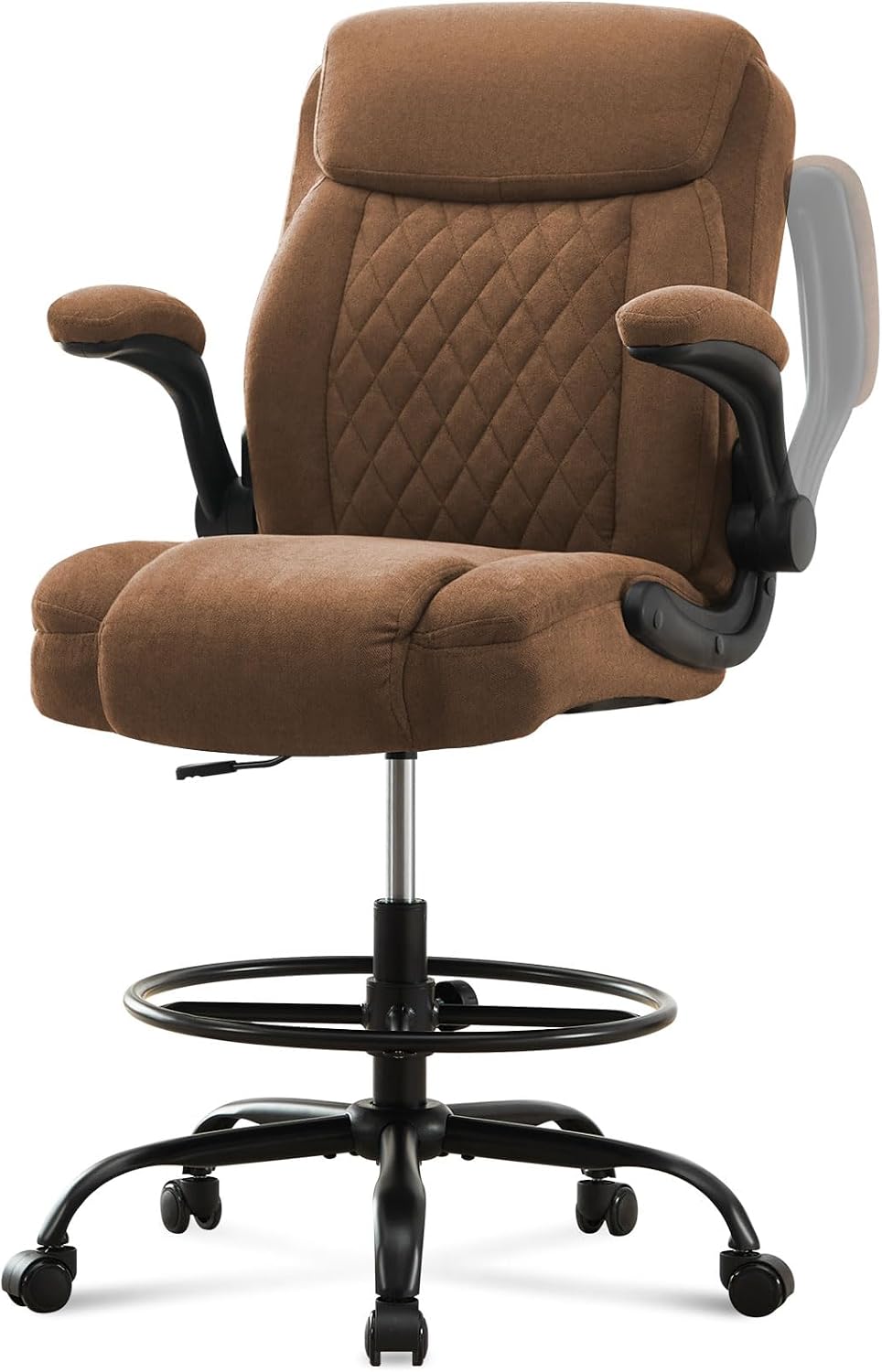
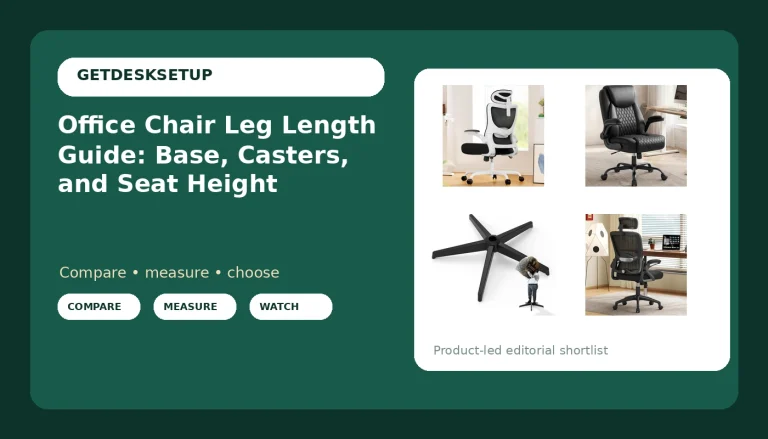
MAHOMICO Drafting Chair Tall Office Chair for Standing Desk with Foot Ring
A tall chair with a foot ring at the lowest spend here, the entry point for most standing desk setups
A budget build asks you to verify the details yourself, including the caster stem, before you order replacements
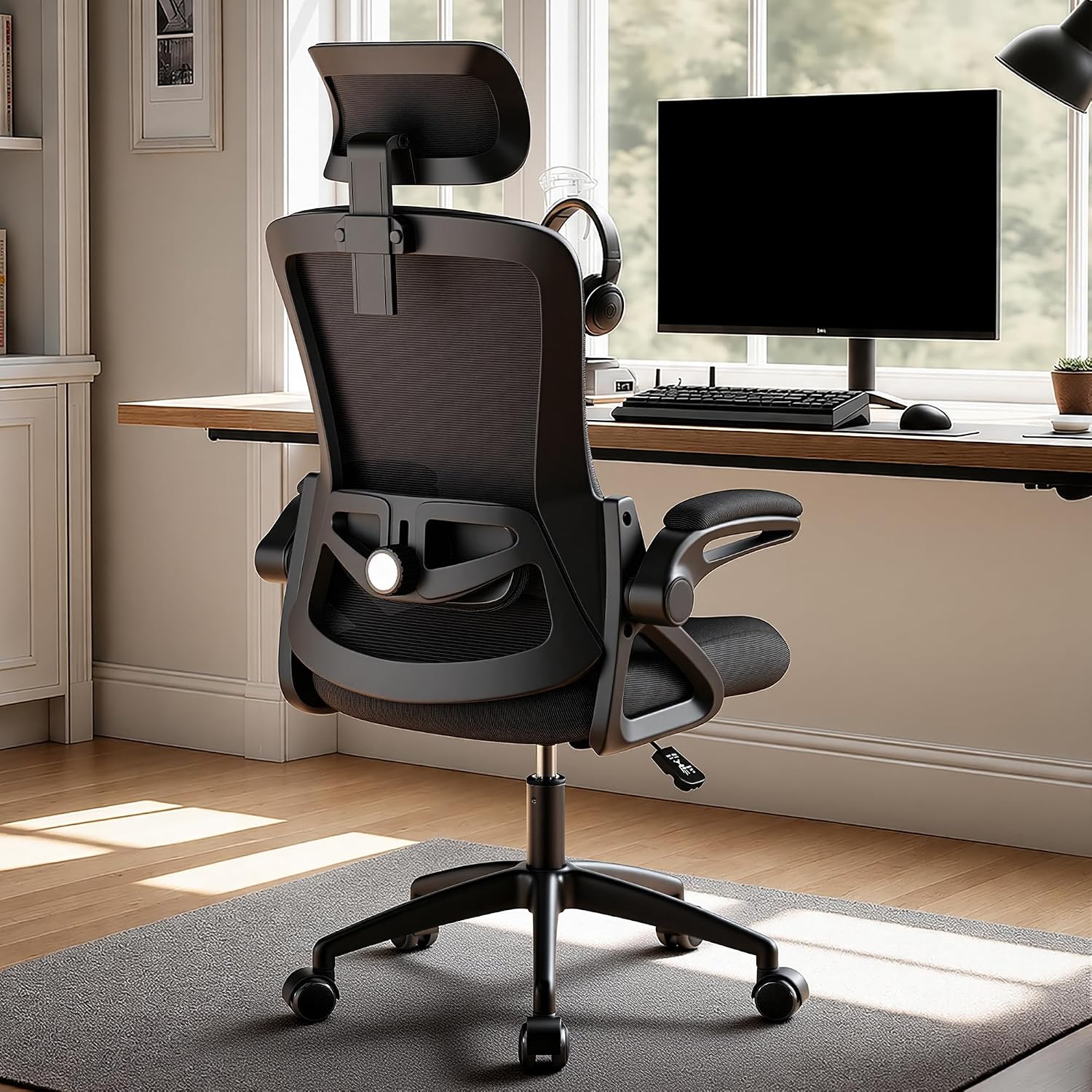
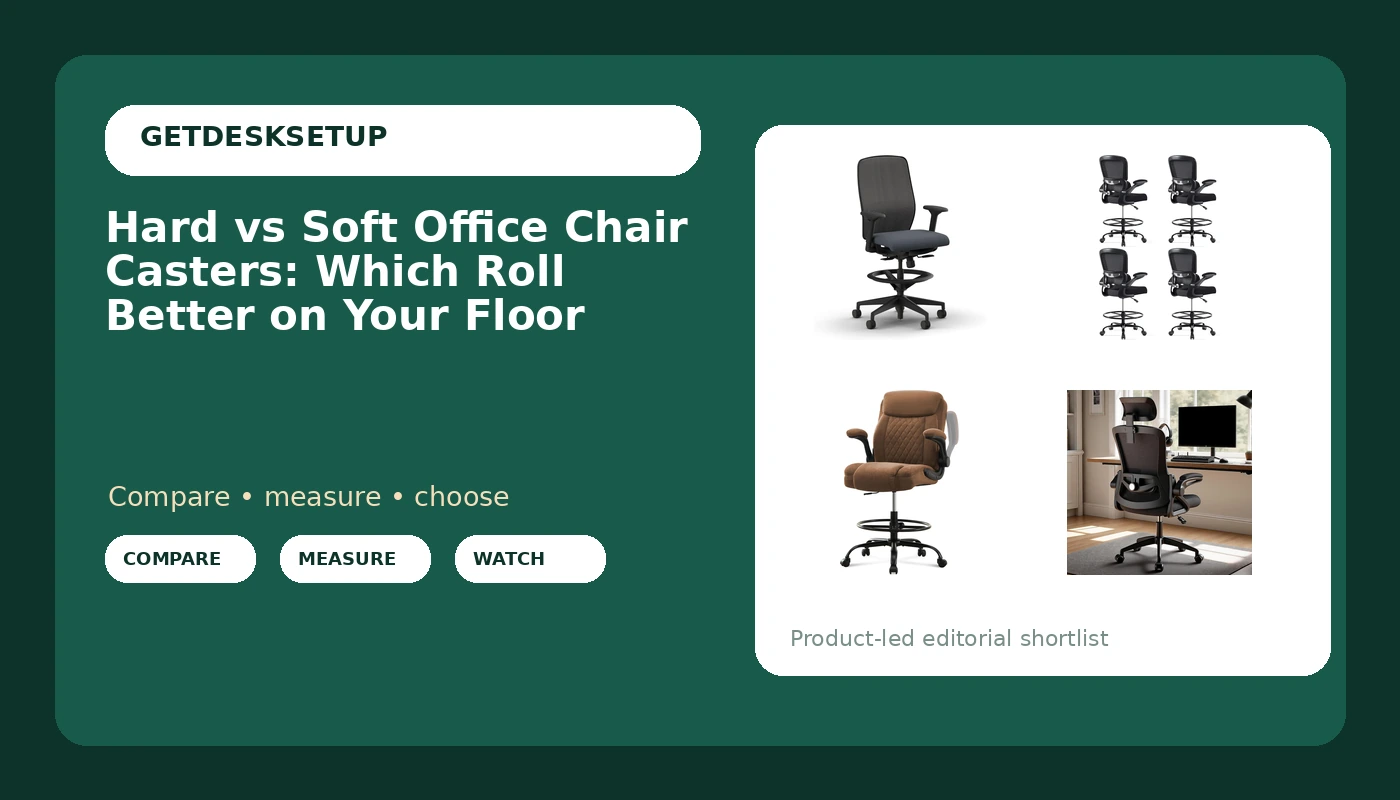
Ergonomic Mesh Office Chair with 2D Adjustable Headrest and Lumbar Support
A standard-height mesh chair with an adjustable headrest and lumbar support, the only one here aimed at a normal desk
No amount of adjustment makes it reach a standing desk at full height
Prices and availability may change.
What hard vs soft office chair casters actually means
A caster is a whole assembly: a mounting stem, a bracket, and a wheel. When people argue about hard versus soft, they are arguing about the wheel's tread material and, less often, its durometer, the number that describes how much a rubber or plastic resists a dent. Hard wheels are usually nylon, polypropylene, or a hard plastic blend. Soft wheels are usually polyurethane, rubber, or a thermoplastic rubber compound with a matte, slightly grippy finish.
A thumbnail tells you which one you have. Press it into the tread and a hard wheel does not give at all, while a soft wheel leaves a faint dent that springs back. That is the entire difference between hard and soft office chair casters: not quality, not price, just how much the material deforms under load. Everything after this is application.
One naming note before you shop. The word "caster" gets used for the whole unit and for the wheel alone. When you order replacements, you are ordering the complete assembly, stem included, and the stem is where most people go wrong.
Hard casters: the carpet default
Hard nylon wheels ship on most office chairs because most office chairs are sold into carpeted buildings. On a loop-pile commercial carpet, a hard wheel floats on top of the fibers instead of sinking into them, so the chair rolls with a light push and the wheel does not collect lint. That is why a facilities manager with 400 desks orders hard wheels by default. They last, they are cheap, and a carpeted floor hides the scuffing.
On hardwood or vinyl plank, the same wheel is a liability. It has no give, so every grain of grit under it gets pressed into the finish, and the rolling sound carries through a quiet room. If you have hard floors and hard wheels, you will hear your chair before you see it. The classic complaint is a chair that "scratches the floor," and nine times out of ten the floor is fine and the wheel is the wrong compound.
There is a second cost that shows up on rugs. A hard wheel under a heavy sitter digs in at the edge of a thin rug and folds it. If you have a flat-weave rug over concrete, you will be straightening it every morning.
Soft casters: the hard-floor default
Soft polyurethane wheels are the fix for all of that. The tread flexes over a grain line, a tile grout joint, or a threshold strip instead of chattering across it, and the material is quiet. Soft wheels also grip, which is a benefit at a standing desk and a nuisance on carpet, where they sink into the pile and turn a one-finger push into a shoulder movement.
The trade-off is wear. A soft tread picks up hair, grit, and crumbs, and a wheel wearing a ring of debris will mark a light floor. Wipe them once a month with a damp cloth and they stay clean. The other trade-off is lifespan. Soft tread wears faster than nylon, especially if you roll the same three feet of floor all day. Expect to replace them more often than hard wheels, and treat that as the cost of protecting a wood floor.
Why the floor decides before the chair does
Before you look at a single chair, look down. Three questions settle the caster type:
- What is the floor? Bare wood, laminate, tile, or vinyl plank wants soft. Carpet or a rug wants hard. A plastic chair mat is a third case, and it usually wants soft, because a hard wheel on a mat sounds like a shopping cart and eventually cracks the mat.
- Is the floor shared? A chair that rolls from a hardwood office into a carpeted hallway needs either two sets of wheels or a set of soft wheels and a mat at the boundary.
- Who else rolls? A chair used by a child, or by anyone who leans on it to stand up, wants a wheel with some grip. Hard wheels on a hard floor slide sideways when you push down on an armrest, and that is how people fall.
None of the measurements in the rest of this article matter if you pick the wrong wheel, which is why hard vs soft office chair casters comes first and chair shopping comes second.
The four chairs here and where each one rolls
All four of these chairs ship with casters, and all four use a stem that drops into a socket, which means you can change the wheels without changing the chair. What differs is height class. Height decides which floor you are rolling on, how much leverage the wheel takes, and whether a foot support is part of the design.
HON Nucleus Ergonomic Stool, Footring, Office Desk Chair, Darkness
This is a stool, and the name states the important part: a footring. At counter height your feet cannot reach the floor, and a ring is the only thing that gives them somewhere to go. Without it, you perch on the edge of the seat and your lower back takes the load all day.
If you are setting up a tall bench, a drafting table, or a standing desk you actually use at its top range, this is the class of chair to look at. Where it loses is scope. It is the most expensive seat in this comparison and the least flexible if you also want to sit at a standard desk for part of the day. A stool is a single-purpose tool, and you should buy it knowing that.
TRALT Drafting Chair – Tall Office Chair with Lumbar Support for High Desk
A tall drafting chair with lumbar support, sold for high desks. The pairing matters: lumbar support does more work on a tall chair than on a standard one, because a tall seat pushes your hips forward relative to the desk edge and the curve of the back is what keeps you from rounding over your keyboard.
This is the chair I would hand someone who owns a standing desk and sits at it at standing height rather than lowering it. The reason to skip it is equally clear. At a standard 28 to 30 inch desk, a drafting chair puts you above your work, and no amount of lumbar support fixes a desk that is too low.
MAHOMICO Drafting Chair Tall Office Chair for Standing Desk with Foot Ring
Tall drafting chair with a foot ring, aimed at standing desks. This is the entry point in the group: it gives you the tall seat height and the ring, which is the combination most people actually need, at the lowest spend here.
A budget tall chair is also exactly where a set of replacement casters changes the whole experience. Before you buy, verify two things yourself, the caster stem and the wheel diameter. If the stem fits your floor's wheel of choice, a thirty-dollar swap turns a decent tall chair into a quiet one. If it does not, you live with what shipped.
Ergonomic Mesh Office Chair with 2D Adjustable Headrest and Lumbar Support
The conventional chair in the group. Standard height, mesh back, adjustable headrest, and adjustable lumbar support. If your desk sits at the usual 28 to 30 inches, this is the shape you want, and the caster decision is simple: soft wheels if the floor is hard, hard wheels if it is carpet.
Two details earn their keep on a chair like this. A headrest matters once you recline, because it stops your neck from craning forward when the back goes past upright. Adjustable lumbar support matters because a fixed curve fits one body and misses the rest. The reason to skip it is height. No adjustment makes a standard chair reach a standing desk at full height.
What to measure before you order replacement casters
Four numbers, and you can collect all of them in ten minutes with the chair upside down.
- Stem diameter. Pull one caster out of its socket and measure across the stem with calipers. Most office chairs use a grip-ring stem, but diameters vary by brand, and a millimeter of slop becomes a wobble you feel all day.
- Stem type. A grip ring presses in and holds by friction. A threaded stem screws into a socket. A threaded stem will not fit a grip-ring socket, and vice versa.
- Wheel diameter. A larger wheel rolls over a mat edge, a threshold strip, and a cable cover. A smaller wheel keeps the seat lower for shorter sitters. Decide your seat height first, then the wheel.
- Brake or lock. If the chair is shared, or the floor slopes, look for a braked caster. A locking wheel on a standing desk chair is the difference between a chair that stays parked and one that drifts into your shins.
Order five. Most office chairs take five casters, and buying four is the most common mistake I see in a home office order.
The difference between hard and soft office chair casters on a standing desk
A standing desk changes the geometry of the problem. For most of the day the chair is parked, then you drop the desk and sit for an hour, then you push the chair out of the way with your foot. That means the casters spend hours under load in one spot, then take a sideways shove.
Two things follow. First, a hard wheel on a hard floor under a tall chair is the worst combination in this article, because the tall frame gives the shove more leverage and the hard tread slides instead of rolling. Second, wheel diameter matters more on a tall chair than a standard one, since a bigger wheel clears a mat edge and a floor cable without a lift.
This is where hard vs soft office chair casters stops being a floor question and becomes a stability question. A tall chair on soft wheels on a hard floor stays where you put it. The same chair on hard wheels wanders.
Soft office chair casters vs hard: the real trade-offs
Soft office chair casters vs hard comes down to four trades, and you cannot win all four:
- Noise. Soft wins on hard floors, hard wins on carpet. Neither is quiet on the wrong surface.
- Floor protection. Soft wins, clearly. This is the entire reason the category exists.
- Rolling effort. Hard wins on carpet, soft wins on hard floors. Effort follows whichever wheel matches the surface.
- Wear. Hard wins. Nylon outlasts polyurethane, so budget for replacing soft wheels first.
If you are renting and the floor is somebody else's problem to repair, soft wheels are cheap insurance. If you own a carpeted office, hard wheels are simply correct and there is no argument to have.
Hard or soft office chair casters: the 30-second decision
Hard or soft office chair casters, decided in one pass:
- Carpet wall to wall, no chair mat: hard.
- Hardwood, laminate, tile, vinyl plank: soft.
- Rug over a hard floor, and the chair mostly stays on the rug: hard.
- Chair mat over carpet: soft, and check the mat's weight rating.
- Mixed floor in one room: soft wheels plus a mat at the boundary, or two sets of wheels and a five-minute swap.
If you cannot decide, buy soft. A soft wheel on carpet is annoying. A hard wheel on wood is expensive.
Who should skip each of these chairs
- Skip the HON Nucleus stool if your only desk is a standard 29 inch model. You will be sitting above it, and the footring will not save you.
- Skip the TRALT drafting chair if you never raise your desk past sitting height. The tall frame is dead weight at a low desk.
- Skip the MAHOMICO drafting chair if you want to set the chair up once and never think about it. A budget tall chair rewards a buyer who checks the stem and the wheel before ordering spares.
- Skip the Ergonomic Mesh chair if your desk lives at 40 inches or higher. It is the right chair for a normal desk and the wrong one for a standing desk at full height.
For each of them, the caster swap is the same job: tip the chair, pull five wheels, press five new ones in. Twenty minutes, no tools on most chairs, and it is the cheapest improvement you can make to a setup that already fits.
What I tell clients at the end of a build
Match the wheel to the floor, match the seat height to the desk, and match the seat depth to the person. In that order. Most people reverse it, buy a chair for its looks or its armrest, and then discover the wheels are chewing a wood floor or the seat will not go high enough for the desk they already own.
All four chairs above can be made to work. The stool and the two drafting chairs belong under a high surface, and the mesh chair belongs under a standard one. Whichever you pick, spend the extra twenty minutes on the casters, because that is the part of the chair you touch every single day without noticing it.