Chair height and desk height fight each other in almost every home office. Set the seat so your elbows land near 90 degrees at the keyboard, and for plenty of people the feet come off the floor. That gap is exactly why a footrest with adjustable height range exists: it lets you keep the chair where your arms need it and still give your legs something solid to rest on.
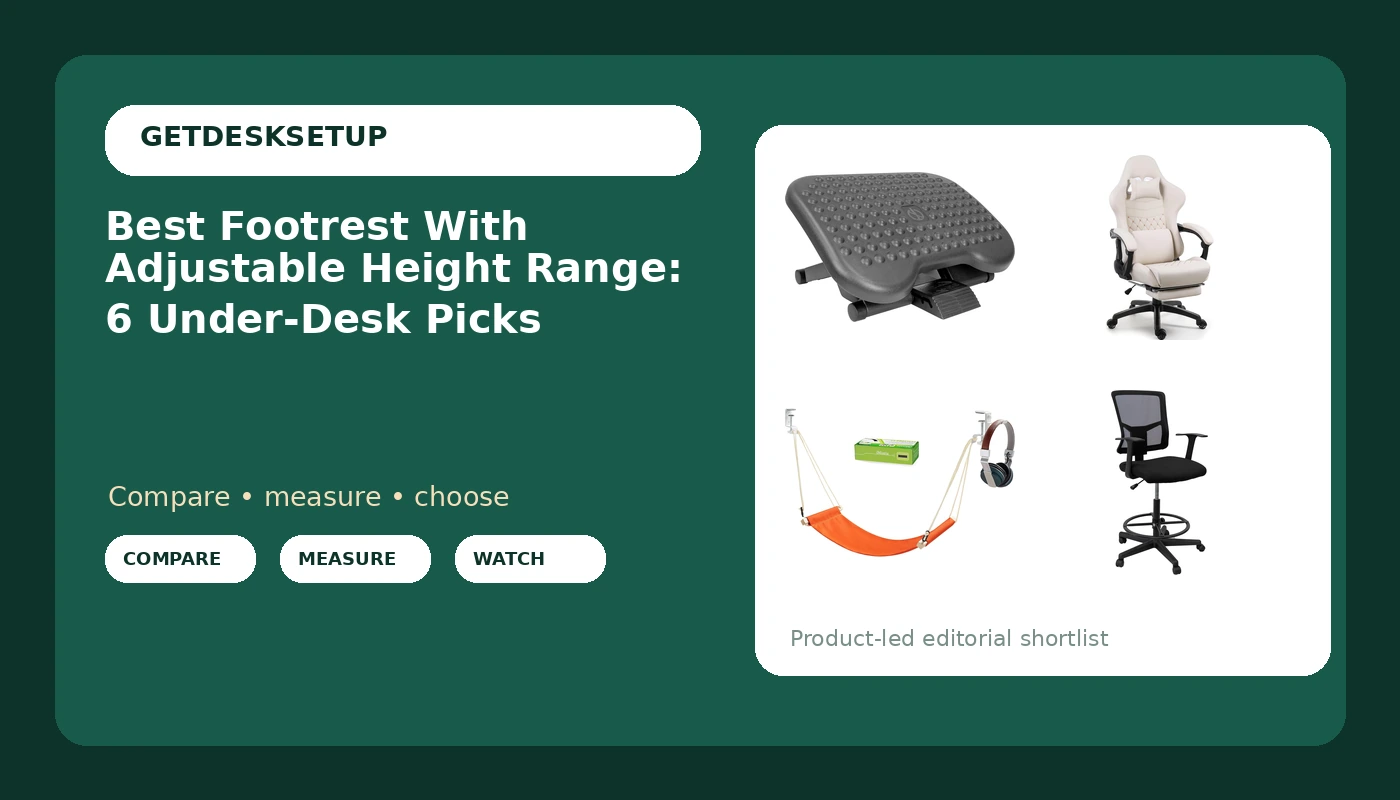
This guide covers six products that solve that problem in different ways. One is a dedicated under-desk footrest, two are foot hammocks that clip under a desktop, one is a drafting stool with its own footrest, and two are gaming chairs whose footrests extend from the seat. There is no single answer here. There is only the best footrest with adjustable height range for your desk, your chair, and your legs, and those three things decide more than brand does.
Related: How to set chair and desk height before you buy a footrest
Quick answer
The Mount-It! Foot Rest Under Desk with Massage Bumps & Foot Pedal Height is the strongest fit for a normal seated desk setup because it is the one product here that is a dedicated under-desk footrest with height adjustment built into the pedal, so the surface under your feet moves instead of you. Choose the Stand Up Desk Store Sit to Stand Drafting Task Stool Chair for Standing Desks with Adjustable Footrest and Armrests (Black) instead when you want the footrest attached to the seat you sit on rather than sitting on the floor.
Footrest with adjustable height range worth comparing
The six products below split into three groups: floor footrests, under-desk hammocks, and seating with a built-in footrest. All of them change the relationship between your feet and your hips. They do it with very different footprints.
Top pick
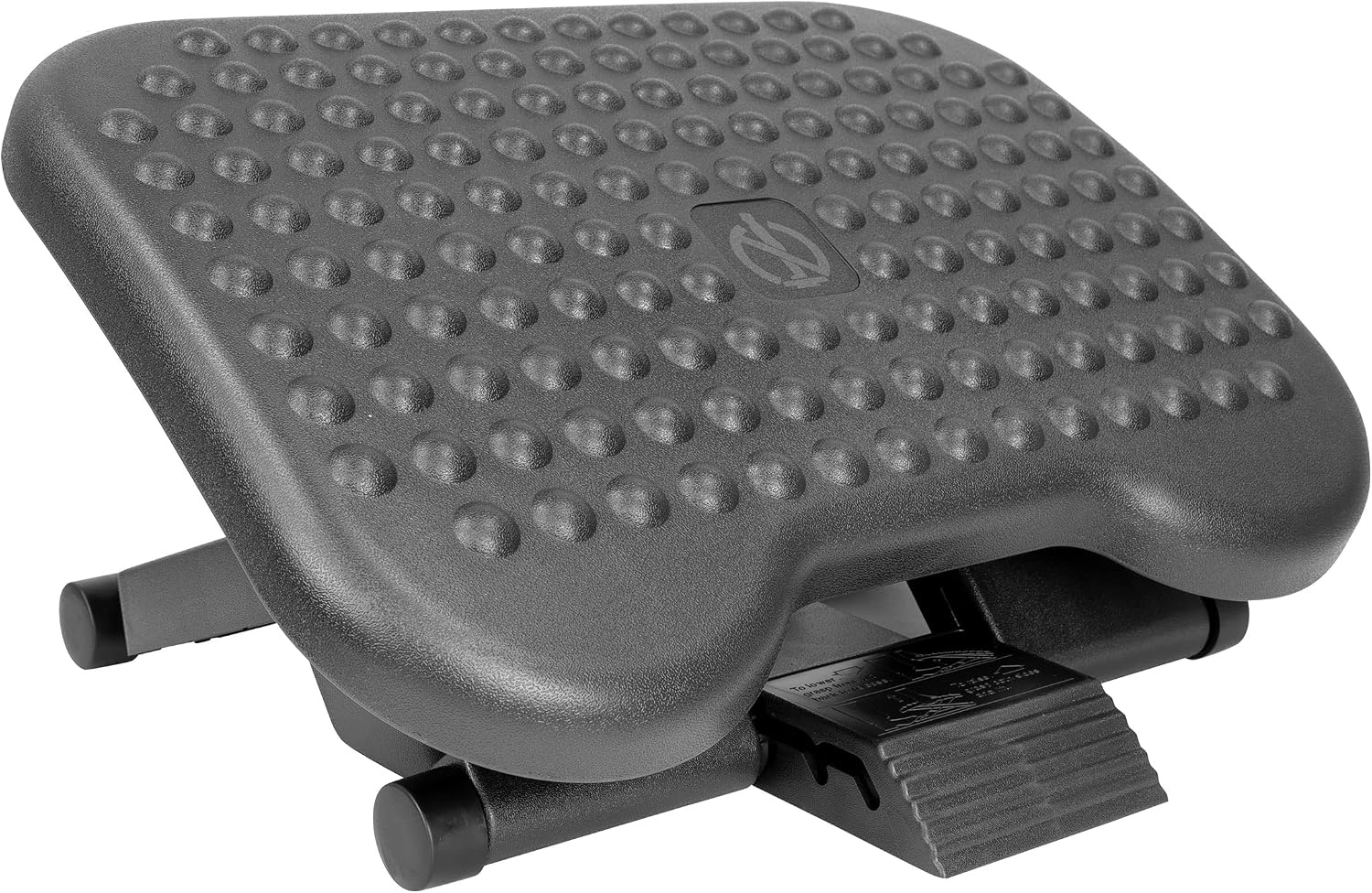
Mount-It! Foot Rest Under Desk with Massage Bumps & Foot Pedal Height
Check current Amazon price
A dedicated under-desk platform with massage bumps on the surface and a foot pedal for changing the height setting. It stands on the floor, takes no desk clearance, and needs nothing from your chair to work.
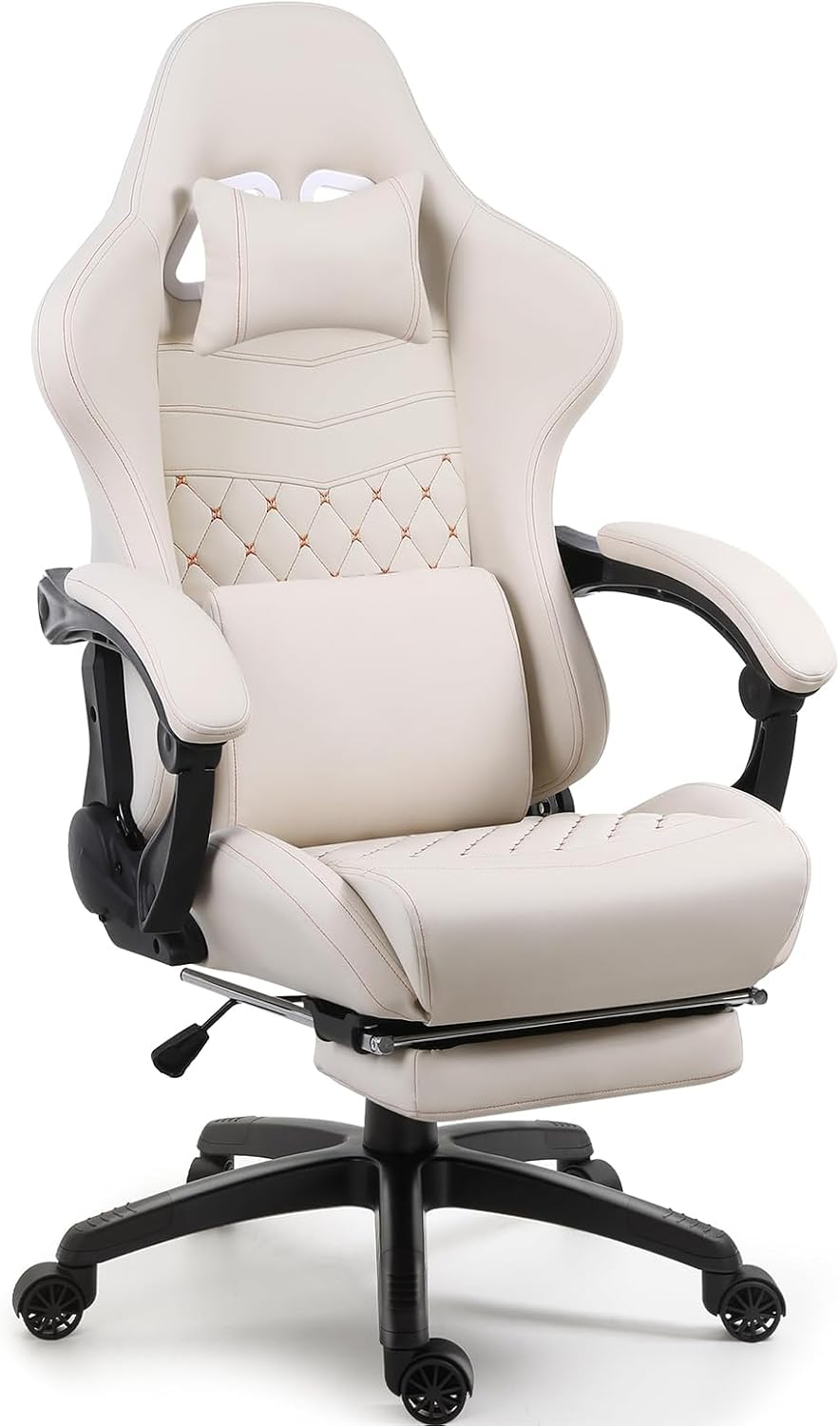
LUCKRACER Gaming Chair with Massage and Footrest, Ergonomic High Back PU Leather Computer Office Chair
Check current Amazon price
An ergonomic high-back chair in PU leather with a massage function and a footrest built into the seat. The footrest travels with the chair, so the height relationship between hips and feet stays fixed.
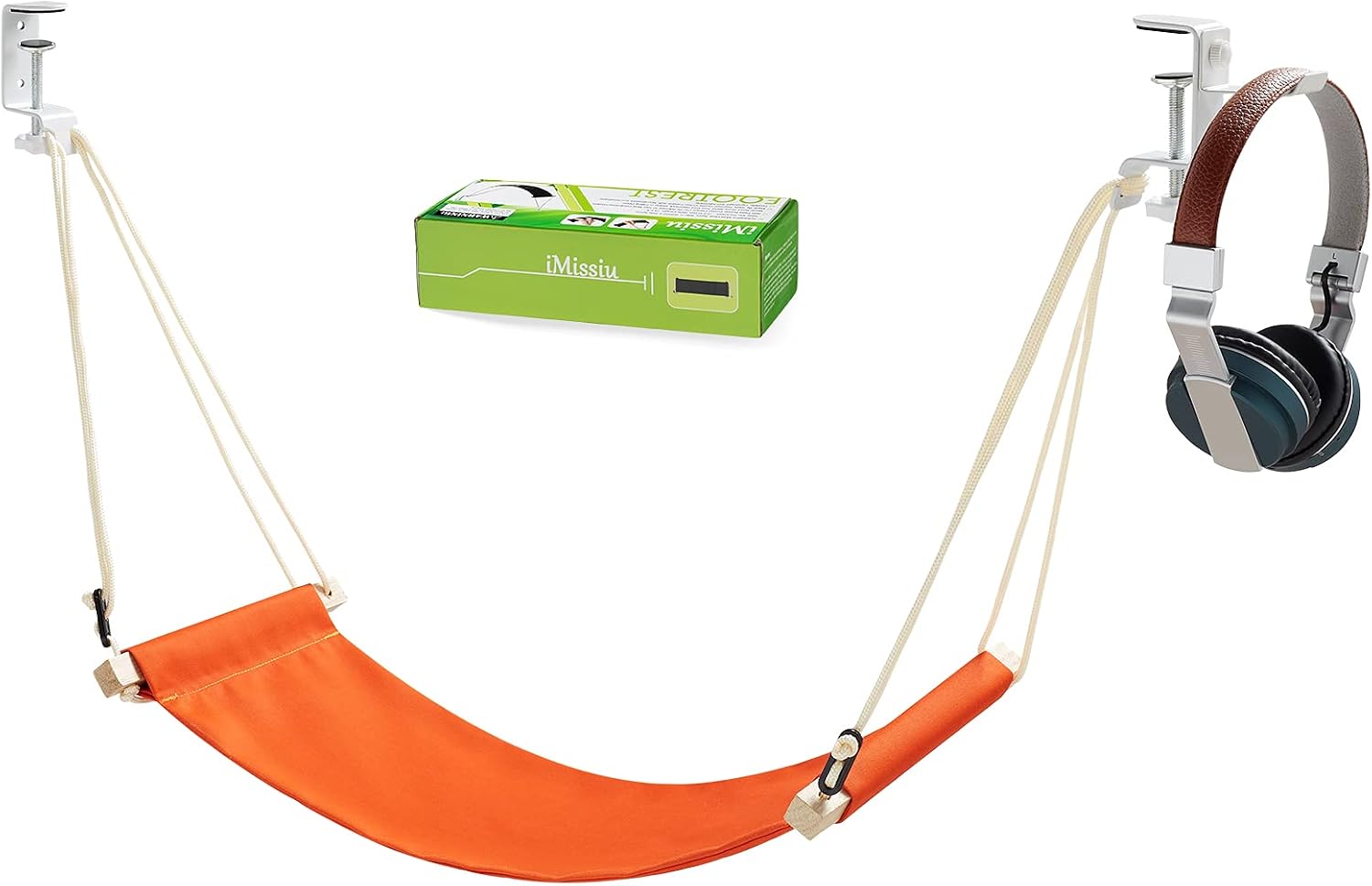
iMissiu Foot Hammock Under Desk | iMissiu Adjustable Office Foot Rest | Portable Footrest with Headphones Holder (Orange)
Check current Amazon price
A portable hammock that hangs under the desktop and holds your feet at a chosen height, with a headphone holder on the side. It uses no floor space at all, which is the whole point in a small room.
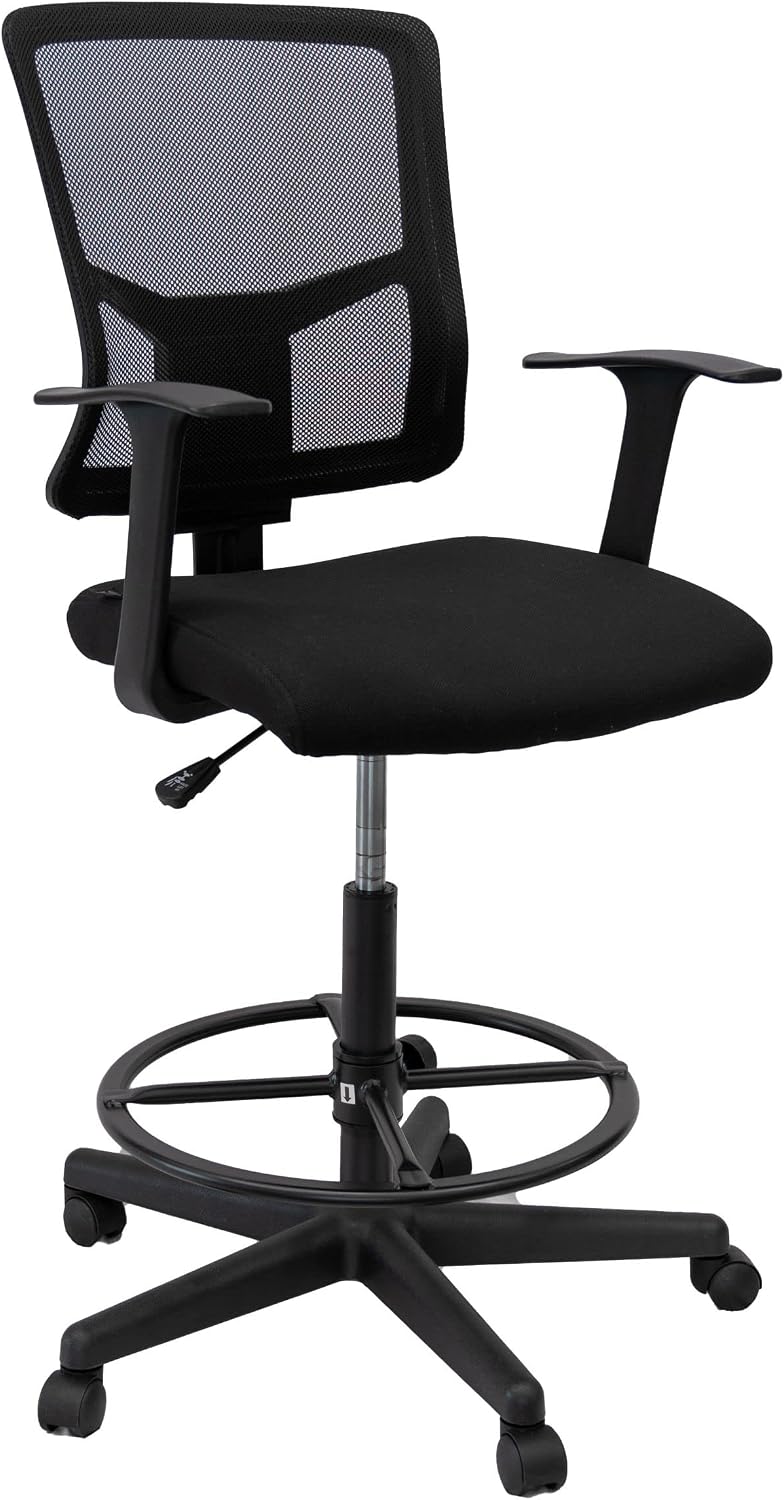
Stand Up Desk Store Sit to Stand Drafting Task Stool Chair for Standing Desks with Adjustable Footrest and Armrests (Black)
Check current Amazon price
A sit-to-stand drafting stool with its own adjustable footrest and armrests, built for tall desks. Because the footrest is part of the seat, the foot-to-hip distance stays constant as you change position.
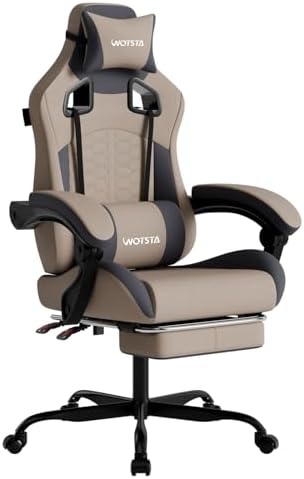
Gaming Chair with Massage,Ergonomic PC Gaming Chair with Footrest Comfortable Headrest and Lumbar Support, High Back, 300LBS (Grey)
Check current Amazon price
A high-back PC gaming chair with massage, a headrest, lumbar support, and an extending footrest, listed at a 300 lb capacity. Suits a heavier user better than a strap-based hammock does.
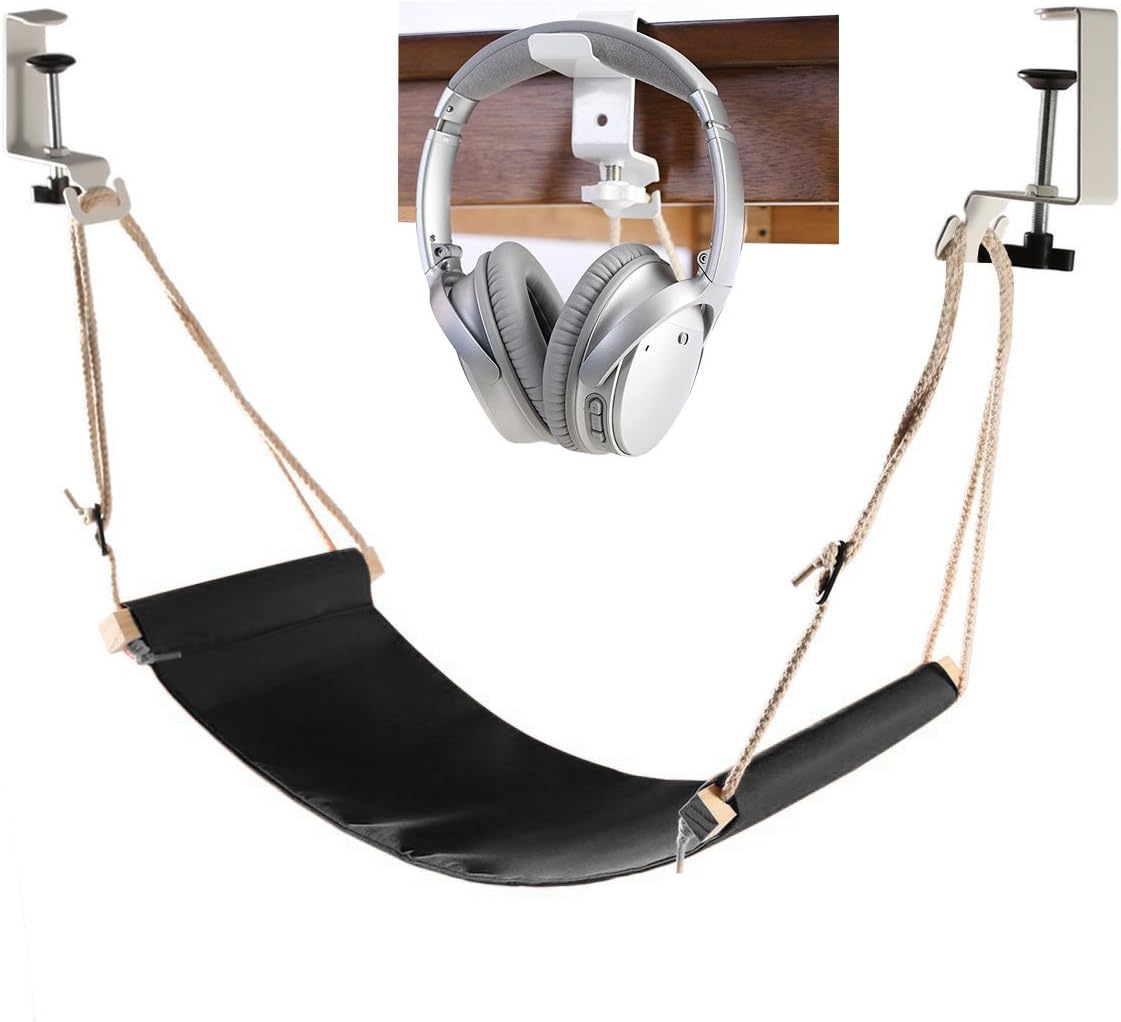
Auoinge Foot Hammock Under Desk FootRest | Adjustable Office Foot Rest Under Desk | Portable Desk Foot Hammock with Headphone Holder
Check current Amazon price
A second portable under-desk hammock, adjustable and light enough to roll up and move between desks, with a headphone holder. A low-commitment way to find out whether the hammock style suits you.
How these products were compared
This guide compares attachment type, meaning whether the product stands on the floor, hangs from the desktop, or carries the footrest as part of a chair. It compares how height is adjusted, the footprint each product occupies in a room, the surface your feet actually land on, and the amount of adjustment the design supports. Product names, images, and retailer links are matched by ASIN so that every card points to the product shown.
Grouping matters more than ranking here. A hammock and a floor platform are not really competitors. They solve the same problem with opposite constraints, one spending floor space and the other spending clearance under the desktop. The comparison therefore weights the constraint most home offices hit first, which is usually how much room is left in front of the chair and how much open space exists under the desk top.
No criterion here is presented as hands-on testing. The comparisons come from the product records supplied for this guide, and every claim on a card stays inside what those records support. Current pricing is not printed anywhere in this article because it moves; use the link on each card to check the retailer for the live number, availability, and return terms.
How to choose the right footrest with adjustable height range
Start with a measurement, not a product. Sit in your chair with the seat set so your forearms sit roughly level with the desk. Then measure the gap between your heels and the floor. Under about two inches and you may not need anything at all. Around three to four inches and a low-profile platform usually closes the gap. Past four or five inches you are into the territory where an under desk footrest with adjustable height range earns its place, because a fixed platform simply will not reach.
The second measurement is clearance. An under-desk hammock needs an open span beneath the desktop, and it needs the underside of the desk to be free of anything a strap can catch on. A drafting stool with a built-in footrest needs a taller desk than a standard one, because the seat sits higher than an office chair. Measure the underside of the desktop, not the top, and measure it with the desk at the height you actually work at.
Footrest angle matters more than most people expect. A flat platform holds the foot at one angle all day. A unit with a pedal or a strap lets you change that angle between a flat-footed position and a more reclined one, and that is the difference between a footrest you keep and one you shove to the side by Thursday.
Then think about the surface. A hammock is fabric, so it cradles the foot but gives less resistance when you push down. A platform is rigid, so it gives you something to brace against. If you wear shoes at the desk or push hard through your heels, the platform wins. If you work in socks and mainly want your feet off a cold floor, the hammock is often enough.
Two groups should skip the hammock style entirely. Anyone whose desk has a shallow modesty panel or a crossbar near the front edge has nowhere sensible to hang the straps, and anyone who rests a lot of weight through the heels will find fabric gives more than they want. Anyone with a compact desk that has very little space under the top should skip the drafting stool and the extending gaming chairs as well, since both need vertical room a small desk does not have.
One more thing while you are under there: cable management. If a footrest slides in and out, it will find any loose bundle you left in its path. Run cables into a raceway along the back of the desk and hold the last stretch with an adhesive clip, so the space under your feet stays clear. That single step prevents a lot of the intermittent monitor and keyboard dropouts people blame on hardware. If you are still sorting out the desk itself, our standing desk wobble checklist uses the same measure-before-you-buy approach on the frame.
Mount-It! Foot Rest Under Desk with Massage Bumps & Foot Pedal Height
The Mount-It! is the direct answer to the dangling-feet problem. It sits on the floor under your desk, the platform carries massage bumps for the sole of the foot, and the height is set with a foot pedal, so you can change the setting with your foot instead of reaching down with a hand. That detail matters more than it sounds. A footrest you have to bend over to adjust is a footrest you adjust once and never touch again.
It takes the top pick because it is the only dedicated floor footrest in this set whose adjustment mechanism is described in the product record itself. Nothing about it depends on a chair, a desk edge, or a strap. You put it where your feet land.
The trade-off is floor space and range. A floor unit occupies its footprint permanently, and it will not help if your chair is set so high that a low platform cannot reach your feet at all. If you work at a standing desk and switch between sitting and standing through the day, a floor footrest also does nothing for you in the standing position, which is where the drafting stool and the two gaming chairs come in.
Alternatives to consider
The LUCKRACER Gaming Chair with Massage and Footrest, Ergonomic High Back PU Leather Computer Office Chair is better suited to someone who wants the footrest to come out of the seat itself, with massage, a high back, and PU leather upholstery in one package. The iMissiu Foot Hammock Under Desk is a stronger fit when floor space is the constraint and you want your feet suspended at a chosen height, with a headphone holder on the side of the hammock.
The Stand Up Desk Store Sit to Stand Drafting Task Stool Chair, the Gaming Chair with Massage,Ergonomic PC Gaming Chair with Footrest Comfortable Headrest and Lumbar Support, High Back, 300LBS (Grey), and the Auoinge Foot Hammock Under Desk FootRest cover the remaining cases. The stool keeps your hips and feet in a fixed relationship while you move between sitting and standing at a tall desk, which is exactly what a floor footrest cannot do. The grey gaming chair pairs an extending footrest with a headrest, lumbar support, and a listed 300 lb capacity, so it suits a heavier user better than a strap-based hammock. The Auoinge hammock is the lightest way to test whether the hammock style suits you at all before you spend on anything larger.
Search listings for a foot rest with adjustable height range and you will find all three of these types sitting under one phrase, which is why the category is confusing. The phrase describes a function, not a form factor. Decide the form factor first.
Day-to-day use and maintenance
Every product here has one moving interface, and that interface is what fails first. On a floor footrest it is the height mechanism. On a hammock it is the strap and the clip that holds it to the desk. On the chairs it is the footrest extension. Check that interface weekly for the first month, then monthly after that.
For hammocks, unclip them before you move the desk. A strap that stays attached while a sit-stand frame rises will either tear or drag something with it. For floor footrests, keep the underside of the platform clean, because dust and grit on a hard floor turn into a grinding sound within a season. For chairs with extending footrests, do not sit on the footrest section. It is built to carry feet, and the listed capacity of the chair applies to the seat.
If you put a standing mat under a drafting stool, pay attention to mat thickness and mat density. A thick, soft mat is comfortable to stand on and awkward to roll a stool across; a thin, dense mat does the opposite. Most people end up wanting the dense one under the stool and the soft one where they stand.
A desk footrest with adjustable height range only helps if you actually change the setting as your chair moves. Two positions are usually enough: one for focused sitting and one for a reclined break. Set both once, then move between them instead of hunting for a single compromise height.
The rest of the desk follows the same logic. A desk lamp lumens rating tells you how much light leaves the fixture, not how much lands on your keyboard, and a footrest height range tells you the span, not whether it fits your legs. Both need one measurement in your own room before they are worth buying.
The test I apply to anything that lives under a desk is whether it survives a year without a replacement part. Footrests pass when the moving part is metal and the surface wipes clean. They fail when the adjustment is a friction joint that loosens, or when a fabric strap frays at the clip. That kind of wear rarely shows up in the first week, which is why the return window is worth checking before you commit.
Buying checklist
- Measure the gap between your heels and the floor with the chair set for your elbows, not for comfort.
- Pick the type from that number: nothing under two inches, a low platform around three to four, a height-adjustable footrest beyond that.
- Confirm clearance under the desktop and a clear path for any strap or sliding platform.
- Check that the exact model you are buying includes the adjustment feature you want, since these product names describe the feature and not every listing carries it.
- Route cables into a raceway or a cable sleeve and hold the last run with an adhesive clip before you add anything that slides.
- Read the care instructions for fabric hammocks and PU leather chairs before first use.
- Verify the current retailer price, availability, and return terms through the card link.
Final recommendation
Choose the Mount-It! Foot Rest Under Desk with Massage Bumps & Foot Pedal Height when you sit at a standard desk and the only problem is that your feet do not reach the floor. It is the best footrest with adjustable height range in this set for that job, because the adjustment lives on the product instead of on your chair.
Choose the Stand Up Desk Store Sit to Stand Drafting Task Stool Chair when you work at a tall or standing desk and want the footrest to travel with your seat. Choose a hammock, the iMissiu or the Auoinge, when floor space is tight or when you want to test the style before spending more. Choose the LUCKRACER or the grey gaming chair when you would rather buy the footrest and the chair as one purchase.
What none of these fix is a chair set to the wrong height. Set the seat first, measure the gap, then buy the product that closes it.