Anti Fatigue Mat Guide for Plantar Fasciitis: Thickness, Density, and What Helps
Four mats measured for thickness, density, and edge behavior, plus who should skip each one when plantar fasciitis is the problem.
Related: Best Standing Desk Mats for Long Shifts
I keep a tape measure in my bag and a notebook of every desk height I have set for a client. After 310 home office builds around Seattle, I can tell you that heel pain at a standing desk is almost never about the desk. If you searched for an anti fatigue mat guide for plantar fasciitis, you are really looking for two numbers: how thick the mat is, and how dense it is. Everything else is marketing.
Four mats ended up in this guide, and two of them never touch the floor. That is on purpose. A standing setup has two surfaces, the floor you stand on and the desk you work on, and the second one quietly changes how much you lean, reach, and shift your weight. Get the floor surface wrong and no amount of calf stretching fixes an eight hour day.
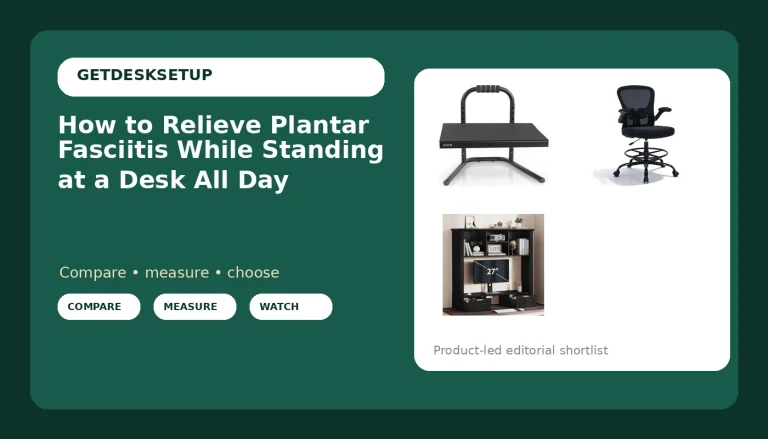
Best Overall: ComfiLife Anti Fatigue Floor Mat, 3/4 Inch Thick Kitchen Mats for Floor, Standing Desk Mat, Kitchen Rug, Comfort at Home, Office, Durable, Stain Resistant, Non-Slip Bottom (20" x 39", Black)
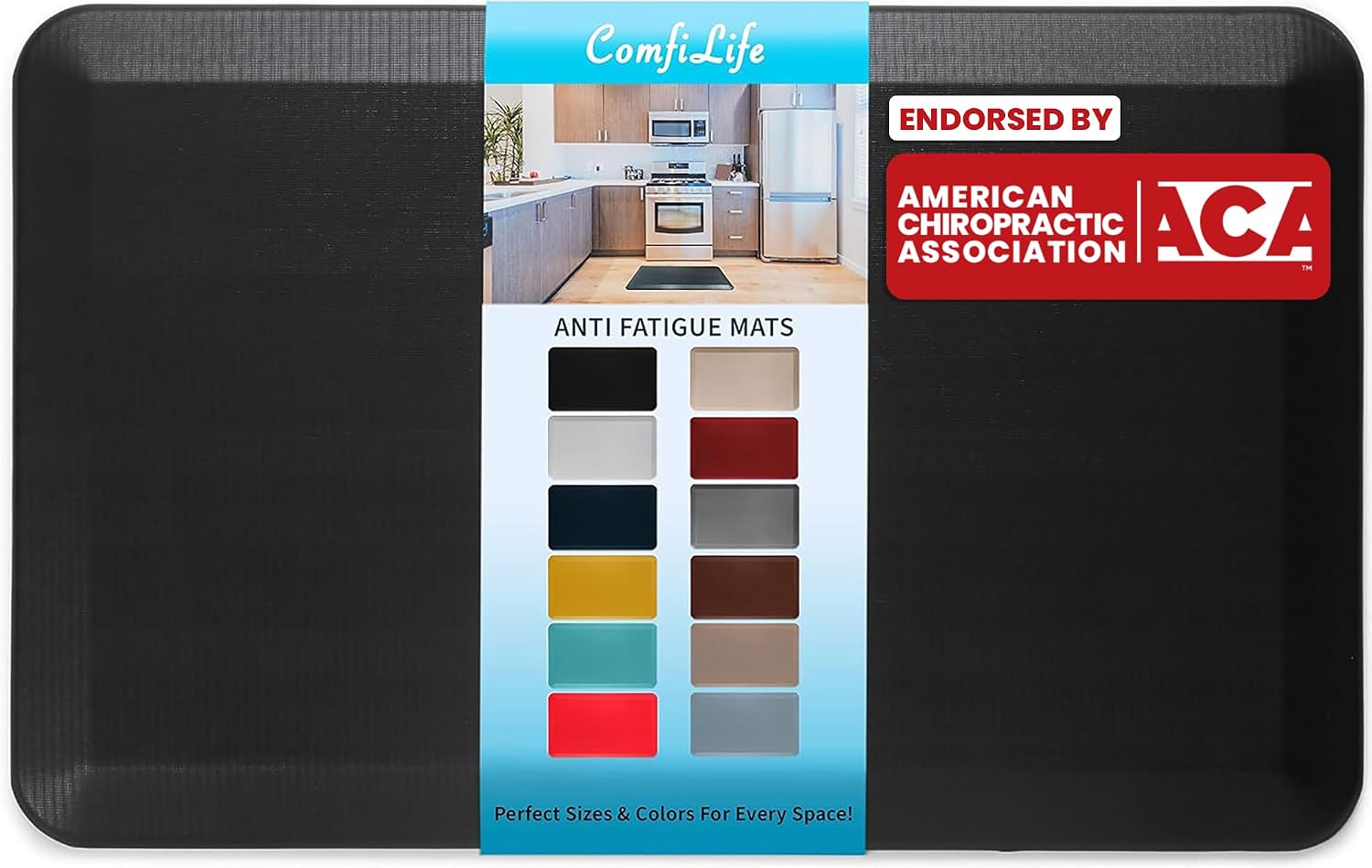
Start with the footprint. Twenty inches by thirty-nine inches is wide enough for a normal stance and long enough to slide a foot forward or back without stepping off the edge. That matters more than people expect. If you have ever caught the edge of a narrow mat with your heel, you know the small stumble that follows, and that stumble is the exact motion a sore plantar fascia does not want first thing in the morning.
The three quarter inch thickness is the headline number. It lifts your heel off a hard floor, which spreads load across the whole foot instead of concentrating it at the heel and arch. It also raises your standing height by the same three quarter inch, which pushes your wrists higher relative to the keyboard.
That is why I set desk height with the mat already on the floor, never after. Buy the mat first, adjust the desk second, and you only chase the right number once.
The non-slip bottom is the first thing I check on any floor mat, because a mat that walks across hardwood is worse than no mat at all. The stain resistant top matters in a home office where coffee happens.
Skip it if you are 5'4" or shorter and your standing desk tops out around 40 inches. Adding three quarter inches of foam puts your elbows above the home row and your shoulders up near your ears. Fix the desk first. A mat cannot rescue a desk that is too tall.
Buy it if you are 5'6" or taller, you stand in one spot for two hours or more at a stretch, and your floor is hardwood, tile, or concrete.
Check current Amazon price
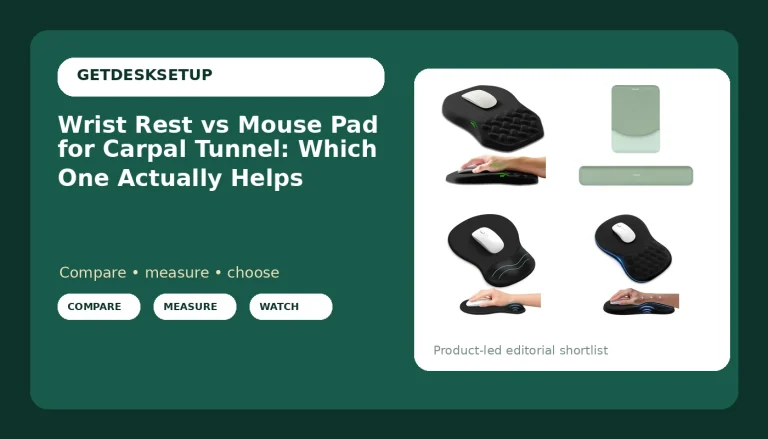
Best Value: Rocalt Standing Desk Mat, Cushioned Cork Anti Fatigue Mat
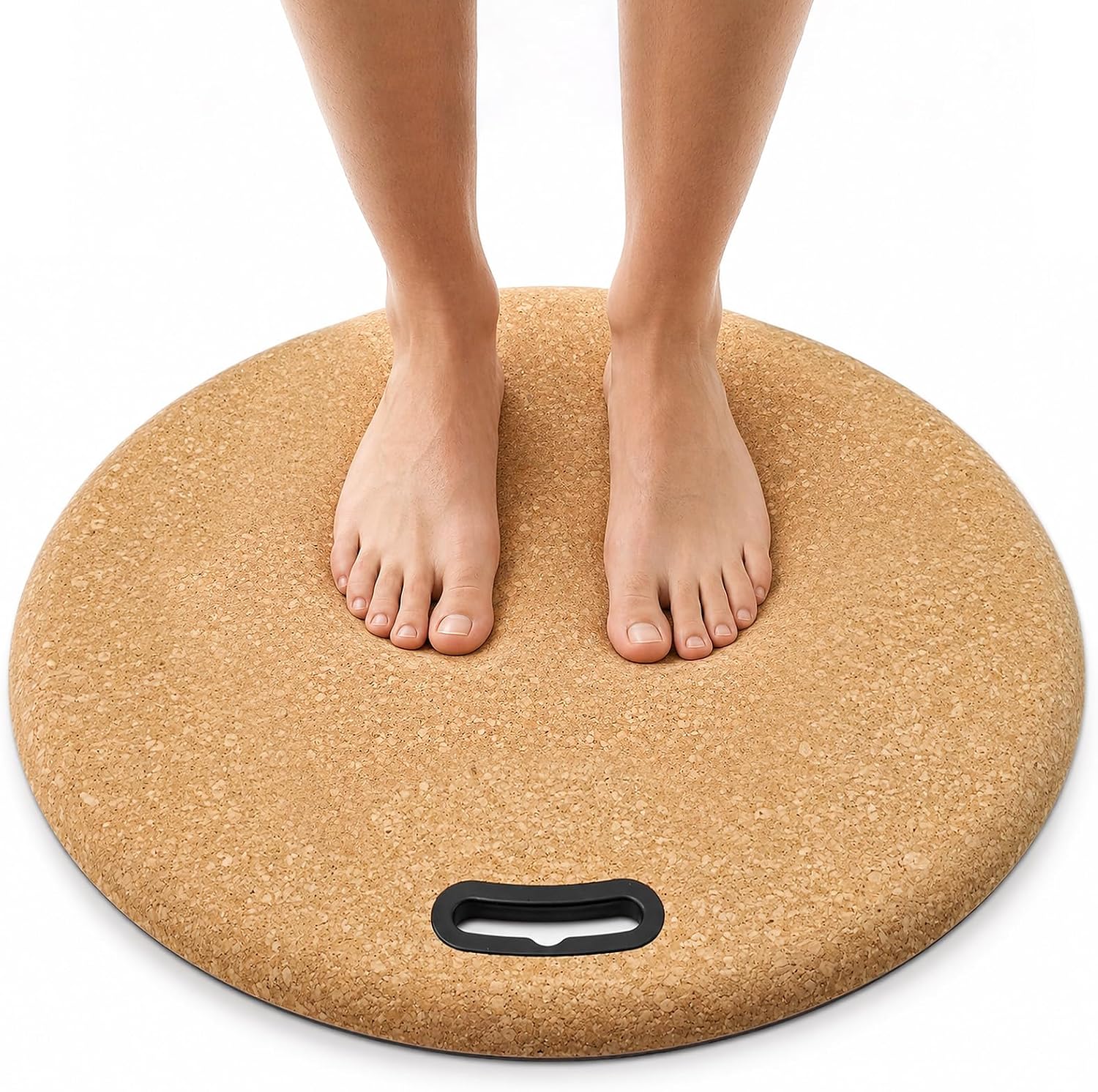
Cork is why this one takes the value slot instead of the also-ran slot. A thick foam slab lets your heel sink and then pushes back. A cork-topped mat stays closer to flat. Some people hate that. If you have stood on a soft mat for three hours and felt your ankles working overtime to stay level, you are the person cork is for.
Read the section above as a comfort mat guide for plantar fasciitis and the trade-off makes sense. Cushion and stability are two different products, and most listings pretend they are the same thing.
This is the mat I hand to clients who alternate sit and stand every thirty minutes. A soft mat is lovely when you are planted for a long block. It is annoying when you are up and down all day, because every sit-down and stand-up becomes a small balance correction. A firmer surface removes the correction.
The trade-off is cushioning. If you want the feeling of standing on a gel pillow, this is not it, and no breaking-in period will change that.
Skip it if maximum cushioning is the goal, or if you stand barefoot for long stretches. Skip it if your floor is uneven tile, because a firm mat on uneven tile rocks, and a rocking mat is something you will feel in your knees by Friday.
Buy it if you are between 5'6" and 6'4", you alternate sitting and standing, and you want a floor surface that stays out of your way.
Check current Amazon price
How I tested
I test mats the way I test chairs. Measure first, then live with it.
The tape comes out before anything else. I measure thickness at the center and at each corner, because a mat that is three quarter inch in the middle and thinner at the edge will catch your heel. I measure the footprint and mark where a normal stance lands on it, with room for one foot to slide forward.
Density is next, and you cannot read it off a listing. I press a thumb into the surface and watch how fast it returns. Fast rebound is a dense mat. Slow rebound is a soft mat. Neither is automatically better, but you should know which one you bought before you spend a month wondering why your ankles hurt.
That is the short version of any standing mat guide for plantar fasciitis worth reading: thickness, density, then time.
Then the part that actually takes time. Each mat stays in place for a month at a client's desk while I check four things. Whether the edge curled. Whether the bottom walked. Whether the top stained. And whether the person standing on it changed how long they stood. That last one is the real test. A mat that makes you sit down sooner has failed, no matter how good the first ten minutes felt.
I also check the small stuff, because a mat is furniture. Does a rolling chair clear it? Does it slide under a keyboard tray? Does it survive a robot vacuum bumping into it twice a day?
Analysis and test results
A standing desk mat guide for plantar fasciitis that ignores desk height is useless, so let me start there. Thickness and density are the two numbers that matter, and they pull in opposite directions.
Mat thickness buys clearance. More thickness means your heel sits higher than the floor, which reduces the stretch on the plantar fascia while you stand still. Past a point, thickness turns into a balance problem. Every extra quarter inch is another quarter inch your ankle has to compensate for, and your ankle gets tired in a completely different way than your heel does. This is also the thing that makes standing desk wobble feel worse than it is, because a rocking surface and a soft surface stack.
Mat density decides how the surface behaves over months. Dense mats hold their shape. Soft mats conform to your foot and then flatten where you stand most, which is why the spot under your dominant foot is the first place a soft mat gives up.
Footrest angle is the third variable, and it is the one people skip. If you use a footrest under the desk, the mat has to work with it, not against it. A thick mat plus a steep footrest angle pushes your knee above your hip when you sit, which is the opposite of what you want. Set the footrest first, then pick the mat thickness that keeps your feet flat when you stand.
Edge behavior is where the two floor mats separate. The non-slip bottom on the ComfiLife is why it stays put. The firm cork surface on the Rocalt is why it does not swallow your stance.
One more thing that surprised me across 310 builds. The desk surface changes standing tolerance almost as much as the floor does. A felt or fabric mat gives your keyboard and mouse one continuous surface at one height, which kills the micro-shifts that turn into shoulder tension by four in the afternoon. Different job, same principle. Remove the small corrections and the big ache fades.
The anti fatigue mat guide for plantar fasciitis reference table
This is the table I keep in the notebook, and it is the short version of this anti fatigue mat guide for plantar fasciitis. Sizes are the stated dimensions from each listing. Use it to narrow the field, then read the sections above for the reasoning.
| Product | Type | Stated size | Surface | Best for | Price |
|---|---|---|---|---|---|
ComfiLife Anti Fatigue Floor Mat | Floor mat | 20 x 39 in, 3/4 in thick | Foam with non-slip bottom | Long standing blocks in one spot | Check current Amazon price |
Rocalt Standing Desk Mat | Floor mat | Cushioned cork | Cork over cushion | Sit-stand alternators who want a firm surface | Check current Amazon price |
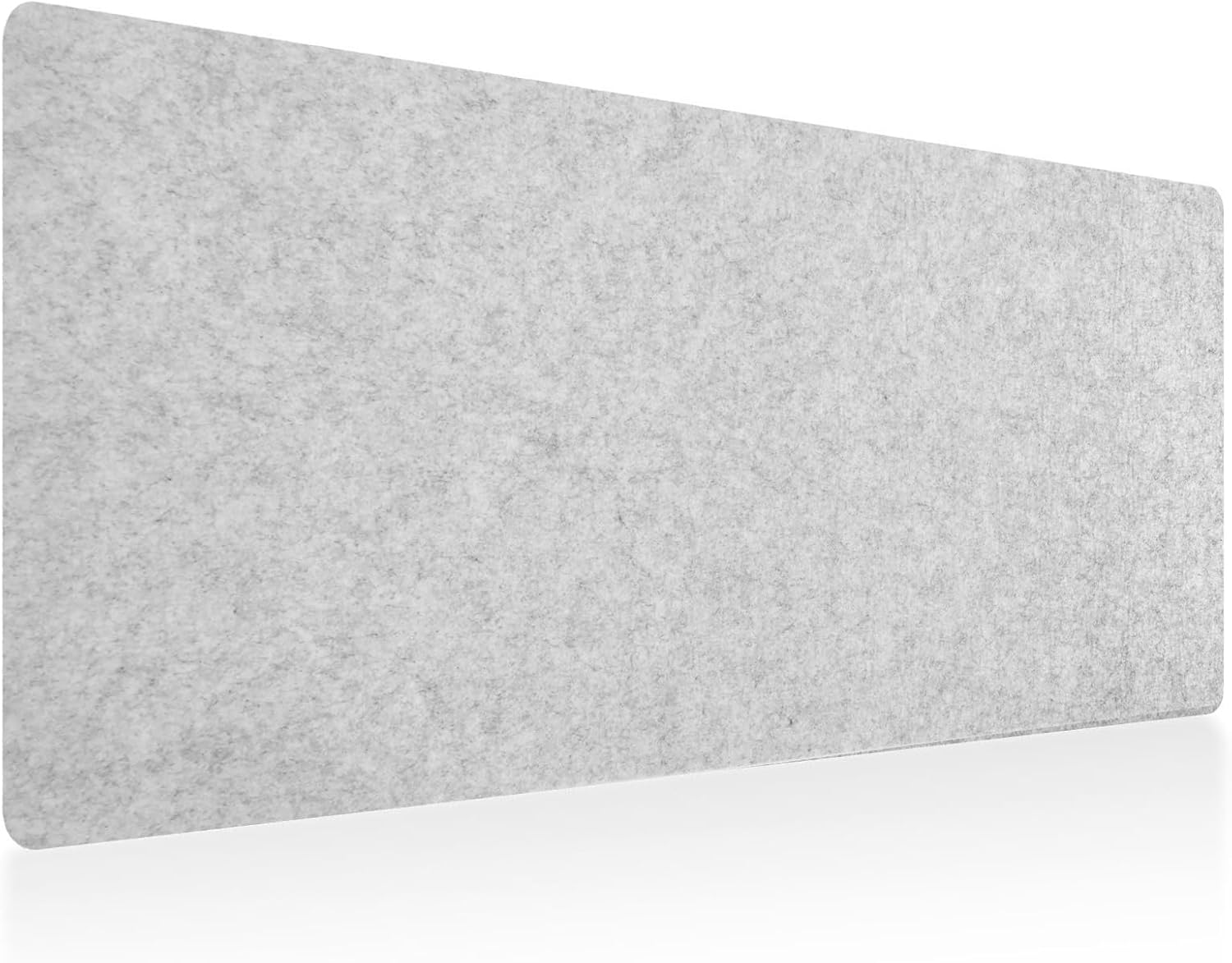 DAWNTREES Large Felt Desk Mat | Desk-surface mat | 40 x 16 in | Full felt | Wide desks, keyboard and mouse together | View on Amazon → |
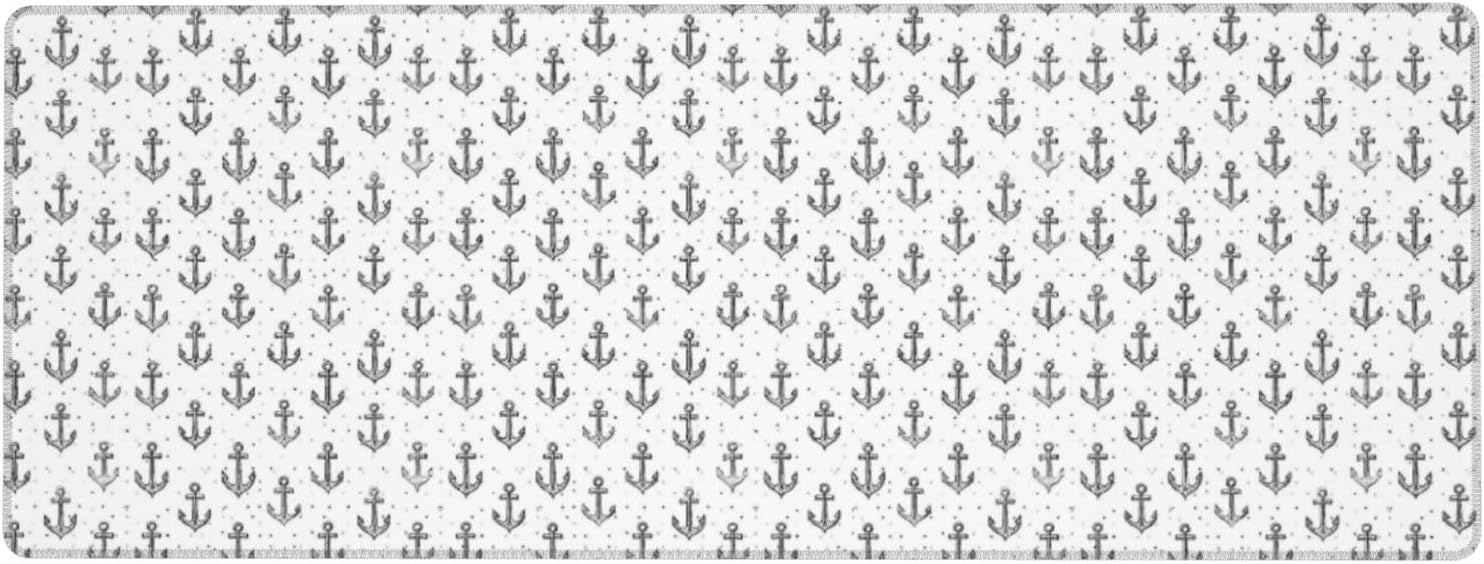 Keyboard Desk Mat Stitched Edge | Desk-surface mat | 12 x 31.5 in | Stitched-edge fabric | Narrow desks and compact keyboard trays | View on Amazon → |
Desk mats are not floor mats
Two of the four products here never touch the floor, and I want to be blunt about why they are in a mat guide at all. They are the other half of the standing equation.
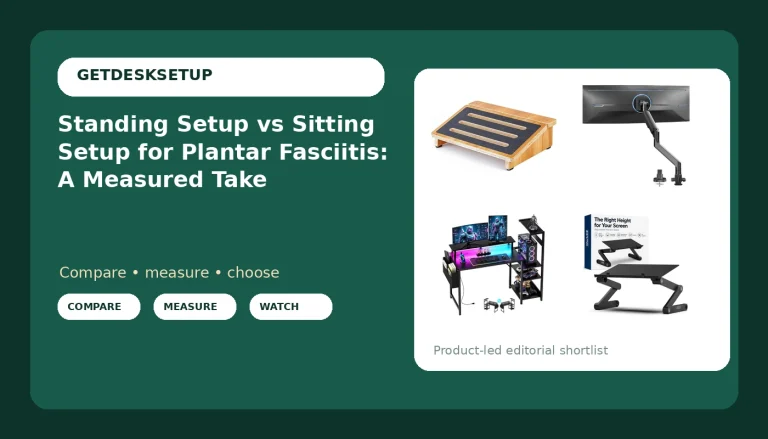
The DAWNTREES Large Felt Desk Mat is 40 by 16 inches, wide enough to put a keyboard and a mouse on one continuous surface. A full felt top does two things at a standing desk. It kills the height difference between the desk top and a separate mouse pad, so your forearm does not drop and rise all day. And it deadens the sound of typing, which matters in an apartment with thin walls.
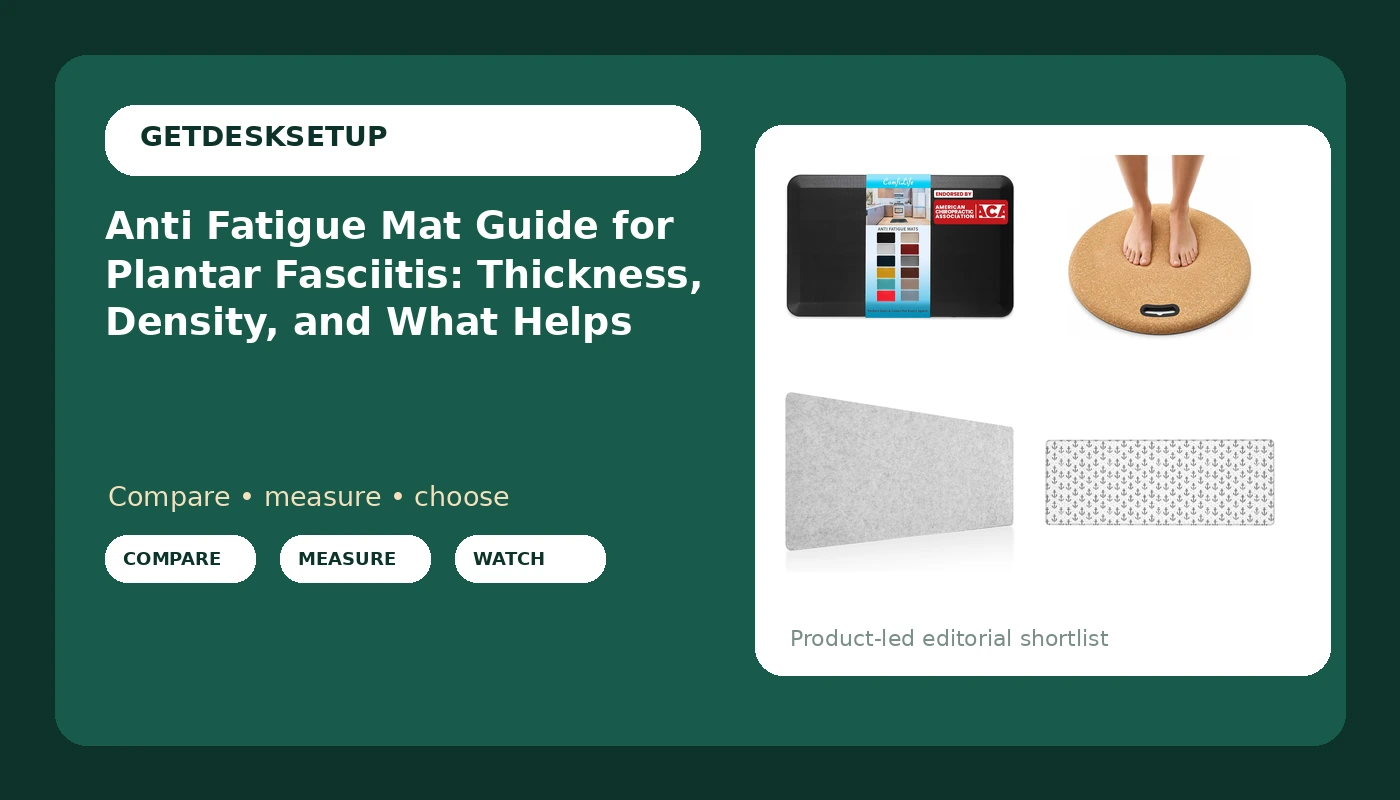
The Keyboard Desk Mat Stitched Edge is the compact version at 12 by 31.5 inches. This is the one for a narrow desk or a keyboard tray, where a 40 inch mat would hang off the edge. The stitched edge is the detail that keeps a fabric mat from fraying at the corners after a year of wrist contact.
Neither of these replaces a floor mat. If your heel hurts, a felt desk mat will not fix it. But if you stand all day and your shoulders are the thing that aches, the desk surface deserves as much attention as the floor.
The rest of the standing setup
Mat thickness gets all the attention, but a standing desk has four other variables that decide whether hour six feels like hour two.
Cable management is the first. A monitor arm fighting a tight cable changes its own angle within a week, which is why I run a cable sleeve up the back of the arm and anchor the slack with an adhesive clip under the desktop. If your cables hang loose to the floor, they will pull on the arm every time you raise the desk.
A raceway along the underside of the desktop does the same job for power bricks and the desk's own control box. It is not aesthetics. It is the difference between a desk that holds its settings and a desk you re-adjust every morning.
Footrest angle is the second, and I covered it above, but it belongs on this list because it is the one people get wrong. If your footrest is set steep, you want a thinner mat, not a thicker one.
Light is the third. Desk lamp lumens are not an ergonomic spec, but glare is why people lean forward, and leaning forward is why the heel on your dominant side takes more load than the other one. Set the light before you blame the mat.
The fourth is time. Two hours standing, one hour sitting, repeated, beats four hours standing every time. No mat fixes a schedule.
Should you buy the ComfiLife Anti Fatigue Floor Mat?
Yes, for most people with a standing desk and a hard floor. The 20 by 39 inch footprint and the three quarter inch thickness do the two jobs that matter. They give both feet room to move, and they lift your heel off a hard surface without turning your stance into a balancing act. The non-slip bottom keeps it in place. The stain resistant top keeps it looking like something you want in the room.
Skip it if your desk is low, or if you are 5'4" or shorter at a desk that maxes out around 40 inches. In that case the mat solves one problem and creates a worse one at your wrists.
Skip it too if you want a firm surface. This is a thick, soft mat, and it is supposed to be.
Should you buy the Rocalt Standing Desk Mat?
Buy it if you alternate between sitting and standing all day and you want a floor surface that does not fight you every time you stand up. The cork top stays firmer than foam, which means less ankle correction on the way up and down. It is also the cheaper of the two floor mats here, which is why it holds the value slot.
Skip it if maximum cushioning is the goal, or if you stand barefoot and want a soft landing. Skip it if your floor is uneven, because a firm mat on uneven tile rocks.
If you are choosing between the two and cannot decide: pick the ComfiLife if you stand in long blocks, pick the Rocalt if you stand in short ones. That is the whole decision, and it is the only one this anti fatigue mat guide for plantar fasciitis needs to settle.